
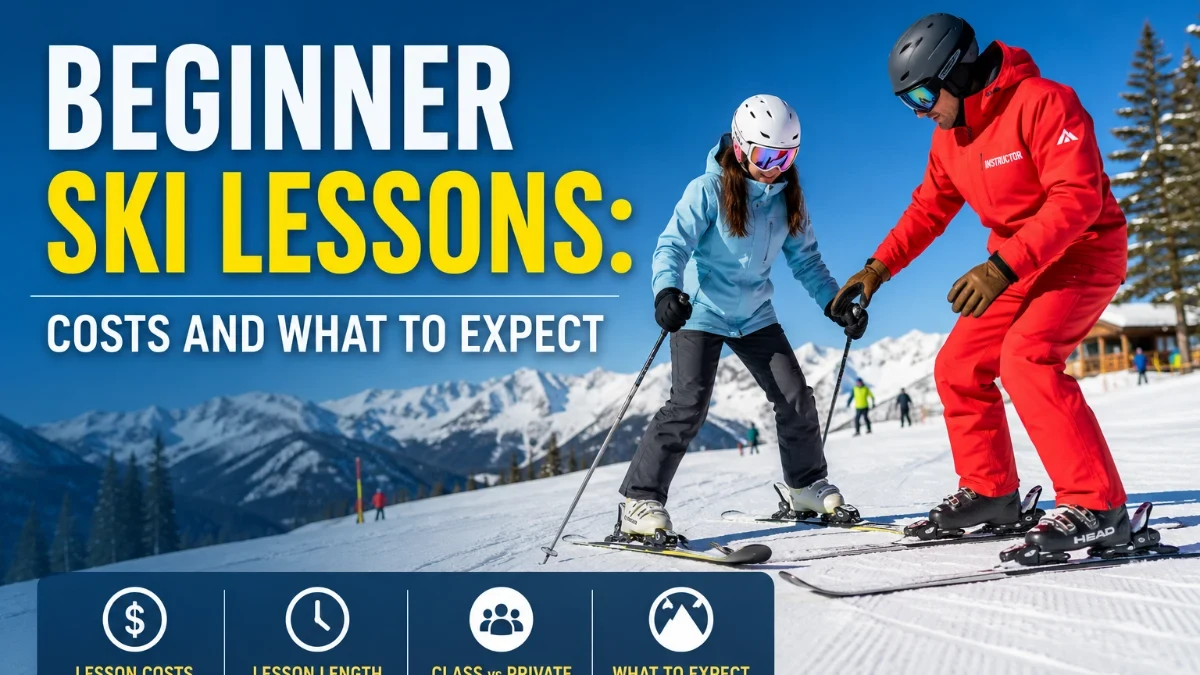
Beginner Ski Lessons: Costs and What to Expect
On this page6
For your first time on snow, book a group lesson rather than a private one. It costs a fraction of the price, the pace is built for people who have never clicked into a binding, and you do not need one-on-one attention to learn the two skills that matter on day one: stopping and turning. Budget roughly $100 to $180 for a US package that bundles the lesson, rental gear and a beginner lift ticket, about £35 for a two-hour lesson at a UK snowdome, or AUD $99 to $167 a day in Australia. With a qualified instructor, most beginners are linking simple turns on gentle green runs within a day or two.
Group or private lessons: which should a beginner book?
Start with a group lesson. Learning the wedge (or “pizza”) stop and your first turns is standard first-day material, and a group instructor teaches it just as well to five people as to one. You also get to watch others try the same move, which quietly takes the pressure off. Certified instructors, whether through the US body PSIA-AASI or its equivalents abroad, follow a structured beginner progression that a group format is built around.
A private lesson earns its price later, not first. Book one when you plateau after a couple of days, when you learn much faster than the rest of the group, when you are nervous and want undivided attention, or when you have a stubborn habit like sitting back on the skis. Many resorts also let a private instructor take up to four or five people from the same party, which splits a steep hourly rate across friends or family.
My rule of thumb: a group lesson for the first day, then decide. Most people never need a private at all to become a confident green-run skier.
What does a beginner ski lesson cost?
Prices swing hugely by country, resort size and date. The cheapest path is almost always a bundled learn-to-ski package rather than buying a lesson, a lift ticket and rental separately. Here is how the real 2026 numbers compare across the three markets most readers ski in.
| Option | United States | United Kingdom (snowdome) | Australia |
|---|---|---|---|
| Group lesson (approx. 2 hrs) | $70-$130 per person | ~£34.50 (The Snow Centre Manchester, Stage 1) | Included in package below |
| Learn-to-ski package (lesson + rental + beginner lift) | ~$100-$180 per day | ~£99 for a 5-hour beginner day (with lunch) | AUD $99 (Thredbo) to AUD $499 for 3 days (Perisher) |
| Private lesson | $100-$150+ per hour; $600-$1,000+ full day at top resorts | ~£90-£140 per hour | AUD $150+ per hour |
| Rental gear alone (adult) | $40-$125 per day | Usually included | Usually included |
| Beginner lift ticket | Under $20 to $150+ | Included | Included |
Sources for these figures: the US lesson, rental and lift ranges come from SkiTutor’s 2026 cost guide; the UK numbers reflect The Snow Centre Manchester’s published beginner rates (the venue formerly traded as Chill Factore); and the Australian packages are Thredbo’s Learn to Ski from $99 and Perisher’s three-day beginner bundle.
A worked example makes the cheapest realistic US day concrete. A mid-sized resort learn-to-ski package at around $130 covers your group lesson, rental skis and boots, and a beginner-area lift ticket in one payment. Add lunch and a hot drink and you are near $150 all-in for a full first day. Compare that with buying separately at a destination resort: a $329 peak lift ticket, plus $78 rental, plus a $250 half-day group lesson clears $650 before food. The package is not a minor saving; it can halve the day.
What actually happens on your first day?
You will spend the first stretch not moving much at all. Instructors start you on flat snow: clicking in and out of bindings, shuffling, sliding one ski, and getting up after a fall (roll onto your side, bring both skis below you across the hill, then push up). It feels slow, but this is where balance is built.
Next comes speed control before speed. You learn the wedge stop, pushing your ski tips together and tails apart to form a pizza slice that scrubs speed and halts you. Only once you can stop reliably do you ride a magic carpet or gentle beginner lift and start making wedge turns, steering by pressing on one ski. A good first lesson ends with you linking two or three turns down a green slope and stopping on purpose. It should also cover the NSAA Responsibility Code: who yields, where to stop, and how to merge safely.
Expect to fall, and expect to be tired. Skiing loads muscles you rarely use, and nerves burn energy. Two to three hours is plenty for day one.
How fast will you progress?
Faster than most beginners fear. The first day is the steep part of the curve; after it, things click quickly. A realistic arc looks like this:
- Day 1: wedge stop, wedge turns, confident on green runs with an instructor nearby.
- Days 2-3: linking green runs solo, starting to bring the skis parallel at the end of turns.
- A week of skiing (spread across a season): smoother parallel turns on easy blue runs.
Fitness, nerves and snow conditions all move these markers. Soft, groomed morning snow flatters a beginner; icy afternoon slush does not. The biggest accelerator is practice between lessons; even an hour of solo green-run laps cements what an instructor showed you.
What gear do you need for your first lesson?
Less than you think, because rental packages cover the expensive parts. Skis, boots and poles come with almost every beginner package, and the shop sets your bindings to your weight and ability so they release in a fall. You do not need to buy anything to start, and you should not.
What you do bring: a waterproof jacket and trousers, warm waterproof gloves, goggles, a helmet (rentable if you lack one), and one thin pair of ski socks. Avoid cotton, which soaks and chills. Add sunscreen, sunglasses for the lift line, and water. The one fit that trips up first-timers is boots, so it is worth reading how ski boots should be sized before you collect your rental, because a boot that is too big is the most common reason beginners struggle to steer.
For the wider picture of a first trip, our complete guide to skiing for beginners walks through the pizza-and-french-fry basics, layering and what a full day costs.
Ski school or a learn-to-ski app?
For the first day on snow, ski school wins, no contest. An app cannot watch your posture, adjust your bindings, pick a safe slope, or catch you leaning back before you fall. A live instructor does all four, which is why nearly every experienced skier steers first-timers toward a lesson.
Apps and video courses do have a place, just not as a replacement. Use them before your trip to learn the vocabulary and see what a wedge turn looks like, and between lesson days to review technique so your practice laps are deliberate rather than random. Think of them as homework around the lesson, not instead of it.
If you are planning a full snow-sports season and want to explore other disciplines and gear guides, browse our winter sports hub for more beginner-friendly breakdowns before you book.
We dig into a related angle in Adult Ski Lessons.
It is worth pairing this with our guide to Vail Resorts Ski Lessons.
Frequently asked questions
Are ski lessons worth it for beginners?+
Yes. A certified instructor teaches you to stop and turn safely in the first hour, which is exactly where self-taught beginners get hurt or scared off. One group lesson also gets you off the slow beginner lift lines faster. For a first-timer, it is the single best-value part of the day.
How much do beginner ski lessons cost?+
A two-hour group lesson runs about $70 to $130 in the US, or roughly £35 at a UK snowdome. Full learn-to-ski packages that bundle lesson, rental and a beginner lift ticket cost about $100 to $180 in the US and AUD $99 to $167 a day in Australia. Private one-on-one lessons start near $100 to $150 an hour.
Should a first-timer book a group or private lesson?+
Book a group lesson first. It is far cheaper, the pace is built for absolute beginners, and you rarely need one-on-one attention to learn the wedge stop. Upgrade to a private lesson later if you plateau, learn faster than the group, or want to fix a specific habit like leaning back.
How many ski lessons does a beginner need?+
Most people ski gentle green runs confidently after one or two lessons. Reaching smooth parallel turns on blue runs usually takes several days spread across a season. Two or three lesson days in your first winter, with practice between them, is a realistic target for becoming an independent green-run skier.
What should I bring to my first ski lesson?+
Bring a waterproof jacket and trousers, gloves, goggles, warm socks and a helmet, plus sunscreen and water. Skis, boots and poles usually come with a rental package, so you do not need to own gear. Wear one thin pair of ski socks, not two, and skip cotton layers that stay wet.
Can I learn to ski from an app instead of lessons?+
Apps and videos help you understand technique and prepare mentally, but they cannot watch your body or adjust bindings on the hill. For the first day, a live instructor is safer and faster. Use apps as a supplement between lessons, not a replacement for that first supervised session on snow.
Sources
Play & tools
Free browser games and tools — no account, no download.
- Play today's Sports Connections — Today's Sports Connections — daily hints, answers, and play the grid.
- Play Guess the NFL Player — A new mystery NFL player every day. Eight guesses, with a clue on each — plus free unlimited mode.
- Explore all our games →
Related winter sports guides
View all →
Adult Ski Lessons: What to Expect and Cost
Adult ski lessons explained: group vs private, what your first day covers, how long it takes to learn and typical 2026 price ranges, with tips to save.
Snowboard Lessons for Beginners: Cost and What to Expect
Snowboard lessons for beginners: 2026 group vs private prices in the US, UK and Australia, how many lessons to link turns, and why day one is hardest.
Vail Resorts Ski Lessons: How Pricing Works by Resort
Vail Resorts ski lessons compared: the same lesson structure and Epic Pass discount at every resort, but prices range from about $195 to AUD $499.
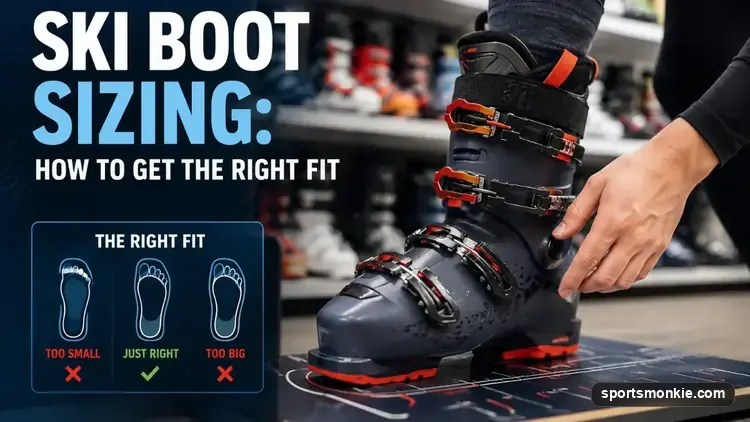
Ski Boot Sizing: How to Get the Right Fit
Ski boots are sized in Mondopoint (your foot length in cm). Learn to measure your Mondo size, pick flex and last width, and run the shell fit test.
What Is the Hammer in Curling?
The hammer in curling is the last-stone advantage: throwing the final rock of an end. How it's decided, why teams protect it, and how it changes hands.
Curling Rules Explained for Beginners
Curling is a team sport where players slide stones toward a target. The rules, scoring, sweeping and why players shout, explained simply for beginners.