
Sailing for Beginners: Where to Start

On this page6
- 01What does a first sailing lesson actually cover?
- 02What sailing terms do I need to know before day one?
- 03What gear do I need, and what does the school provide?
- 04What are the safety basics I need to know first?
- 05Traditional lessons or a learn-to-sail vacation: which is right for you? ${#learn-to-sail-vacations-the-fast-track-option}
- 06What comes after your first certification?
Book a 2-3 day beginner course, such as ASA 101 or US Sailing’s Basic Keelboat, rather than trying to teach yourself from videos. A reputable school supplies the boat, sails, and life jackets, so your only job is to show up and log the 16-22 hours of on-water time it takes to sail solo in light to moderate wind. If you want the fast track, a learn-to-sail vacation charter compresses that same skill set, plus real cruising miles, into one immersive week.
What does a first sailing lesson actually cover?
The first session is almost always dry land and dock time before you touch a tiller. Expect a briefing on the parts of the boat, the points of sail relative to the wind, and how to read a puff before it hits. Then you go out in a small, forgiving boat, usually a dinghy or a 20-something-foot keelboat, with an instructor talking you through your first tack.
US Sailing’s beginner guide frames it the same way most schools do: get comfortable with wind awareness and boat balance before anything else, because every other skill sits on top of those two. By the end of a standard course, you should be able to steer, trim a sail, tack, and dock under supervision without your instructor taking the helm.
What sailing terms do I need to know before day one?
You don’t need a full glossary, but these terms show up in every instruction, and mixing them up wastes time on the water.
- Port and starboard: left and right as you face the bow (front). They don’t flip when you turn around, unlike “left” and “right.”
- Bow and stern: the front and back of the boat.
- Tacking: turning the bow through the wind to change direction, so the wind crosses from one side of the sail to the other in front of you.
- Jibing: turning the stern through the wind instead, which swings the boom faster and harder across the cockpit. Every beginner course drills a controlled, called-out jibe before letting you do it solo.
- Windward and leeward: the side the wind is coming from (windward) and the side it’s blowing toward (leeward).
- Heeling: the boat leaning under wind pressure. It feels alarming the first time; a well-trimmed boat rights itself.
Learn these six and you can follow almost any instruction shouted across a cockpit.
What gear do I need, and what does the school provide?
Almost nothing, at least at first. Schools running beginner courses supply the boat, sails, rigging, and Coast Guard-approved life jackets as part of tuition. What you bring is simpler than most first-timers expect: closed-toe shoes with non-marking soles (no flip-flops, they come off in a tack), quick-dry synthetic layers instead of cotton, polarized sunglasses with a retainer strap, reef-safe sunscreen, and a way to keep your phone dry.
Only once you’re sailing regularly, past your first certification, does it make sense to buy your own gear: a proper sailing jacket, gloves for line handling, and a personal life jacket sized to you rather than a rental fleet’s average. Renting or borrowing everything for your first course is the norm, not a shortcut.
What are the safety basics I need to know first?
Life jackets are non-negotiable, and the rule is stricter than most new sailors assume. The US Coast Guard requires a properly fitted, wearable life jacket on board for every person, and children under 13 must wear one at all times while a boat is underway, not just keep one nearby. Adults on a calm day can sometimes go without, but any instructor worth the tuition has you wear one on deck by default.
Weather awareness is the second pillar, and it’s a skill schools drill early because it matters more than boat-handling polish. Watch the sky for darkening clouds and shifting wind, check a marine forecast before you leave the dock, and know that a sailing school will cancel or shorten a session for building wind well before it feels dangerous to you. That caution is a feature, not overprotection: small-boat capsizes and squalls are the leading cause of sailing injuries for first-timers, and almost all of them are avoidable by simply not going out.
Traditional lessons or a learn-to-sail vacation: which is right for you? {#learn-to-sail-vacations-the-fast-track-option}
Both paths get you certified. The difference is speed, cost, and whether you want a vacation attached to the learning.
Traditional lessons mean a local sailing school, a few weekends spread over a month or two, and a certification like ASA 101 or US Sailing’s Basic Keelboat. You go home every night, which is convenient if you have a job and a family, but progress is slower because you’re relearning a bit each session.
A learn-to-sail vacation is a liveaboard course, commonly run in the Caribbean, the Mediterranean, or the Pacific Northwest, where you sleep on the boat for 7-9 days and stack multiple certifications, often ASA 101, 103, and 104, or the RYA equivalents, into one trip. LTD Sailing’s Caribbean Basic Cruise & Learn course is a typical example: one week, three stacked certifications, and real open-water miles instead of a marina loop.
| Factor | Traditional weekend lessons | Learn-to-sail vacation charter |
|---|---|---|
| Typical cost | $500-1,300 (US); £399-850 (UK) | $1,500-3,200 per person (Caribbean, 7-9 days) |
| Duration | 2-3 days, often spread over weekends | 7-9 days, all at once, liveaboard |
| Instruction hours | 16-22 hours | 50-60+ hours over the week |
| Certifications earned | Usually one (e.g., ASA 101) | Often three stacked (e.g., ASA 101/103/104) |
| Where you sleep | Home, between sessions | On the boat, most nights |
| Best for | Local skill-building on a budget, tight schedule | Fast-track certification plus a real vacation |
Neither option is “better” outright. If you sail once a year and want to try it cheaply, a weekend course near home is the right call. If your goal is to charter your own boat on a future trip, a liveaboard course gets you there in one week instead of a full season of scattered weekends, for roughly what a mid-range beach vacation already costs.
What comes after your first certification?
Most beginners can bareboat charter a small boat in familiar conditions after Basic Keelboat plus Bareboat Cruising (ASA 101 and 104, or the RYA equivalent). From there, the usual next steps are coastal navigation, night sailing, and eventually offshore passage-making, each its own short course rather than a return to square one. Sailing is one of the few sports where a single week of solid instruction, whether spread over weekends or compressed into one vacation, gets you to genuine independence on the water.
If you’re weighing sailing against other beginner-friendly outdoor sports before you commit a season to it, our guides to beginner ski lessons and horseback riding lessons cover what first-timers pay and expect in those sports, and our dedicated sailing lessons guide breaks down local course pricing city by city if you want to go deeper on the traditional route.
Ready to book? Call two or three US Sailing or ASA-accredited schools near you (or RYA-recognized centers in the UK), ask what’s included in the quoted price, and confirm the boat-to-student ratio before you pay a deposit; a 4:1 ratio or better means you actually get time at the helm instead of watching from the rail.
For a closer look at a related topic, see Keelboat vs. Dinghy.
Frequently asked questions
How long does it take to learn to sail?+
You can learn the fundamentals in a single weekend. A standard beginner course like ASA 101 or US Sailing's Basic Keelboat runs 16-22 hours over 2-3 days and gets you sailing a small keelboat solo in light to moderate wind. Real comfort and instinct for the wind take a full season of regular sailing, not one course.
Do I need to buy gear before my first sailing lesson?+
No. Reputable sailing schools supply the boat, sails, life jackets, and safety gear for beginner courses. Bring closed-toe non-marking shoes, quick-dry layers, sunglasses with a strap, sunscreen, and a water bottle. Skip cotton, since it stays wet and cold once it's soaked, and leave anything you don't want to lose overboard on the dock.
What is a learn-to-sail vacation and is it worth it?+
It's a multi-day liveaboard course, often in the Caribbean or Mediterranean, that stacks several certifications into one 7-9 day trip while you cruise real destinations. It's worth it if you want to charter a boat on future vacations, since it compresses months of weekend lessons into one immersive week, at roughly triple the cost of a local weekend course.
What's the difference between tacking and jibing?+
Tacking turns the bow through the wind, so the wind briefly hits the boat head-on as the sails swap sides. Jibing turns the stern through the wind, which is faster and can swing the boom hard across the cockpit without warning. Tacking is the safer, default way to change direction; jibing needs a controlled, called-out technique.
Do I have to wear a life jacket the whole time on a sailboat?+
US Coast Guard rules require a properly fitted, wearable life jacket on board for every person, and children under 13 must wear one at all times while the boat is underway. Adults aren't always required to wear one continuously, but any competent instructor or skipper will have you wear one anytime you're on deck or the wind picks up.
How much does it cost to get sailing-certified?+
A weekend beginner course (ASA 101 or RYA Start Yachting) runs roughly $500-1,300 in the US or £399-850 in the UK. A learn-to-sail vacation stacking three certifications over 7-9 days runs about $1,500-3,200 per person in the Caribbean, all-inclusive of the boat, instructor, and cabin.
Sources
- US Sailing — Sailing for Beginners: Your Step-by-Step Guide
- US Sailing — Basic Keelboat certification course
- American Sailing Association — How Much Does It Cost to Learn to Sail?
- Royal Yachting Association — Competent Crew Practical Course
- US Coast Guard — Personal Flotation Device Selection, Use, Wear & Care
- LTD Sailing — Caribbean Basic Cruise & Learn liveaboard course
Play & tools
Free browser games and tools — no account, no download.
- Play today's Sports Connections — Today's Sports Connections — daily hints, answers, and play the grid.
- Play Guess the NFL Player — A new mystery NFL player every day. Eight guesses, with a clue on each — plus free unlimited mode.
- Explore all our games →
Related guides
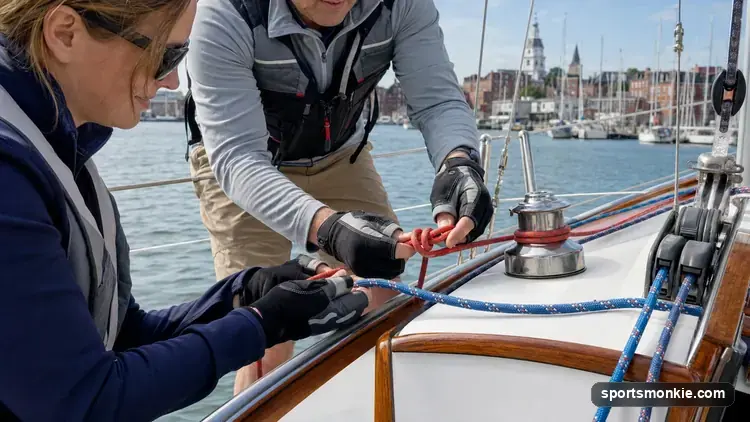
Sailing Lessons by Location: Annapolis, San Diego, LA
Real 2025-2026 beginner sailing lesson prices at named schools in Annapolis, San Diego, and Marina del Rey/LA, plus what makes each hub different.
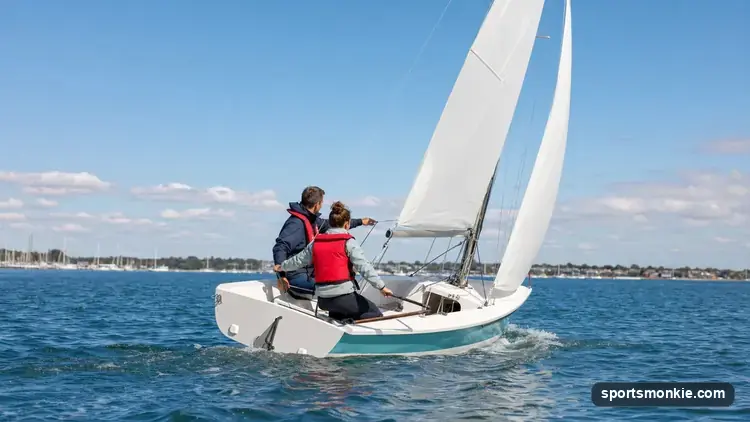
Sailing Lessons: Cost, Certification, and What to Expect
Sailing lessons explained: US Sailing vs ASA vs RYA certification, real 2026 group and private costs, and how many lessons you need before sailing solo.
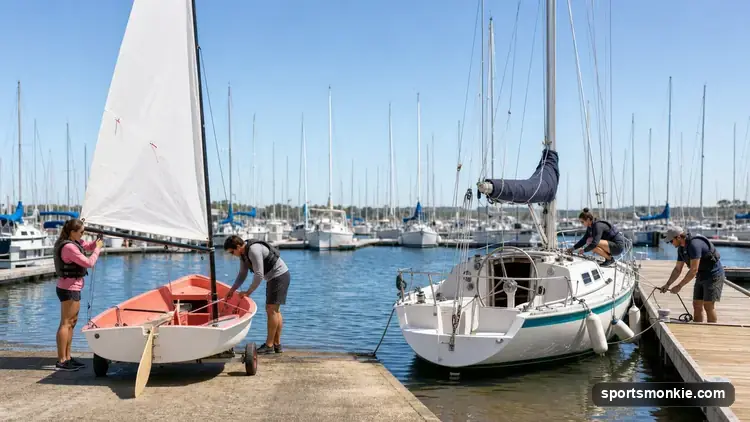
Keelboat vs. Dinghy: Which Should You Learn to Sail On?
Keelboat vs dinghy: the real differences in stability, capsize risk, and cost, plus which one US Sailing, ASA, and RYA recommend for beginners.
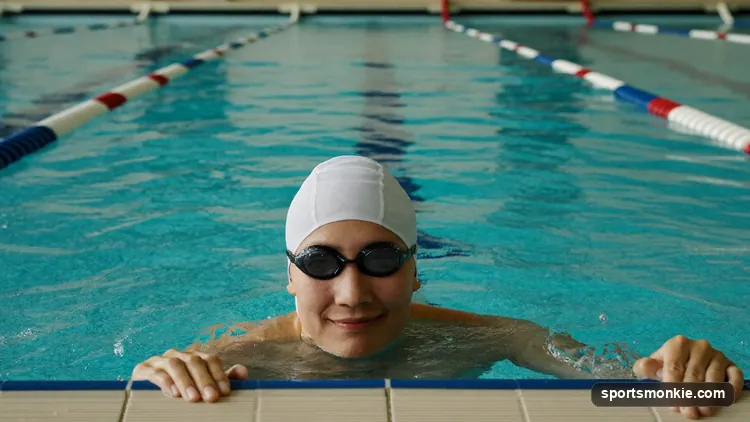
How to Swim for Beginners: First Steps in the Water
Learn how to swim as a beginner with a step-by-step plan: get comfortable, float, blow bubbles, kick, and swim your first freestyle strokes safely.

Marathon Training Plan for Beginners: A 16-Week Schedule
A beginner marathon training plan runs 16 to 18 weeks, builds from about 15 to 40 weekly miles, and peaks with a 20-mile long run before a 3-week taper. Here is the full week-by-week schedule.
Vertical Jump Training Basics: How to Start (Beginner Guide)
Vertical jump training basics: build leg and hip strength, add plyometrics to turn that strength into speed, and train two to three days a week. Here is how to start from scratch and what to skip.