
Keelboat vs. Dinghy: Which Should You Learn to Sail On?

On this page7
- 01What actually separates a keelboat from a dinghy?
- 02Keelboat vs. dinghy at a glance
- 03Which is easier to learn on: a dinghy or a keelboat?
- 04Which one actually capsizes, and how bad is it?
- 05How much does each cost to buy and learn on?
- 06Keelboat vs. dinghy for club racing vs cruising
- 07So which one should you actually start on?
Learn on a dinghy if you want to build real sailing feel fast. Learn on a keelboat if your goal is cruising, you value comfort over athleticism, or a physical limitation makes swimming and hiking out impractical. The mechanical difference is simple: a keelboat carries a fixed, weighted keel that pulls the hull back upright, while a dinghy relies on a retractable centerboard or daggerboard plus your own body weight for balance, which means it will tip over sooner or later. Below is what that difference means for your first season, with the actual numbers on cost, capsize risk, and what US Sailing, the American Sailing Association, and the RYA each recommend.
What actually separates a keelboat from a dinghy?
A dinghy is a small, open sailboat, usually 8 to 16 feet, with no ballast below the waterline. It resists sideways slip with a centerboard or daggerboard that raises and lowers, and it stays upright only because the crew shifts weight to balance the wind’s push on the sails. A keelboat starts around 20 feet and commonly runs 27 to 40-plus feet, with a fixed keel bolted beneath the hull that carries roughly a third to nearly half the boat’s total weight, according to the American Sailing Association. That ballast acts like a pendulum: push the boat over and gravity pulls it back up without any input from the crew.
Everything else follows from that one structural choice. Dinghies are light, cheap, and instantly responsive because there is no dead weight to drag. Keelboats are heavier, slower to react, and far more stable because that dead weight is doing the work for you.
Keelboat vs. dinghy at a glance
| Category | Keelboat | Dinghy |
|---|---|---|
| Typical length | 20–40+ ft | 8–16 ft |
| Stability | Ballasted keel resists tipping | Depends on crew weight and balance |
| Capsize risk | Very low; self-rights in most conditions | Expected occasionally; a normal part of learning |
| Crew needed | 1 to 6+ | 1 to 2 |
| New boat cost | roughly $45,000–$180,000+ | roughly $1,000 (used)–$6,500 (new trainer) |
| Beginner course cost (US) | ~$600–$1,300 (ASA 101) | ~$300–$1,000 (US Sailing basic course) |
| Best for | Cruising, overnighting, comfort | Racing, fast skill-building, solo sailing |
Which is easier to learn on: a dinghy or a keelboat?
Easier and faster are not the same question, and that is where most guides blur the answer. A keelboat is easier moment to moment: it reacts slowly, forgives a late tack, and rarely punishes a bad decision immediately. A dinghy is harder but teaches faster, because US Sailing and most instructors agree that small-boat sailing compresses the feedback loop between mistake and consequence, so you learn balance, sail trim, and wind reading in hours instead of weeks.
That gap matters most if you plan to keep sailing. Skills built on a dinghy scale up cleanly to a keelboat; tacking, trimming, and reading a puff work the same way on a 40-footer as on an 8-foot trainer. Going the other direction is harder, because a keelboat never forces you to feel those small errors in the first place. If your only goal is a relaxed afternoon on the water and you have no interest in racing, starting on a keelboat is a completely reasonable shortcut. The RYA runs parallel Start Sailing courses for both, and its dinghy and keelboat training pages make the same point: pick the boat that matches your actual goal, not the one that sounds more impressive.
Which one actually capsizes, and how bad is it?
Dinghies capsize. It is built into how they work, not a sign anything went wrong. Push the boat too far without adjusting your weight or the sail, and it goes over. Righting one is a five-minute skill most sailing schools teach in the first lesson: ease the sheets, swim to the centerboard, place your feet near the hull, and lean back until leverage brings the boat upright, a technique Discover Boating documents in detail for both solo and two-person recoveries. Wear a life jacket, sail in sheltered water with supervision, and a capsize becomes a wet inconvenience rather than a real danger.
A keelboat capsizing is a different order of event. The same ballast that keeps it upright in normal sailing means a true knockdown only happens in extreme wind or after serious flooding, and most keelboat sailors never experience one. That trade-off cuts both ways: keelboats are safer against tipping but slower to recover if something does go wrong, since there is no quick righting technique for a boat that heavy.
How much does each cost to buy and learn on?
The price gap is the single biggest practical difference, and it starts before you even own a boat. An ASA 101 Basic Keelboat certification course runs roughly $600 to $1,300 in the US depending on the school and whether it is private or group instruction. A comparable beginner dinghy course through a US Sailing-affiliated school typically costs $300 to $1,000. In the UK, RYA Start Sailing courses run about £195 to £295 either way, so the entry-level course cost gap is smaller in the UK than in the US.
Ownership is where dinghies pull ahead decisively. A new small trainer dinghy like a Sunfish lists around $6,000 to $6,500, and a usable secondhand dinghy can be had for $1,000 to $3,000, with no slip fees since most store on a trailer, rack, or even a garage wall. A small entry-level keelboat like a Catalina 22 starts around $8,000 to $20,000 used in sailable condition and climbs past $45,000 new, and that is before marina fees, insurance, haul-outs, and winter storage, which commonly add several thousand dollars a year. If budget is the deciding factor, a dinghy wins outright.
Keelboat vs. dinghy for club racing vs cruising
The two boats also dominate different corners of the sport. Club and youth racing runs almost entirely on dinghy classes: Optimists for kids, then 420s, and the ILCA (formerly Laser) as the standard adult singlehander, all raced under one-design rules that keep the boats identical so the sailing, not the equipment, decides the result. Keelboat racing exists too, in classes like the J/70 and J/24, but it is a smaller, more expensive scene built around club fleets and regional regattas rather than the dense grassroots racing dinghies get.
Cruising runs the other way entirely. Nobody takes a dinghy on an overnight trip; the lack of a cabin, the capsize risk in open water, and the physical toll of hiking out for hours rule it out. Keelboats are the default for anything past a few hours afloat, from a weekend on a lake to a coastal passage, which is exactly why the ASA built its entire certification ladder, ASA 101 through bareboat chartering, around keelboats rather than dinghies.
So which one should you actually start on?
If you are still undecided, start on a dinghy. It is cheaper to buy, cheaper to learn on in the US, and the skills you build transfer upward to a keelboat far more easily than the reverse. The exception is real: if your goal from day one is cruising, you are sailing with a group that already owns a keelboat, or a physical limitation makes hiking out and swimming impractical, skip straight to a keelboat course and do not treat it as a lesser starting point. Both paths get you sailing. One just builds the deeper skill set faster.
For a full walkthrough of what a first lesson actually covers and what to bring, see our guide to sailing lessons, and if you are still weighing whether sailing is the right hobby to start, our sailing for beginners guide covers gear, cost, and etiquette before you book anything.
If you can get to a club that offers a short taster session on both boat types, take it. An hour on each will tell you more about which one suits you than any comparison table, including this one.
Frequently asked questions
Is it easier to learn sailing on a dinghy or a keelboat?+
A dinghy teaches faster because it reacts to every mistake within seconds, forcing you to learn balance and sail trim quickly. A keelboat is more forgiving and less physically demanding, which suits older beginners or anyone with mobility limits. Neither is wrong; dinghy skills simply transfer upward to keelboats more easily than the reverse.
Can a keelboat capsize?+
In practice, no. A keelboat's fixed, weighted keel makes up roughly a third to nearly half of its total weight and acts as a pendulum that pulls the hull back upright, so it takes extreme conditions or a serious knockdown to capsize one. That stability is the main reason cruisers and nervous beginners choose keelboats.
What size counts as a dinghy versus a keelboat?+
Dinghies typically run 8 to 16 feet, are open-hulled, and use a retractable centerboard or daggerboard instead of ballast. Keelboats start around 20 feet and commonly reach 27 to 40-plus feet, with a fixed keel bolted beneath the hull. Anything with a permanent, weighted keel is a keelboat regardless of length.
Do dinghy sailing skills transfer to keelboats?+
Yes, almost completely. Sail trim, tacking, jibing, and reading wind all carry over directly, and dinghy sailors typically adapt to keelboats faster than the reverse. What a dinghy will not teach you is docking, anchoring, engine handling, or VHF radio use, which keelboat-specific courses like ASA 101 cover instead.
Is sailing a dinghy dangerous for beginners?+
Not in a supervised setting. Capsizing is an expected, low-risk part of dinghy sailing, and instructors teach the righting technique in the first lesson. Wear a properly fitted life jacket, sail in sheltered water with a rescue boat nearby, and treat your first few capsizes as practice rather than a failure.
Which is cheaper: owning a dinghy or a keelboat?+
A dinghy, by a wide margin. A new small trainer dinghy runs roughly $1,000 to $6,500 with no slip fees, since most are stored on a trailer or rack. A keelboat starts around $10,000 to $50,000-plus used, and then adds thousands a year in marina fees, insurance, and haul-outs.
Sources
- US Sailing – Sailing for Beginners: Your Step-by-Step Guide
- American Sailing Association – What Is a Keelboat?
- American Sailing Association – ASA 101 Basic Keelboat Sailing
- RYA – Dinghy and Keelboat Start Sailing Courses
- Discover Boating (NMMA) – Sailing Capsize Recovery: Scoop and Single-Handed Methods
Play & tools
Free browser games and tools — no account, no download.
- Play today's Sports Connections — Today's Sports Connections — daily hints, answers, and play the grid.
- Play Guess the NFL Player — A new mystery NFL player every day. Eight guesses, with a clue on each — plus free unlimited mode.
- Explore all our games →
Related guides
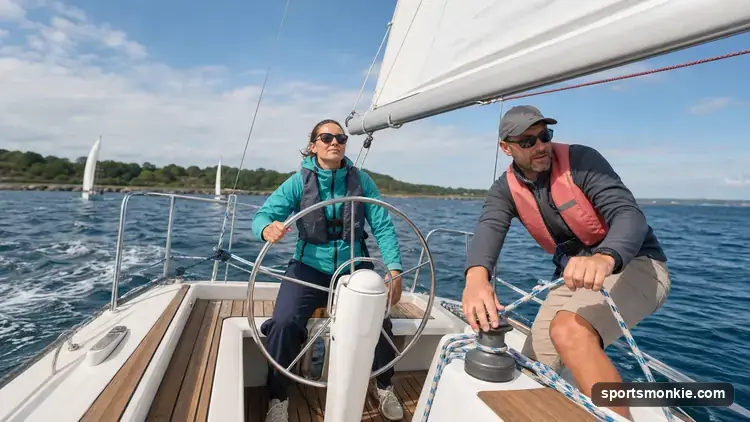
Sailing for Beginners: Where to Start
Sailing for beginners: what a first lesson covers, gear you actually need, safety basics, and how beginner sailing lessons compare to a learn-to-sail vacation.
Longboard vs Skateboard: Which to Ride First
Longboards are longer, more stable and built for cruising; skateboards are shorter and made for tricks. Key differences and which to learn on first.

What Weight Bowling Ball Should I Use?
A common guideline is a bowling ball about 10% of your body weight, up to the 16 lb max. How to pick the right weight you can actually control.

Lacrosse vs Soccer: Which Should Your Kid Play?
Lacrosse vs soccer compared on cost, contact, injury rates, college roster odds and where you can actually play. A parent's decision guide, with real numbers.
Lacrosse Rebounders: Are They Worth It and Which to Buy
A lacrosse rebounder returns your passes for solo stick-skills practice. Whether one is worth it, how the top models compare, and the free alternative.
Climbing Shoes for Beginners: What to Buy and How They Should Fit
The best climbing shoes for beginners are flat, neutral, and snug, not painful. Here's how to size them, rent vs buy, and 5 real 2026 models with prices.