
How to Do the Butterfly Stroke: Technique Guide
On this page8
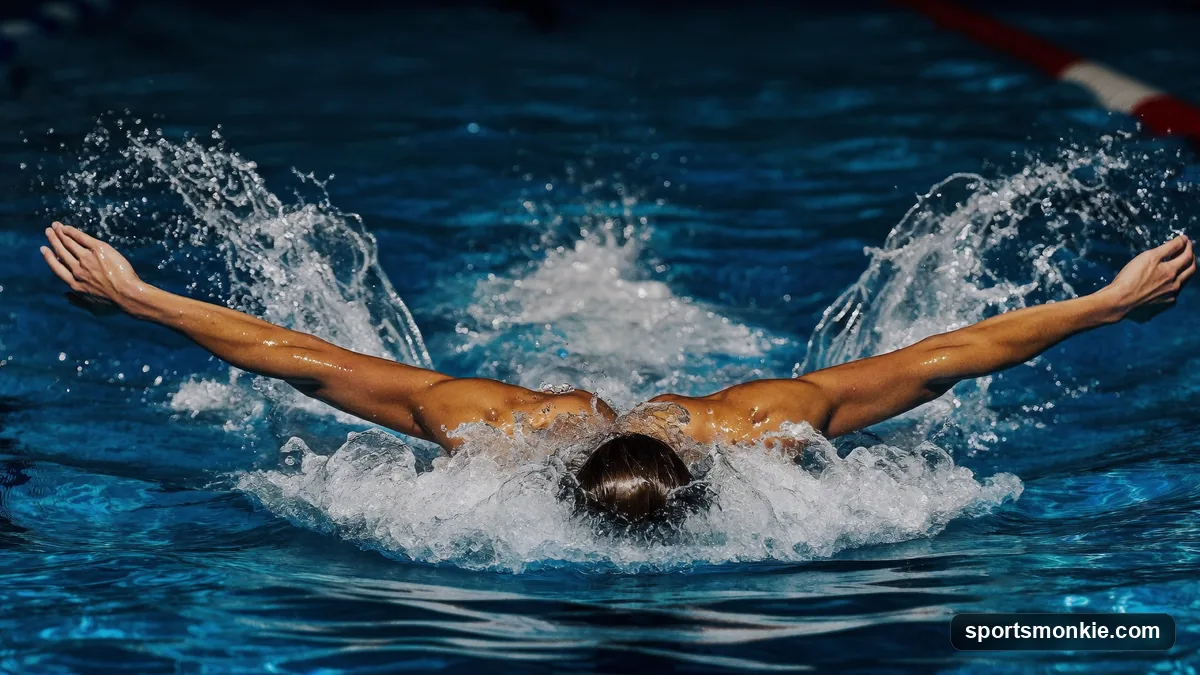
To do the butterfly stroke, drive a whip-like dolphin kick from your chest and core while your arms pull through in a keyhole shape and recover low over the water. The secret is two-kick timing: one kick as your hands enter, one as they exit. Add a forward, low breath and a rhythmic press of the chest, and fly becomes a smooth wave rather than a struggle.
Butterfly looks brutal, but it is the most rhythm-dependent stroke in swimming. Once the timing clicks, you glide instead of grind. This guide breaks down the body wave, the dolphin kick, the arm pull, breathing, and the drills that make it click. For the wider picture, start with our complete swim technique guide, then come back here for the hardest stroke of the four.
Master the Body Undulation First
Butterfly is powered by a wave, not by your arms. Before you ever add a full arm cycle, learn to move your torso like a dolphin. Float on your chest, press your sternum down toward the pool bottom, then let your hips rise, then press your hips down and let your chest rise. This press-and-release cycle is the engine of the whole stroke.
Keep the motion small and continuous. Beginners exaggerate the wave into a big up-and-down bounce, which wastes energy and stalls forward progress. A tight, front-to-back undulation moves you forward; a giant vertical bounce just tires you out.
- Press the chest, not the head, to start each wave.
- Keep your neck neutral so your head rides along with the wave.
- Let the motion travel down your spine to your hips, then your legs.
If body position feels shaky, spend a session on core float drills from our swimming drills for beginners before layering in the kick.
Build a Powerful Dolphin Kick
The dolphin kick is two legs moving as one. Hold them together, ankles loose, toes pointed, and drive the kick from your hips and core rather than bending hard at the knees. A good kick looks like a whip: the energy starts at your chest, rolls through your hips, and cracks out through your feet.
There are two kicks in every arm cycle, and they are not equal. The first is a big, propulsive downbeat. The second is a smaller, quicker beat that helps launch the recovery. Aim for relaxed knees on the downbeat and pointed, flexible ankles so your feet act like flippers.
Practice kick on its own with arms extended in a streamline, face down, breathing every few kicks by pressing the chest. Vertical dolphin kicking in deep water is another excellent builder: arms crossed on your chest, kick to keep your head up for 20 to 30 seconds. The same core-driven kick fuels fast freestyle underwaters, which we cover in how to swim faster.
Learn the Two-Kick Timing
Timing is where butterfly is won or lost. Sync the two dolphin kicks to your arm cycle like this:
| Phase | What your arms do | Which kick fires |
|---|---|---|
| Entry | Hands enter and shoot forward | First (big) kick down |
| Catch and pull | Hands sweep out, in, then back | Body glides, hips rise |
| Release | Hands exit near the hips | Second (quick) kick down |
| Recovery | Arms sweep low over water | Ride the momentum forward |
The coaching cue is simple: kick your hands in, kick your hands out. The first kick punches your hands and chest forward on entry. The second kick fires as your hands leave the water, throwing your arms into the recovery. Miss either kick and the stroke stalls, forcing your shoulders to drag your body up alone.
Practice the rhythm slowly. Take one full stroke, glide, then the next. Butterfly does not have to be fast to be correct; a slow, well-timed fly is far easier than a rushed one.
Refine the Arm Pull and Recovery
Your hands enter the water shoulder-width apart, thumbs slightly down, reaching forward. From there the underwater pull traces a keyhole or hourglass shape: press out, sweep in toward your belly, then push back and past your hips. Accelerate through the pull so your hands are moving fastest as they exit.
The recovery is where beginners waste the most energy. Keep your arms low, relaxed, and slightly bent, sweeping them out to the sides just above the surface like you are throwing water behind you. Do not lift them high or muscle them forward; let the second kick and the release of the pull sling them around.
- Enter thumbs-first, hands about shoulder-width, not crossed or too wide.
- Accelerate the hands from catch to exit; never let the pull slow down.
- Recover low and loose, palms angled slightly out, elbows soft.
This press-and-recover rhythm shares DNA with the timing challenges in breaststroke technique, where a well-timed glide also does the heavy lifting.
Time Your Breathing to the Stroke
Breathing sinks more butterfly attempts than any other fault. Breathe forward, not up. As your hands sweep back in the pull, your chest naturally rises; ride that rise, push your chin just past the surface, grab a quick breath, and drive your head back down before your arms recover.
The head leads the wave. If you keep your chin low and return your face to the water early, your hips stay high and the stroke flows. Lift too high or hold the breath too long and your hips drop like an anchor, killing your rhythm.
Most swimmers breathe every second stroke to preserve timing and speed, taking one non-breathing stroke with the face down between breaths. When you are learning, breathing every stroke is fine while you groove the pattern. If forward breathing feels foreign, the same low, relaxed head position matters in how to breathe while swimming across every stroke.
Drills That Make Butterfly Click
You do not learn fly by swimming full laps of it. You build it in pieces:
- Body dolphin (no arms): Arms at your sides or in streamline, undulate and kick the length of the pool. Feel the wave.
- Single-arm fly: One arm pulls, the other stays extended forward. Keeps the timing honest without the full load.
- Three-kick, one-pull: Take three dolphin kicks in streamline, then one full butterfly stroke. Reinforces kick-driven propulsion.
- 2-2-2 drill: Two strokes right-arm-only, two left-arm-only, two full strokes. Builds symmetry.
- Fly with fins: Fins amplify the dolphin kick so you feel a correct, powerful wave, then you replicate it without them.
Work these in short bursts of 15 to 25 yards with full rest between. Butterfly rewards quality over quantity; ten crisp strokes beat a sloppy full lap.
How Butterfly Compares to the Other Strokes
Understanding where fly sits among the four strokes helps you train it smartly.
| Stroke | Power source | Breathing | Relative difficulty |
|---|---|---|---|
| Freestyle | Rotational arm pull + flutter kick | To the side | Easiest to sustain |
| Backstroke | Rotational pull, face up | Always available | Moderate |
| Breaststroke | Timed pull-kick glide | Forward, every stroke | Moderate, timing-heavy |
| Butterfly | Body wave + dolphin kick | Forward, late | Hardest, most rhythmic |
If you are still building a base, get comfortable with freestyle swimming technique and solid freestyle breathing technique first. Freestyle teaches the streamline, catch, and continuous rhythm that transfer directly into a cleaner fly. Adults returning to the water will also find butterfly far easier after working through learning to swim as an adult.
Putting It All Together
Swim butterfly as a wave: press the chest, kick the hands in, pull through the keyhole, kick the hands out, breathe low and forward, and recover loose. Keep it slow while you build the timing, then let the two-kick rhythm carry you. Focus on one element per session, whether that is the dolphin kick, the breath, or the recovery, and the whole stroke gradually knits together. Master fly and you will have earned the most rhythmic, satisfying stroke in the pool.
Frequently asked questions
Why is the butterfly stroke so hard to learn?+
Butterfly is demanding because it requires both arms and both legs to move symmetrically while your whole body undulates in a wave. Most beginners tire fast because they muscle the arms instead of letting the dolphin kick and body rhythm do the work. Once you master the two-kick timing and a low, relaxed recovery, fly becomes far less exhausting. It rewards rhythm and timing over raw strength.
What is the two-kick timing in butterfly?+
Butterfly uses two dolphin kicks per arm cycle. The first, stronger kick happens as your hands enter the water and press forward. The second kick fires as your hands finish the pull and exit near your hips, launching the arm recovery. Think 'kick your hands in, kick your hands out.' This down-up-down-up rhythm keeps you moving continuously instead of stalling between strokes.
Should the dolphin kick come from the knees or the core?+
The dolphin kick originates in your chest and core, not your knees. Press your chest and hips down to start a wave that travels down your body and finishes as a whip through relaxed knees and pointed toes. If you bend only at the knees and kick like a bicycle, you lose power and undulation. Keep legs together and let the wave flow through them.
How do I breathe in butterfly without sinking?+
Breathe forward, keeping your chin low and close to the surface, and time the breath to the natural rise created by your pull. Push your face up late in the arm pull, take a quick breath, and drive your head and chest back down before your arms recover. Lifting too high or too early stalls your hips and sinks the stroke. Many swimmers breathe every other stroke to hold rhythm.
How many kicks per stroke should a beginner use?+
Beginners should learn two kicks per arm cycle, which is standard competitive butterfly. Some novices default to a single kick, which stalls the body between strokes and makes fly feel jerky. Practice the timing slowly with a kickboard or arms at your sides first, feeling the down-up-down-up rhythm. Once the two-kick pattern is automatic, add the arm pull and breathing on top of it.
Can I swim butterfly if I am not very strong?+
Yes. Butterfly is more about timing, rhythm, and body position than brute strength. Swimmers who rely on power alone burn out within a lap or two. A relaxed low recovery, an efficient press of the chest, and well-timed kicks let you swim fly with modest fitness. Start with short distances of 15 to 25 yards, focus on smooth undulation, and build endurance gradually.
Sources
Play & tools
Free browser games and tools — no account, no download.
- Play today's Sports Connections — Today's Sports Connections — daily hints, answers, and play the grid.
- Play Guess the NFL Player — A new mystery NFL player every day. Eight guesses, with a clue on each — plus free unlimited mode.
- Explore all our games →
Related guides
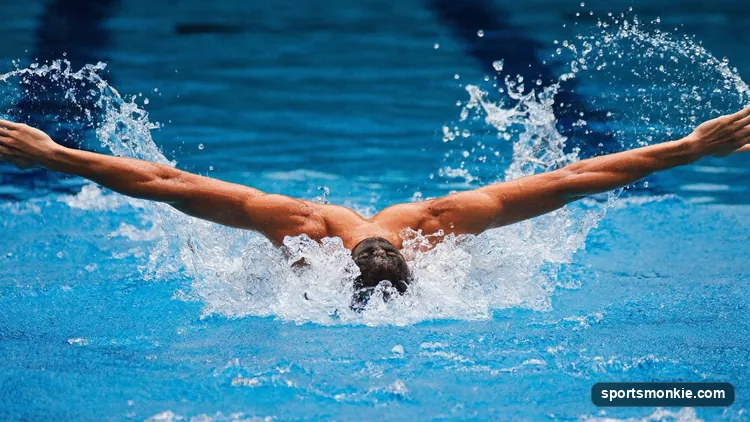
Butterfly Stroke: Technique, Kick Timing, and Drills Explained
The butterfly stroke pairs a simultaneous over-water arm recovery with two dolphin kicks per cycle, making it swimming's hardest, second-fastest stroke.

Dolphin Kick Swimming: Technique, the 15-Meter Rule, and Drills
The dolphin kick swimming technique explained: core-driven undulation, streamline, the 15-meter underwater rule, and drills to build a faster fifth stroke.

Heptathlon Technique Guide: Hurdles, Jumps, Throws and 800m
A heptathlon technique guide for all seven events, including hurdles, high jump, shot put, 200m, long jump, javelin and 800m pacing.
Breaststroke Kick Technique: Whip Kick, Faults & Drills
Master the breaststroke kick with a step-by-step whip kick sequence, ankle flexion cues, whip vs frog kick differences, and fixes for the most common faults.
Breaststroke Technique: Pull, Breathe, Kick, Glide Timing
Master breaststroke technique with the pull-breathe-kick-glide sequence, body undulation, and timing cues that fix common mistakes and make you faster.
Freestyle Breathing Technique: Breathe Without Sinking
Master freestyle breathing with head-position, exhale-underwater, and bilateral breathing cues. Fix the lift-and-sink habit and swim relaxed for longer, faster laps.