
Butterfly Stroke: Technique, Kick Timing, and Drills Explained
On this page5
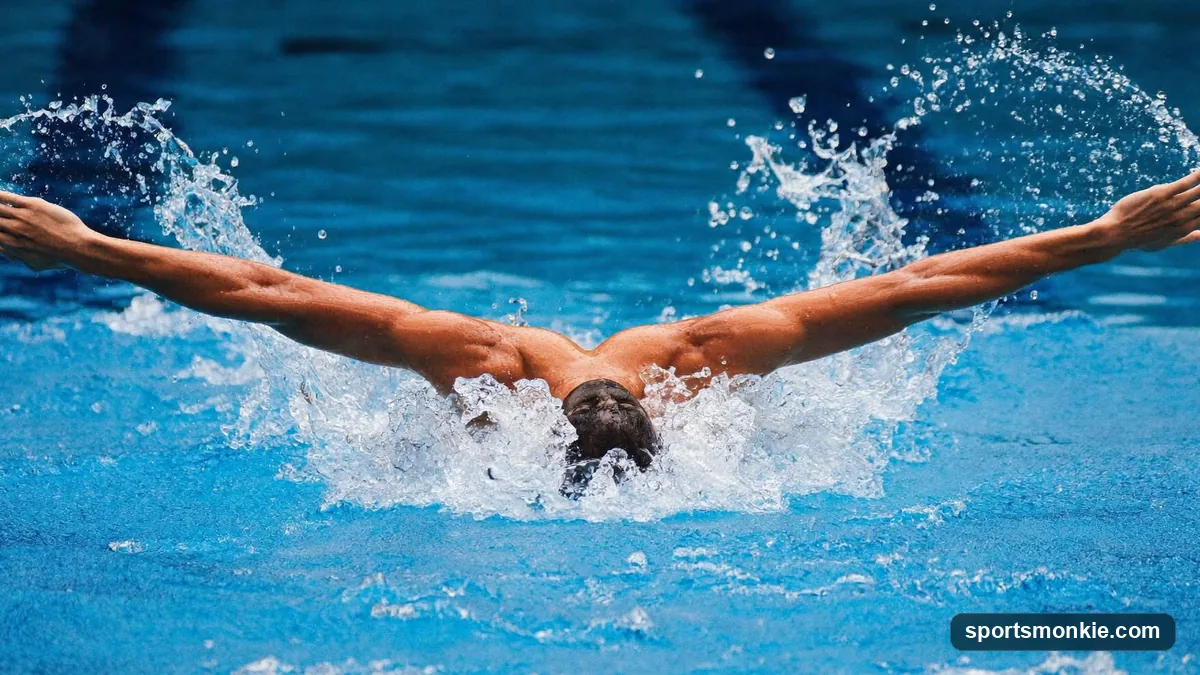
The butterfly stroke is a face-down competitive swimming stroke in which both arms pull underwater and recover together over the surface, while the legs fire two dolphin kicks per arm cycle and the torso undulates in a whip-like motion to drive the swimmer forward. It ranks among the four strokes swum in types of swimming strokes, and it’s widely regarded as the hardest one to learn — not because any single piece is complicated, but because every piece has to fire in the same tight window, stroke after stroke, with almost no natural rest.
Why Butterfly Is So Demanding
Freestyle and backstroke are alternating strokes — one arm works while the other recovers, which spreads the load out and gives each side a brief break. Butterfly removes that break entirely. Both arms pull, both arms recover, and both legs kick together, twice per cycle, which means the shoulders, lats, core, and hip flexors all have to fire in unison on every single stroke.
That’s also why butterfly is the second-fastest competitive stroke, behind only freestyle. The simultaneous double-arm pull generates a strong, short burst of propulsion, and the undulating body motion — chest pressing down as the hips rise, then hips driving down as the chest and head lift — keeps the swimmer’s center of mass moving forward instead of stalling between strokes. Get the timing wrong, though, and that same lack of a rest phase turns into a stroke that eats energy fast and produces very little speed.
The Technique, Step by Step
Butterfly is best learned as three separate motions — body undulation, the dolphin kick, and the arm cycle — that get layered together once each one is solid on its own.
- Set the body position. Swim face-down with the head in a neutral, mostly-down position. The undulation starts at the chest, not the head: press the chest down and let the motion travel through the hips and into the legs, like a wave passing through the body.
- Add the dolphin kick. Keep the legs together and mostly straight, with a slight bend at the knee on the downbeat. Both feet kick simultaneously in a whip-like snap, driven from the hips rather than the knees. See our full breakdown of the dolphin kick for drills that isolate this motion in deep water before combining it with the arms.
- Time the two kicks per cycle. The first, smaller kick happens as the arms enter the water and stretch forward. The second, more powerful kick comes as the arms sweep back and begin recovery — this kick lifts the hips and shoulders and provides the momentum that carries the arms up and over the water.
- Pull with both arms together. Hands enter shoulder-width apart, thumbs first, then sweep outward, down, and in toward the midline in a keyhole or hourglass shape before pushing back past the hips. Unlike breaststroke swimming, where the arm pull stays underwater throughout, butterfly’s pull finishes with the arms exiting the water for recovery.
- Recover both arms over the water simultaneously. This is butterfly’s signature move and a strict rule requirement — the arms must swing forward together, low and wide over the surface, elbows leading slightly, and re-enter in front of the shoulders.
- Breathe on a forward lift. As the arms finish their pull and begin recovery, lift the chin just enough to clear the water, inhale quickly, then snap the head back down before the arms re-enter. Breathing every stroke is fine for beginners; competitive swimmers often breathe every second stroke to cut drag.
- Finish and touch with both hands. World Aquatics rules require both hands to touch the wall together and simultaneously at every turn and finish — touching with one hand is a disqualification.
Common Butterfly Mistakes
| Mistake | Why It Hurts the Stroke | Fix |
|---|---|---|
| Lifting the head too high or too early | Sinks the hips and stalls the undulation | Lead the breath with the shoulders; lift only enough to clear the mouth |
| Kicking from the knees | Produces a weak, splashy kick with little propulsion | Drive the kick from the hips with straight-ish legs |
| Recovering arms underwater or asynchronously | Illegal in competition and kills rhythm in practice | Practice single-arm butterfly to isolate the over-water recovery |
| Skipping the second kick | Flattens the undulation and stalls momentum before the next pull | Count kicks out loud during drills: kick-pull, kick-recover |
| Rushing the stroke rate | Burns energy fast with no speed payoff | Slow down and lengthen each pull before adding tempo |
Drills That Build Butterfly
- Vertical dolphin kick: Kick in deep water with arms crossed or overhead, isolating the undulation and kick rhythm without the arms.
- Single-arm butterfly: One arm stays extended at your side while the other completes a full pull-recovery cycle, making the over-water recovery easier to learn one side at a time.
- Fly kick on your back: Dolphin kicking face-up highlights the same hip-driven whip motion used in the standard kick.
- 3-kick drill: Take three dolphin kicks per arm cycle instead of two, slowing everything down so the undulation timing becomes obvious.
Butterfly rewards patience more than raw strength. Swimmers who rush straight into full-stroke reps without drilling the kick and undulation separately tend to plateau early, while those who build the rhythm piece by piece — the same progression covered in our tips to start swimming guide — usually pick up a clean, efficient stroke faster.
Butterfly in Competition
Butterfly has been a standalone Olympic event since 1956, after its arm and kick elements — developed separately in the early 20th century — were combined into one stroke in the 1930s. It’s swum over 50m, 100m, and 200m at the elite level, and it’s also the opening leg of the individual medley in most competitive formats. Because of its physical cost, butterfly races are typically shorter than freestyle or backstroke events at the same level, and even elite swimmers rarely hold a fast, clean butterfly stroke much past 200 meters without significant fade.
Frequently asked questions
What is the butterfly stroke in swimming?+
Butterfly is a competitive swimming stroke performed face-down, with both arms pulling and recovering simultaneously over the water and two dolphin kicks driving each arm cycle through an undulating body motion. It's one of the four strokes swum in individual medley and butterfly-specific events.
Why is the butterfly stroke so hard?+
Butterfly is hard because it has no natural rest phase — both arms recover together instead of alternating, so the whole upper body and core must generate power on every stroke while the legs simultaneously drive two dolphin kicks and the torso undulates to keep the stroke moving.
How many dolphin kicks are in one butterfly stroke cycle?+
Two. A standard butterfly cycle has one kick as the arms enter and stretch forward, and a second, harder kick as the arms sweep back and recover, which helps lift the hips and shoulders for the next arm recovery.
Is butterfly faster than freestyle?+
No. Freestyle (front crawl) is the fastest competitive stroke; butterfly is the second-fastest, ahead of backstroke and breaststroke, largely because its continuous undulation and double kick generate strong propulsion despite the extra drag of lifting both arms out of the water at once.
When do you breathe in butterfly?+
Most swimmers breathe forward, lifting the chin just enough to clear the surface as the arms finish their pull, then snapping the head back down before the arms re-enter. Breathing every stroke is common for beginners; more advanced swimmers often breathe every second stroke to reduce drag.
What are common butterfly stroke mistakes?+
The most frequent errors are lifting the head too high or too early to breathe, kicking from the knees instead of the hips, letting the arms recover underwater or asynchronously (a disqualification), and skipping the second dolphin kick, which flattens the rhythm and stalls the stroke.
What is a good butterfly drill for beginners?+
Single-arm butterfly, where one arm stays at the side while the other completes the full stroke, is a standard beginner drill because it isolates the pull and recovery timing without requiring full-body coordination. Vertical dolphin kicking in deep water builds the undulating rhythm separately from the arms.
Do you need to be a strong swimmer to learn butterfly?+
Yes, a working base of freestyle and breaststroke fitness helps, since butterfly is typically taught last among the four strokes. Comfort with the dolphin kick and basic body undulation, covered in beginner swim lessons, makes learning butterfly technique considerably easier.
Sources
Play & tools
Free browser games and tools — no account, no download.
- Play today's Sports Connections — Today's Sports Connections — daily hints, answers, and play the grid.
- Play Guess the NFL Player — A new mystery NFL player every day. Eight guesses, with a clue on each — plus free unlimited mode.
- Explore all our games →
Related guides

Dolphin Kick Swimming: Technique, the 15-Meter Rule, and Drills
The dolphin kick swimming technique explained: core-driven undulation, streamline, the 15-meter underwater rule, and drills to build a faster fifth stroke.
Breaststroke Swimming: Technique, Timing, and Drills Explained
Breaststroke swimming is the slowest competitive stroke, built on a pull-breathe-kick-glide rhythm and a whip kick. Learn the timing, pull-out, and fixes.
Backstroke Swimming: Technique, Start, and Drills Explained
Backstroke swimming is the only competitive stroke swum face-up. Learn the flutter kick, arm recovery, body roll, start, and drills to swim it correctly.
Freestyle Swimming: Technique, Drills, and Common Mistakes Explained
Freestyle swimming (front crawl) is the fastest competitive stroke. Learn the arm pull, flutter kick, breathing, and drills that fix common mistakes.
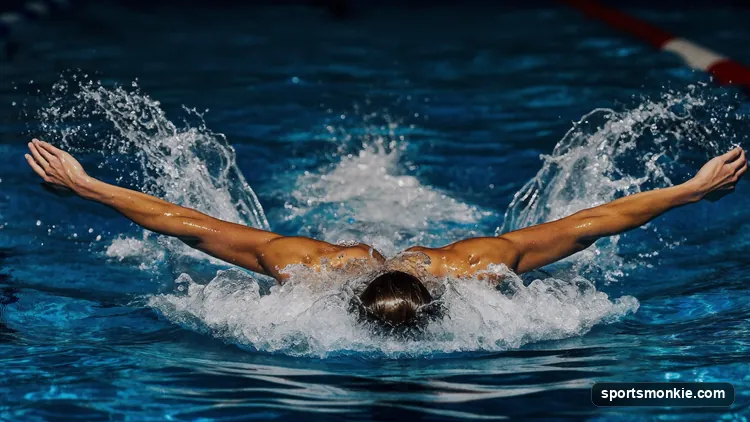
How to Do the Butterfly Stroke: Technique Guide
Learn how to do the butterfly stroke with dolphin kick drills, two-kick timing, arm recovery cues, and breathing tips to swim fly smoothly and without exhaustion.
How to Swim: Complete Technique Guide for All 4 Strokes
Learn how to swim with correct technique for freestyle, breaststroke, backstroke, and butterfly. Body position, breathing, kick, and drills to swim farther and faster.