
Types of Swimming Strokes: Freestyle, Backstroke, Breaststroke & More
On this page8
- 01The Four Competitive Swimming Strokes
- 02Freestyle (Front Crawl): The Fastest Stroke
- 03Backstroke: Racing on Your Back
- 04Breaststroke: The Slowest but Most Popular Stroke
- 05Butterfly: The Toughest Stroke to Master
- 06Sidestroke and Elementary Backstroke: Survival and Fitness Strokes
- 07How to Pick the Right Stroke: A Step-by-Step Approach
- 08Swimming Strokes Comparison Table
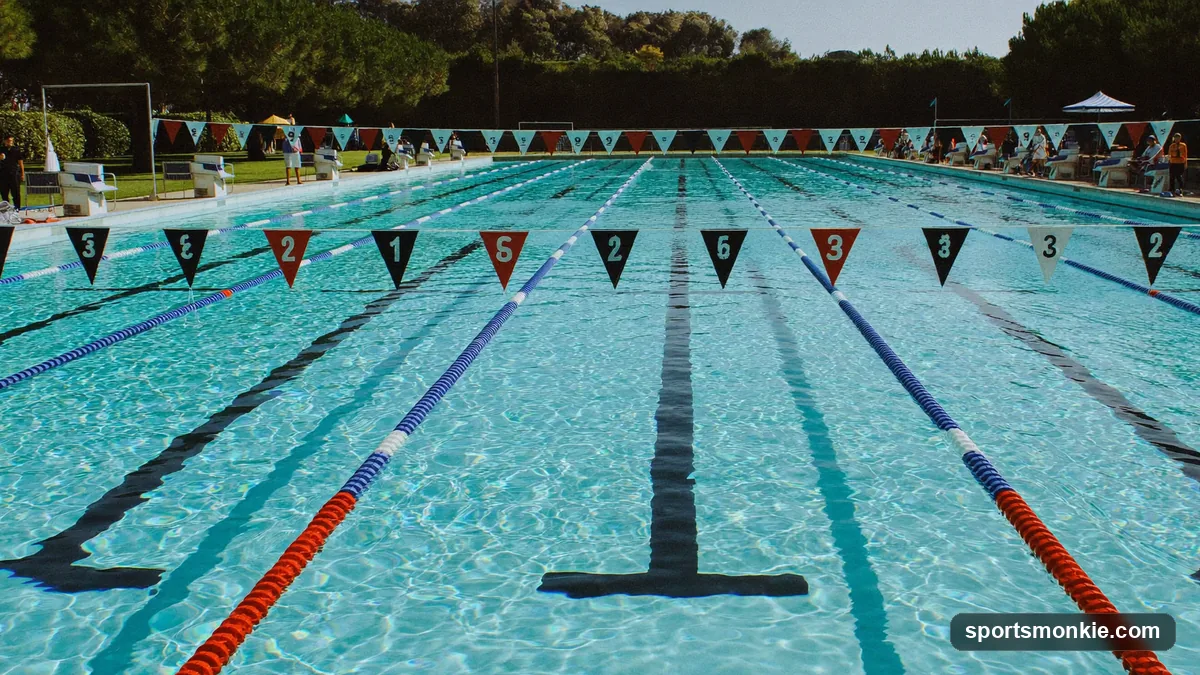
The main types of swimming strokes are freestyle (front crawl), backstroke, breaststroke, and butterfly — the four strokes swum in competition — plus sidestroke and elementary backstroke, which are used for fitness, survival, and lifeguard rescues. Each stroke moves the body through water differently, which is why swimmers pick one over another depending on whether they’re racing for time, building endurance, or just trying to stay afloat safely. If you’re new to the pool, start with our guide on how to start swimming before working through the strokes below.
The Four Competitive Swimming Strokes
Every Olympic swimming event is built around four legal strokes: freestyle, backstroke, breaststroke, and butterfly. World Aquatics (the sport’s global governing body) defines strict technical rules for each one, right down to how a swimmer’s hands must touch the wall on a turn. These four strokes also form the individual medley, where one swimmer performs all four in sequence, and the medley relay, where four teammates each swim one leg.
Freestyle is the only event where the rulebook doesn’t dictate a specific stroke — “freestyle” technically means “any stroke you want” — but every competitive swimmer uses front crawl because nothing else moves through the water faster.
Freestyle (Front Crawl): The Fastest Stroke
Freestyle, or front crawl, is the fastest and most efficient of all swimming strokes, which is why elite swimmers like Michael Phelps and Katie Ledecky built their careers largely around it. The swimmer lies face-down and alternates arms in a windmill motion — one arm pulls underwater while the other recovers above the surface — combined with a continuous flutter kick. Because the body stays streamlined and one arm is always generating propulsion, freestyle wastes very little energy.
It’s the go-to stroke for open-water swimming, triathlons, and fitness laps, and it’s usually the first full stroke beginners are taught. Read the full breakdown in our freestyle swimming guide.
Backstroke: Racing on Your Back
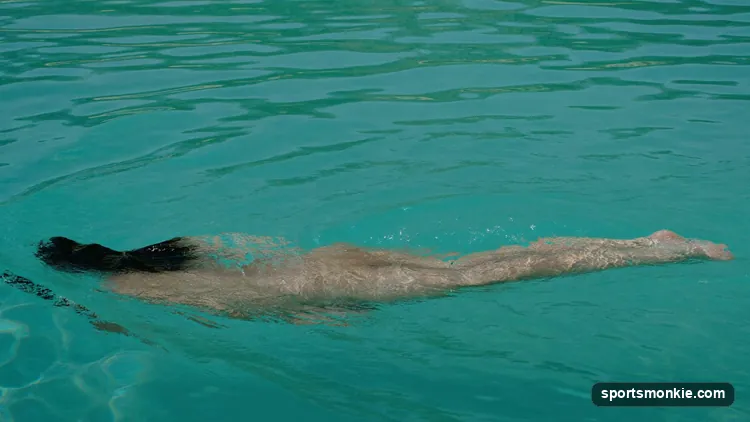
Backstroke mirrors the front crawl’s arm and leg mechanics but is performed lying face-up. It’s the only competitive stroke that starts in the water rather than with a dive, since swimmers push off the wall on their backs. Because the face stays above water, backstroke is often recommended for people managing back issues or working on posture, and it’s a natural stroke to pair with sighting skills since swimmers can’t see where they’re going.
Backstroke ranks as the third-fastest of the four competitive strokes. For technique cues and common mistakes, see our backstroke swimming guide.
Breaststroke: The Slowest but Most Popular Stroke
Breaststroke is the slowest of the four competitive strokes, but it’s also the most widely taught and most commonly swum stroke overall — many recreational swimmers know breaststroke and nothing else. The arms pull in a circular motion in front of the chest while the legs execute a distinctive whip kick, and unlike the other three strokes, the head can stay above water for the entire stroke cycle.
That accessibility makes breaststroke a favorite starting point for adult beginners, even though its rules (a simultaneous, symmetrical arm pull and glide phase) are stricter than they look. Full mechanics are in our breaststroke swimming guide.
Butterfly: The Toughest Stroke to Master
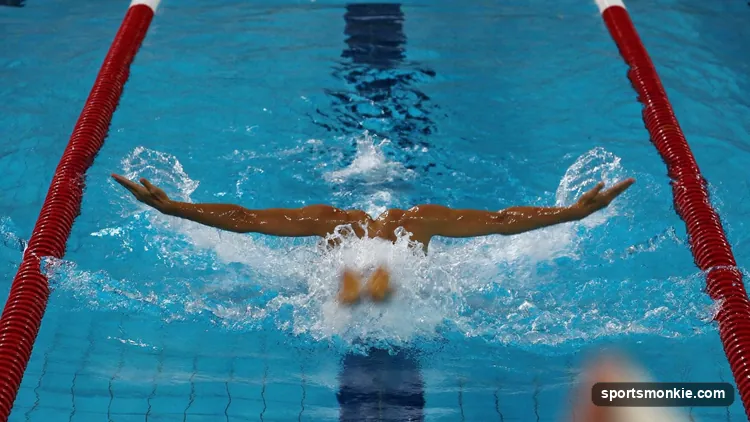
Butterfly is widely considered the hardest stroke to learn and the second-fastest after freestyle. Both arms sweep out of the water simultaneously in a wide arc while the legs perform a wave-like dolphin kick — the same kick swimmers use underwater off every wall in every stroke. Timing the arm recovery with the kick’s two beats per cycle takes real upper-body strength and coordination, which is why butterfly is usually taught last, after a swimmer has mastered the other three strokes.
Because it’s so demanding, butterfly is rarely swum for casual fitness laps, but it’s a staple of competitive swimming and a signature event for stars featured in our list of the greatest swimmers of all time. See our full butterfly stroke guide for a step-by-step breakdown.
Sidestroke and Elementary Backstroke: Survival and Fitness Strokes
Beyond the four racing strokes, two non-competitive strokes matter for real-world swimming: sidestroke and elementary backstroke.
- Sidestroke is swum lying on one side with a scissor kick, one arm pulling in front of the body and the other trailing behind. Because it keeps the head above water and leaves one arm free, it’s the stroke lifeguards default to when towing a swimmer to safety. Learn the technique in our sidestroke swimming guide.
- Elementary backstroke is performed face-up with a whip kick and a synchronized “reach and pull” arm motion. It’s low-effort, easy to sustain, and often one of the very first strokes taught to new swimmers because it builds comfort floating on the back before backstroke’s more athletic arm recovery is introduced.
Both strokes prioritize energy conservation and breathing over raw speed, which is exactly why they’re taught in Red Cross water-safety courses rather than raced at swim meets.
How to Pick the Right Stroke: A Step-by-Step Approach
- Decide your goal. Racing for time favors freestyle; building total-body strength favors butterfly; low-impact fitness favors breaststroke or backstroke.
- Check your comfort in the water. If you’re not fully confident submerging your face, start with elementary backstroke or breaststroke, both of which let you keep your head up.
- Learn the kick first. Every stroke’s power comes from the legs and core, not the arms — master the flutter kick (freestyle/backstroke), whip kick (breaststroke/elementary backstroke), or dolphin kick (butterfly) before adding the arm pull.
- Add the arm pattern. Layer in the stroke-specific arm motion once the kick is automatic, keeping strokes long and controlled rather than fast and choppy.
- Practice the turn. Competitive swimmers finish each pool length with a flip turn to save time; recreational swimmers can use an open turn instead.
- Mix strokes to build well-roundedness. Rotating through all six strokes in practice, the way medley relay swimmers must, builds a more complete set of muscles and skills than repeating one stroke alone.
Swimming Strokes Comparison Table
| Stroke | Speed | Difficulty | Best For |
|---|---|---|---|
| Freestyle (front crawl) | Fastest | Moderate | Racing, open water, fitness laps |
| Butterfly | 2nd fastest | Hardest | Competitive racing, upper-body strength |
| Backstroke | 3rd fastest | Moderate | Racing, back-friendly fitness |
| Breaststroke | Slowest (of the 4) | Easiest of the 4 | Beginners, recreational swimming |
| Sidestroke | Slow, efficient | Easy | Lifeguard rescues, long-distance survival |
| Elementary backstroke | Slow | Easiest overall | Beginners, relaxed fitness, floating confidence |
Once you’re comfortable with all six, the natural next step is combining them: the individual medley tests every stroke in one race, while a medley relay turns it into a four-person team event. Whichever stroke you start with, pairing solid technique with a real training plan — outlined in our beginner’s guide to starting swimming — is what actually moves you from splashing around to swimming with purpose.
Frequently asked questions
What are the types of swimming strokes?+
The six major types are freestyle (front crawl), backstroke, breaststroke, butterfly, sidestroke, and elementary backstroke. The first four are raced in competitive swimming and the Olympics; sidestroke and elementary backstroke are used mainly for fitness, survival swimming, and lifeguard rescues.
Which swimming stroke is the fastest?+
Freestyle (front crawl) is the fastest stroke, followed by butterfly, backstroke, and then breaststroke, which is the slowest of the four competitive strokes. This order holds true at every level, from age-group swimming up through the Olympics.
Which swimming stroke is easiest to learn?+
Breaststroke and elementary backstroke are generally the easiest strokes for beginners because the head can stay above water and the timing is more forgiving. Butterfly is considered the hardest stroke to learn since it demands full-body coordination and significant upper-body strength.
What is the hardest swimming stroke?+
Butterfly is widely regarded as the hardest competitive stroke. It requires both arms to move together out of the water while the legs perform a synchronized dolphin kick, and any timing error causes the swimmer to stall or sink.
What stroke do lifeguards use to rescue someone?+
Lifeguards primarily use sidestroke, often paired with a modified scissor kick, because it keeps a rescuer's head above water, frees one arm to tow a victim, and is far more energy-efficient over distance than freestyle or breaststroke.
Are freestyle and front crawl the same stroke?+
Yes. Front crawl is the technical name for the stroke, and freestyle is the competitive event that allows any stroke — but because front crawl is the fastest, virtually every swimmer chooses it, so the two names are used interchangeably.
How many strokes are in the individual medley?+
The individual medley uses all four competitive strokes in a fixed order: butterfly, backstroke, breaststroke, then freestyle. A medley relay uses the same four strokes but splits them among four different swimmers instead of one.
What stroke should a beginner learn first?+
Most swim programs start beginners with freestyle and elementary backstroke because both use simple, repetitive movements and don't require advanced breath control, before progressing to backstroke, breaststroke, and finally butterfly.
Sources
Play & tools
Free browser games and tools — no account, no download.
- Play today's Sports Connections — Today's Sports Connections — daily hints, answers, and play the grid.
- Play Guess the NFL Player — A new mystery NFL player every day. Eight guesses, with a clue on each — plus free unlimited mode.
- Explore all our games →
Related guides
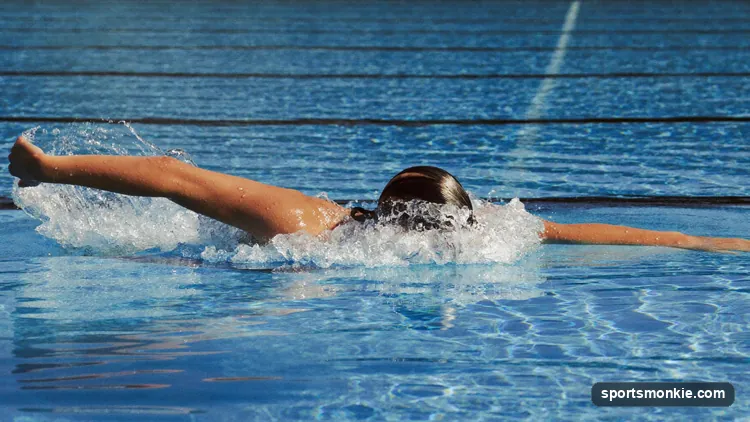
How to Swim: Complete Technique Guide for All 4 Strokes
Learn how to swim with correct technique for freestyle, breaststroke, backstroke, and butterfly. Body position, breathing, kick, and drills to swim farther and faster.
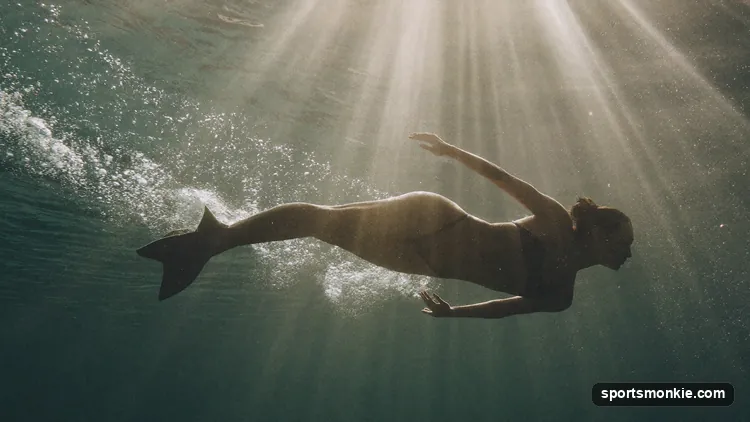
Dolphin Kick Swimming: Technique, the 15-Meter Rule, and Drills
The dolphin kick swimming technique explained: core-driven undulation, streamline, the 15-meter underwater rule, and drills to build a faster fifth stroke.
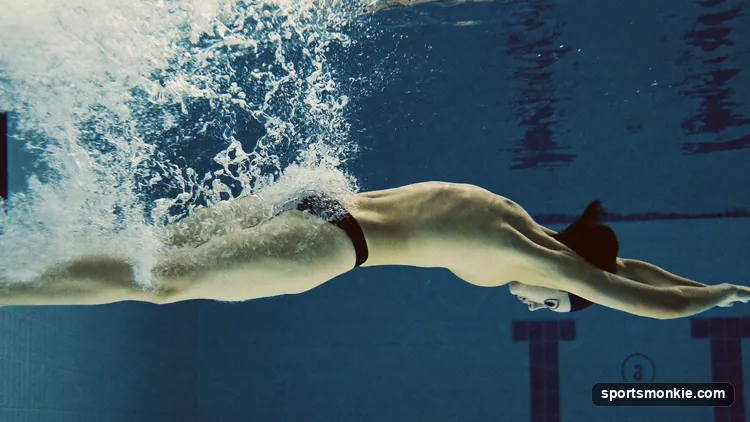
Flip Turn in Swimming: How to Master the Tumble Turn Step by Step
Master the flip turn swimming technique: the approach, tuck, plant, and streamline push-off used in freestyle and backstroke, plus fixes for common mistakes.
Sidestroke Swimming: Technique, Scissor Kick, and Lifesaving Use
Sidestroke swimming is a relaxed, on-your-side stroke built for endurance and rescue. Learn the arm pull, scissor kick, and why lifeguards rely on it.
What Is the Individual Medley in Swimming? Order, Distances & Rules
Individual medley swimming has one swimmer race all four strokes in a fixed order: butterfly, backstroke, breaststroke, freestyle. Here's how it works.
Individual Medley Order: The 4 Strokes in Turn
The individual medley order is butterfly, backstroke, breaststroke then freestyle. Why the order is set that way and how it differs from the medley relay.