
Medley Relay Explained: Stroke Order, Exchanges & Strategy
On this page6
A medley relay is a four-swimmer race in which each athlete swims one stroke over a quarter of the total distance, always in the order backstroke, breaststroke, butterfly, then freestyle. That fixed sequence — the reverse of the individual medley order — exists for a practical reason: backstroke is the only stroke that starts from the water, so it has to go first to avoid a collision at the wall. From there, the strokes are lined up slowest to fastest. Understanding that logic, plus the legal-exchange rules that decide relay disqualifications, is the key to understanding one of swimming’s most exciting team events.
The Medley Relay Stroke Order
Every medley relay, at every level of competition, swims the four legs in this order:
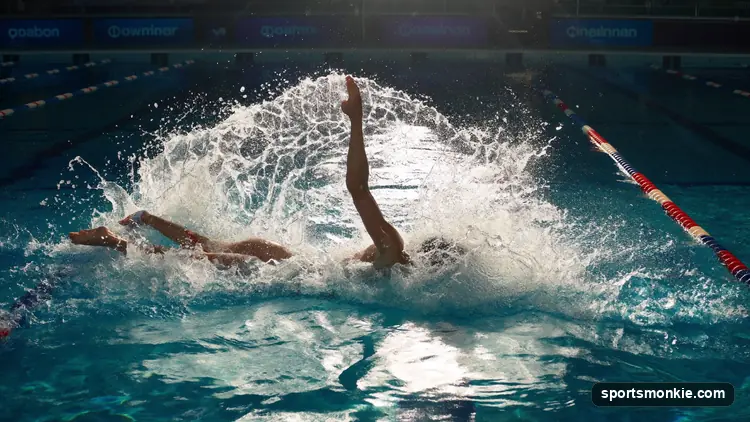
- Backstroke — swum first because it begins in the water with a backstroke start.
- Breaststroke — the slowest of the four competitive swimming strokes, swum second.
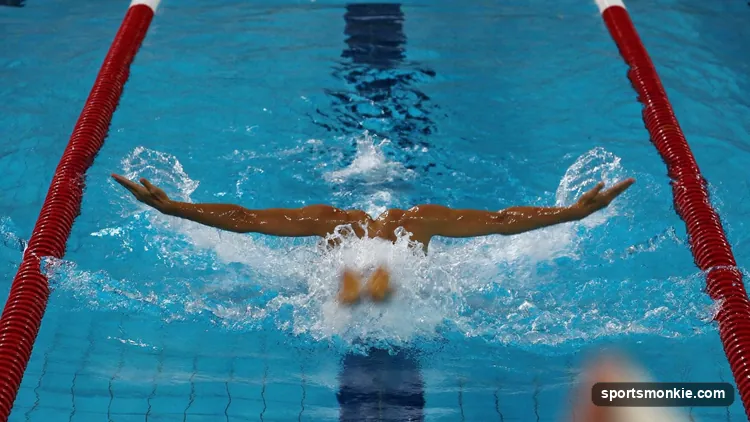
- Butterfly — a faster, high-variance stroke swum third.
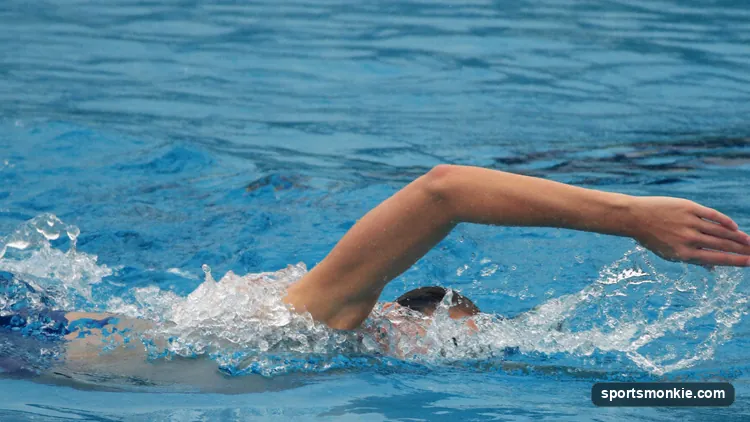
- Freestyle — the fastest stroke, anchoring the relay.
This is the opposite arrangement from the individual medley, where a single swimmer goes butterfly, backstroke, breaststroke, freestyle in one continuous race. In an IM, stroke order is about technical progression and pacing for one athlete. In a relay, order is about safety and speed: starting with backstroke swimming keeps the pool clear at the start, since a backstroke swimmer launches from an in-water grip rather than diving off the deck, and finishing with freestyle — the fastest stroke — sets up the most dramatic possible anchor leg.
Why Backstroke Goes First
If the medley relay simply mirrored the IM and opened with butterfly, the third-leg swimmer would be diving in from the blocks at the same moment the second-leg breaststroker is finishing at that wall — a recipe for collisions. Backstroke solves this because the swimmer starts already in the water, gripping the wall or the starting block handles, so there is no incoming swimmer to dodge. Governing bodies settled on backstroke-breaststroke-butterfly-freestyle decades ago, and it has been standard at the Olympics, World Aquatics Championships, and every national federation ever since.
Exchange (Changeover) Rules
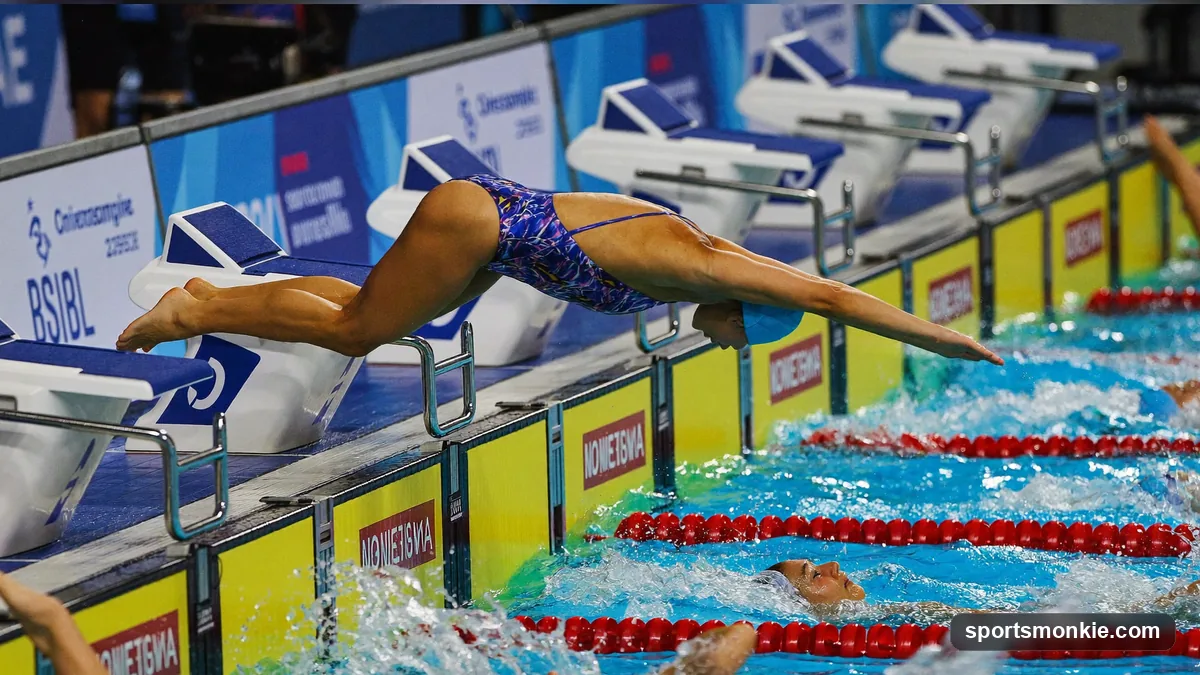
The changeover, or “exchange,” is where medley relays are won, lost, and occasionally disqualified. World Aquatics and USA Swimming rules require that some part of the outgoing swimmer’s body remain in contact with the starting block until the incoming teammate’s hand touches the wall. Touchpads built into the blocks measure this electronically, so officials can catch a false start down to the hundredth of a second.
| Exchange | What happens | DQ risk |
|---|---|---|
| Backstroke to breaststroke | Trickiest handoff — the backstroker finishes on their back, so the breaststroker must judge the touch without a clear forward view | High if timing is off |
| Breaststroke to butterfly | Breaststroker makes a simultaneous two-hand touch; butterfly swimmer reads the hands, not the body | Moderate |
| Butterfly to freestyle | Butterfly swimmer makes a two-hand touch; freestyle anchor gets a rolling “flying” start | Moderate |
A legal exchange lets the outgoing swimmer leave a fraction of a second before the touch registers, since the block sensor and the touchpad sync at the moment of contact. Elite teams train this margin to save roughly 0.6 to 1.0 seconds per exchange compared with a flat, reactive start — which is why a full medley relay routinely finishes 2-3 seconds faster than the sum of all four swimmers’ best individual times.
Step-by-Step: How a Medley Relay Exchange Works
- Incoming swimmer approaches the wall on their final stroke of the leg (backstroke, breaststroke, or butterfly).
- Outgoing swimmer sets up on the block, feet planted, eyes locked on the incoming swimmer’s hands or body position.
- Outgoing swimmer begins forward motion in anticipation, but must keep some part of their body touching the block.
- Incoming swimmer’s hand touches the wall or timing pad, which registers the official split and legally releases the exchange.
- Outgoing swimmer leaves the block, ideally within hundredths of a second of the touch, to gain the maximum legal head start.
- Officials review the touchpad data; if the outgoing swimmer’s feet left before the touch registered, the team is disqualified — though the leadoff backstroke swim can still stand as an individual time.
Mixed Medley Relay
The mixed medley relay puts two men and two women on the same team, in whatever stroke assignment the coaching staff chooses, while keeping the standard backstroke-breaststroke-butterfly-freestyle order. World Aquatics introduced a mixed 4x50m medley at its 2014 short course championships and a mixed 4x100m version at the 2015 World Championships. The event made its Olympic debut at the Tokyo 2020 Games and has quickly become one of the most tactically interesting relays, since coaches can stack their strongest stroke specialist into any leg regardless of gender.
Medley Relay Strategy: How Teams Pick Their Order
Coaches don’t just plug in their four fastest swimmers — they build a lineup around each leg’s demands:
- Leadoff (backstroke): the best individual 100m backstroker, since this is the only leg swum from a standard start and therefore eligible to count as a personal or national record.
- Second (breaststroke): a technically efficient breaststroker, because this is the slowest stroke and the leg most likely to lose ground if technique breaks down.
- Third (butterfly): often the team’s most explosive sprinter, since butterfly times vary the most from swimmer to swimmer and can swing a race.
- Anchor (freestyle): the fastest freestyler who also handles pressure well, since this swimmer often knows exactly where the team stands — ahead, even, or behind — before diving in.
Frequently Asked Questions
Is the medley relay only swum at 4x100m? The 4x100m medley relay is the standard long-course Olympic and World Championship distance, but short-course meets and some age-group programs also swim 4x50m and 4x200m medley relays with the same stroke order.
What happens if a swimmer swims the wrong stroke? Swimming a leg out of order, or using an illegal stroke technique within a leg (such as a backstroker rolling onto their front before finishing), results in disqualification of the entire team.
Does the medley relay ever use fewer than four swimmers? No — by rule, a medley relay always requires four different swimmers, each completing one full stroke leg. A single swimmer completing all four strokes is an individual medley, not a relay.
Frequently asked questions
What is a medley relay in swimming?+
A medley relay is a team race with four swimmers, each covering one-quarter of the total distance using a single stroke, swum in the order backstroke, breaststroke, butterfly, freestyle. The standard Olympic version is the 4x100m medley relay, contested by men's, women's, and mixed teams.
Why is the medley relay order different from the individual medley?+
The individual medley (IM) goes butterfly, backstroke, breaststroke, freestyle because one swimmer must transition smoothly between strokes without stopping. The medley relay instead opens with backstroke because that stroke starts from the water; if it came later, the finishing swimmer and the next starter could collide at the wall. The other three legs then run slowest to fastest: breaststroke, butterfly, freestyle.
What are the exchange (changeover) rules in a medley relay?+
The outgoing swimmer's feet must stay in contact with the starting block until the incoming teammate's hand touches the wall. Officials use touchpads to time this to the hundredth of a second. If the outgoing swimmer leaves early, the entire team is disqualified, though a legal leadoff swim can still count as an individual result.
What is a mixed medley relay?+
A mixed medley relay uses two men and two women on the same team, in any stroke-to-gender combination the coach chooses, as long as the backstroke-breaststroke-butterfly-freestyle order is kept. World Aquatics introduced the mixed 4x50m medley at the 2014 world championships and the mixed 4x100m at the 2015 World Championships; it debuted at the Tokyo 2020 Olympics.
Who swims last in a medley relay?+
The freestyle leg is always last, and teams typically anchor it with their fastest sprinter. The anchor also gets a rolling, flying start off the block, which is roughly 0.6-1.0 seconds quicker than a flat start, so a strong anchor can close a deficit built over the first three legs.
Can the backstroke leadoff swimmer set an individual record in a medley relay?+
Yes. Because the leadoff backstroker starts from a stationary in-water position just like an individual event, their split can be ratified as an official individual time or record even if a teammate is disqualified later in the race.
How much faster is a medley relay than the sum of four individual times?+
Elite medley relays typically finish 2-3 seconds faster than the arithmetic sum of the four swimmers' best individual times, mostly because of the legal head-start swimmers get on breaststroke, butterfly, and freestyle exchanges, plus the adrenaline of racing as a team.
What stroke rules apply within each medley relay leg?+
Each leg must follow the standard rules for that stroke: the backstroker finishes on their back, the breaststroker and butterflyer must make simultaneous two-hand touches at the wall, and the freestyler can use any stroke, though virtually all swim front crawl.
Sources
Play & tools
Free browser games and tools — no account, no download.
- Play today's Sports Connections — Today's Sports Connections — daily hints, answers, and play the grid.
- Play Guess the NFL Player — A new mystery NFL player every day. Eight guesses, with a clue on each — plus free unlimited mode.
- Explore all our games →
Related guides
What Is the Individual Medley in Swimming? Order, Distances & Rules
Individual medley swimming has one swimmer race all four strokes in a fixed order: butterfly, backstroke, breaststroke, freestyle. Here's how it works.
Individual Medley Order: The 4 Strokes in Turn
The individual medley order is butterfly, backstroke, breaststroke then freestyle. Why the order is set that way and how it differs from the medley relay.
Backstroke Swimming: Technique, Start, and Drills Explained
Backstroke swimming is the only competitive stroke swum face-up. Learn the flutter kick, arm recovery, body roll, start, and drills to swim it correctly.
Flip Turn in Swimming: How to Master the Tumble Turn Step by Step
Master the flip turn swimming technique: the approach, tuck, plant, and streamline push-off used in freestyle and backstroke, plus fixes for common mistakes.
Sidestroke Swimming: Technique, Scissor Kick, and Lifesaving Use
Sidestroke swimming is a relaxed, on-your-side stroke built for endurance and rescue. Learn the arm pull, scissor kick, and why lifeguards rely on it.
Types of Swimming Strokes: Freestyle, Backstroke, Breaststroke & More
The main types of swimming strokes are freestyle, backstroke, breaststroke, butterfly, sidestroke, and elementary backstroke — each built for a different job.