
What Is the Individual Medley in Swimming? Order, Distances & Rules
On this page6
The individual medley (IM) is a swimming race in which one athlete swims all four competitive strokes — butterfly, backstroke, breaststroke, and freestyle — in that exact order, each covering an equal share of the total distance. No other event in the sport asks a single swimmer to master every stroke discipline in one continuous race, which is why the IM is often called swimming’s ultimate all-around test.
The Fixed Stroke Order — And Why It Never Changes
World Aquatics rules lock the IM sequence to: butterfly, backstroke, breaststroke, freestyle. A swimmer who swims the strokes out of order, even accidentally, is disqualified — there’s no exception.
The order isn’t arbitrary. It reflects both physiology and transition mechanics:
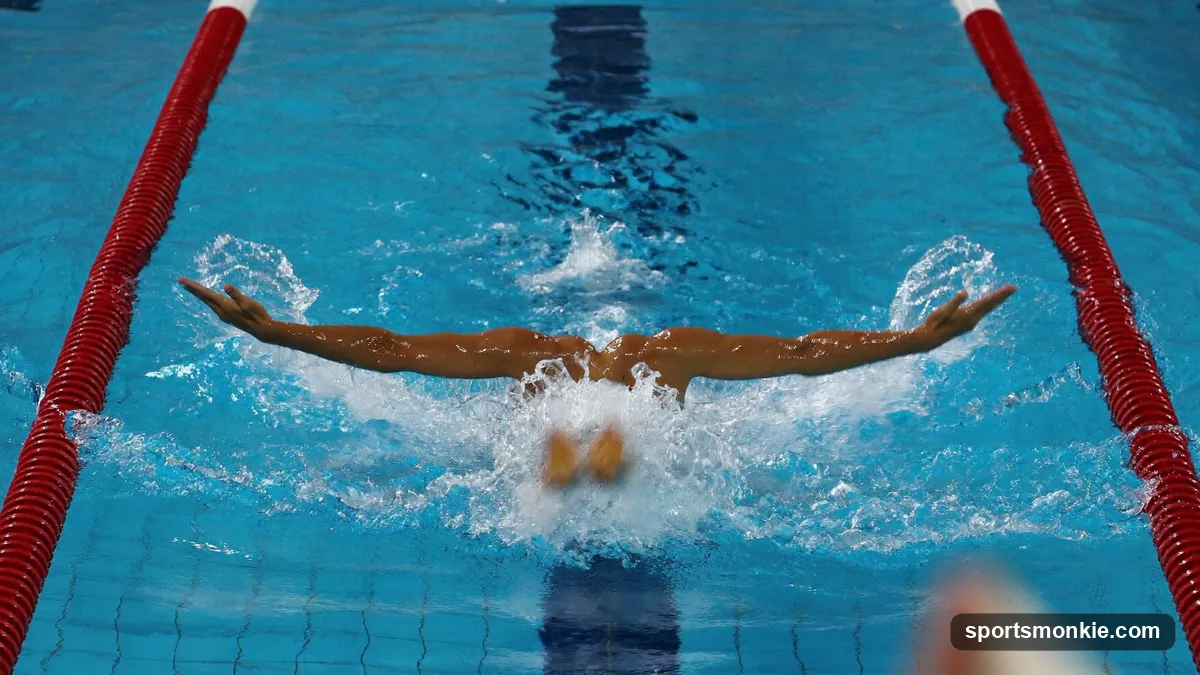
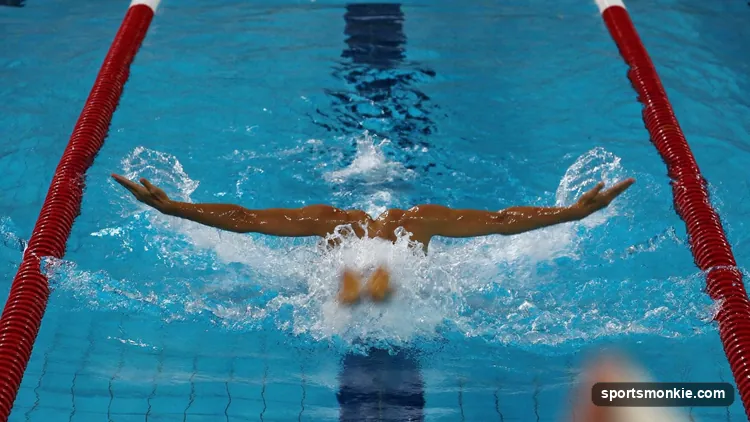
- Butterfly is first because it’s the most physically demanding of the four competitive strokes, draining shoulders and lungs fastest. Swimmers tackle it while they’re fresh, when they can still generate the double-arm recovery and dolphin kick it requires.
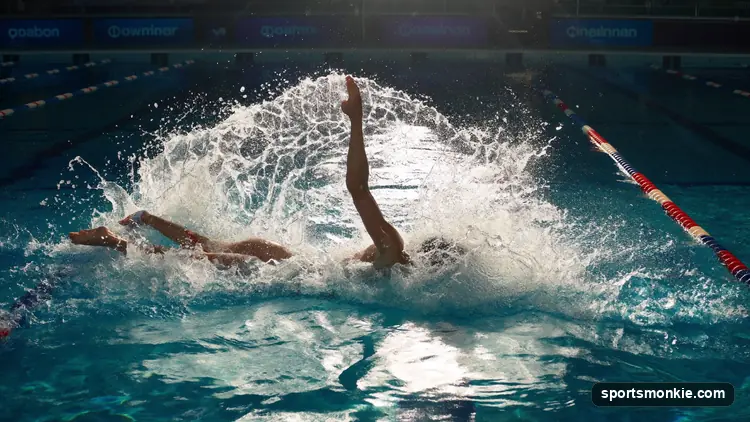
- Backstroke is second partly because finishing butterfly face-down at the wall makes it natural to flip onto the back for the next leg, and because backstroke is comparatively less taxing than what comes right after it.
- Breaststroke is third — it’s the slowest stroke and the easiest to swim in a fatigued state, since its glide phase gives swimmers a moment to recover between pulls.
- Freestyle is last because it’s the fastest, least technical stroke. Any swimmer can hold form on tired legs and arms using freestyle (almost always swum as front crawl), so it lets even exhausted athletes close the race at full speed.
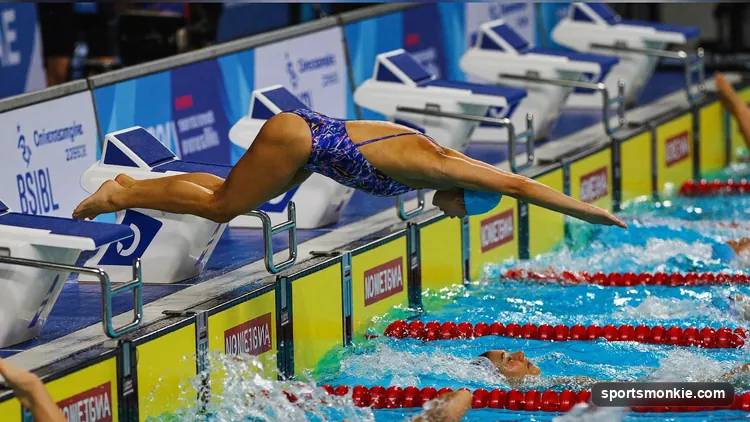
This order is unique to the individual medley. A medley relay — where four different swimmers each take one stroke — uses a different sequence (backstroke, breaststroke, butterfly, freestyle) because relay legs start with an in-water push-off rather than a racing dive, and backstroke is the only stroke that legally starts in the water.
IM Race Distances: 100, 200, and 400
The individual medley is contested at three standard distances, and each one splits evenly across the four strokes.
| Event | Total Distance | Per-Stroke Distance | Pool Type |
|---|---|---|---|
| 100 IM | 100 yards/meters | 25 each | Short course (25m/25yd) only |
| 200 IM | 200 yards/meters | 50 each | Short course and long course (50m) |
| 400 IM | 400 yards/meters | 100 each | Short course and long course (50m) |
The 100 IM exists only in short-course pools because it requires just one length per stroke — there isn’t enough room to swim it in a 50-meter long-course pool. The 200 IM and 400 IM are both contested in long course and are Olympic events; the 400 IM has been on the Olympic program since 1964, while the 200 IM was added in 1968, dropped for a decade, and restored permanently in 1984.
How the Turns Work Between Strokes
Each stroke-to-stroke transition has to satisfy that stroke’s own turn rule, not a special “medley turn”:
- Butterfly to backstroke — the swimmer must touch the wall with both hands simultaneously (butterfly’s normal finish/turn rule), then rotate onto the back before pushing off.
- Backstroke to breaststroke — the swimmer must remain on the back until touching the wall, then may either do a simple one-hand touch-and-rotate or execute a “crossover” flip turn that rotates the body face-down before the feet leave the wall.
- Breaststroke to freestyle — like every breaststroke touch, this requires a simultaneous two-hand touch on the wall before pushing off into freestyle.
- Within freestyle — this is the only leg of the IM where any turn style is legal, so swimmers use standard flip turns to save time.
Getting these transitions right is often the difference between a good IM swimmer and a great one — a fumbled breaststroke-to-freestyle turn alone can cost several tenths of a second.
Step-by-Step: How a 200 IM Race Actually Unfolds
- Start — a forward racing dive, same as any freestyle or breaststroke event.
- Butterfly leg (50m) — swimmers go out hard but not all-out, since three more strokes remain; a two-hand touch ends the leg.
- Backstroke leg (50m) — a rollover turn (often a crossover) transitions into backstroke; swimmers must stay on their back to the finish, again ending with a two-hand touch.
- Breaststroke leg (50m) — typically the tactical leg, where pacing and stroke efficiency matter more than raw power; ends with a simultaneous two-hand touch.
- Freestyle leg (50m) — the closing sprint, where fatigue is highest but stroke rules are loosest, so swimmers empty the tank using flip turns and a fast front-crawl finish.
- Finish — a two-hand touch (per the freestyle-finish requirement that applies to the final stroke of the race).
Famous Individual Medley Swimmers
- Michael Phelps (USA) — won Olympic gold in the 200 IM at four consecutive Games (2004, 2008, 2012, 2016), the first swimmer ever to four-peat a single event. He also held the men’s 400 IM world record for 15 years, from Beijing 2008 until 2023.
- Léon Marchand (France) — broke Phelps’ long-standing 400 IM world record in 2023 (4:02.50) and won Olympic gold in both the 200 IM and 400 IM at the Paris 2024 Games in front of a home crowd.
- Katinka Hosszú (Hungary) — nicknamed “The Iron Lady,” she became the first swimmer, male or female, to hold world records in all five individual medley events simultaneously, and her 2015 world record in the 200 IM (2:06.12) still stands.
Why the IM Is Considered Swimming’s Toughest Test
Coaches often call the individual medley the sport’s truest measure of an all-around swimmer. A pure sprinter can hide a weak breaststroke in a freestyle race; in the IM, that weakness is on full display for one full leg of the race, with no way to substitute a stronger stroke. Pacing matters enormously too — a swimmer who burns too much energy going out fast on butterfly has nothing left to close hard on freestyle. That combination of technical range and race-management skill is exactly why IM specialists like Phelps, Hosszú, and Marchand are regarded among the most complete athletes in the sport.
Frequently Asked Questions
What is the individual medley in swimming? It’s a race where one swimmer completes all four competitive strokes back to back in a single continuous swim, with each stroke covering an equal fraction of the total race distance.
What is the correct stroke order? Butterfly, then backstroke, then breaststroke, then freestyle — fixed by World Aquatics rules for every distance.
Why butterfly first and freestyle last? Butterfly is the most demanding stroke, so it’s swum while fresh; freestyle is the fastest and least technical, letting a tired swimmer still finish at speed.
What are the standard IM distances? 100 IM (short course only), 200 IM, and 400 IM, each splitting the distance evenly across the four strokes.
How do the turns between strokes work? Each transition follows that stroke’s own turn rule — two-hand touches for butterfly and breaststroke legs, an on-the-back finish for backstroke, and any turn style once freestyle begins.
How is the IM different from a medley relay? The IM is one swimmer doing all four strokes in butterfly-backstroke-breaststroke-freestyle order; a medley relay uses four swimmers in a different order (backstroke-breaststroke-butterfly-freestyle).
Who holds the IM world records? Léon Marchand holds the men’s 400m and 200m IM world records; Katinka Hosszú holds the women’s 200m IM world record.
Frequently asked questions
What is the individual medley in swimming?+
The individual medley (IM) is a race in which one swimmer completes all four competitive strokes back to back in a single continuous swim, using an equal fraction of the race distance for each stroke. It's the only event that tests every stroke discipline in one head-to-head heat.
What is the correct stroke order in the individual medley?+
Butterfly first, then backstroke, then breaststroke, then freestyle. This order is fixed by World Aquatics (FINA) rules for every IM distance and cannot be changed by a swimmer or coach.
Why does the IM start with butterfly and end with freestyle?+
Butterfly goes first because it's the most technically demanding and fatigue-sensitive stroke, so swimmers tackle it while fresh. Freestyle goes last because it's the fastest and least technical stroke, letting fatigued swimmers still finish at speed using any technique (usually front crawl).
What are the standard IM race distances?+
100 IM (25 yards/meters per stroke, short course pools only), 200 IM (50 per stroke), and 400 IM (100 per stroke). The 400 IM has been an Olympic event since 1964; the 200 IM was added to the Olympic program in 1968, dropped, then restored in 1984.
How do turns work between strokes in the IM?+
Each stroke-to-stroke transition must obey that stroke's own turn rule. Butterfly-to-backstroke and backstroke-to-breaststroke turns require a two-hand touch (backstroke swimmers must be on their back until touching the wall). Breaststroke-to-freestyle also requires a two-hand touch. Only the freestyle leg allows any turn style, including flip turns.
What's the difference between an individual medley and a medley relay?+
In the individual medley, one swimmer swims all four strokes in the order butterfly-backstroke-breaststroke-freestyle. In a medley relay, four different swimmers each swim one stroke, and the order is different: backstroke, breaststroke, butterfly, freestyle — backstroke goes first there because relay legs start with an in-water push rather than a dive.
Who holds the individual medley world records?+
Léon Marchand of France holds the men's 400m IM world record (4:02.50, set in 2023) and the 200m IM world record. Katinka Hosszú of Hungary set the women's 200m IM world record (2:06.12) in 2015, a mark that still stands. Michael Phelps won the Olympic 200 IM at four straight Games (2004-2016) and held the 400 IM world record for 15 years before Marchand broke it in 2023.
Is the individual medley the hardest swimming event?+
Many coaches and swimmers consider it the most demanding because it exposes every technical weakness in one race — poor breaststroke timing, a slow backstroke turn, or a fading freestyle finish all show up. It also punishes poor pacing since a swimmer who goes out too hard on butterfly has nothing left for the closing freestyle leg.
Sources
Play & tools
Free browser games and tools — no account, no download.
- Play today's Sports Connections — Today's Sports Connections — daily hints, answers, and play the grid.
- Play Guess the NFL Player — A new mystery NFL player every day. Eight guesses, with a clue on each — plus free unlimited mode.
- Explore all our games →
Related guides
Individual Medley Order: The 4 Strokes in Turn
The individual medley order is butterfly, backstroke, breaststroke then freestyle. Why the order is set that way and how it differs from the medley relay.
Medley Relay Explained: Stroke Order, Exchanges & Strategy
The medley relay swims backstroke, breaststroke, butterfly, then freestyle. Learn the medley relay swimming order, exchange rules, and race strategy.
What Is the Individual Medley in Swimming? Order and Rules
The individual medley combines butterfly, backstroke, breaststroke, and freestyle in one race, in that order.
Backstroke Swimming: Technique, Start, and Drills Explained
Backstroke swimming is the only competitive stroke swum face-up. Learn the flutter kick, arm recovery, body roll, start, and drills to swim it correctly.
Flip Turn in Swimming: How to Master the Tumble Turn Step by Step
Master the flip turn swimming technique: the approach, tuck, plant, and streamline push-off used in freestyle and backstroke, plus fixes for common mistakes.
Sidestroke Swimming: Technique, Scissor Kick, and Lifesaving Use
Sidestroke swimming is a relaxed, on-your-side stroke built for endurance and rescue. Learn the arm pull, scissor kick, and why lifeguards rely on it.