
Freestyle Swimming: Technique, Drills, and Common Mistakes Explained
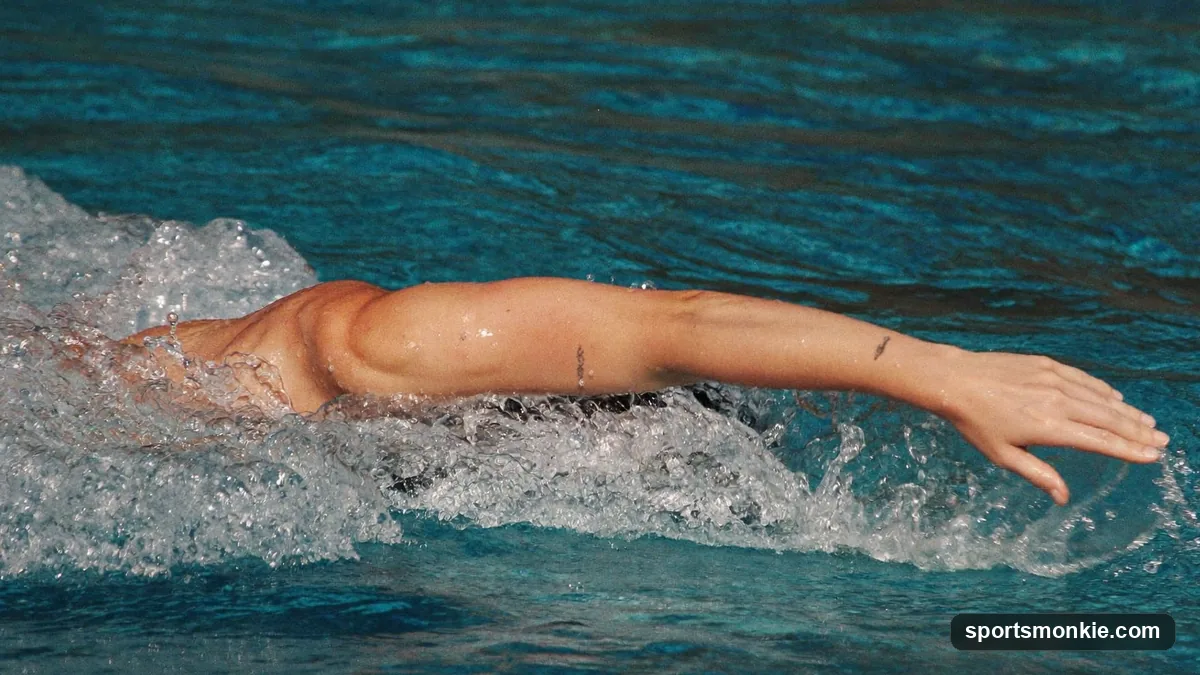
On this page7
Freestyle swimming, technically called front crawl, is a stroke built on alternating overhand arm pulls, a continuous flutter kick, body rotation along the long axis, and side breathing — making it the fastest of the four competitive swimming strokes. Every swimmer who wants to get faster, whether training for a meet or just trying to swim a clean lap, needs to understand these four pieces working together, because freestyle only feels effortless when the mechanics are right.
What Makes Freestyle the Fastest Stroke
Freestyle beats butterfly, backstroke, and breaststroke because it never stops producing forward propulsion. One arm is always pulling while the other recovers above the water, the flutter kick runs continuously, and the body stays flat and horizontal instead of undulating or bobbing the way butterfly and breaststroke do. Less resistance plus constant propulsion equals more speed per stroke cycle. This is also why freestyle is the most common stroke swimmers reach for first when learning to swim, and why it’s usually the stroke coaches teach before backstroke, breaststroke, or butterfly.
Why It’s Called “Freestyle” If It’s Really Front Crawl
Here’s the technical quirk: a “freestyle” event in competitive swimming does not actually require swimmers to use front crawl. World Aquatics (the sport’s global governing body) does not regulate which stroke swimmers use in freestyle races — swimmers are, by rule, free to swim any stroke they choose. In practice, front crawl is so much faster than the alternatives that virtually every competitor swims it in freestyle events. Over time, the event name “freestyle” became shorthand for the front crawl stroke itself, even though the two terms technically mean different things. Regulated strokes like backstroke and butterfly do have strict technical rules; freestyle is the one event where the rulebook stays out of the way.
Freestyle Technique Step by Step
Building a clean freestyle stroke comes down to five sequential checkpoints. Work through them in order rather than trying to fix everything at once.
- Body position — Swim as flat and horizontal as possible, face down, with hips and legs near the surface. A dropped hip or sagging leg line is the single biggest drag source in freestyle.
- The catch — As your hand enters the water in front of your shoulder, bend the wrist and elbow to “catch” the water, setting up a high-elbow pull rather than a straight-arm one.
- The pull and push — Pull your hand back along your body’s centerline (not out wide) through the catch, pull, and push phases, finishing near your hip before your arm exits the water.
- Recovery — Bring the recovering arm forward above the water with a high, relaxed elbow while the opposite arm is mid-pull underwater — this is what creates the alternating rhythm.
- Body rotation — Rotate your torso along its long axis with every stroke so the recovering shoulder rides higher than the pulling shoulder; this rotation is what powers a longer, more efficient pull.
The Flutter Kick
The flutter kick is a continuous, alternating up-and-down leg movement generated from the hips, not the knees. Feet stay loose and pointed, ankles relaxed enough to flex slightly on each kick, with most of the motion happening below the surface and only a small splash breaking through. Most competitive swimmers coordinate six kicks per full arm-stroke cycle (a “six-beat kick”), though distance swimmers often drop to a two-beat or four-beat kick to save energy over longer races. A kick that’s too big or driven from stiff knees burns energy without adding much speed.
Breathing Technique
Side breathing is what separates efficient freestyle from exhausting freestyle. Exhale steadily underwater — through the nose, mouth, or both — so you’re not forced to both exhale and inhale in the split second your face is turned to the side. As your arm exits the water on your breathing side, roll (don’t lift) your head just far enough to catch the air pocket at the waterline, then rotate back to a face-down position immediately. Many swimmers train bilateral breathing — alternating breathing sides every three strokes — to keep the stroke symmetrical and avoid overdeveloping one side.
Common Mistakes and How to Fix Them
| Mistake | Why It Slows You Down | Fix |
|---|---|---|
| Lifting the head to breathe | Drops the hips and legs, increasing drag | Roll the head sideways instead of lifting it |
| Crossing the arm over the centerline | Causes the body to snake side to side | Pull straight back under the shoulder, not across it |
| Over-kicking from stiff knees | Wastes energy without adding propulsion | Kick from the hips with relaxed ankles |
| Holding the breath underwater | Forces a rushed, panicked breath at the surface | Exhale continuously underwater before turning to breathe |
| Dropped elbow on the pull | Weakens the catch and pull power | Practice a high-elbow catch, wrist and forearm leading |
Drills to Improve Your Freestyle
These three drills are staples in competitive swim programs because they isolate one flaw at a time instead of asking a swimmer to fix everything mid-stroke:
- Catch-up drill — Keep one arm fully extended in front until the recovering arm “catches up” to it before starting the next pull. Slowing the stroke down this way makes timing errors and a weak catch much easier to feel and correct.
- Fist drill — Swim freestyle with closed fists instead of open hands. Without the palm to rely on, swimmers are forced to build a stronger forearm-based catch, which usually transfers into a noticeably more powerful pull once the hands open back up.
- Fingertip-drag drill — Drag your fingertips along the surface of the water during the recovery phase. This keeps the recovering elbow high and relaxed instead of dropping toward the water, which is one of the most common technical breakdowns as swimmers fatigue.
Freestyle rewards patience more than raw effort — small technical fixes in body position, breathing timing, and the pull almost always beat swimming harder with a flawed stroke. If you’re still building foundational comfort in the water before refining freestyle specifically, a few basic tips to start swimming are worth revisiting alongside these drills.
Frequently asked questions
What is freestyle swimming?+
Freestyle swimming is the competitive name for front crawl, the stroke where swimmers alternate overhand arm pulls while performing a continuous flutter kick and breathing to the side. It is the default stroke swimmers use in freestyle events because no other stroke moves through the water faster.
Why is front crawl called freestyle?+
In competitive swimming, a freestyle event technically allows any stroke, since World Aquatics does not regulate the technique in those races. Front crawl became the fastest option, so essentially every swimmer chose it, and the event name freestyle became synonymous with the front crawl stroke itself.
How many kicks per stroke cycle in freestyle?+
Most competitive swimmers use a six-beat kick, meaning six flutter-kick beats for every full arm-stroke cycle (both arms completing one pull each). Distance swimmers sometimes use a two-beat or four-beat kick to conserve energy over longer races.
How do you breathe properly in freestyle?+
Exhale steadily underwater through your nose and mouth, then roll your head to the side as your arm exits the water, breathing in the pocket of air near the waterline rather than lifting your head forward. Most swimmers breathe every two or three arm strokes, alternating sides (bilateral breathing) to keep the stroke balanced.
What is the most common mistake in freestyle swimming?+
Lifting the head straight up to breathe is the most common mistake. It drops the hips and legs, increases drag, and breaks the flat body position that makes freestyle fast. Rolling the head to the side instead of lifting it fixes most of the problem immediately.
What drills improve freestyle technique fastest?+
The catch-up drill, fist drill, and fingertip-drag drill are the three most effective for correcting stroke mechanics. Catch-up drill slows the stroke down so swimmers feel the full pull; fist drill (swimming with closed fists) forces a stronger forearm catch; fingertip drag teaches a high-elbow recovery.
Is freestyle the fastest swimming stroke?+
Yes. Freestyle (front crawl) is the fastest of the four competitive strokes, faster than butterfly, backstroke, and breaststroke, because it keeps the body horizontal with continuous propulsion from alternating arms rather than the simultaneous, more resistance-heavy motions used in the other strokes.
How is freestyle different from backstroke and butterfly?+
Freestyle is swum face-down with alternating arms and a flutter kick, while backstroke uses the same alternating-arm and flutter-kick pattern but face-up. Butterfly uses both arms simultaneously with a dolphin kick and is more physically demanding. Freestyle's continuous, alternating propulsion is what makes it the fastest of the three.
Sources
Play & tools
Free browser games and tools — no account, no download.
- Play today's Sports Connections — Today's Sports Connections — daily hints, answers, and play the grid.
- Play Guess the NFL Player — A new mystery NFL player every day. Eight guesses, with a clue on each — plus free unlimited mode.
- Explore all our games →
Related guides
Backstroke Swimming: Technique, Start, and Drills Explained
Backstroke swimming is the only competitive stroke swum face-up. Learn the flutter kick, arm recovery, body roll, start, and drills to swim it correctly.
Breaststroke Swimming: Technique, Timing, and Drills Explained
Breaststroke swimming is the slowest competitive stroke, built on a pull-breathe-kick-glide rhythm and a whip kick. Learn the timing, pull-out, and fixes.
Butterfly Stroke: Technique, Kick Timing, and Drills Explained
The butterfly stroke pairs a simultaneous over-water arm recovery with two dolphin kicks per cycle, making it swimming's hardest, second-fastest stroke.
Dolphin Kick Swimming: Technique, the 15-Meter Rule, and Drills
The dolphin kick swimming technique explained: core-driven undulation, streamline, the 15-meter underwater rule, and drills to build a faster fifth stroke.
How to Swim: Complete Technique Guide for All 4 Strokes
Learn how to swim with correct technique for freestyle, breaststroke, backstroke, and butterfly. Body position, breathing, kick, and drills to swim farther and faster.
Freestyle Swimming Technique: Body Position, Catch & Pull
Master freestyle swimming technique with coaching cues for body position, the catch, high-elbow pull, hip rotation, and a two-beat kick that saves energy.