
Foil vs Epee vs Sabre: Fencing Weapons
On this page5
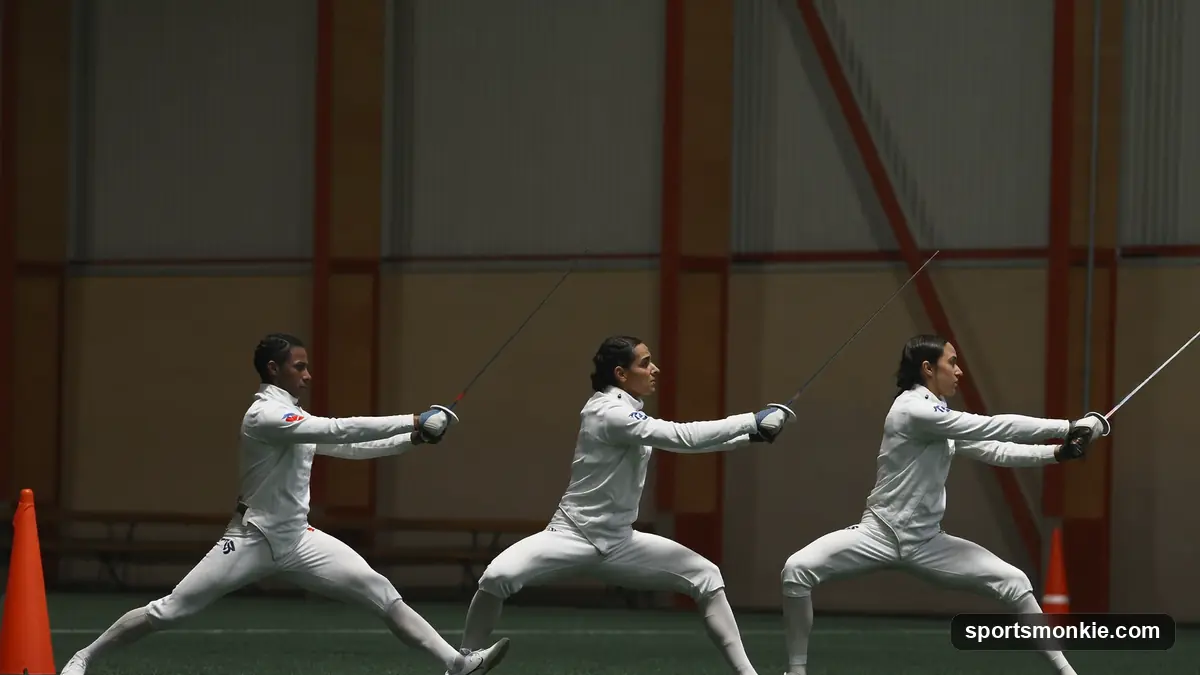
Fencing has three weapons, foil, epee and sabre, and they differ in three key ways: the valid target area, how you score a hit, and whether right-of-way rules apply. In short, foil scores with the point on the torso under right-of-way rules, epee scores with the point anywhere on the body with no right of way, and sabre scores with the edge or point on everything above the waist under right-of-way rules.
Those three variables, target, scoring method and priority, are all you need to tell the weapons apart and to understand why each produces such a different style of bout. The rules are set internationally by the FIE (International Fencing Federation) and, in the United States, by USA Fencing. Here is how the three weapons compare and what makes each one distinctive.
The three weapons at a glance
| Feature | Foil | Epee | Sabre |
|---|---|---|---|
| Scoring action | Point only (thrust) | Point only (thrust) | Edge and point (cut or thrust) |
| Valid target | Torso (front and back) | Entire body | Everything above the waist |
| Right of way | Yes | No | Yes |
| Bout character | Technical, tactical | Patient, precise | Fast, aggressive |
Foil: the technical thrusting weapon
Foil is a light thrusting weapon. Only the tip scores, and only when it lands on the valid target, the torso, front and back, but not the arms, head or legs. What defines foil, and sabre, is right of way (also called priority): when both fencers land a hit at nearly the same time, the referee awards the point to the fencer who had priority, meaning the one who correctly initiated the attack or gained the right through a defensive action.
Right of way makes foil a game of correct sequence as much as speed. You cannot simply lunge and hit; you have to establish or seize priority, which rewards clean technique and clear tactical intent. This is why foil is often where beginners learn the conventions of the sport.
Epee: the whole-body dueling weapon
Epee is also a point-only thrusting weapon, but it strips away two of foil’s restrictions. First, the entire body is a valid target, from head to toe. Second, there is no right of way, so whoever lands a clean hit first simply scores. If both fencers hit within a tiny fraction of a second, both are awarded a point (a double touch).
This “first clean hit anywhere wins” logic is why epee is frequently described as the most realistic to an actual duel. Bouts tend to be more patient and cautious, since a rash attack can be met by a simple counter-hit that scores for the opponent, and timing, distance and precision matter enormously. The hand and forearm are the nearest and most exposed targets, so much of epee is a chess match of quick jabs to the wrist while staying just out of the opponent’s reach.
Sabre: the fast, aggressive cutting weapon
Sabre is the odd one out because you score with the edge of the blade as well as the point, cuts count, not just thrusts. The target is everything above the waist (the logic being a nod to cavalry swordplay, where the legs of a mounted rider were not a target). Sabre also uses right of way, so priority decides simultaneous hits.
The combination of edge-scoring, a large upper-body target and right-of-way priority makes sabre the fastest and most aggressive weapon. Points come in a flash, and fencers often explode off the starting line, which is exactly what gives sabre its reputation as the most forward-driving discipline of the three. Because a glancing touch of the edge scores just as a clean thrust does, sabre bouts can be over in seconds, and footwork and explosive acceleration often matter more than the intricate blade work that dominates foil.
How scoring is registered
In modern competition, all three weapons use electric scoring: the blade and target area are wired so a valid hit registers on a box with colored lights. In foil and sabre, right-of-way then determines who is awarded the touch when both lights show; in epee, both fencers can score on a genuine double. Understanding right of way is the single biggest hurdle for new spectators, because in foil and sabre a “hit” is not automatically a “point.”
If you are curious about taking up the sport, equipment and club costs vary widely by weapon and level, our guide to how much fencing costs breaks that down. Fencing sits within a wider family of one-on-one combat and Olympic sports; you may also enjoy our features on the greatest judo players and, for another precision Olympic discipline, Olympic archery distance.
The short version: foil is a point-only torso weapon with right of way, epee is a point-only whole-body weapon with no right of way (the closest to a real duel), and sabre is an edge-and-point weapon targeting above the waist with right of way (the fastest and most aggressive), and mastering right-of-way priority is what separates foil and sabre from epee.
Frequently asked questions
What are the three types of fencing?+
The three types are foil, epee and sabre, each a distinct weapon with its own rules. Foil targets the torso and scores with the point only under right-of-way rules. Epee targets the whole body, scores with the point, and has no right of way. Sabre targets everything above the waist and scores with the edge or point under right-of-way rules. Each is a separate Olympic discipline governed by the FIE and, in the US, USA Fencing.
Which fencing discipline is the hardest?+
There is no single hardest weapon; each demands different skills. Foil and sabre require mastering right-of-way, the priority rules that decide who scores when both fencers hit, which adds a tactical layer many find the most mentally demanding. Epee removes right of way but rewards patience, precision and timing because the whole body is a target and double-touches count for both. Which feels hardest depends on the fencer, so most coaches say the hardest is the one that least suits your natural style.
Which fencing style is most realistic?+
Epee is often called the most realistic to a real duel, because the entire body is a valid target and there is no right of way, so simply hitting your opponent first, anywhere, scores. That mirrors the logic of an actual sword fight more closely than foil or sabre, which use conventions and priority rules developed for training and sport. Sabre's cutting action also echoes cavalry swordplay, but epee's 'first clean hit anywhere wins' is the closest to dueling logic.
What is the most aggressive fencing style?+
Sabre is generally the most aggressive and fastest of the three. Because you can score with the edge of the blade as well as the point, and the target is the entire upper body, points come quickly and bouts are explosive, with fencers often launching from the line at high speed. Right-of-way rewards the fencer who attacks first with correct priority, which further encourages aggression, making sabre the most forward-driving weapon.
Sources
Play & tools
Free browser games and tools — no account, no download.
- Play today's Sports Connections — Today's Sports Connections — daily hints, answers, and play the grid.
- Play Guess the NFL Player — A new mystery NFL player every day. Eight guesses, with a clue on each — plus free unlimited mode.
- Explore all our games →
Related guides
How Much Does Fencing Cost? Gear and Club Fees
How much does fencing cost? Beginner gear, club membership, lessons and USA Fencing fees explained, with typical price ranges for the sport.
Polo Rules Explained: A Beginner's Guide to the Sport
Polo rules in plain English: teams of four score with a mallet and ball on horseback over 4-6 chukkas. Here's the right-of-way rule, handicaps and field size.

What Is a False Start in Track? Rules and Disqualification
A false start happens when a sprinter begins before the legal starting signal or reacts early enough to violate the competition’s reaction-time rule.
What Is the Individual Medley in Swimming? Order and Rules
The individual medley combines butterfly, backstroke, breaststroke, and freestyle in one race, in that order.

What Is a Faceoff in Lacrosse? Restart and Possession Rules
A lacrosse faceoff starts each quarter and follows goals, with two players competing for the ball while teammates stay outside the restraining area.

Sports Calendar: Upcoming Events and Confirmed Dates
Find upcoming sporting events by sport, month and host. Check confirmed dates, schedule status, short event overviews and official organiser links.