
How Much Does Fencing Cost? Gear and Club Fees
On this page5
The sport of fencing costs less to try than most people expect and more to master. A first lesson is often close to free because clubs lend equipment, beginner group courses usually cost a set fee in the low hundreds of dollars, and buying your own starter kit typically lands in the low-to-mid hundreds. Costs rise mainly when you add competition-grade electric gear, regular private lessons and travel to tournaments.
Because there is no single national price, this guide breaks fencing costs into the pieces you actually pay for: trying it, gear, club dues, coaching and competing. The exact numbers vary by city and club, so treat everything here as typical ranges rather than fixed prices.
Trying fencing for the first time
The cheapest entry point is a beginner group class. Clubs run introductory courses that teach footwork, blade basics and safety over several weeks, and they almost always provide the mask, jacket and weapon so you do not buy anything to start. This is the smart first step: it lets you find out whether you enjoy the sport before spending on your own kit.
Many clubs also offer a low-cost or free first “come and try” session. If you are weighing fencing against other sports on cost, our look at the cost to play polo and at the most popular Olympic sports give useful context for where fencing sits among the options.
The gear you eventually buy
Once you are hooked, you will want your own equipment. Fencing gear splits into two tiers: basic “dry” (non-electric) kit for training, and full “electric” kit that registers hits with a scoring machine for competition.
A dry beginner set is the affordable tier. An electric setup costs more because it adds a body cord and, for two of the three weapons, a conductive lamé. Governed by USA Fencing rules, foil and sabre require that metallic lamé over the target area, while épée does not, which is why épée is often the cheapest weapon to equip.
| Cost item | Typical range | Notes |
|---|---|---|
| First group course | Low hundreds (per block) | Gear usually loaned |
| Dry starter kit | Low-to-mid hundreds | Mask, jacket, glove, weapon |
| Electric upgrade | Several hundred+ | Body cord, lamé (foil/sabre), higher rating |
| Monthly club dues | Varies widely | Recreational to premium academy |
| Private lesson | Per session | Biggest recurring competitive cost |
| USA Fencing membership | Annual | Low-cost recreational or competitive tier |
Ongoing club and coaching costs
The recurring cost of fencing is mostly club membership and lessons. Membership is usually monthly and covers open floor time and group classes; rates range from modest community-club dues to premium big-city academies, so it pays to compare a few clubs near you.
Private lessons are separate and are where serious fencers spend the most over time. A weekly one-on-one with a coach adds up quickly, but it is also the fastest way to improve. Beginners can progress a long way on group classes alone before adding privates.
Competition and membership
If you want to enter sanctioned tournaments, you will need a USA Fencing membership. The organization offers a low-cost recreational tier for people who just want to be members and a higher competitive tier for those entering rated events. On top of membership, tournaments charge entry fees per event, and travel to regional and national competitions becomes the largest cost for ambitious fencers.
None of that is required to enjoy the sport, though. Plenty of people fence purely at their club for fitness and fun and never pay a tournament fee.
Budgeting realistically
To keep costs down, start with a group course, borrow gear as long as your club allows, and buy dry equipment before electric. Épée keeps early kit costs lower, and second-hand masks and jackets are common in the fencing community. As with other equipment-heavy pursuits, spreading purchases out helps, much like building a kit gradually in our beginner scuba gear cost guide.
The short version: you can try fencing for very little, own a respectable dry kit for the low-to-mid hundreds, and only reach the higher numbers if you go electric, take regular private lessons and travel to compete. It is a sport that scales with your ambition rather than demanding a big outlay on day one.
Frequently asked questions
Is fencing an expensive sport to start?+
Fencing is moderately priced to begin and gets more expensive only if you compete seriously. Almost every club lends equipment for a first lesson, and beginner group courses are usually the cheapest way in, often costing a set fee for a multi-week block. Real costs climb later through your own electric kit, private lessons, travel and tournament entries, but a curious beginner can try the sport for very little.
How much does beginner fencing equipment cost?+
A basic starter set of mask, jacket, glove, underarm protector and a non-electric (dry) weapon typically costs somewhere in the low-to-mid hundreds of dollars. Stepping up to a competition-legal electric setup, which adds a body cord, a conductive lamé for foil or sabre, and often a higher safety rating, pushes the total several hundred dollars higher, so many beginners buy dry gear first and upgrade later.
How much are fencing club fees and lessons?+
Club membership is usually billed monthly and varies widely by city and coaching level, from modest recreational rates to premium academies. Group classes are included in many memberships, while private one-on-one lessons with a coach are charged separately per session and are the biggest recurring cost for competitive fencers. Ask each club for its own rate card, since there is no single national price.
Which fencing weapon is cheapest to start with?+
Épée is often the most economical electric weapon to equip because, unlike foil and sabre, it does not require a conductive lamé over the torso. Foil and sabre need that extra metallic jacket to register valid hits, adding cost. For a first weapon, though, most beginners simply use whatever the club teaches and coaches, since the coaching matters far more than the gear.
Sources
Play & tools
Free browser games and tools — no account, no download.
- Play today's Sports Connections — Today's Sports Connections — daily hints, answers, and play the grid.
- Play Guess the NFL Player — A new mystery NFL player every day. Eight guesses, with a clue on each — plus free unlimited mode.
- Explore all our games →
Related guides
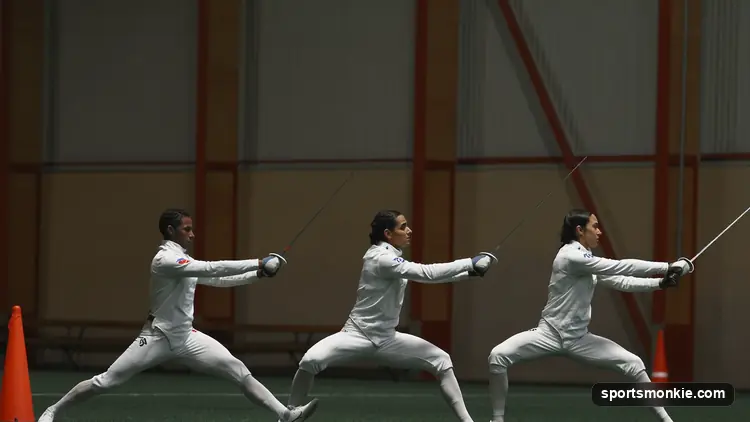
Foil vs Epee vs Sabre: Fencing Weapons
Fencing's three weapons compared: foil, epee and sabre differ by target area, how you score (thrust vs cut) and whether right-of-way rules apply.
How Much Does Club Volleyball Cost?
Club volleyball typically costs a few thousand dollars a season once fees, travel and gear are added. Full cost breakdown and why it's expensive.

How Much Does a Polo Horse Cost?
How much a polo horse (pony) costs: green prospects to top string ponies, plus the real ongoing costs of keeping one. Typical 2026 ranges explained.
How Much Does a Golf Club Fitting Cost?
How much a golf club fitting costs: free retailer fittings, paid studio sessions, full-bag vs single-club, and whether it's worth it. 2026 ranges.

How Much Does Lacrosse Equipment Cost? Full Gear Budget
A full beginner lacrosse setup runs about $300 to $500; a mid-to-advanced kit climbs past $1,000. Here is the real cost of every piece of lacrosse equipment.

How Much Does a Racehorse Cost?
A racehorse can cost anywhere from a few thousand dollars to millions at auction, plus tens of thousands a year to train and keep. Full price breakdown.