
Polo Rules Explained: A Beginner's Guide to the Sport

On this page7
Polo is played by two teams of four riders (three in the indoor, or arena, version), who score by hitting a small ball through the opposing team’s goalposts using a long-handled mallet, all from horseback. A match is split into periods called chukkas, usually four to six of them, each lasting about seven to seven-and-a-half minutes. The rule that trips up most first-time spectators isn’t an offside law, because polo doesn’t have one. It’s right of way: the player following the ball’s exact line owns that line, and everyone else has to merge into the play rather than cut across it.
That’s the whole game in outline. Here’s what each part actually means once the ball is moving at 30 mph and four riders are converging on it at once.
What Is the Objective of Polo?
The objective is simple: score more goals than the other team by driving the ball between two posts at each end of the field. Players use a bamboo or synthetic-cane mallet, swung right-handed only, to hit a plastic ball roughly the size of a baseball. Unlike hockey or soccer, there’s no goalkeeper standing in the mouth of the goal; positioning and right of way do that job instead. Teams switch ends after every goal, which keeps any wind or ground advantage from favoring one side for the whole match, and it also means the “home” end for a team changes constantly, so following the run of play matters more than watching a fixed goal.
How Many Players Are on a Polo Team?
Outdoor grass polo fields four players per side, numbered 1 through 4, and the number roughly maps to a role. Number 1 plays furthest forward and is expected to finish scoring chances; Number 2 supports the attack and pressures the opposition’s playmaker; Number 3 is usually the team’s strongest, highest-handicapped rider, the pivot who links defense to attack and often carries the most possession; Number 4, or Back, sits deepest and defends the goal, similar to a sweeper in soccer. Positions aren’t rigid, riders swap roles constantly as the ball changes hands, but the numbering tells you who’s meant to be where when the whistle blows according to the U.S. Polo Association’s official rules.
Arena polo, played indoors on a smaller dirt surface bounded by low boards, drops to three players a side. The smaller space and the boards, which keep the ball in play off ricochets, make for a faster, more compressed version of the same game rather than a different sport.
What Is a Chukka, and How Many Are in a Match?
A chukka is a timed period of play, polo’s answer to a quarter or an inning. The clock runs continuously rather than stopping for every whistle, which is part of why matches move faster than the raw chukka count suggests. Players and ponies get a short break between chukkas, and a pony that’s played rarely goes back out again in the same match without a full rest.
Match length varies by tournament level and organizing body, and this is one of the few places the US and UK genuinely differ:
| Format | Team size | Chukkas | Chukka length | Typical total match time |
|---|---|---|---|---|
| Outdoor grass (US, USPA) | 4 | 4-6 | 7.5 minutes | 1.5-2 hours |
| Outdoor grass (UK, HPA) | 4 | 4-8, usually 4 or 6 at club level | 7 minutes, plus up to 30 seconds if the ball is in play when time is called | 1.5-2 hours |
| Arena / indoor | 3 | Usually 4 | 7.5 minutes | Under 1.5 hours |
The half-minute grace period the Hurlingham Polo Association uses is a small but real detail worth knowing if you’re watching UK club polo and wondering why a chukka runs long: the game doesn’t stop mid-play just because a bell rang, it plays out the ball first.
What Is the Right-of-Way Rule in Polo?
This is the rule that actually governs the sport, and most casual explainers skip past it or bury it under jargon. Think of the ball’s path as a one-lane road. The player following directly behind the ball, on the exact line it’s traveling, has right of way, the same way a car already in a lane has the right to keep going straight. Nobody else can cut across that lane. They can merge into it at an angle, the way you’d join a motorway from a slip road, but only if they leave enough room that the right-of-way player doesn’t have to check their pony or change direction to avoid a collision.
Two things follow from that. First, right of way is about safety of the path, not about who gets to hit the ball; a player can hold right of way and still lose the ball to a legal ride-off or hook. Second, it’s the umpire’s judgment call on distance and speed that decides most fouls, which is why polo fouls can look inconsistent to a first-time viewer even when the rule itself is straightforward. The U.S. Polo Association spells this out directly: the right of way has to have “sufficient width and distance to permit the player to continue safely in the direction and at the speed” they’re already traveling. Cross that space and force a check-up, and it’s a foul no matter who ends up with the ball.
Players are allowed two legal ways to contest possession without breaking right of way: the ride-off, where a defender leans a pony into an opponent’s pony shoulder-to-shoulder to push them off the line, and the hook, where a defender blocks an opponent’s mallet swing with their own stick, but only from the correct side and never above shoulder height. Both look aggressive on video. Both are legal, provided nobody crosses the line of the ball to do it.
How Does the Polo Handicap System Work?
Every registered player carries a handicap from -2 goals, a genuine beginner, up to 10 goals, the ceiling reserved for a handful of the best players alive at any given time under the U.S. Polo Association’s rating scale. The number has nothing to do with how many goals a player has personally scored; it’s a rating of overall ability, horsemanship, strategy and team play, reassessed periodically by committee.
A team’s handicap is just the sum of its four players’ ratings. That total sets the tournament tier: low-goal polo runs roughly 0-8 combined, medium-goal around 8-15, and high-goal polo, the level played at the Argentine Open and the US Open Polo Championship, sits at 22 goals and above. In handicapped matches between unevenly rated teams, the difference in combined handicap is added to the weaker side’s score before the match even starts, so a team with a two-goal disadvantage begins the game already up 2-0. It’s the same logic as a stroke-play handicap in golf, applied to a team sport, and it’s the single biggest reason polo tournaments can pit amateur-heavy club sides against professional lineups without the result being a foregone conclusion.
How Big Is a Polo Field?
An outdoor polo field runs 300 yards long. Width depends on whether the field is boarded: 160 yards wide with a 12-inch perimeter board that keeps the ball from rolling out on minor touches, or 200 yards wide unboarded per the Hurlingham Polo Association’s rules. Either way, that’s roughly nine full-size soccer pitches side by side, which is why a mounted game with only eight outfield players in total never looks crowded. Goalposts sit 8 yards apart at each end, and there’s no crossbar, so any ball that crosses the goal line between the posts at any height counts.
Arena polo trades that scale for a dirt surface closer to 100 by 50 yards, enclosed by boards that keep the ball live off deflections. It’s a genuinely different viewing experience: faster exchanges, tighter turns, and a ball that can come off a wall unpredictably, more like an ice hockey rink than an open pitch.
Polo is played and governed in more than 80 countries under the Federation of International Polo, which oversees the sport’s world championships, though day-to-day rules enforcement runs through national bodies like the USPA and HPA. If you’re curious which clubs and countries currently sit at the top of the sport, our breakdown of the best polo teams in the world covers the Argentine outfits that have dominated high-goal polo for two decades.
Getting Started as a Spectator or Rider
Watching a chukka or two with the right-of-way rule in mind is genuinely the fastest way to make sense of polo; once you can spot the imaginary line the ball is traveling on, the ride-offs and hooks stop looking chaotic and start looking like a defense working a system. If the sport pulls you toward actually riding rather than just watching, the crossover skills aren’t as far off as they look. Our guides to horseback riding lessons and horse riding tips for beginners cover the basic seat, rein control and mounting fundamentals that every polo club expects you to already have before they’ll let you near a chukka.
Frequently asked questions
How many players are on a polo team?+
Outdoor grass polo is played four-a-side, with riders numbered 1 to 4 by role. Arena (indoor) polo, played on a smaller dirt surface bounded by boards, drops to three-a-side. Both formats field two mounted umpires plus a referee on the sideline to make the final call on disputed fouls.
How long does a polo match last?+
A full outdoor match runs 4 to 6 chukkas, each roughly 7 to 7.5 minutes of playing time, with a short break between chukkas and a longer halftime after the midpoint. Add stoppages and a match usually takes 1.5 to 2 hours from first bell to last.
What is the right-of-way rule in polo, in plain English?+
The player following directly behind the ball on the line it's traveling owns that line, the same way a car owns its lane. Anyone else can join the play only by merging in safely from an angle, not by cutting across. Crossing that line close enough to force a check-up is a foul, regardless of who touches the ball next.
Can you play polo left-handed?+
No. Both the U.S. Polo Association and the Hurlingham Polo Association require every player to swing the mallet right-handed, at every level of the game. It's a safety rule, not a style preference: two mallets swinging on opposite sides at a gallop would make collisions far more likely.
What is a polo pony, and is it actually a pony?+
No, it's a full-size horse, usually 15 to 16 hands, often a Thoroughbred crossed for quickness and a calm temperament. The name is a holdover from the sport's early days in Manipur, India, when smaller native ponies were used, and it stuck even after breeding standards changed completely.
How does the polo handicap system decide who wins on paper?+
Every player carries a handicap from -2 to 10 goals based on overall ability, not scoring. Add up the four handicaps on each side and the team with the lower total starts the match with that many goals already on the board, so a genuinely even contest is possible even when the rosters aren't.
Sources
Play & tools
Free browser games and tools — no account, no download.
- Play today's Sports Connections — Today's Sports Connections — daily hints, answers, and play the grid.
- Play Guess the NFL Player — A new mystery NFL player every day. Eight guesses, with a clue on each — plus free unlimited mode.
- Explore all our games →
Related guides
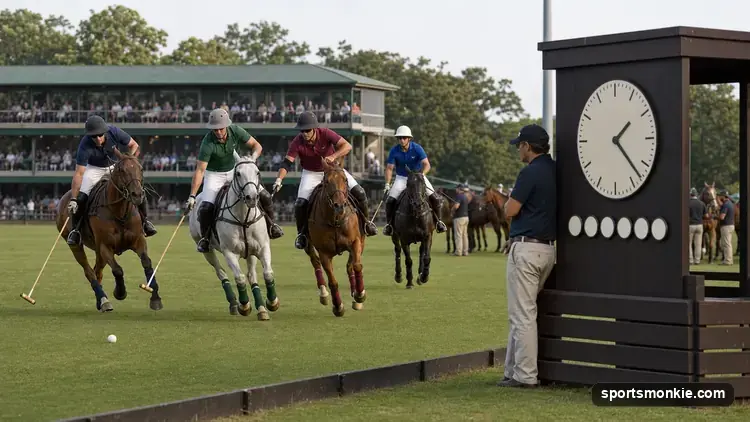
How Long Does a Polo Match Last? Chukkas Explained
A polo match runs 1 to 2 hours across 4-8 chukkas of 7-7.5 minutes each, plus breaks and halftime. Here's the exact breakdown by level of play.
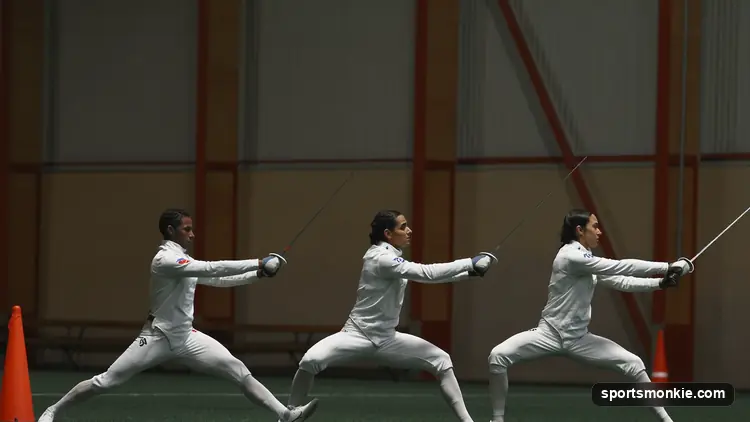
Foil vs Epee vs Sabre: Fencing Weapons
Fencing's three weapons compared: foil, epee and sabre differ by target area, how you score (thrust vs cut) and whether right-of-way rules apply.

Best Polo Teams in the World: Top 10 Squads Ranked
La Natividad-La Dolfina, Ellerstina-Indios Chapaleufu, and La Dolfina Saudi lead the world's best polo teams, with Argentina, the USA, UK, and UAE fielding the top high-goal outfits as of 2026.
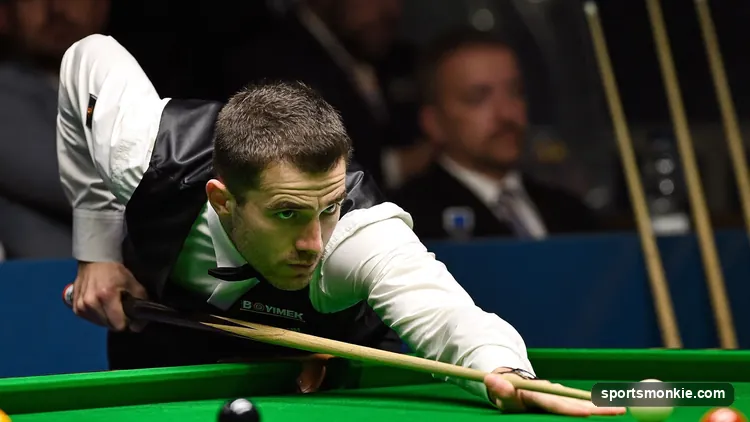
How to Play Snooker: A Beginner's Guide
Learn how to play snooker: setting up the table, the break-off, taking a turn, and the pot-a-red-then-a-colour sequence, step by step for beginners.

Marco Polo Game Rules: How to Play the Pool Game
Rules for Marco Polo: 'It' shuts their eyes, calls Marco, everyone answers Polo, and the tagged player goes next. Full rules, variations, safety tips.

What Is a False Start in Track? Rules and Disqualification
A false start happens when a sprinter begins before the legal starting signal or reacts early enough to violate the competition’s reaction-time rule.