
Offside in Soccer Explained: The Rule in Plain English
On this page5
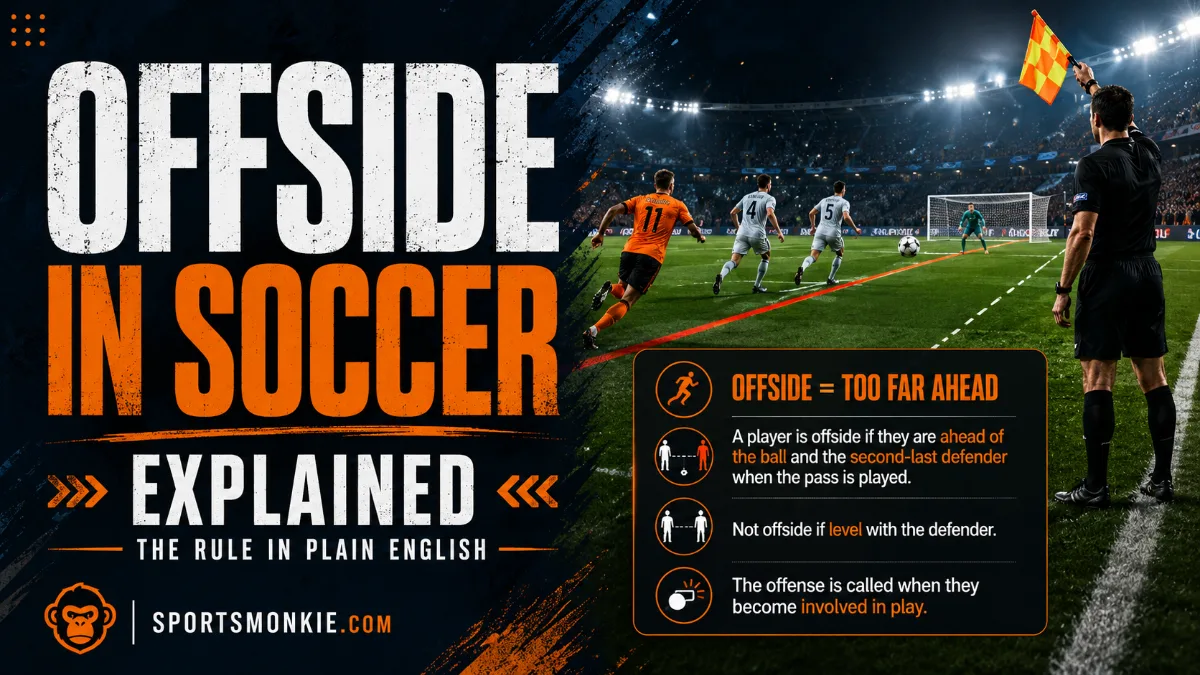
Few rules in sport get argued about as much as offside. It decides goals, it triggers replay after replay (the VAR checks that swell stoppage time), and it can hinge on a striker’s shoulder being a few centimetres ahead of a defender’s knee. Strip away the drama, though, and the rule is doing one simple job: it stops attackers from camping next to the goalkeeper and waiting for an easy tap-in.
The basic rule
An attacker is in an offside position if, at the exact moment the ball is played to them by a teammate, they are:
- in the opponent’s half of the field, and
- closer to the opponent’s goal line than both the ball and the second-last defender.
The second-last defender is usually the last outfield defender, because the goalkeeper is normally the last man. So in plain terms: you must have at least two opponents (typically the keeper plus one defender) between you and the goal line, or be level with them, at the moment the pass is struck.
Timing is everything. The referee’s assistant judges the attacker’s position when the ball is played, not when it arrives. A striker can sprint past the defence after the pass is made and still be perfectly onside, as long as they were behind the line at the instant of the pass.
The rule is also tied to the shape of the pitch. Our soccer field dimensions guide shows the halfway line and penalty-area landmarks that make the positioning easier to picture.
Position is not the same as offence
Here is the part casual fans miss. Simply standing in an offside position is not against the rules. It only becomes an offside offence if the player then becomes involved in active play. That involvement takes three forms:
| Type of involvement | Example |
|---|---|
| Interfering with play | Touching or playing the ball passed by a teammate |
| Interfering with an opponent | Blocking the goalkeeper’s line of sight or challenging for the ball |
| Gaining an advantage | Playing a ball that rebounds off the post, crossbar, or a defender |
So an attacker can stand in an offside position all game long, and as long as they never touch the ball or affect a defender, no offence occurs.
When offside does not apply
You cannot be offside from three restarts:
- a goal kick
- a corner kick
- a throw-in
You also cannot be offside if you are in your own half, or if you are level with the second-last defender. And the ties go to the attacker: if it is genuinely level, it is onside.
Offside in small-sided soccer
Futsal removes this confusion entirely because there is no offside rule in the standard five-a-side indoor game. If you are switching formats, our futsal rules guide explains the main differences.
In full 11v11 soccer, offside is one reason formations stretch and compress so carefully. The soccer formations explained guide shows how back lines hold shape to control that space.
Why the rule looks so tight now
For most of the sport’s history, offside was an assistant referee’s split-second judgement, and close calls went either way. Video review changed that. With VAR drawing lines across frozen frames, offside became a matter of millimetres, and goals now get chalked off for an armpit or a toe.
That precision sparked a genuine debate about whether the rule should give a bigger benefit of the doubt to attackers. Football’s lawmakers have trialled versions where a player is only offside if their whole body is beyond the defender, aiming to reward attacking play. The core principle behind Law 11 has not changed, though: keep attackers honest, and make them beat the defensive line with timing rather than by lurking behind it.
Frequently asked questions
Can you be offside from a throw-in?+
No. There is no offside directly from a throw-in, a goal kick, or a corner kick. A player can receive the ball in an offside position from any of these restarts without being penalised, which is why quick throw-ins can create clean scoring chances.
Is it offside if you are level with the last defender?+
No. Being level with the second-last defender (or the last two defenders) is onside. The attacker has to be clearly beyond that line for offside to apply, and the benefit of any tie goes to the attacker.
Why can you be in an offside position but not be offside?+
Standing in an offside position is not an offence by itself. It only becomes an offence if you then get involved in play by touching the ball, blocking an opponent, or otherwise interfering with a defender's ability to play the ball.
Sources
Play & tools
Free browser games and tools — no account, no download.
- Play 38-0 — Sign a 4-4-2 of all-time football legends and chase a perfect 38-0 league season — perfect, not just unbeaten.
- Explore all our games →
Related football guides
View all →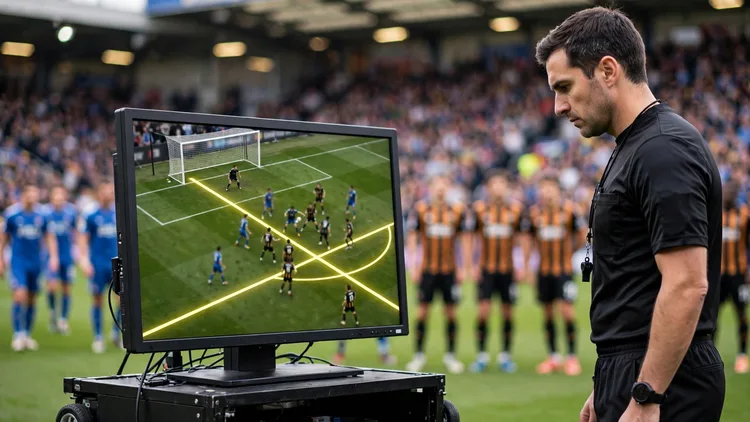
Brennan Johnson's Goal at Hull Is Ruled Out by a Subjective Offside Everton Have Seen Before
Brennan Johnson's goal for Everton at Hull was disallowed after a VAR review for a subjective offside, his second disallowed-goal controversy in two games.

Why Do Soccer Players Flop? Diving and Simulation Explained
Soccer players flop, or simulate fouls, to win free kicks, penalties and get opponents carded. Here's why it happens, how it's punished and the fixes.
What Is a Corner Kick in Football? Rules and Tactics
A corner kick restarts football after the defending team last touches the ball before it crosses its goal line.
What Is a Penalty Shootout in Football? Rules and Order
A football penalty shootout decides a drawn knockout match through alternating kicks, with sudden death if the scores remain level.

What Is Aggregate Score in Football?
Aggregate score combines the goals from both legs of a two-match tie to decide which team advances.
What Is Stoppage Time in Football? How It Is Added
Stoppage time compensates for delays such as substitutions, injuries, goals, disciplinary action and video reviews.