
What Is a Challenge Flag in Football? NFL Replay Rules
On this page5
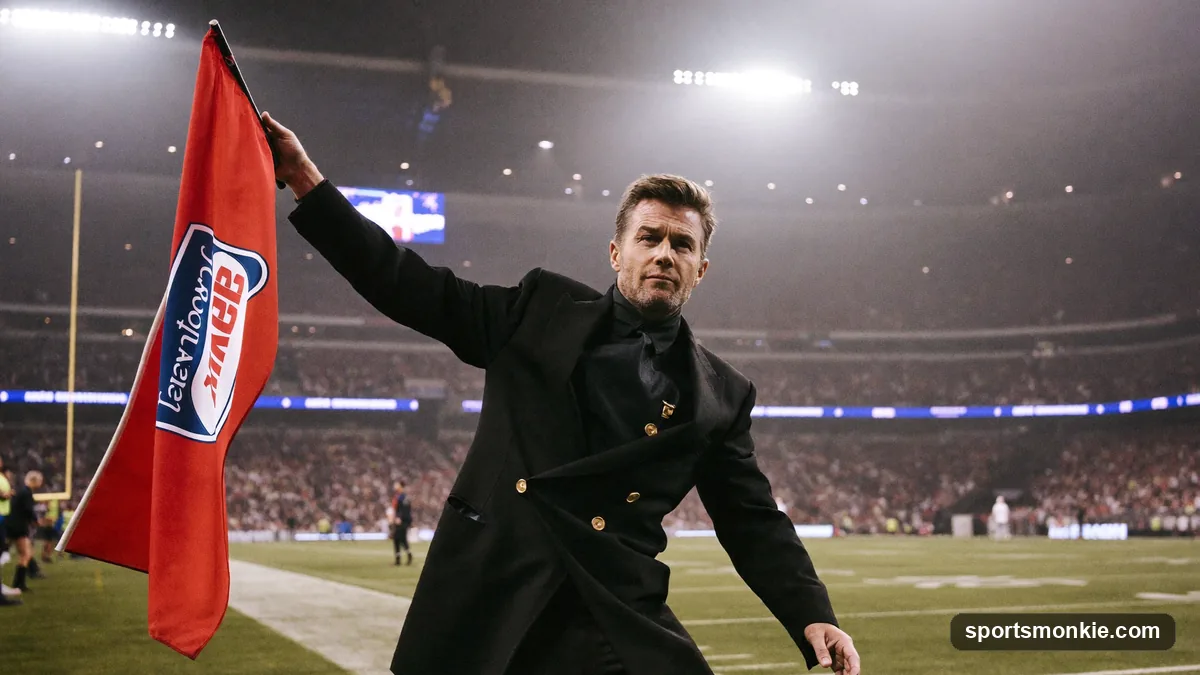
A challenge flag is the red flag an NFL head coach throws onto the field to request an instant-replay review of a call. Each team gets two challenges per game, and a third only if both succeed. A winning challenge overturns the call for free; a losing one costs a timeout. Coaches cannot challenge in the final two minutes of a half or in overtime.
How a challenge works
When a coach believes an on-field ruling is wrong, he throws the red flag before the next snap. The referee reviews the play under the hood or via the league’s replay center, and either overturns the call (if there is clear and obvious video evidence) or lets it stand. The whole system is built around a simple risk-reward: be right and you fix a bad call for nothing; be wrong and you lose a timeout.
The two-challenge rule and its cost
| Situation | Result |
|---|---|
| Challenge succeeds | Call overturned, no timeout lost |
| Challenge fails | Call stands, one timeout charged |
| Win both challenges | Team earns a third |
| No timeouts left | Cannot challenge at all |
Because each challenge needs an available timeout, a team that has burned its timeouts on a comeback drive loses the ability to challenge exactly when it might need it most.
What you can and can’t challenge
Reviewable: catches, fumbles, a runner being down, in/out of bounds, ball spot and first down measurements, and non-automatic scoring situations. Not reviewable as of 2026: judgment fouls like pass interference, which the league briefly made challengeable in 2019 before scrapping it after one season.
Why late-game reviews are booth-only
Inside the final two minutes of each half and throughout overtime, coaches cannot challenge — the replay official in the booth initiates any review. This stops teams from using challenges to freeze the clock and keeps the highest-leverage moments under neutral control. Throwing the flag in that window is a 15-yard penalty, so coaches track the two-minute warning carefully.
Automatic reviews you never see a flag for
Every scoring play and every turnover is reviewed automatically, with no flag required. That means the challenge flag really only governs ordinary, non-scoring plays in the first 28 minutes of each half — a narrower window than most fans assume. For more on how the pro game is officiated, see our NFL guides.
Frequently asked questions
How many challenges does an NFL team get?+
Each team gets two challenges per game. If a coach wins both, the team earns a third challenge, but never more than three total. Each challenge also requires an available timeout to use, and a lost challenge costs one. A team with no timeouts remaining cannot throw the challenge flag at all.
What happens if a coach challenges and loses?+
The original call stands and the team is charged a timeout. That is the built-in risk: a failed challenge costs one of the team's three timeouts for that half, which can be devastating late in a close game. This is why coaches weigh the odds and often consult a replay assistant upstairs before throwing the flag.
Can you challenge a play in the last two minutes?+
No. Inside the final two minutes of each half, and at any point in overtime, coaches cannot use the challenge flag. In that window all replay reviews are initiated by the replay official in the booth, not by the teams. This prevents coaches from stopping the clock with challenges and keeps late-game review in neutral hands. If a coach throws the flag in this window, it is a penalty.
What plays can be challenged in the NFL?+
Most on-field rulings involving the ball are reviewable: whether a pass was caught, whether a runner was down or fumbled, spot of the ball and first-down measurements, whether a player was in or out of bounds, and scoring plays outside the automatic-review window. Judgment calls such as [pass interference](/what-is-pass-interference-in-football/) are not challengeable as of 2026, after the one-year 2019 experiment ended.
What is automatically reviewed without a challenge flag?+
All scoring plays and all turnovers are reviewed automatically by the replay booth — coaches do not, and cannot, challenge them. The same is true for every play inside the final two minutes of a half and in overtime. So the challenge flag only applies to non-scoring, non-turnover plays in the first 28 minutes of each half.
Why is the challenge flag red?+
The red flag is simply the standard color the NFL adopted so officials can instantly distinguish a coach's challenge from the yellow penalty flags thrown by officials. When a coach wants a review, he throws the red flag onto the field before the next snap. The color-coding avoids confusion in the split second officials have to react.
Can a coach lose a challenge for throwing the flag at the wrong time?+
Yes. If a coach challenges a play that is already being reviewed automatically, or throws the flag inside the final two minutes or in overtime, his team is penalized 15 yards for unsportsmanlike conduct and the play is not reviewed as a challenge. Knowing exactly which situations are booth-only is part of a head coach's in-game clock and [two-minute-warning](/what-is-the-two-minute-warning/) management.
Sources
Play & tools
Free browser games and tools — no account, no download.
- Play 17-0 — Draft nine and chase a flawless NFL regular season — the perfect 17-0 run, no playoffs.
- Play 20-0 — Draft nine and chase a perfect NFL season — regular season and playoffs, undefeated.
- Play 16-0 — Draft nine and chase a perfect 16-0 — the classic 16-game NFL regular season, no playoffs.
- Play Flawless Six — Draft five players and a head coach, then chase a perfect NFL season with the right chemistry.
- Play Guess the NFL Player — A new mystery NFL player every day. Eight guesses, with a clue on each — plus free unlimited mode.
- Play NFL Wordle — A Wordle for football — guess the daily NFL player in eight tries, with green-amber-grey feedback on every clue.
- Play NFL Connections — Sort sixteen football tiles into four hidden groups of four. A new daily puzzle, four mistakes allowed, plus unlimited mode.
- Explore all our games →
- Open the schedule simulator — Pick every 2026 NFL game and watch the standings and playoff seeds update live.
- Open the squares generator — Generate a randomized, printable Super Bowl squares grid for your party — free, no sign-up.
- Open the trade calculator — Weigh any fantasy football trade instantly — clear winner and value gap.
- Run the NFL predictor — Simulate the NFL bracket and see who your picks send to the Super Bowl.
- Open the passer rating calculator — Calculate the official NFL passer rating (0–158.3) from any passing line, with the formula shown.
- Explore all our free sports tools →
Related nfl guides
View all →
Overtime Rules in the NFL: How OT Works (2026)
NFL overtime is a 10-minute period where both teams now get a possession. Regular-season OT can end in a tie; playoff OT plays until someone wins.
What Is a Safety in Football? The 2-Point Score
A safety in football is worth 2 points, awarded to the defense when the ball carrier is downed in his own end zone. The conceding team then free-kicks from its 20.
What Is an Eligible Receiver in Football?
An eligible receiver is a player allowed to catch a forward pass — the QB, backs, tight ends and the two players on the ends of the line. Interior linemen are ineligible.
What Is Pass Interference in Football? DPI & OPI
Pass interference is illegal contact that hinders a receiver's chance to catch a pass. In the NFL, defensive PI is a spot foul and automatic first down.
What Is the Two-Minute Warning in Football?
The two-minute warning is an automatic clock stoppage when two minutes remain in each half of an NFL game. It works like a free timeout for both teams.
What Is a Touchback in Football? Rules
A touchback is when the ball is dead in the end zone off the opponent. No points score; the receiving team gets the ball at a set yard line.