
What Is a Safety in Football? The 2-Point Score
On this page5
A safety in football is a 2-point score for the defense, awarded most often when an offensive ball carrier is tackled in his own end zone. It can also result from an offensive penalty in the end zone or a fumble out the back of it. Uniquely, the team that concedes a safety must then give the ball back with a free kick from its own 20-yard line — so a safety means two points and possession.
How a safety is scored
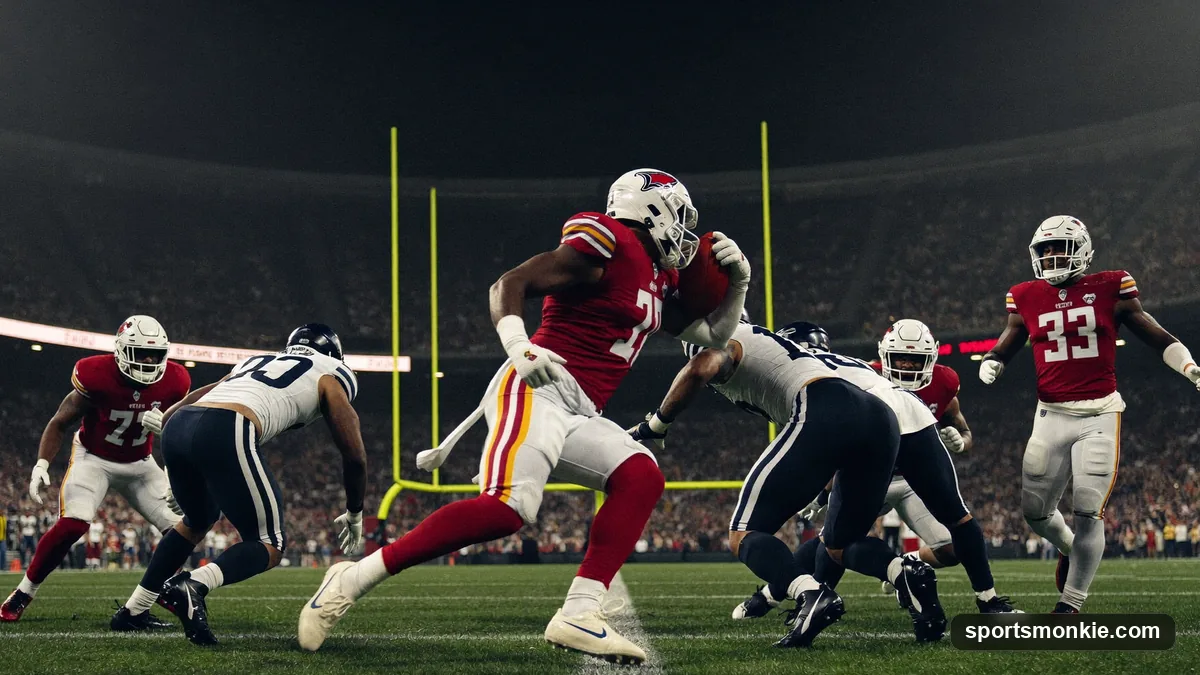
The defining picture is a ball carrier — a quarterback sacked deep, a running back stuffed, a returner swallowed up — being downed in the end zone he is defending. The moment the ball is dead there, and the offense is responsible for it being there, the defense is awarded two points. It is the only score in football credited to the defense as a unit.
The ways a safety can happen
Safeties come from more than just a deep tackle. The common triggers:
| Trigger | Example |
|---|---|
| Ball carrier tackled in own end zone | QB sacked at his own 2, driven back into the end zone |
| Offensive penalty in the end zone | Holding or intentional grounding behind the goal line |
| Fumble out the back of the end zone | Loose ball rolls out of bounds through the end zone |
| Blocked punt out of the end zone | Special-teams block that exits the back line |
Why a safety is worth more than two points
Most scores are followed by the scoring team kicking off. A safety flips that: the team that gave up the two points must free-kick the ball back from its own 20, usually with a punt. So the defense’s reward is points plus the ball, often near midfield. In a tight game that combined swing can be decisive, which is why a safety in overtime can end the game instantly once it is in sudden death.
Safety vs. touchback — don’t confuse them
A safety and a touchback both involve the end zone but are opposites. A touchback happens when the ball is dead in the end zone under the other team’s responsibility (a kickoff fielded and downed, for instance), and results in no points and a fresh set of downs at the 25 or 20. A safety happens when the offense is responsible for the ball being dead in its own end zone, and results in two points for the defense.
The rare one-point safety
On a two-point try or extra-point attempt, if the defense gains possession and is then downed in its own end zone, the offense scores a single point — a one-point safety. It is one of football’s least-seen plays and has almost never occurred in the NFL, but the rule is real. For more oddities and fundamentals of the game, see our NFL guides.
Frequently asked questions
How many points is a safety in football?+
A safety is worth two points, awarded to the defending team. It is the only score credited to the defense as a unit rather than earned by the offense. After the two points, the team that conceded the safety must also give the ball back with a free kick, so the scoring team gets points and possession — a swing that can be worth far more than two points in field position.
What causes a safety in football?+
The most common cause is the offensive ball carrier being tackled in his own end zone. A safety is also awarded if the offense commits a penalty in its own end zone (such as holding or intentional grounding), if a fumble goes out of bounds through the back of the end zone, or if a blocked punt goes out of the kicking team's end zone. The theme is that the ball becomes dead in the offense's own end zone under the offense's responsibility.
What happens after a safety is scored?+
After the two points, the team that conceded the safety must put the ball back in play with a free kick — usually a punt — from its own 20-yard line. This is different from a normal score, after which the team that just scored kicks off. Here the scored-upon team kicks, which is why a safety uniquely combines points with a change of possession.
Is a safety the rarest score in football?+
A safety is one of the rarest scoring plays, far less common than touchdowns or field goals, though not as rare as a one-point safety. Most NFL seasons see only a handful of them league-wide. Because it hands over both points and possession, a safety often has an outsized effect on a close game.
What is intentional grounding in the end zone?+
If a quarterback throws the ball away to avoid a sack while standing in his own end zone with no eligible receiver near the throw, the intentional grounding penalty is enforced as a safety rather than a yardage loss. This is one of the penalty-based ways a defense can be awarded two points. See our explainer on intentional grounding for the full rule.
What is a one-point safety?+
A one-point safety is an extremely rare play that can only happen on a try (extra-point or two-point attempt). If the defense gains possession during a try and is then downed in its own end zone, the offense is awarded a single point. It has almost never happened at the NFL level, but the rule exists.
Can a safety happen on special teams?+
Yes. A blocked punt that rolls out of the back of the kicking team's end zone, or a punt returner tackled in his own end zone, both result in a safety. Special-teams safeties are among the most dramatic because they swing points and field position at once, often flipping momentum late in a half.
Sources
Play & tools
Free browser games and tools — no account, no download.
- Play 17-0 — Draft nine and chase a flawless NFL regular season — the perfect 17-0 run, no playoffs.
- Play 20-0 — Draft nine and chase a perfect NFL season — regular season and playoffs, undefeated.
- Play 16-0 — Draft nine and chase a perfect 16-0 — the classic 16-game NFL regular season, no playoffs.
- Play Flawless Six — Draft five players and a head coach, then chase a perfect NFL season with the right chemistry.
- Play Guess the NFL Player — A new mystery NFL player every day. Eight guesses, with a clue on each — plus free unlimited mode.
- Play NFL Wordle — A Wordle for football — guess the daily NFL player in eight tries, with green-amber-grey feedback on every clue.
- Play NFL Connections — Sort sixteen football tiles into four hidden groups of four. A new daily puzzle, four mistakes allowed, plus unlimited mode.
- Explore all our games →
- Open the schedule simulator — Pick every 2026 NFL game and watch the standings and playoff seeds update live.
- Open the squares generator — Generate a randomized, printable Super Bowl squares grid for your party — free, no sign-up.
- Open the trade calculator — Weigh any fantasy football trade instantly — clear winner and value gap.
- Run the NFL predictor — Simulate the NFL bracket and see who your picks send to the Super Bowl.
- Open the passer rating calculator — Calculate the official NFL passer rating (0–158.3) from any passing line, with the formula shown.
- Explore all our free sports tools →
Related nfl guides
View all →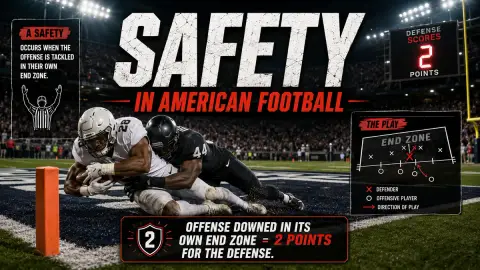
What Is a Safety in American Football? Rules and Scoring
A safety scores two points for the defense when the offense is tackled in its own end zone. Here is how it happens, what follows it, and why it is so rare.

What Is a Challenge Flag in Football? NFL Replay Rules
A challenge flag is the red flag an NFL coach throws to request an instant-replay review. Teams get two challenges, a third if both succeed, and lose a timeout if wrong.
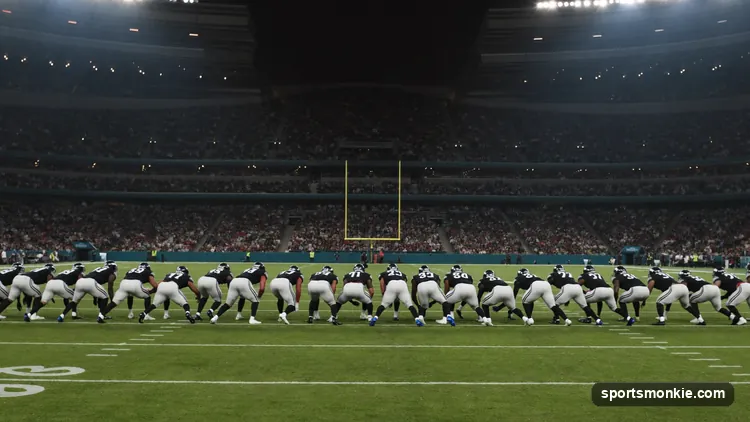
What Is an Eligible Receiver in Football?
An eligible receiver is a player allowed to catch a forward pass — the QB, backs, tight ends and the two players on the ends of the line. Interior linemen are ineligible.
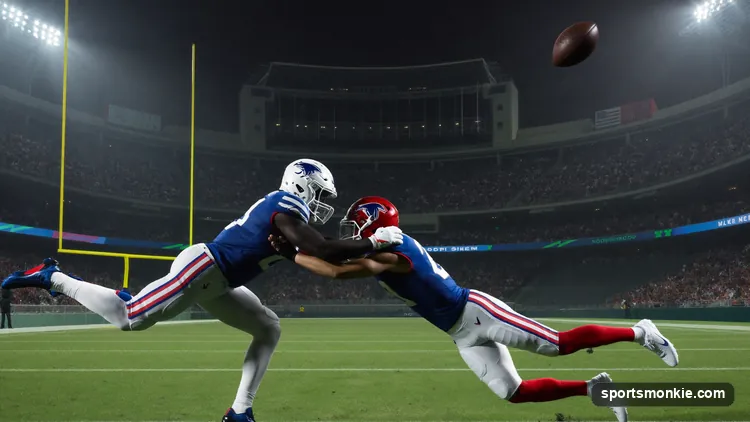
What Is Pass Interference in Football? DPI & OPI
Pass interference is illegal contact that hinders a receiver's chance to catch a pass. In the NFL, defensive PI is a spot foul and automatic first down.
What Is the Red Zone in Football?
The red zone in football is the area from the defense's 20-yard line to the goal line. Scoring efficiency there — touchdowns vs. field goals — often decides games.
What Is the Two-Minute Warning in Football?
The two-minute warning is an automatic clock stoppage when two minutes remain in each half of an NFL game. It works like a free timeout for both teams.