
Penalty Shootout Rules Explained (Football)
On this page5
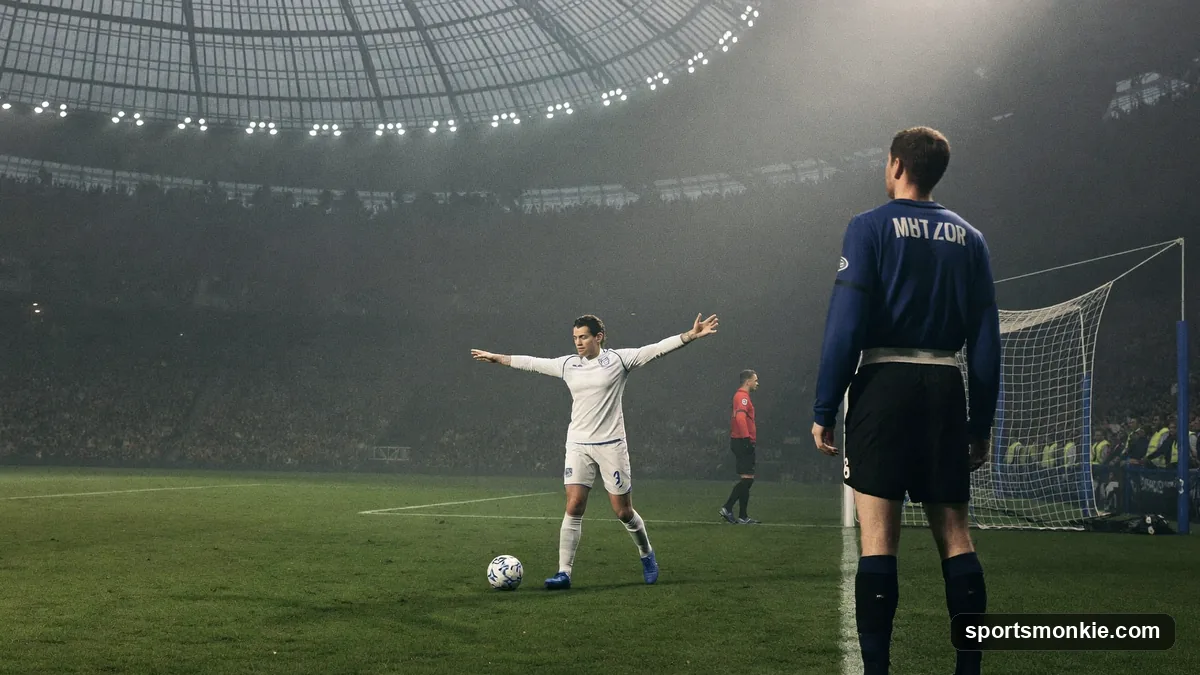
A penalty shootout decides a tied knockout match: each team takes five penalties, alternating, and the side that scores more wins. If they are level after five each, it goes to sudden death. Only players on the pitch at the final whistle may take a kick. It is football’s ultimate tie-breaker, used after extra time.
How the shootout is run
Once extra time ends level, a coin toss decides which goal is used and which team kicks first. The sides then alternate from the penalty spot, twelve yards out, one kick at a time, five different takers each. Whoever scores more of their five wins. If the outcome is mathematically settled early, the shootout stops there.
The order of events
| Stage | What happens |
|---|---|
| First five each | Alternating kicks; most goals wins |
| Level after five | Sudden death begins |
| Sudden death | One kick each per round; score-and-miss decides it |
| All players used | Cycle repeats — even goalkeepers can take one |
Because every eligible player must take a kick before anyone goes twice, dramatic shootouts sometimes end with goalkeepers stepping up.
Who is allowed to take a kick
Only players on the pitch when extra time ended are eligible, including the goalkeeper. If one team has fewer players — say after a red card — the other must reduce its pool to match, so both take from an equal number of players.
The goalkeeper’s rules
The keeper must keep at least part of one foot on or in line with the goal line until the ball is struck, and cannot rush off the line to close the angle. They can shuffle along the line and try to unsettle the taker, but stepping forward early risks a retake if the penalty is missed.
Why the shootout exists
The shootout is the last resort after a level 90 minutes and 30 minutes of extra time. It is unique to knockout football — a league simply records a draw. It is also different from an in-game penalty, which allows rebounds; a shootout kick is dead after first contact. For the rest of the game’s rules, see our football guides, the offside rule, and how stoppage time works.
Frequently asked questions
How does a penalty shootout work?+
After extra time ends level, the two teams take turns from the penalty spot. Each side gets five kicks, taken by five different players, and they alternate one at a time. The team that scores more of its five penalties wins. If the result is already decided before all five are taken — for example one team is three ahead with two to go — the shootout stops early.
What happens if a penalty shootout is tied after five kicks?+
It goes to sudden death. Each team takes one kick per round, and if one scores while the other misses in the same round, the scoring team wins. Every eligible player must take a kick before anyone can go again, so shootouts occasionally reach the goalkeepers taking penalties. Sudden death continues until there is a winner.
Who can take penalties in a shootout?+
Only players who were on the pitch at the end of extra time — including the goalkeeper — are eligible. A team reduced to ten men must 'even up' by having the other team not use one of its players, so both sides take from an equal pool. Substituted or sent-off players cannot take a kick.
What are the rules for the goalkeeper in a shootout?+
The goalkeeper must stay on the goal line, between the posts, until the ball is kicked, and must have at least part of one foot on or in line with the line at the moment of the kick. Keepers cannot come off the line early to narrow the angle. They can move along the line and try to distract or read the taker, but stepping forward before contact can lead to a retake.
When does a penalty shootout happen?+
A shootout is football's final tie-breaker, used only in knockout matches that remain level after 90 minutes and a full period of [extra time](/what-is-extra-time-in-football/). Leagues never use shootouts because a draw is an acceptable result. Cup finals, tournament knockouts and level two-legged ties are the classic settings.
What was the ABBA penalty system?+
ABBA was a trialled shootout order meant to reduce the advantage of going first: instead of teams alternating one kick each (ABAB), one team took two in a row, then the other took two (ABBA), mirroring a tennis tiebreak. It was tested in some competitions but proved confusing and was largely dropped in favour of the traditional alternating order.
Is a penalty shootout the same as a penalty in normal play?+
No. A penalty awarded during the match is a live play — if the goalkeeper parries it, the taker or others can score from the rebound. In a shootout, each kick is dead after the first contact: there are no rebounds, and a save or a miss simply ends that attempt. Both are taken from the same spot, 12 yards out, but the follow-up rules differ.
Sources
Play & tools
Free browser games and tools — no account, no download.
- Play 38-0 — Sign a 4-4-2 of all-time football legends and chase a perfect 38-0 league season — perfect, not just unbeaten.
- Explore all our games →
Related football guides
View all →
What Is Extra Time in Football? The 30 Minutes
Extra time in football is two 15-minute halves played when a knockout match is level after 90 minutes. If still tied, it goes to a penalty shootout.
What Is Stoppage Time in Football? (Added Time)
Stoppage time — also called added time or injury time — is the extra minutes the referee adds to the end of each half to make up for time lost during play.
What Is the Away Goals Rule in Football? How It Worked
The away goals rule broke ties in two-legged ties by counting goals scored away from home as extra weight. Here's how it worked and why UEFA scrapped it.
What Is a Derby in Football? Local Rivalry Matches
A derby in football is a match between two rival clubs, usually from the same city or region. Think the Manchester derby, El Clasico or the Merseyside derby.
What Is a False Nine in Football? The Role Explained
A false nine is a centre-forward who drops deep into midfield instead of staying up front, dragging defenders out of position and creating space for teammates.
What Is a Nutmeg in Football? (Panna)
A nutmeg in football is playing the ball through an opponent's legs and collecting it on the other side. Also called a 'panna,' it's one of the game's cheekiest skills.