
What Is a Penalty Shootout in Football? Rules and Order
On this page7
TL;DR
A penalty shootout is a tie-breaker for a football match that must produce a winner. Teams alternate kicks from the penalty mark. The first five kicks are a comparison set; if the scores are level after equal kicks, the contest continues one pair at a time.
When a shootout is used
League matches normally accept a draw. Knockout competitions may use extra time first and then a shootout if the score remains level. The tournament regulations, not the universal laws alone, decide the sequence.
The basic order
The referee conducts a coin toss to choose the goal and another procedure determines which team kicks first. Each team nominates eligible kickers. The teams take one kick each until five kicks per side are completed or the score is mathematically decided earlier.
Sudden death and early endings
If the teams remain level after five kicks, they continue in rounds. A team wins when it has scored more after both sides have taken the same number of kicks. A shootout can end before ten total kicks if the trailing team cannot catch up.
Keeper, kicker, and retake rules
Only eligible players may participate, and substitutions are limited by the competition rules. The goalkeeper may be replaced if unable to continue. A kick can be retaken or recorded as a miss when the kicker or goalkeeper infringes the law.
Shootout versus a penalty kick
A penalty kick happens during play after a specific foul. A shootout kick is a tie-break procedure after the match. For context, compare stoppage time in football, what is VAR and aggregate score.
Questions readers ask
Do all five kickers have to shoot?
No. A shootout may finish early once the score cannot be caught. Otherwise each team uses five different kickers before the next rounds.
Can the same player kick twice?
Not until all eligible players have kicked, subject to the competition law and the number of players remaining.
Can a match go straight to penalties?
Some competitions skip extra time, while others require it. The published competition regulations control the format.
What happens if a goalkeeper is injured?
The laws allow a replacement in specified circumstances, but the competition rules and remaining substitutions also matter.
Does the team that kicks first usually win?
Historical outcomes vary by dataset and era. The laws do not give the first team extra points; both teams take equal turns.
Is a shootout part of the match score?
The match result is recorded as a draw after the playing time, with the shootout winner noted for advancement. Statistics providers may display both values.
Related football rules
See offside in soccer, the offside trap and what is a derby for more match-law explainers.
Sources
Play & tools
Free browser games and tools — no account, no download.
- Play 38-0 — Sign a 4-4-2 of all-time football legends and chase a perfect 38-0 league season — perfect, not just unbeaten.
- Explore all our games →
Related football guides
View all → What Is a Corner Kick in Football? Rules and Tactics
A corner kick restarts football after the defending team last touches the ball before it crosses its goal line.
What Is VAR in Football? Video Assistant Referee Rules
VAR supports on-field officials by reviewing clear errors in goals, penalties, direct red cards and mistaken identity situations.
Penalty Shootout Rules Explained (Football)
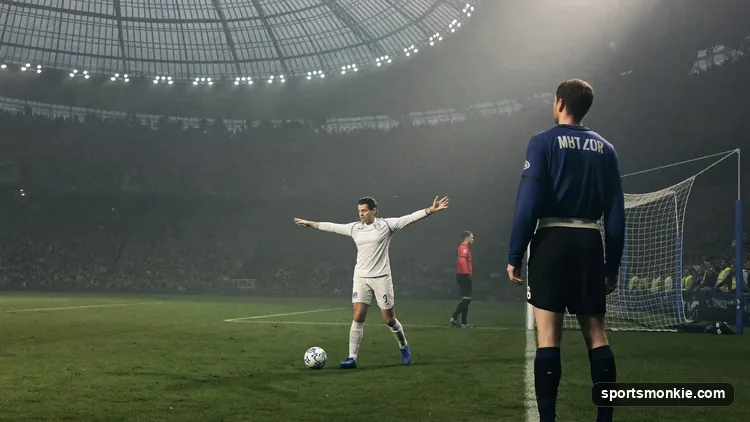
A penalty shootout decides a tied knockout match: teams take five penalties each, alternating, and the side with more goals wins. If level, it goes to sudden death.
What Is a Challenge Flag in Football? NFL Replay Rules
A challenge flag is the red flag an NFL coach throws to request an instant-replay review. Teams get two challenges, a third if both succeed, and lose a timeout if wrong.
What Is a Safety in Football? The 2-Point Score
A safety in football is worth 2 points, awarded to the defense when the ball carrier is downed in his own end zone. The conceding team then free-kicks from its 20.
What Is an Eligible Receiver in Football?
An eligible receiver is a player allowed to catch a forward pass — the QB, backs, tight ends and the two players on the ends of the line. Interior linemen are ineligible.