
Soccer Ball Weight and Pressure: Official FIFA Standards
On this page7
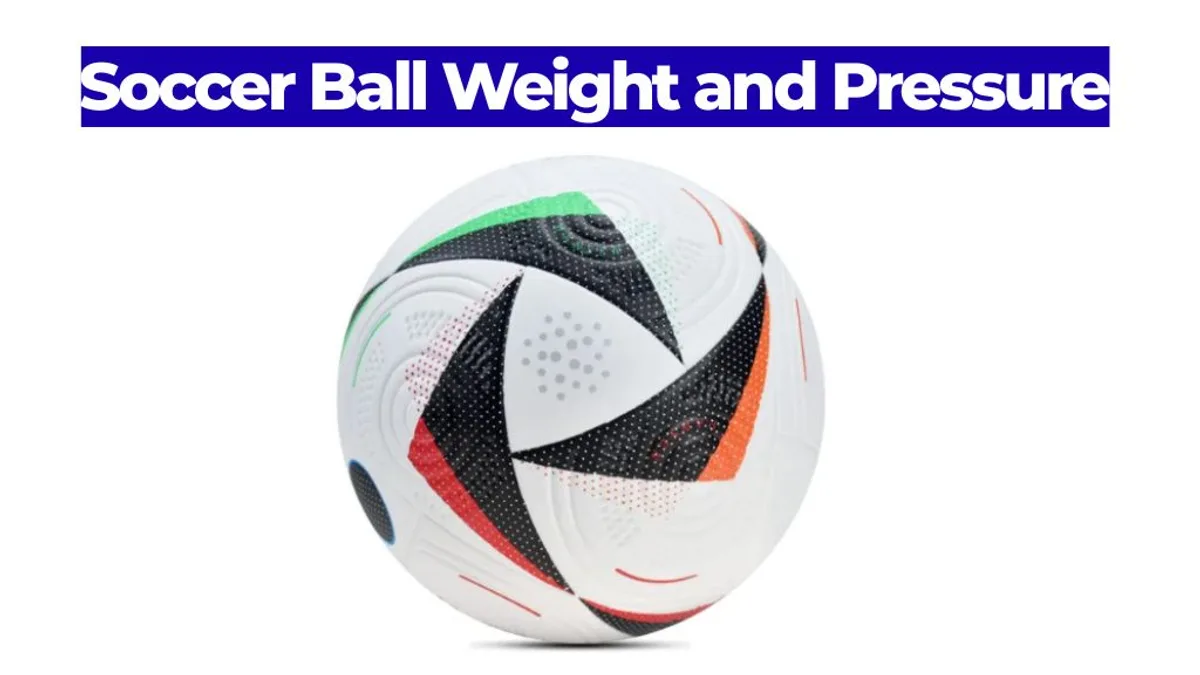
Referees carry a pressure gauge in their kit bag for a reason: a ball outside the legal window changes how the game plays, not just how it feels. Law 2 of the Laws of the Game sets the numbers everyone has to hit — 410 to 450 grams, 0.6 to 1.1 atmospheres of pressure at sea level — and every FIFA-sanctioned match ball has to clear that bar before kickoff.
The Governing Document: Law 2
IFAB writes and maintains the Laws of the Game, and Law 2 covers the ball itself:
- Spherical shape
- Leather or another suitable material
- Circumference between 68 cm and 70 cm (27 in to 28 in)
- Weight at kickoff between 410 g and 450 g (14 oz to 16 oz)
- Pressure of 0.6 to 1.1 atmospheres at sea level (60–110 kPa / 8.5–16 psi)
These figures apply at the start of the match. Rain changes things: a ball absorbs water as play goes on, which is why modern ball construction puts so much effort into waterproofing.
For the field markings that go with Law 2, see our soccer field dimensions guide.
Official Specifications at a Glance
| Specification | Minimum | Maximum |
|---|---|---|
| Weight | 410 g (14 oz) | 450 g (16 oz) |
| Circumference | 68 cm (27 in) | 70 cm (28 in) |
| Pressure (atm) | 0.6 atm | 1.1 atm |
| Pressure (psi) | approx. 8.5 psi | approx. 16 psi |
| Pressure (kPa) | 60 kPa | 110 kPa |
Why Pressure Matters
Pressure changes how the ball behaves off the boot. Inflate it toward the low end and it feels softer, deforms more on contact, and doesn’t travel as far when struck. Toward the high end, it feels harder, springs back to shape faster, and carries further.
Referees check pressure with a calibrated gauge before every match. Most professional games use balls inflated toward the middle-to-upper end of the range, since players tend to want a firmer ball for passing and shooting accuracy.
Altitude Adjustments
At real altitude, La Paz, Bolivia sits over 3,600 meters above sea level, the air is thinner, so a ball travels farther and faster at the same inflation level. IFAB’s numbers are set for sea level, which means clubs and referees at altitude have to adjust pressure to get a comparable playing feel. It’s a real factor in high-altitude international fixtures, not a footnote.
How Waterlogging Affects the Ball
Old leather footballs soaked up water, sometimes adding 10 to 20 percent to their starting weight in a wet match. That’s the source of every story about “heavy balls” in winter football from decades past.
Modern match balls use synthetic panels with moisture-resistant coatings that cut water uptake sharply. The outer surface repels water, and the internal bladder (usually butyl or latex) holds air without significant loss during normal play.
Size Categories for Different Ages
Adults play with a Size 5 ball. Younger age groups use smaller balls suited to their physical development:
| Ball Size | Typical Age Group | Circumference |
|---|---|---|
| Size 3 | Under 8 / mini football | 58–60 cm |
| Size 4 | Under 8 to Under 12 | 63–66 cm |
| Size 5 | Under 12 upwards / adult | 68–70 cm |
Matching ball size to age group matters for technique. A six-year-old trying to control a Size 5 ball builds poor habits and loses interest faster.
Futsal also uses a smaller, lower-bounce ball built for a hard indoor court. If that is the format you are playing, use our futsal rules guide rather than applying full outdoor soccer ball assumptions. For a broader format comparison, futsal vs indoor soccer explains why the ball and court change the rhythm of the game.
FIFA Quality Labels
FIFA runs a two-tier quality mark for balls:
- FIFA Quality — meets a baseline set of performance tests
- FIFA Quality Pro — the higher standard required for top professional competitions
Testing covers shape retention, water absorption, pressure loss, rebound, and circumference, so a ball performs consistently across 90 minutes and across a full season.
Once the ball is legal, technique takes over. Our guide on how to shoot a soccer ball covers the striking mechanics that make pressure and weight matter in practice.
Frequently asked questions
What is the official weight of a soccer ball?+
According to the Laws of the Game (Law 2), an official match ball must weigh between 410 g and 450 g (14 oz to 16 oz) at the start of a match.
What pressure should a football be inflated to?+
The Laws of the Game specify a pressure of 0.6 to 1.1 atmospheres (atm) at sea level, equivalent to approximately 8.5 to 16 psi or 60 to 110 kPa.
Does a wet ball weigh more than a dry ball?+
Yes. A waterlogged ball absorbs moisture and can exceed its starting weight during a match played in heavy rain. This is why modern match balls use panels and coatings designed to minimise water absorption.
Sources
Play & tools
Free browser games and tools — no account, no download.
- Play 38-0 — Sign a 4-4-2 of all-time football legends and chase a perfect 38-0 league season — perfect, not just unbeaten.
- Explore all our games →
Related football guides
View all →
How Much Does a Tennis Ball Weigh? Official Specs Explained
A standard tennis ball must weigh 56.0 to 59.4 g (1.975-2.095 oz) under ITF rules, and meet strict diameter and bounce limits for approved pro play.

How Big Is a Soccer Field? Official Dimensions Explained
A standard soccer field is 100-130 yards long and 50-100 yards wide. FIFA sets tighter ranges for internationals: 110-120 long and 70-80 yards wide.
Offside in Soccer Explained: The Rule in Plain English
Offside is called when an attacker is nearer the goal than the ball and the second-last defender as the ball is played. See how the offside rule works.
What Is Trapping in Soccer? Ball Control Techniques Explained
Trapping in soccer means using part of the body to receive and bring a moving ball under close control. Learn the main techniques and why they matter.
How to Shoot a Soccer Ball: Technique, Power & Accuracy
To shoot a soccer ball with power and accuracy, plant your standing foot beside the ball, strike through the laces, and follow through to your target.
How to Juggle a Soccer Ball: Step-by-Step for Beginners
To juggle a soccer ball, drop it onto your dominant foot and kick it back up, keeping it below chest height. Start with one touch and build up gradually.