
How Long Is a Soccer Game? Full Time, Stoppage & More
On this page8
Ninety minutes sounds simple, but almost nobody watches a soccer match that runs exactly an hour and a half. Between the halftime break, stoppage time, and the possibility of extra time and penalties in a knockout tie, the gap between the “90 minutes” on the poster and the time you actually spend watching can be enormous. Here is how a match’s length really breaks down, from a routine league game to a World Cup knockout that goes the distance.
Regulation Time: 90 Minutes
Regulation play is 45 minutes per half with a 15-minute halftime interval. The clock runs continuously — it does not stop for the ball going out of play, which is why stoppage time exists.
Stoppage Time (Injury Time)
The fourth official holds up a board showing the minimum amount of stoppage time to be played at the end of each half. Actual time added can exceed the displayed number. Common reasons time is added include:
- Substitutions
- Injury treatment
- Goal celebrations
- VAR (Video Assistant Referee) checks
- Time-wasting by players
Modern matches, especially at major tournaments, routinely see 5–10 minutes of stoppage time per half.
Halftime Break
Teams get a 15-minute interval between halves. In some competitions the break can extend slightly, but 15 minutes is the standard under the Laws of the Game.
Extra Time: 30 Additional Minutes
In knockout competitions (such as the FA Cup, UEFA Champions League, or World Cup rounds), a draw after 90 minutes triggers extra time: two 15-minute periods played end-to-end with no break. Stoppage time can still be added to each extra-time period.
Penalty Shootout
If the score is still level after extra time, a penalty shootout decides the winner. Each team nominates five kickers; if still tied, it goes to sudden death. The shootout itself typically takes 15–30 minutes depending on how many rounds are needed.
Duration by Competition Format
| Format | Regulation | Extra Time | Potential Max |
|---|---|---|---|
| Standard league match | 90 min | None | ~100–110 min with stoppages |
| Knockout round (draw) | 90 min | 30 min | ~140 min with stoppages |
| Knockout with penalties | 90 min | 30 min + shootout | ~160 min |
| Youth (U10) | 50–60 min | Varies | Varies |
| Youth (U14) | 70 min | Varies | Varies |
Youth and Amateur Match Lengths
Youth and amateur matches are shorter. Governing bodies set age-appropriate durations: younger age groups play halves of 20–25 minutes, older youth sides progressively closer to the full 45-minute half. Always check your local federation’s rules, as they vary.
Why the Clock Never Stops
Unlike basketball or American football, soccer uses a continuous clock. This keeps the game flowing and is fundamental to its character. The trade-off is that precise elapsed playing time must be estimated by officials and compensated for at half-time and full-time.
Frequently asked questions
How long is a soccer game including halftime?+
A standard match is 90 minutes of playing time plus a 15-minute halftime break. With stoppage time added to each half, the total clock time is typically around 100–110 minutes.
What is stoppage time in soccer?+
Stoppage time (also called injury time) is added by the referee at the end of each half to compensate for time lost to substitutions, injuries, goal celebrations, and VAR checks. It usually ranges from 1 to 10-plus minutes.
How long is a soccer game if it goes to extra time?+
If a knockout match is level after 90 minutes, two 15-minute periods of extra time are played, bringing the potential total to 120 minutes before a penalty shootout if still level.
Why doesn't the clock stop in soccer?+
Soccer uses a continuous running clock that keeps play flowing, unlike basketball or American football. Time lost to stoppages is not paused but estimated by the officials and added back as stoppage time at the end of each half, which is why matches run past 90 minutes.
How much stoppage time is added in a soccer match?+
It varies. The fourth official displays a minimum, but the referee can add more. Two to five minutes per half is common, though major tournaments now routinely see 5 to 10 minutes or more added for substitutions, injuries, celebrations, and VAR reviews.
How long is a youth soccer game?+
Youth matches are shorter and set by local federations. Under-10 games often run 50 to 60 minutes, under-14 around 70 minutes, with older age groups moving toward the full 45-minute halves. Always check your specific league's rules, as durations differ.
How long does a penalty shootout take?+
A shootout usually takes about 15 to 30 minutes, depending on how many rounds are needed. Each side takes five kicks, and if still level it moves to sudden death, one kick each, until one team scores and the other misses in the same round.
Sources
Play & tools
Free browser games and tools — no account, no download.
- Play 38-0 — Sign a 4-4-2 of all-time football legends and chase a perfect 38-0 league season — perfect, not just unbeaten.
- Explore all our games →
Related football guides
View all →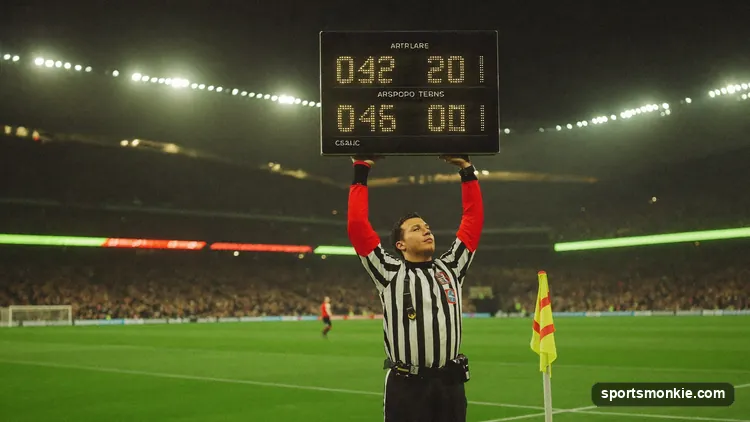
What Is Stoppage Time in Football? (Added Time)
Stoppage time — also called added time or injury time — is the extra minutes the referee adds to the end of each half to make up for time lost during play.

What Is Stoppage Time in Football? How It Is Added
Stoppage time compensates for delays such as substitutions, injuries, goals, disciplinary action and video reviews.
11v11 Soccer Formations: The Full-Sided Guide to Every Shape
11v11 soccer formations explained: how full-sided lineups work, the most common shapes (4-4-2, 4-3-3, 4-2-3-1, 3-5-2, 5-3-2), and how to pick one.
The Highest-Scoring Soccer Game Ever
AS Adema beat SO l'Emyrne 149-0 in Madagascar in 2002, the highest-scoring soccer game ever, though every goal was a deliberate own goal in protest.
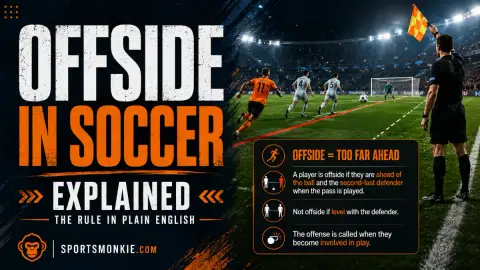
Offside in Soccer Explained: The Rule in Plain English
Offside is called when an attacker is nearer the goal than the ball and the second-last defender as the ball is played. See how the offside rule works.
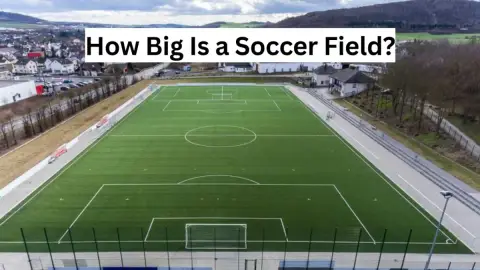
How Big Is a Soccer Field? Official Dimensions Explained
A standard soccer field is 100-130 yards long and 50-100 yards wide. FIFA sets tighter ranges for internationals: 110-120 long and 70-80 yards wide.