
Flip Turn in Swimming: How to Master the Tumble Turn Step by Step
On this page5
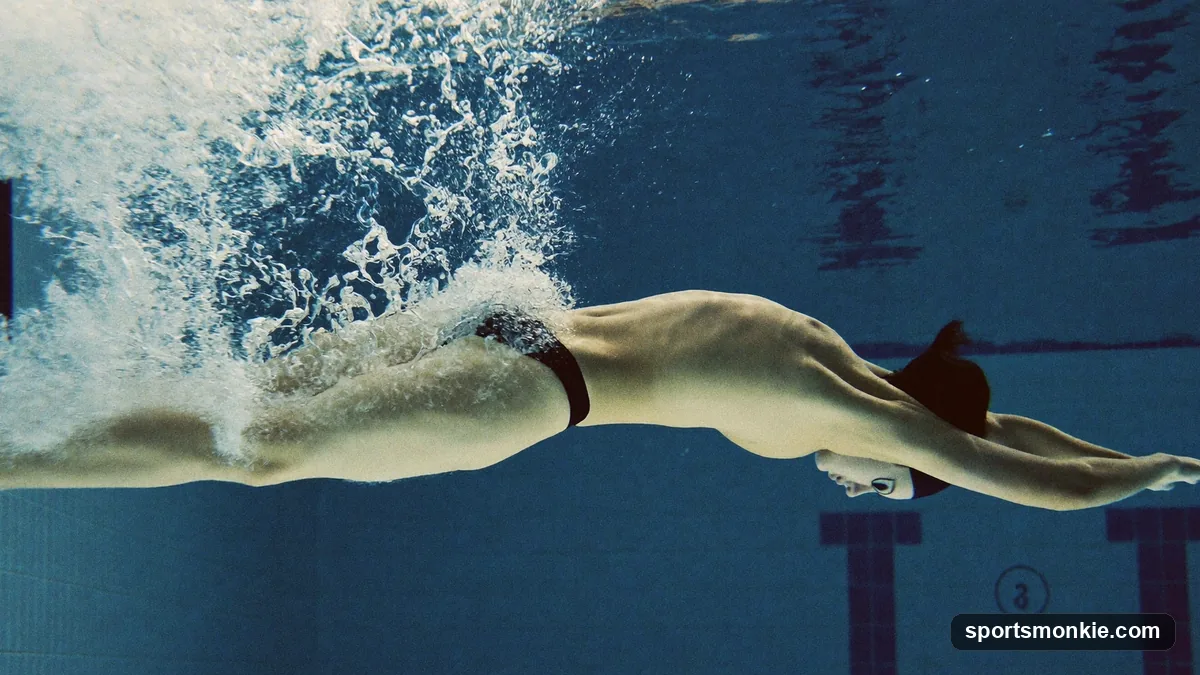
A flip turn (tumble turn) is a forward somersault at the wall that lets freestyle and backstroke swimmers reverse direction without stopping or standing up, converting the somersault’s momentum straight into a push-off. It’s one of the first advanced skills every lap swimmer and racer needs, because a clean flip turn is measurably faster than an open, stand-up turn and keeps a swim workout — or a race — from breaking rhythm every 25 or 50 meters.
This guide breaks the flip turn into the phases coaches teach on deck — approach, tuck and flip, foot plant, and push-off — plus the mistakes that trip up almost every beginner.
What Is a Flip Turn?
A flip turn is a forward tumble performed at the wall, usually just before or right at the final arm stroke of a length. Instead of touching the wall with a hand and manually turning around, the swimmer somersaults so the feet land on the wall while the body is upside down and on its back, then pushes off in a streamline before rolling onto the stomach to resume the stroke.
Flip turns are legal only in freestyle and backstroke. Butterfly and breaststroke require both hands to touch the wall simultaneously immediately before any turn, which is incompatible with a full tumble — swimmers in those strokes instead do a fast tuck-and-turn off the two-hand touch. If you’re still building your foundation across strokes, it helps to first get comfortable with the different types of swimming strokes before adding a turn skill on top.
Why Use a Flip Turn Instead of an Open Turn
An open (or “touch”) turn means reaching the wall, touching with a hand, and repositioning the body before pushing off — a pause that costs time and breaks momentum. A flip turn keeps the body moving the whole time: forward momentum rolls straight into the somersault, and the legs are already loaded against the wall for an explosive push-off. That difference adds up over a full race, which is why flip turns are standard at every level above beginner.
Step-by-Step Flip Turn Technique
Work through these phases in order. Most swimmers learn them dry-land or mid-pool first, then move the drill progressively closer to the wall.
| Phase | What happens | Key focus |
|---|---|---|
| 1. Approach | Final stroke begins about one meter from the wall; eyes stay down, not on the wall | Keep swimming at speed — don’t glide in early |
| 2. Tuck and flip | Arms pull in to the sides, chin tucks to chest, knees pull up into a tight ball, small dolphin kick starts the rotation | Let the tuck and kick do the work, not the arms |
| 3. Foot plant | Feet land flat on the wall, shoulder-width apart, knees bent to roughly 90 degrees, body now on its back | Land square — not too high or too low on the wall |
| 4. Push-off and streamline | Legs drive explosively off the wall as arms extend overhead into a tight streamline, body rotates from back to stomach | Push in the direction you want to travel; keep the streamline tight |
| 5. Glide and breakout | Glide while speed is highest, then take 3-5 dolphin kicks before the first stroke | Don’t kick too early or surface too soon |
1. The Approach
Start judging distance instead of guessing it. Many swimmers count strokes per length in practice until they know exactly how many bring them to the flip point, then repeat that count every length. Keep the head neutral and eyes down, not up at the wall — lifting the head early slows the hips and throws off timing.
2. The Tuck and Flip
On the last stroke, pull both arms in close to your sides rather than using them to pull yourself over — reaching with the arms is the single most common flaw and it slows the rotation. Drop your chin to your chest, pull your knees up, and add a small dolphin kick to drive the somersault. Exhale steadily through the nose; holding the breath here is what causes water up the nose and a rushed landing.
3. Planting the Feet
Your feet should land on the wall shoulder-width apart, knees bent to about 90 degrees, toes pointed slightly upward, body now on its back with arms already extending overhead into a streamline. Landing too high wastes leg drive; landing too low crowds the knees and cuts push-off power.
4. Push-Off and Streamline
Drive off the wall hard and immediately — this push generates more speed than any other moment in the lap. Point the locked, streamlined hands in the exact direction of travel and rotate from back to stomach during the glide, not before the feet leave the wall. A loose or late streamline bleeds off the speed the push-off just created.
5. Glide, Kick, and Breakout
Let the glide run until it naturally slows, then begin dolphin kicking — coaches typically recommend three to five kicks before breaking into the normal stroke and first breath. Surfacing too early wastes the underwater speed advantage; staying under much past five or six kicks usually costs more energy than it saves for anyone but elite sprinters. The breakout leans on the same motion used in dolphin kick technique, so drilling that kick on its own carries straight over into faster turns.
Common Flip Turn Mistakes and How to Fix Them
| Mistake | Why it happens | Fix |
|---|---|---|
| Using arms to flip | Reaching or pulling with the arms instead of relying on the tuck | Keep arms pinned to the sides through the rotation |
| Swallowing water | Holding the breath and lifting the chin during the tumble | Exhale through the nose; tuck chin to chest |
| Mistimed approach | Guessing the distance to the wall instead of counting strokes | Practice a consistent stroke count per length |
| Feet land off-center or wrong height | Rushing the tuck or flipping too early or late | Slow the drill down mid-pool before doing it at speed |
| Loose streamline off the wall | Arms not locked together, elbows bent | Squeeze arms against the ears, hands stacked, before pushing off |
| Popping up too soon after push-off | Anxiety about breathing or losing the underwater line | Count dolphin kicks (3-5) instead of watching for the surface |
How to Practice and Learn a Flip Turn
Break the skill into pieces rather than trying it at full speed against the wall on day one. A typical progression:
- Dry-land or mid-pool somersaults. Practice the tuck-and-rotate motion away from the wall first, keeping the arms in and the chin tucked.
- Kickboard approach drill. Swim toward the wall holding a kickboard to groove the approach’s body position without worrying about the flip yet.
- Move closer gradually. Once the somersault feels natural, start a few feet from the wall and close the gap until the feet reliably plant flat.
- Add the push-off last. Once the tuck, rotation, and foot plant are consistent, layer in the explosive streamline push-off and dolphin-kick breakout.
This staged approach folds naturally into a broader freestyle swimming session, since the turn only pays off once the stroke is efficient enough to carry speed into the wall. Newer swimmers should treat flip turns as a later add-on — the tips to start swimming fundamentals of balance, breathing, and body position come first.
Flip turns reward repetition more than raw athleticism — a swimmer who drills the tuck, foot plant, and streamline dozens of times a week will out-turn a faster swimmer who never practices the skill. Start slow, keep the arms out of the rotation, and let the wall do the work.
Frequently asked questions
What is a flip turn in swimming?+
A flip turn, also called a tumble turn, is a forward somersault swimmers perform at the pool wall to change direction without stopping or standing up. It is used in freestyle and backstroke racing and lap swimming because it converts forward momentum directly into a wall push-off, which is faster than touching the wall and turning around by hand.
How far from the wall should you start a flip turn?+
Start the tuck roughly half an arm's length to a full arm's length from the wall, right after your final stroke. Distance varies with height and speed, so most swimmers find the right spot by counting strokes per length in practice until the timing becomes automatic.
Do you touch the wall on a flip turn?+
No, not with your hands. In freestyle and backstroke, World Aquatics rules only require the swimmer to touch some part of the body — the feet, planted flat on the wall during the somersault — to complete the turn. Butterfly and breaststroke still require a simultaneous two-hand touch before any turn.
Why do my flip turns make me swallow water?+
Most swimmers who gasp or swallow water during a flip turn are holding their breath and lifting their chin. Exhale steadily through the nose during the somersault and tuck the chin to the chest; this keeps water out of the nose and lets the body rotate faster.
How many dolphin kicks should you take off the wall?+
Three to five dolphin kicks in a tight streamline is the typical range before breaking out into freestyle stroke. Elite sprinters may hold the underwater streamline longer, but recreational and age-group swimmers usually lose speed if they stay under much past five kicks.
Is a flip turn legal in every stroke?+
Flip turns are only used in freestyle and backstroke. Butterfly and breaststroke require both hands to touch the wall at the same time immediately before the turn, which rules out the tumble-turn motion, though swimmers can still tuck and rotate quickly after that two-hand touch.
What's the biggest mistake beginners make on flip turns?+
Using the arms to pull the body over instead of relying on the tuck and a small dolphin kick. Pulling with the arms slows the rotation, throws off the streamline, and often means the feet land off-center or too high or low on the wall.
How long does it take to learn a flip turn?+
Most swimmers pick up the basic rotation in a few sessions of dry-land and mid-pool practice, then need several weeks of repetition at the wall to make the timing, foot plant, and streamline push-off consistent under race speed.
Sources
Play & tools
Free browser games and tools — no account, no download.
- Play today's Sports Connections — Today's Sports Connections — daily hints, answers, and play the grid.
- Play Guess the NFL Player — A new mystery NFL player every day. Eight guesses, with a clue on each — plus free unlimited mode.
- Explore all our games →
Related guides
Sidestroke Swimming: Technique, Scissor Kick, and Lifesaving Use
Sidestroke swimming is a relaxed, on-your-side stroke built for endurance and rescue. Learn the arm pull, scissor kick, and why lifeguards rely on it.
Types of Swimming Strokes: Freestyle, Backstroke, Breaststroke & More
The main types of swimming strokes are freestyle, backstroke, breaststroke, butterfly, sidestroke, and elementary backstroke — each built for a different job.
What Is the Individual Medley in Swimming? Order, Distances & Rules
Individual medley swimming has one swimmer race all four strokes in a fixed order: butterfly, backstroke, breaststroke, freestyle. Here's how it works.
Individual Medley Order: The 4 Strokes in Turn
The individual medley order is butterfly, backstroke, breaststroke then freestyle. Why the order is set that way and how it differs from the medley relay.
How to Swim: Complete Technique Guide for All 4 Strokes
Learn how to swim with correct technique for freestyle, breaststroke, backstroke, and butterfly. Body position, breathing, kick, and drills to swim farther and faster.
Medley Relay Explained: Stroke Order, Exchanges & Strategy
The medley relay swims backstroke, breaststroke, butterfly, then freestyle. Learn the medley relay swimming order, exchange rules, and race strategy.