
Sidestroke Swimming: Technique, Scissor Kick, and Lifesaving Use
On this page6
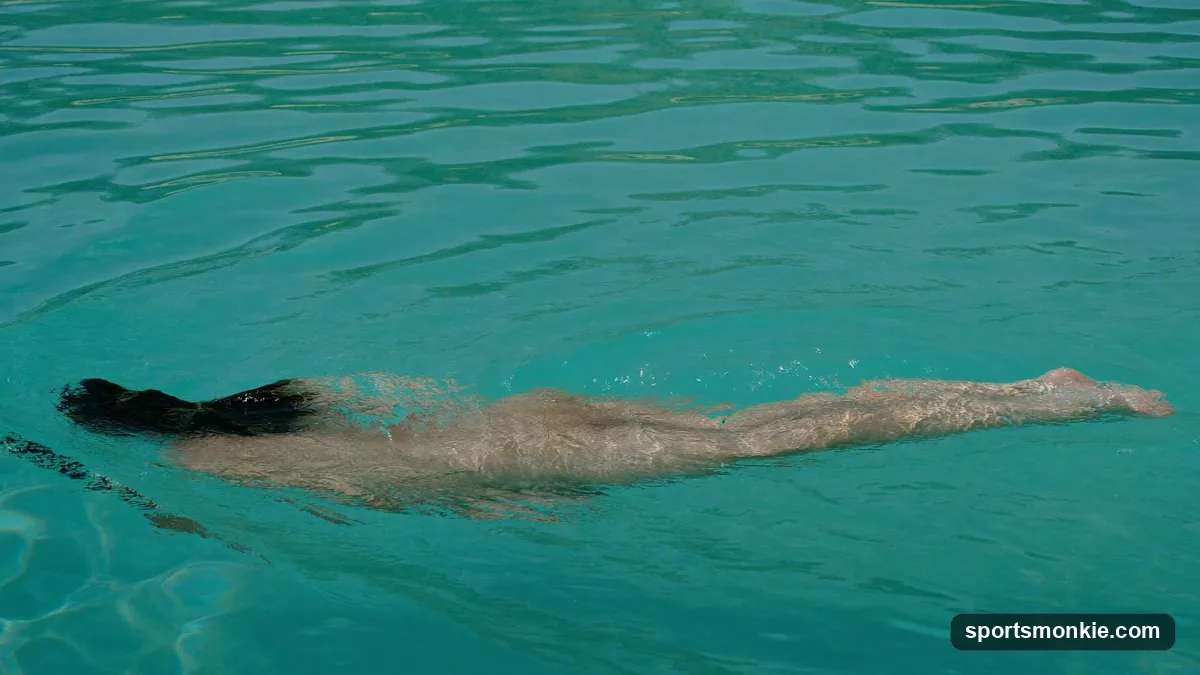
Sidestroke swimming is a non-competitive stroke swum lying on one side, combining an alternating “picking an apple” arm pull with a scissor kick, and it’s the backbone of lifeguard rescue tows and long-distance survival swimming. Unlike the four strokes swum at the Olympics, nobody races the sidestroke — its entire purpose is efficiency: keep the face out of the water, spend as little energy as possible, and stay in control for as long as the swim demands.
If you’ve ever watched someone glide almost silently across a lake, barely splashing, one arm slicing forward while the other pulls back, that’s very likely sidestroke. It looks slow because it is slow — deliberately. That’s the whole point.
What Makes Sidestroke Different
Every other major stroke keeps the body roughly flat: front crawl and breaststroke face down, backstroke faces up. Sidestroke rotates the body about 30–40 degrees onto one side, with the lower shoulder and hip staying just under the surface and the head turned to rest one ear near the water while the mouth and nose stay clear for breathing.
Because the body is rolled onto its side, the two arms can’t do the same job at the same time — one becomes the “leading” arm (the one closer to the bottom of the pool or lake floor) and the other becomes the “trailing” arm. That asymmetry is the defining feature separating sidestroke from the symmetrical strokes covered in our guide to the types of swimming strokes.
Step-by-Step Sidestroke Technique
Sidestroke is built from three parts working on a repeating cycle: the leading arm pull, the trailing arm recovery, and the scissor kick, all timed so the glide phase — not constant motion — carries the swimmer forward.
- Start in a side-lying glide. Roll onto one side with your bottom arm stretched forward past your head and your top arm resting along your top side, legs together and streamlined.
- Pull with the leading arm (“picking an apple”). Sweep the bottom arm down and back in a semicircle, as if reaching up to pick an apple off a branch and pulling it down toward your hip to drop it in a basket. This pull generates most of your forward drive.
- Recover with the trailing arm. While the leading arm pulls, the top arm bends at the elbow and slides forward along your ribs and chest, tracing the same path the bottom arm just left, until both hands meet in front of your chest.
- Kick with a scissor motion. As the hands meet, draw both knees up slightly, then open the legs — top leg forward, bottom leg backward — and snap them together in a wide, scissoring sweep. This kick fires at the same moment the leading arm finishes its pull.
- Glide. After the kick and pull finish together, extend fully on your side and glide in a streamlined position before starting the next cycle. The glide is where sidestroke saves its energy — resist the urge to rush into the next stroke.
- Breathe naturally. Because the face stays mostly above water throughout, breathing doesn’t need to be timed to arm strokes the way it does in front crawl; you can breathe on almost every cycle without turning your head.
| Component | Motion | Purpose |
|---|---|---|
| Leading (bottom) arm | Semicircular pull, forward-down-back (“picking an apple”) | Main propulsion |
| Trailing (top) arm | Bends and slides forward along the torso | Recovery, sets up next pull |
| Legs | Scissor kick — open wide, snap together | Secondary propulsion, stabilizes body |
| Head/body | Rotated ~30–40° on side, ear near water | Keeps airway clear, reduces drag |
| Rhythm | Pull, kick, and glide finish together, then pause | Conserves energy over distance |
Swimmers who are just building comfort in the water may want to start with fundamentals first — see our primer on tips to start swimming before layering on side-lying technique.
The Scissor Kick, Explained
The scissor kick is what visually separates sidestroke from every other stroke. Instead of a continuous flutter kick (used in freestyle) or a simultaneous whip kick (used in breaststroke), the legs move in opposite directions along a single plane — one forward, one back — then close together in one strong, wide sweep. It’s intentionally slower and more exaggerated than a flutter kick, and because both legs contribute a large surface area on the closing sweep, it produces a strong, efficient burst of thrust without requiring rapid leg turnover. That efficiency is a big part of why the stroke barely raises the heart rate compared to strokes like freestyle swimming.
Why Lifeguards and Rescue Swimmers Use It
Sidestroke is the standard tow stroke taught in lifeguard and water-rescue training, including American Red Cross lifeguarding courses, for a few practical reasons:
- The airway stays clear. With the face mostly out of the water, a rescuer can watch a victim and communicate without stopping to breathe.
- One arm is always free. Because only the leading arm needs to actively pull for propulsion at any moment, the trailing arm and hand are free to grip and tow a person in trouble.
- It’s low-energy and sustainable. A rescuer might need to swim a fair distance while towing dead weight; a stroke that spends energy carefully matters more than one that’s fast for 25 meters.
- It keeps the swimmer calm and controlled. The slow, deliberate rhythm makes it easier to monitor a distressed swimmer and adjust pace than a fast, breath-timed stroke like crawl.
A more modern, streamlined descendant, combat sidestroke, was developed for U.S. Navy SEAL training. It compresses the body position and shortens the recovery to make the stroke faster and more hydrodynamic for long ocean swims while keeping the same low-profile, energy-conserving principles.
Sidestroke vs. the Competitive Strokes
Sidestroke has never been part of Olympic or World Aquatics competition, and it isn’t swum in NCAA or FINA-sanctioned meets. The four recognized competitive strokes are freestyle, backstroke, breaststroke, and butterfly. Sidestroke’s closest historical relative is the Trudgen stroke, a 19th-century hybrid that combined a sidestroke-style scissor kick with an over-the-water freestyle arm recovery — a transitional stroke on the path to the modern front crawl.
The clearest practical contrast is with breaststroke swimming, the other stroke that keeps the head largely out of the water. Breaststroke is symmetrical, swum face-down, and raced competitively at every level; sidestroke is asymmetrical, swum on the side, and essentially never raced. Both share a slower, more controlled rhythm than crawl or butterfly, which is part of why sidestroke is often taught as a bridge stroke for swimmers still building water confidence.
Who Should Learn Sidestroke Today
Sidestroke remains genuinely useful even though nobody competes in it. Open-water and long-distance swimmers use it to rest a fatigued shoulder mid-swim by simply rolling to the other side. Triathletes and endurance swimmers use it as an active-recovery stroke during long training sets. And anyone pursuing lifeguard certification, boating safety, or basic water-survival skills will be taught it directly, because towing another person is genuinely difficult without it. Even recreational swimmers benefit: practicing the side-lying body position and the timing between the scissor kick and arm pull builds body awareness and rotational control that carries over directly into freestyle and backstroke.
Sidestroke won’t win you a race, but it’s one of the most practical strokes in the water — built entirely around lasting longer, breathing easier, and, when it counts, getting someone else safely back to shore.
Frequently asked questions
What is sidestroke swimming?+
Sidestroke swimming is a stroke performed lying on one side of the body, using asymmetric arm movements and a scissor kick instead of the flutter or breaststroke kick. It's not a competitive racing stroke; it's used for lifesaving, rescue tows, and energy-efficient long-distance or open-water swimming.
Why is it called sidestroke?+
It's named for the body position: the swimmer stays rotated onto one side throughout the stroke, rather than facing down (front crawl, breaststroke, butterfly) or up (backstroke).
What is the 'picking an apple' technique in sidestroke?+
It's a common teaching cue for the leading (bottom) arm. The swimmer reaches forward and down as if picking an apple off a low branch, then pulls it back and down toward the hip as if placing it in a basket, describing the arm's semicircular pulling path.
Is sidestroke an Olympic swimming stroke?+
No. The four competitive strokes recognized by World Aquatics and swum at the Olympics are freestyle (front crawl), backstroke, breaststroke, and butterfly. Sidestroke is not raced in Olympic, NCAA, or FINA/World Aquatics competition.
How does the scissor kick work in sidestroke?+
From a side-lying position with knees slightly bent, the legs open apart — the top leg moves forward and the bottom leg moves backward — then snap together in a wide, scissoring motion that generates the stroke's main propulsion.
Why do lifeguards use sidestroke?+
Sidestroke keeps the face largely clear of the water for easy breathing, uses less energy than crawl-style strokes, and frees one arm to tow a victim while the other arm and the scissor kick provide propulsion, making it the standard rescue-swim stroke.
Is sidestroke faster or slower than freestyle?+
Sidestroke is significantly slower than freestyle (front crawl). It trades speed for efficiency and a low, controlled body position, which is exactly why it's chosen for endurance and rescue swimming rather than racing.
What is combat sidestroke?+
Combat sidestroke is a modified, more streamlined variant developed for U.S. Navy SEAL training. It blends elements of sidestroke and breaststroke with a lower, more hydrodynamic profile designed for long-distance ocean swims with gear.
Sources
Play & tools
Free browser games and tools — no account, no download.
- Play today's Sports Connections — Today's Sports Connections — daily hints, answers, and play the grid.
- Play Guess the NFL Player — A new mystery NFL player every day. Eight guesses, with a clue on each — plus free unlimited mode.
- Explore all our games →
Related guides
Flip Turn in Swimming: How to Master the Tumble Turn Step by Step
Master the flip turn swimming technique: the approach, tuck, plant, and streamline push-off used in freestyle and backstroke, plus fixes for common mistakes.
Types of Swimming Strokes: Freestyle, Backstroke, Breaststroke & More
The main types of swimming strokes are freestyle, backstroke, breaststroke, butterfly, sidestroke, and elementary backstroke — each built for a different job.
What Is the Individual Medley in Swimming? Order, Distances & Rules
Individual medley swimming has one swimmer race all four strokes in a fixed order: butterfly, backstroke, breaststroke, freestyle. Here's how it works.

Dolphin Kick Swimming: Technique, the 15-Meter Rule, and Drills
The dolphin kick swimming technique explained: core-driven undulation, streamline, the 15-meter underwater rule, and drills to build a faster fifth stroke.
Medley Relay Explained: Stroke Order, Exchanges & Strategy
The medley relay swims backstroke, breaststroke, butterfly, then freestyle. Learn the medley relay swimming order, exchange rules, and race strategy.
How Long Is an Olympic Pool? Size & Lanes
An Olympic pool is 50 meters long, 25 meters wide, with 10 lanes and a 2-meter minimum depth. Full dimensions, lane specs, and format comparisons.