
Sixes Lacrosse Rules: The Olympic Format Explained
On this page8
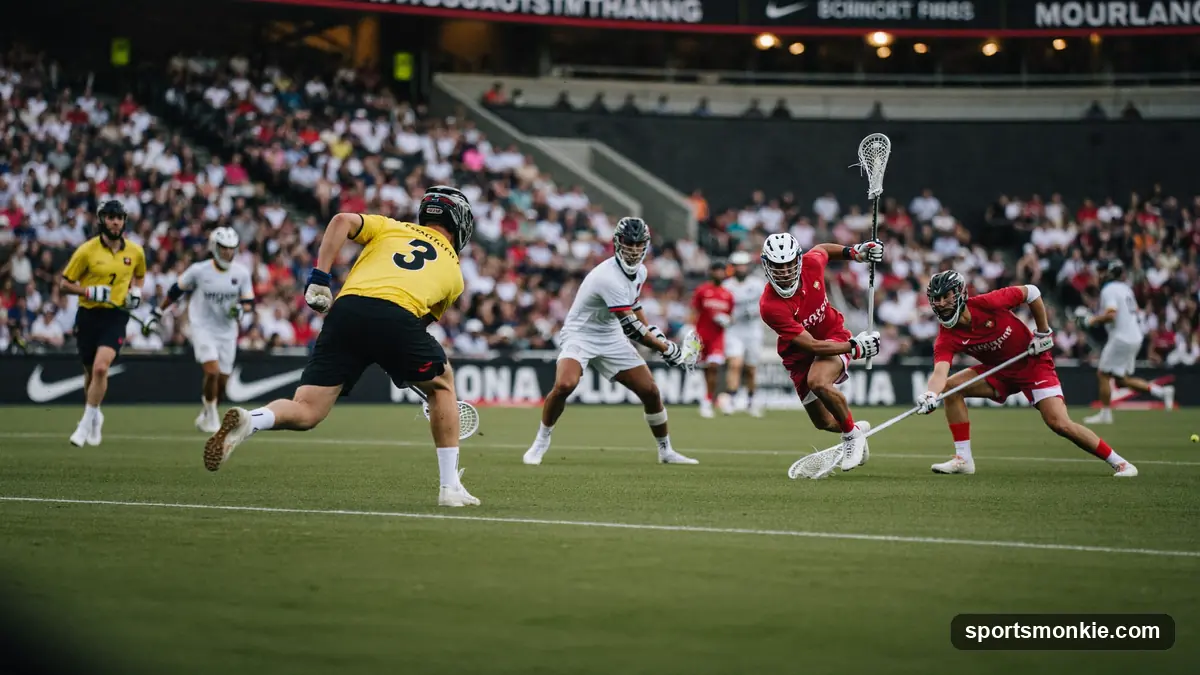
Sixes lacrosse puts six players per team on the field, including one goalkeeper, on a 70m x 36m pitch, and plays four eight-minute quarters with a 30-second shot clock. Every player carries a short stick, long poles are gone, and rosters are small enough that everyone attacks and defends. That is the whole format in a sentence, and it is the one lacrosse will use at the 2028 Los Angeles Olympics.
World Lacrosse designed Sixes to be quick, cheap to stage, and easy for a first-time viewer to follow. The rules below are the ones that actually change how a game looks.
What are the rules for sixes lacrosse?
The core is deliberately stripped down. Per the World Lacrosse Sixes rulebook, each side fields six players: five runners and a goalkeeper. There are no specialist long-stick defenders, because long poles are not allowed. That single change means everyone on the field can pick up a ground ball, run it, shoot it, and defend, so positions blur into a fast two-way game.
The clock does the rest of the work. A 30-second shot clock starts when a team gains possession. Fail to get a shot on goal in time and the ball turns over to the defense. There are no long stalls and no killing the clock in the corner, which is exactly what a broadcast Olympic audience needs.
How big is a sixes field?
A Sixes field of play measures 70 meters by 36 meters, roughly half a traditional field lacrosse pitch. Cutting the field in half is the point. It fits inside arenas and modular stadium setups, keeps both goals close together, and shortens every transition so play stays in front of the cages.
The smaller field also raises the shot count. With less ground to cover and a shot clock ticking, teams get down the field faster and take more shots per minute than a full-field game, which is part of why organizers pitched Sixes as spectator-friendly.
Timing, scoring, and overtime
A regulation Sixes game is four eight-minute quarters. If the score is level after regulation, the game goes to sudden-death overtime played in short periods until someone scores. That golden-goal finish keeps the ending sharp rather than dragging out.
Scoring itself works like field lacrosse: put the ball in the net for a goal. Sixes does not use the two-point arc that some domestic pro leagues added, so every goal counts the same, which keeps the math simple for new fans.
How play starts and substitutions
Sixes keeps the sport’s signature restart. Each quarter and each goal is followed by a face-off style draw to decide possession, so momentum can swing quickly when one team wins the draw repeatedly. Because there are no long-pole specialists, the players contesting the draw are the same short-stick athletes who then defend or attack, which rewards all-round skill over specialization.
Substitutions run on the fly through a designated exchange area, the way hockey lines change. With only five runners on the field and a small bench, players cover far more ground per shift than in the 10-a-side game, so conditioning becomes a genuine tactical factor. A tired defender in Sixes cannot hide behind a rotation of specialists; everyone has to two-way.
Sixes vs field lacrosse: side by side
The fastest way to understand Sixes is to line it up against the traditional men’s field game.
| Rule | Sixes | Field lacrosse (men’s) |
|---|---|---|
| Players per side | 6 (5 + goalie) | 10 (3 attack, 3 mid, 3 defense, goalie) |
| Field size | 70m x 36m | ~110 x 60 yards |
| Sticks | Short sticks only | Short and long poles |
| Shot clock | 30 seconds | 60-80s in pro leagues; none in some rules |
| Game length | 4 x 8-minute quarters | 4 x 15-minute quarters (NCAA) |
| Overtime | Sudden-death periods | Sudden-death |
| Roster feel | Everyone attacks and defends | Position specialists |
| Built for | Olympics, arenas, TV | Traditional outdoor game |
If you want a wider look at how the outdoor and indoor codes differ before Sixes even enters the picture, our PLL vs NLL comparison covers the field-versus-box split that Sixes borrows ideas from.
Is there over and back in sixes?
This is the question that trips people up, and the honest answer is that Sixes leans on the shot clock rather than a stack of midfield rules. The 30-second clock is the primary anti-stalling tool. It removes most of the reason a team would ferry the ball back into its own end, because doing so burns the clock they need to get a shot away.
Sixes rules are still being tuned by World Lacrosse ahead of 2028, so for the precise boundary and possession wording, read the current official rulebook rather than trusting a summary. The direction of travel is clear: fewer stoppages, more shots, faster restarts.
Why sixes exists
Sixes was not invented for tradition; it was invented to get lacrosse into the Olympics. The International Olympic Committee wanted a format that was gender-equal, cheap to stage, quick to broadcast, and easy for a global audience to pick up. Ten-a-side field lacrosse with specialist positions and heavy equipment did not fit. Six-a-side, short-stick, shot-clock lacrosse did.
That is why the format looks the way it does. Every simplification, the smaller roster, the half-size field, the banned long poles, the tight clock, traces back to making the sport Olympic-ready. For a sense of how the compact game stacks up against a similar-looking sport, see our lacrosse vs field hockey breakdown.
The bottom line
Sixes is field lacrosse compressed for a stadium and a clock: half the players, half the field, no long poles, and a 30-second shot clock that never lets the game slow down. Learn those four numbers, six, 70x36, eight, and 30, and you understand the format the world will watch in Los Angeles.
Freshness note: Sixes rules are being finalized by World Lacrosse ahead of LA 2028; shot-clock, overtime, and boundary details can change between rulebook versions, so verify against the latest official PDF before quoting specifics.
Frequently asked questions
What are the rules for sixes?+
Sixes uses six players per side, including one goalkeeper, on a 70m x 36m field. Games run four eight-minute quarters with a running clock and a 30-second shot clock on each possession. Everyone plays with a short stick, there are no long poles, and rosters are small, so players cover both attack and defense.
Is there over and back in sixes?+
Sixes relies on its 30-second shot clock rather than heavy midfield restrictions to keep play fast. The shot clock, not an over-and-back call, is the primary mechanism that stops teams from stalling in the backcourt. For the exact boundary and possession wording, check the current World Lacrosse Sixes rulebook, since Sixes rules are still being refined ahead of 2028.
How long is a sixes field?+
A World Lacrosse Sixes field of play is 70 meters long by 36 meters wide, roughly half the size of a traditional field lacrosse pitch. The smaller footprint is deliberate: it fits into arenas and stadiums, shortens transitions, and keeps the action concentrated in front of both goals for a faster spectator experience.
What is the difference between field and sixes lacrosse?+
Field lacrosse uses 10 players a side on about a 110-yard field, allows long-pole defenders, and runs longer quarters. Sixes uses six a side on a 70x36m field, bans long poles, adds a 30-second shot clock, and runs four eight-minute quarters. Sixes is smaller, faster, and simpler, designed specifically for the Olympics.
Sources
Play & tools
Free browser games and tools — no account, no download.
- Play today's Sports Connections — Today's Sports Connections — daily hints, answers, and play the grid.
- Play Guess the NFL Player — A new mystery NFL player every day. Eight guesses, with a clue on each — plus free unlimited mode.
- Explore all our games →
Related guides
Lacrosse at the 2028 Olympics: Sixes Format, Teams and History
Lacrosse returns at the 2028 Olympics in the Sixes format: six men's and six women's teams, July 24-29 in LA. Its first medal appearance since 1908, explained.
The 8-Meter Arc in Women's Lacrosse: Free Position Shots
The 8-meter arc in women's lacrosse is the fan in front of goal where a major defensive foul gives the attacker a free position shot. Rules and procedure inside.
Can You Kick the Ball in Lacrosse? The Rule Explained
Yes, you can kick the ball in men's lacrosse, and you can even score by kicking it. The women's game restricts it more. Here is exactly what the rules allow.
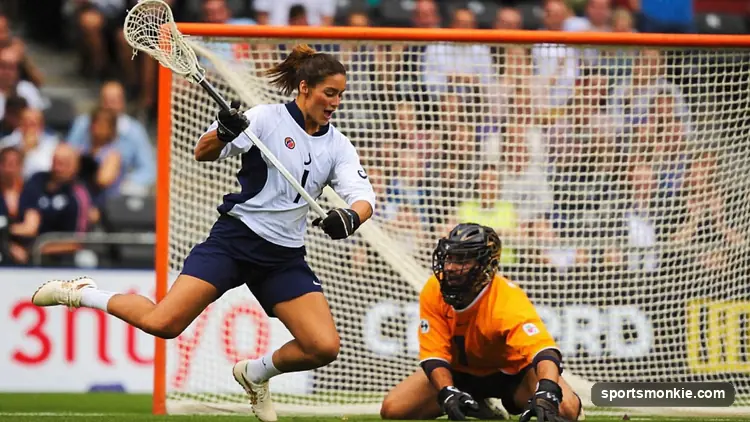
How Lacrosse Scoring Works: Goals, Assists and Points
In lacrosse, every goal is worth one point in almost every version of the game. The lone modern exception is the PLL's 2-point arc. Here is how scoring works.
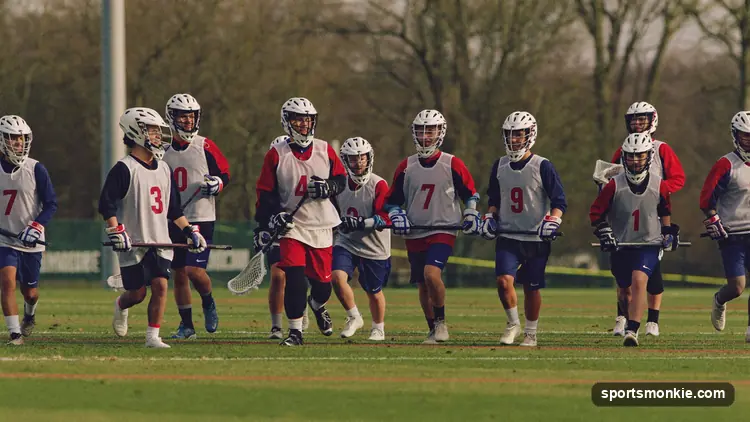
Lacrosse Equipment List: Everything You Need to Play
The full lacrosse equipment list: a men's player needs a helmet, gloves, and pads; a girls' player needs eyewear, a mouthguard, and a stick. Checklist inside.
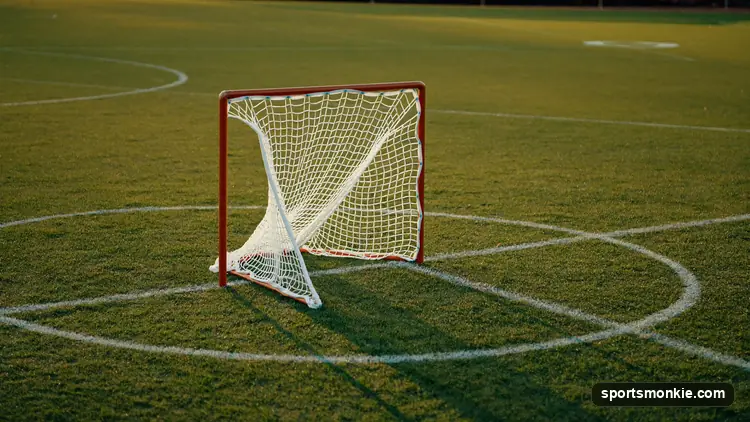
Lacrosse Goal Size: Official Dimensions for Every Level
A lacrosse goal is 6 feet wide by 6 feet high at every field level, from youth to NCAA. Here are the official dimensions, pipe specs, and box differences.