
Lacrosse Equipment List: Everything You Need to Play

On this page5
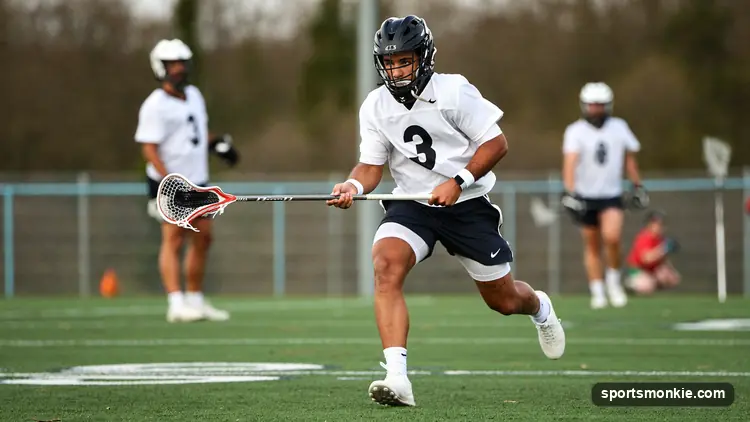
The lacrosse equipment list splits sharply by gender, because the men’s and women’s games have different contact rules. A men’s field player must wear a certified helmet, gloves, shoulder pads, arm pads, and a mouthguard on top of the stick and cleats. A girls’ or women’s field player is required to wear only protective eyewear and a mouthguard, because their game bans the body checking that makes the men’s game a heavy-armor sport.
If you are outfitting a first-time player, that single distinction saves or costs you a few hundred dollars. Below is the full checklist, split by gender and level, with the must-haves separated from the optional extras.
What equipment is required in lacrosse?
The required gear is set by USA Lacrosse and certified to standards from the National Operating Committee on Standards for Athletic Equipment (NOCSAE). Two certifications matter most: men’s helmets must carry the NOCSAE ND lacrosse-helmet stamp, and girls’/women’s eyewear must meet the ASTM F803 standard. Gear without the right stamp is not legal for games, no matter how protective it looks.
The men’s game allows body checking and stick checking, so every field player wears a hard shell and pads. The women’s game restricts stick contact to controlled checks away from the head and bans body checking, so the required kit is deliberately minimal. Goalies in both games are the exception: because they face hard shots at close range, a keeper of either gender wears a helmet with a facemask, a throat protector, a chest protector, gloves, and a mouthguard.
The full lacrosse equipment checklist
Here is the complete list, split by game and level, with required gear marked against optional add-ons. “Youth” covers roughly U9 to U15; “high school and up” covers varsity and adult club play.
| Item | Men’s field | Women’s field | Goalie (both) | Must-have or optional |
|---|---|---|---|---|
| Stick (crosse) | Yes | Yes (shorter pocket) | Yes (wider head) | Must-have |
| Helmet (NOCSAE ND) | Yes | No | Yes | Must-have (men + goalies) |
| Protective eyewear (ASTM F803) | No | Yes | — | Must-have (women) |
| Mouthguard | Yes | Yes | Yes | Must-have |
| Gloves | Yes | Optional | Yes | Must-have (men) / optional (women) |
| Shoulder pads | Yes | No | No (chest pad instead) | Must-have (men) |
| Arm pads / elbow pads | Yes | No | Optional | Must-have (men) |
| Rib / kidney pads | Optional | No | No | Optional |
| Chest protector | No | No | Yes | Must-have (goalies) |
| Throat guard | No | No | Yes | Must-have (goalies) |
| Protective cup | Yes | No | Yes | Must-have (men + male goalies) |
| Cleats | Yes | Yes | Yes | Must-have |
| Soft headgear | Optional | Optional | No | Optional (women) |
The women’s optional headgear is worth a note. USA Lacrosse permits soft protective headgear certified to the ASTM F3137 standard in the girls’ and women’s field game, and a growing number of players wear it, but it is not required equipment. Eyewear is the piece that is genuinely mandatory.
The stick: the one piece every player buys
The crosse is the item nobody borrows for long. Beginners are usually best served by a complete, pre-strung stick rather than buying a head and shaft separately. Men’s and boys’ field sticks run 40 to 42 inches for attackers and midfielders and 52 to 72 inches for defenders; women’s sticks are typically 35.5 to 43.25 inches with a much shallower pocket, because women’s rules require the ball to be visible above the sidewall.
If you are choosing a first stick, our guide to the best lacrosse sticks for beginners walks through complete-stick picks by position and budget. The pocket matters as much as the shaft, so it is worth understanding the best lacrosse mesh options before you commit, especially if you plan to restring later.
Helmet and pads: sizing is not optional
A helmet only protects if it fits. NOCSAE certification assumes correct sizing, and a loose shell shifts on impact. Measure the head circumference above the eyebrows and match it to the manufacturer’s chart rather than guessing by hat size; our lacrosse helmet sizing guide covers the fit test in detail. Shoulder and arm pads follow the same logic: they should sit snug without limiting the throwing motion.
What it all costs
The gap between the two games shows up hardest in the receipt. A men’s beginner buying everything new spends roughly $250 to $450 once you add a helmet, gloves, pads, stick, and cleats, with the helmet alone running $80 to $250. A girls’ beginner buying everything new often spends under $120, because the required list is a stick, eyewear, and a mouthguard. Goalie kits are the priciest in either game.
Before you buy new, ask the club. Many programs loan helmets and pads for a first season, which is the cheapest way to find out whether a young player sticks with the sport. Our full breakdown of how much lacrosse equipment costs has current price ranges by item and tier, including used and starter-bundle options that cut the entry cost sharply.
Buy the stick, mouthguard, and cleats first, borrow the hard armor for a season if you can, and only invest in your own helmet and pads once the player is committed. That order keeps a first season affordable without cutting any corner that a referee, or a NOCSAE standard, actually requires.
Freshness note: required-gear rules and NOCSAE/ASTM certifications are reviewed by USA Lacrosse each season; confirm current helmet and eyewear standards and any headgear updates before buying for a new season.
If that interests you, Wooden Lacrosse Sticks is a good next stop.
Frequently asked questions
What is the lacrosse equipment called?+
The stick is called a crosse or lacrosse head on a shaft. The netted part is the head or pocket, the handle is the shaft, and the ball sits in the mesh. Protective gear includes the helmet, shoulder pads, arm pads, gloves, and a mouthguard, while goalies add a chest protector and throat guard.
What gear do you need for beginner lacrosse?+
A beginner in the men's game needs a stick, NOCSAE-certified helmet, gloves, shoulder pads, arm pads, a mouthguard, cup, and cleats. A beginner in the girls' game needs far less: a stick, ASTM F803-certified eyewear, and a mouthguard. Many clubs loan helmets and pads for a first season, so you often only buy a stick and mouthguard to start.
What equipment is needed for lacrosse?+
Required gear is set by USA Lacrosse and NOCSAE and differs by gender. Men's field players must wear a certified helmet, gloves, shoulder pads, arm pads, and a mouthguard. Girls' and women's field players must wear certified protective eyewear and a mouthguard. Both games require a legal stick and appropriate cleats, and both require full goalie protection in the crease.
Do you need cleats to play lacrosse?+
Yes, molded cleats are standard for outdoor field lacrosse for grip on grass or turf. Football, soccer, or dedicated lacrosse cleats all work, though most youth leagues ban metal spikes for safety. For indoor box lacrosse, players wear turf shoes or court shoes instead of cleats.
Sources
Play & tools
Free browser games and tools — no account, no download.
- Play today's Sports Connections — Today's Sports Connections — daily hints, answers, and play the grid.
- Play Guess the NFL Player — A new mystery NFL player every day. Eight guesses, with a clue on each — plus free unlimited mode.
- Explore all our games →
Related guides

Men's vs Women's Lacrosse: Every Major Difference
Men's vs women's lacrosse differ in players, checking, equipment, field, and stick rules. Here's every major difference in one clear breakdown.

The 8-Meter Arc in Women's Lacrosse: Free Position Shots
The 8-meter arc in women's lacrosse is the fan in front of goal where a major defensive foul gives the attacker a free position shot. Rules and procedure inside.

Can You Kick the Ball in Lacrosse? The Rule Explained
Yes, you can kick the ball in men's lacrosse, and you can even score by kicking it. The women's game restricts it more. Here is exactly what the rules allow.

How to Cradle a Lacrosse Ball: Technique for Beginners
To cradle a lacrosse ball, move the stick head in a smooth curved arc so the ball stays pressed in the pocket. Learn one-hand and two-hand cradling here.

Adult Lacrosse Leagues: How to Find One and What They Cost
Adult lacrosse leagues run roughly $100-250 a season. Here is how to find one near you, what the divisions mean, and whether it's too late to start.
How to Catch a Lacrosse Ball: Soft Hands in 3 Steps
To catch a lacrosse ball, present a target, give with the ball as it arrives, then cradle. Learn the soft-hands technique and beginner drills in three steps.