
Wooden Lacrosse Sticks: History, Legality and Where to Get One
On this page7
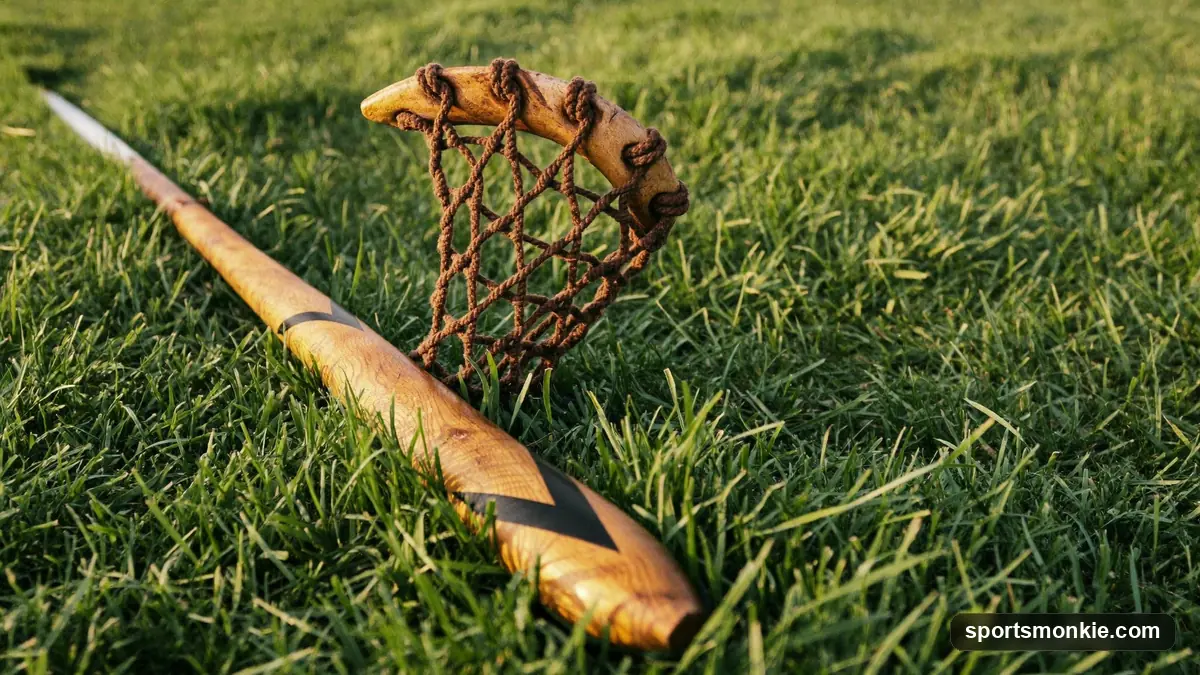
Wooden lacrosse sticks are still legal. The NCAA Men’s Lacrosse Rules and World Lacrosse rules both permit a crosse made of wood, provided it meets the same length, head-width, and pocket specifications as any modern stick. What changed is not the rulebook but the market: molded plastic heads arrived in 1970 and pushed the hand-carved wooden stick out of elite field play within a few seasons. Wood survives today in box lacrosse, ceremonial play, and among a small circle of traditional makers.
To understand why a legal piece of equipment nearly disappeared, you have to start with where the stick came from.
The Haudenosaunee origin of the wooden stick
Lacrosse is the oldest team sport in North America, played by the Haudenosaunee (the Iroquois Confederacy) for centuries before European contact. The wooden stick is not incidental to that history; it is central to it. As the Smithsonian Folklife Festival documents, stickmaking is a revered skill passed down through families.
The tradition carries a specific belief: because a tree gave its life to make the stick, its spirit passes to the player, who is expected to play humbly to honor that sacrifice. The game itself is often called the Creator’s Game. A genuine traditional stick, then, is not just gear, it is a cultural object, which is one reason authentic hand-carved sticks remain sought after even though they have no competitive edge on a modern field.
How a wooden stick is made
The craft is slow and unforgiving, which is the whole reason plastic won on cost. A stickmaker selects a living hickory tree, splits and shapes the wood, steams it until it bends, and forms the characteristic curved head. The bent stick is then seasoned for months so it holds its shape, before being strung with leather runners and nylon into a functional pocket.
Hickory is the wood of choice because it is strong, flexible, and steam-bends without cracking; ash is a secondary option. Every stick is unique, and a single one can take the better part of a year from tree to finished crosse. That labor is why a real traditional stick runs well past $100 and cannot be mass-produced.
When did wooden sticks disappear?
The turning point was 1970, when STX introduced the first molded plastic lacrosse head. Within a few short seasons the plastic head had displaced wood across college and high-school field play, as HISTORY notes in tracing the game’s modern evolution. The reasons were entirely practical.
| Factor | Wooden stick | Modern plastic/metal stick |
|---|---|---|
| Weight | Heavier | Lighter |
| Consistency | Each one unique | Identical, mass-produced |
| Weather | Warps and swells | Unaffected |
| Cost to make | High, hand-carved | Low, injection-molded |
| Durability on checks | Excellent, absorbs shock | Can crack in cold |
| Feel / tradition | Prized by purists | Standardized |
Plastic did not out-perform wood on every axis, note the durability and shock absorption, but it won decisively on weight, cost, weather resistance, and consistency. For a sport trying to grow, a $30 head that plays the same every time beat a hand-carved one that took a year to build.
Where wooden sticks are still legal and used
Legality and popularity are two different things. A wooden stick is legal in NCAA and World Lacrosse field play today, but you will rarely see one there because it is outclassed. Where wood still lives:
- Box lacrosse goalies — many prefer a heavy wooden or bamboo shaft; it never dents and dampens the sting of point-blank shots.
- Traditional and ceremonial play — Haudenosaunee competition and cultural games where the wooden stick is the point.
- Collectors and purists — field players who want the feel and heritage over the performance.
- Beginner and value setups — inexpensive laminated or bamboo shafts sold as budget options.
If you are stringing any stick, wood included, the pocket rules are the same across materials. Our guide to how to string a lacrosse head and our roundup of the best lacrosse mesh both apply whether the frame is hickory or plastic.
Where to get a wooden lacrosse stick
Split your search by what you actually want. For a genuine traditional field stick, buy from a named maker, Haudenosaunee craftsmen and heritage brands sell hand-carved hickory sticks, and expect to pay well over $100 for the months of labor involved. Treat a stick with no named maker and a suspiciously low price with skepticism; the value is in the craft.
For a functional wooden or bamboo goalie shaft, or a cheap wood shaft to learn on, mainstream online retailers stock laminated and bamboo options at ordinary prices. These are the practical, no-ceremony choice.
Caring for a wooden stick
A wooden stick asks for maintenance a plastic one never will, which is the trade for its feel and longevity. Wood swells when wet and dries out over time, so the two enemies are prolonged moisture and direct heat. Never leave a wooden stick soaking in rain or lying in a hot car; both warp the head and slacken the pocket.
Traditional sticks are strung with leather runners that stretch as they absorb water, which is exactly why the old game paused for players to re-tighten pockets. A light coat of a wood-safe oil or wax once a season keeps the shaft from drying and cracking, and storing the stick flat, out of direct sun, holds its shape. Treated this way, a hickory stick outlasts most plastic heads by years, part of why box goalies who value durability still reach for wood.
Traditional stringing vs modern mesh
The pocket is where wood and plastic diverge most in play. Classic wooden sticks use a leather-and-nylon traditional pocket, prized for its soft, deep hold but sensitive to weather, a wet traditional pocket plays differently from a dry one. Modern mesh, by contrast, is weather-stable and consistent, which is a large part of why it won.
A wooden stick will not make you better on a modern field, and that is the honest verdict. But it connects the game to its origin in a way no molded head can, and for box goalies and traditionalists it is a genuinely good tool. If you want to appreciate where the craft sits in the sport’s story, our profiles of the greatest lacrosse players trace how the game grew from the wooden stick era to the pro leagues of today.
Freshness note: stick-legality rules are stable, but re-check the current NCAA and World Lacrosse equipment specifications each season, and confirm pricing directly with traditional makers, whose hand-made stock and prices vary.
Frequently asked questions
Are wooden sticks allowed in lacrosse?+
Yes. The NCAA Men's Lacrosse Rules state a crosse may be made of wood, laminated wood, or synthetic material, and World Lacrosse rules likewise permit wood. A wooden stick is legal as long as it meets the same length, head-width, and pocket-depth specifications as any modern stick. In practice, wood is most common for box lacrosse goalies and traditional or ceremonial play.
Are wood lacrosse shafts good?+
For most modern field players, no; wood is heavier and less consistent than aluminum, scandium, or carbon shafts, which is why elite play abandoned it. But wood has real strengths: it absorbs vibration on checks, never dents, and many box goalies and traditionalists prefer its feel and durability. As a value or beginner shaft it is fine; as a competitive field weapon it is outclassed.
When did they stop using wooden sticks?+
The wooden stick faded from top-level field lacrosse in the early-to-mid 1970s, after STX introduced the first molded plastic head in 1970. Plastic heads were lighter, cheaper to mass-produce, weatherproof, and consistent from one stick to the next. Within a few seasons they had displaced the hand-carved wooden crosse across college and high-school field play.
What is the best wood for a lacrosse stick?+
Hickory is the traditional and preferred wood, used by Haudenosaunee stickmakers for centuries because it is strong, flexible, and steam-bends into the curved head without cracking. Ash is also used. The wood is selected from a living tree, steamed, bent, seasoned for months, and then strung with leather and nylon, which is why a genuine hand-carved stick is expensive and slow to make.
Where can you buy a wooden lacrosse stick?+
Traditional hickory sticks come from specialist makers, including Haudenosaunee craftsmen and heritage brands, and typically cost well over $100 given the months of hand labor. Mass-market wooden shafts, such as bamboo or laminated goalie shafts, are widely sold online for far less. For a genuine traditional field stick, buy from a named maker rather than a generic retailer.
Sources
Play & tools
Free browser games and tools — no account, no download.
- Play today's Sports Connections — Today's Sports Connections — daily hints, answers, and play the grid.
- Play Guess the NFL Player — A new mystery NFL player every day. Eight guesses, with a clue on each — plus free unlimited mode.
- Explore all our games →
Related guides
The Lacrosse Medicine Game: Origins and Meaning
Lacrosse began as the Haudenosaunee 'medicine game' or Creator's Game — played for healing, thanksgiving and community. Here's its meaning and living role.
Adult Lacrosse Leagues: How to Find One and What They Cost
Adult lacrosse leagues run roughly $100-250 a season. Here is how to find one near you, what the divisions mean, and whether it's too late to start.

Greatest Lacrosse Players of All Time
From Jim Brown to Paul Rabil, these are the greatest lacrosse players in history — ranked by dominance, legacy, and impact on the sport.

Box Lacrosse vs Field Lacrosse
Box lacrosse is a fast 5-on-5 indoor game; field lacrosse is a 10-on-10 outdoor sport. Rules, field, gear and physicality compared.

Who Invented Lacrosse? The Origins
Lacrosse was invented by Indigenous peoples of North America centuries before European contact. Its history, sacred roots and how it got its name.

The 8-Meter Arc in Women's Lacrosse: Free Position Shots
The 8-meter arc in women's lacrosse is the fan in front of goal where a major defensive foul gives the attacker a free position shot. Rules and procedure inside.