
Women's Lacrosse Positions Explained: All 12 Roles
On this page7
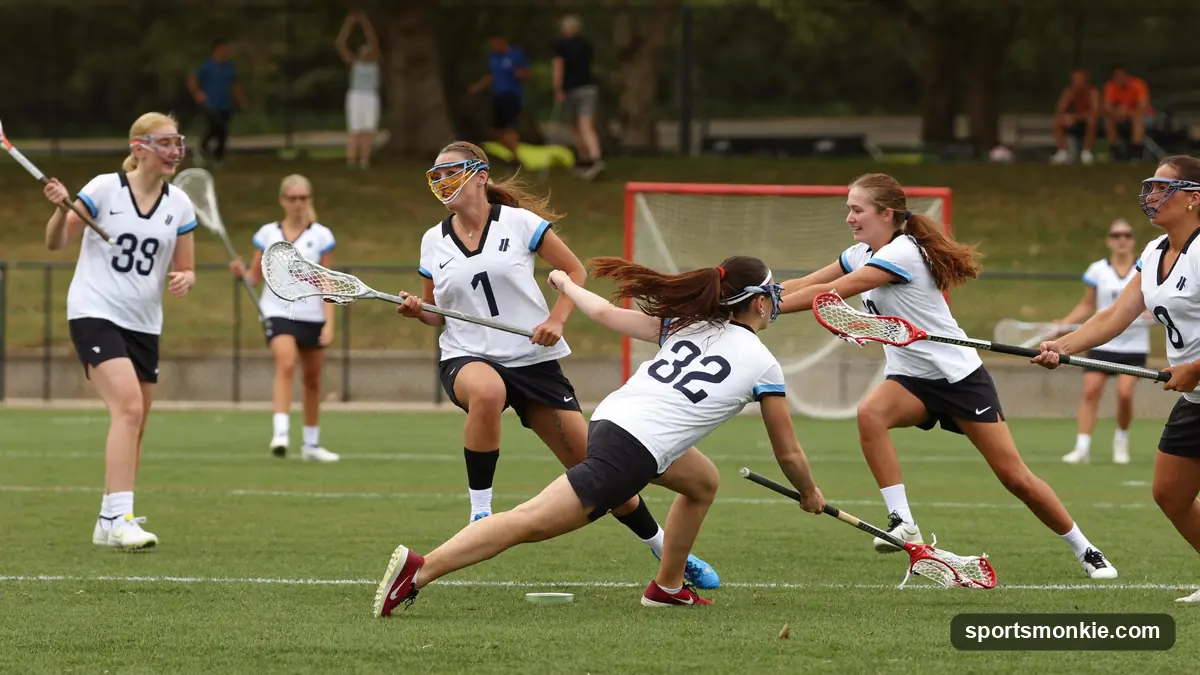
Women’s field lacrosse fields 12 players a side: one goalkeeper and 11 field players. In the traditional naming used by USA Lacrosse and coaches worldwide, those 11 break into an attack unit (First, Second and Third Home plus two Attack Wings), a Center who takes the draw, and a defensive unit (two Defense Wings, Third Man, Cover Point and Point). Most teams now describe the same roles more simply as attack, midfield, defense and goalie.
That gap between the old 12-name system and the modern shorthand confuses a lot of parents and new players. Below is every position, what it actually does, and the zone it lives in.
Why women’s lacrosse has 12 positions
The 12-a-side structure is one of the clearest differences from the men’s 10-player game, and it comes straight from the sport’s history. Women’s lacrosse grew up as a spread, open-field passing game, so it kept two extra field players and a larger playing surface — a contrast we cover in the lacrosse vs field hockey comparison, where similar open-field roots show up.
Under World Lacrosse women’s rules, only a set number of players may cross each restraining line at once, which is why positions are tied so tightly to zones. A Defense Wing and a First Home are not just different jobs; they legally occupy different parts of the field for much of the game.
All 12 women’s lacrosse positions
Here is the full traditional roster, grouped by unit, with each player’s core job and home zone:
| Position | Unit | Core role | Field zone |
|---|---|---|---|
| Goalkeeper | Goal | Stops shots, directs defense, starts clears | In and around the goal circle |
| First Home | Attack | Primary finisher, plays closest to goal | High-danger area in front of net |
| Second Home | Attack | Playmaker and feeder, creates chances | Between First and Third Home |
| Third Home | Attack | Links midfield to attack, transitions ball | Top of the attacking third |
| Right Attack Wing | Attack/Mid | Runs the sideline, stretches the defense | Right flank, attacking half |
| Left Attack Wing | Attack/Mid | Runs the sideline, stretches the defense | Left flank, attacking half |
| Center | Midfield | Takes the draw, defends and attacks | Whole field, centred on midline |
| Right Defense Wing | Defense/Mid | Marks attack wing, supports transition | Right flank, defensive half |
| Left Defense Wing | Defense/Mid | Marks attack wing, supports transition | Left flank, defensive half |
| Third Man | Defense | First line of help defense | Top of the defensive third |
| Cover Point | Defense | Marks Second Home, pressures feeders | Middle of the defensive third |
| Point | Defense | Marks First Home, last field defender | Directly in front of the goalkeeper |
The attack unit
The three Homes are your scorers. First Home is the sharpest finisher, living in the eight-metre arc and living or dying by her ability to get free near goal. Second Home is the creator — the best passer in the attack, drawing defenders and feeding cutters. Third Home is the connector who brings the ball out of the midfield and into the offense.
The two Attack Wings work the sidelines, stretching the defense wide and giving the Homes room to operate. Wings are often where coaches place quick, fit players who love to run; the role rewards motor over intricate stickwork, which is one reason it suits developing players.
The midfield: the Center
The Center is the engine. She takes every draw at the midline to start possessions, then plays both ends — defending in her own half and joining the attack in the other. No one covers more ground. Because she touches the ball so often and dictates transition, the Center overlaps heavily with what a lacrosse midfielder does in the men’s game: the two-way workhorse who never stops moving.
The defensive unit
Defense is built as a series of marks. Point guards the most dangerous attacker, First Home, and is the last field player between the offense and the keeper. Cover Point marks Second Home and pressures the main feeder. Third Man is the free defender who reads the play and slides to help, the equivalent of the sweeper mentality a lacrosse defenseman relies on.
The two Defense Wings shadow the opposing Attack Wings and spark the counter, carrying the ball out of danger the moment their team wins it back.
The goalkeeper
The keeper is a unit of one and, by most coaches’ reckoning, the hardest job on the field. She faces shots approaching 70 mph with less padding than her male counterparts, has to command the eight-metre arc, and organises the entire defense in front of her. A vocal, fearless goalie is worth several goals a game. Reflexes matter, but so does the willingness to be hit — which is why keepers are a breed apart.
How to pick a position
Match the role to the player, not the reverse. Sharp finishers gravitate to the Homes; tireless runners to Center and the wings; brave, communicative athletes to goal; and smart, patient defenders to Point and Cover Point. Newcomers are often best served starting on a wing, where the job is contained enough to build confidence before taking on the constant decision-making of a Center or First Home.
If your player is still finding her feet with the stick, spend the early weeks on fundamentals before worrying about a position at all — our lacrosse drills for beginners cover the catching, cradling and dodging every one of these 12 roles is built on. Position comes after the basics stick, not before.
Frequently asked questions
What is the hardest position in girls lacrosse?+
Most coaches point to goalkeeper. She faces shots near 70 mph with limited padding and has to direct the whole defense, so the mental load is heavy. Center is a close second — she takes every draw, defends and attacks, and covers the most ground on the field.
What are the positions in women's lacrosse?+
Twelve players a side: a goalkeeper plus attack (First, Second and Third Home, and two Attack Wings), a Center, and defenders (two Defense Wings, Third Man, Cover Point and Point). Coaches often group these simply as attack, midfield, defense and goalie.
What position do the best players play in women's lacrosse?+
The most skilled players usually end up at Center or First Home. Center handles the draw and links defense to attack, touching the ball constantly, while First Home is the primary finisher closest to goal. Both demand the sharpest stick skills and game sense on the team.
What is the easiest position in women's lacrosse?+
There is no truly easy role, but wings — Attack Wing and Defense Wing — are often where newer players start. Their job is more contained: run the lanes, support transitions and mark an opposite number, without the constant decision-making the Center or the Homes carry.
Sources
Play & tools
Free browser games and tools — no account, no download.
- Play today's Sports Connections — Today's Sports Connections — daily hints, answers, and play the grid.
- Play Guess the NFL Player — A new mystery NFL player every day. Eight guesses, with a clue on each — plus free unlimited mode.
- Explore all our games →
Related guides
Men's vs Women's Lacrosse: Every Major Difference
Men's vs women's lacrosse differ in players, checking, equipment, field, and stick rules. Here's every major difference in one clear breakdown.
The 8-Meter Arc in Women's Lacrosse: Free Position Shots
The 8-meter arc in women's lacrosse is the fan in front of goal where a major defensive foul gives the attacker a free position shot. Rules and procedure inside.
Women's Professional Lacrosse: Leagues, Teams & Pay
The women's professional lacrosse league in 2026: the WLL, its sixes format and four teams, what happened to Athletes Unlimited, and how pay works.
Can You Kick the Ball in Lacrosse? The Rule Explained
Yes, you can kick the ball in men's lacrosse, and you can even score by kicking it. The women's game restricts it more. Here is exactly what the rules allow.
How to Cradle a Lacrosse Ball: Technique for Beginners
To cradle a lacrosse ball, move the stick head in a smooth curved arc so the ball stays pressed in the pocket. Learn one-hand and two-hand cradling here.

Lacrosse Equipment List: Everything You Need to Play
The full lacrosse equipment list: a men's player needs a helmet, gloves, and pads; a girls' player needs eyewear, a mouthguard, and a stick. Checklist inside.