
Why Do Boxers Hug? The Clinch Explained
On this page7
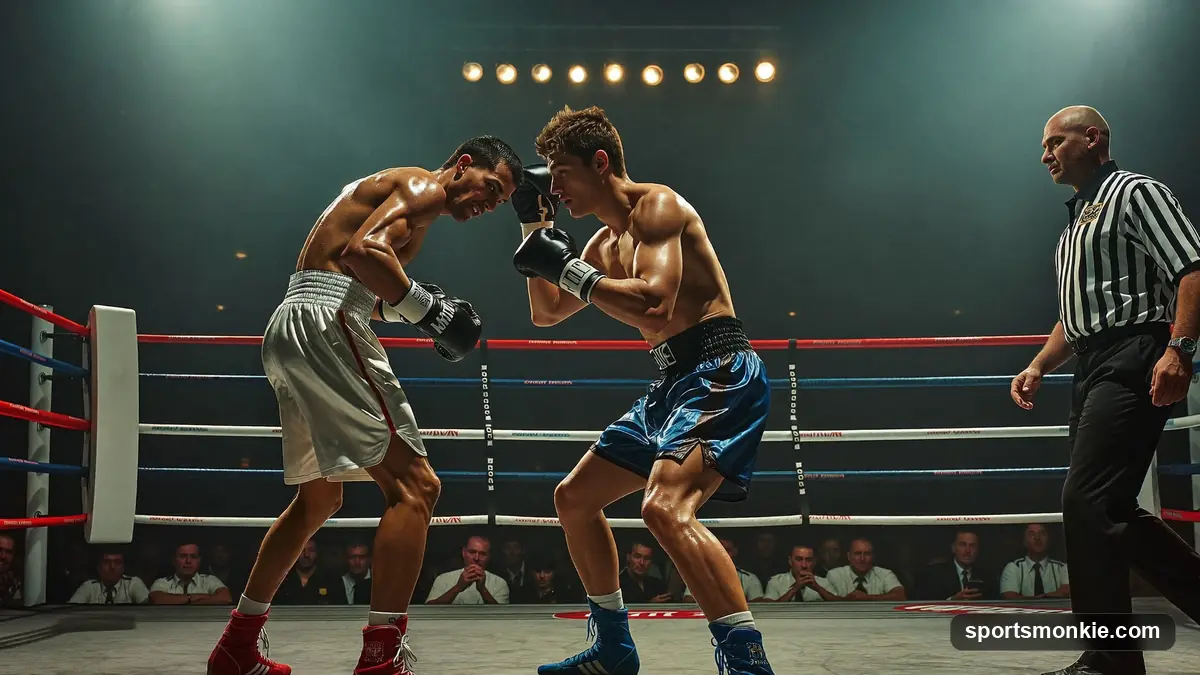
Boxers “hug” because they are clinching, a legal and deliberate tactic in which a fighter wraps up or leans on an opponent to tie up their arms. It is not affection; it is a controlled move used to rest, to disrupt an opponent’s momentum, and to smother incoming punches at close range.
To a casual viewer it can look strange, two fighters who are supposed to be trading blows suddenly locked in what looks like an embrace. But the clinch is one of boxing’s most useful defensive tools, and understanding it makes the sport far easier to read. Here is why fighters do it and how the rules govern it.
The three reasons boxers clinch
Almost every clinch serves one of three purposes, and often more than one at once.
- Recovery. A boxer who is tired or has been hurt can tie up the opponent to steal a few seconds of rest. It lets them clear their head and slow the pace until the referee separates them.
- Disruption. If an opponent is landing a flurry, clinching kills their rhythm. Wrapping them up interrupts combinations and takes away the momentum they were building.
- Defence. At close range a clinch smothers punches. With the arms tied up and the distance closed, an opponent cannot generate the leverage needed to punch with power.
These are the reasons a coach will actually teach the clinch as a skill, not a sign of a fighter giving up.
Why it looks like a hug
The clinch resembles a hug because the mechanics are similar: one or both fighters wrap their arms over or around the opponent’s arms and lean their weight in. Closing that distance is exactly what removes an opponent’s punching room. The closer two boxers are, the harder it is to throw a powerful, straight punch, so the “hug” is really a way of jamming the opponent’s offence at its source.
Fighters known for slick defence often use subtle clinching to control the pace of a bout, while a hurt fighter may grab on more desperately to survive a bad moment. Either way, the embrace is a means to a tactical end.
What it is called and how the referee manages it
The correct term is a clinch, and fighters are said to be “clinching” or “in a clinch.” Managing it is a core job of the referee, who will call “break,” step in, and separate the boxers, at which point both are expected to step back cleanly before resuming. A clean break matters, because hitting an opponent on the break is a foul.
The rules: legal, but policed
Here is the key distinction newcomers miss: clinching is legal, but abusing it is not.
| Clinch behaviour | Status |
|---|---|
| Briefly tying up to recover or disrupt | Legal, normal part of boxing |
| Holding constantly to stall the fight | Discouraged; referee breaks it and may warn |
| Holding and hitting | Foul; can draw a warning or point deduction |
| Hitting on the break | Foul |
| Using the head or forearms while clinching | Foul |
A fighter who leans on the clinch too heavily risks warnings, lost points and a frustrated crowd. That is why the clinch is best understood as a controlled skill, used at the right moments, rather than a way to simply stop fighting.
When clinching becomes a problem
Not all clinching is welcome. A fighter who cannot cope with an opponent’s pressure sometimes grabs on repeatedly just to stall, and that is when the crowd starts to jeer and the referee starts to intervene. Excessive holding slows a bout to a crawl, and referees have tools to stop it: repeated warnings, a stern instruction to “let go,” and ultimately a point deduction that can swing a close fight on the judges’ scorecards.
There is also a fine line between clinching and fouling. Holding an opponent with one hand while punching with the other, known as “holding and hitting,” is illegal. So is leading with the head, leaning the forearm across an opponent’s face, or throwing a punch after the referee has called “break.” These fouls often happen in and around the clinch, which is why officials watch tie-ups so closely. A clever fighter uses the clinch right up to the edge of the rules; a dirty one crosses it and risks losing points.
The clinch in the wider fight game
Clinching also connects boxing to its combat-sport cousins. In Muay Thai the clinch is an offensive position from which fighters throw knees and elbows, and in mixed martial arts it is a gateway to takedowns. Boxing is stricter, the clinch is purely a neutral pause to be broken, with no striking allowed inside it, which is exactly why it looks so much like a harmless hug compared to those other sports. Understanding that distinction helps explain why boxers tie up so cleanly and then separate, rather than wrestling for advantage.
Clinching as a boxing skill
The best defensive boxers make clinching almost invisible, tying up an opponent for a split second to reset, then breaking cleanly and countering. It is part of the same toolkit as footwork and head movement, all aimed at controlling distance and denying the opponent clean shots. A fighter who cannot clinch well tends to take more punishment in close, where much of a fight is decided.
Boxing rewards this kind of tactical intelligence as much as raw power, which is one reason the sport’s all-time greats are celebrated for ring craft, not just punching. Our feature on the greatest boxers highlights fighters who mastered exactly these subtleties, and our explainer on what a southpaw is in boxing covers another element of ring strategy that shapes how clinches and exchanges play out. For a look at the modern women’s game, see our list of the top female boxers.
The short version: boxers hug because they are clinching, a legal tactic used to recover, break an opponent’s momentum and smother punches at close range. It is called a clinch, the referee breaks it up, and while it is allowed, holding too much or holding and hitting can cost a fighter points.
Frequently asked questions
What's the point of clinching in boxing?+
Clinching has three main purposes: recovery, disruption and defence. A boxer who is tired or hurt can clinch to buy a few seconds of rest and clear their head before the referee separates them. Clinching also breaks an opponent's rhythm, if a fighter is landing a flurry, tying them up kills the momentum. And at close range a clinch smothers punches so they cannot be thrown with leverage or power. It is a legitimate tactic, not just a way to survive.
Why do boxers look like they are hugging?+
Because the clinch physically resembles a hug: one or both fighters wrap their arms around the opponent's arms or body and lean in. But the intent is tactical, not affectionate. By closing the distance and pinning the arms, a boxer stops the opponent from generating power and creates a brief pause in the action. It looks like an embrace, but it is a controlled way to neutralise offence until the referee breaks the fighters apart.
What is it called when boxers hug?+
It is called a clinch. When fighters come together and tie up each other's arms, they are said to be 'in a clinch' or 'clinching.' The referee's job is to manage it: they will call 'break' and separate the boxers, and both fighters are expected to step back cleanly. The clinch is a recognised part of the sport with its own rules governing what is and is not allowed while fighters are tied up.
Is clinching allowed in boxing, and can you be penalised for it?+
Clinching itself is legal and is a normal part of boxing, but excessive or unsporting holding is not. Referees will break repeated clinches quickly, and a boxer who holds constantly, holds and hits, or uses the clinch to foul (such as hitting on the break or using the head) can be warned and ultimately docked points. So clinching is permitted as a tactic but is policed, fighters who lean on it too heavily risk penalties and a hostile crowd.
Sources
Play & tools
Free browser games and tools — no account, no download.
- Play today's Sports Connections — Today's Sports Connections — daily hints, answers, and play the grid.
- Play Guess the NFL Player — A new mystery NFL player every day. Eight guesses, with a clue on each — plus free unlimited mode.
- Explore all our games →
Related guides
Bare-Knuckle Boxing Rules, Explained
Bare-knuckle boxing is fought with unwrapped fists, no gloves, in short rounds. The BKFC rules: rounds, the toe line, what's legal and what's banned.
The 10-Point Must System Explained
The 10-point must system scores each round 10 to the winner, 9 or fewer to the loser. How it works in boxing and MMA, with 10-8 and 10-7 rounds.
Boxing Weight Classes in Order: All 17 Divisions
Professional boxing has 17 weight classes, from minimumweight (105 lb) to heavyweight. Every division in order with limits in pounds and kilograms.
How Long Are Boxing Rounds? Length & Rest Times
Men's boxing rounds are three minutes with a one-minute rest; women's rounds are usually two minutes. Round length, rest and total fight time explained.
How Many Rounds Are in a Boxing Match?
Professional title fights are 12 rounds, non-title bouts 4–10, and amateur fights 3 rounds. Round counts explained, plus why boxing dropped 15-round bouts.
TKO vs KO: What's the Difference?
A KO is a knockout by count; a TKO is a technical knockout stopped by the referee, doctor or corner. The difference explained, plus technical decisions.