
What Is a Southpaw in Boxing? Stance & Lefties
On this page5
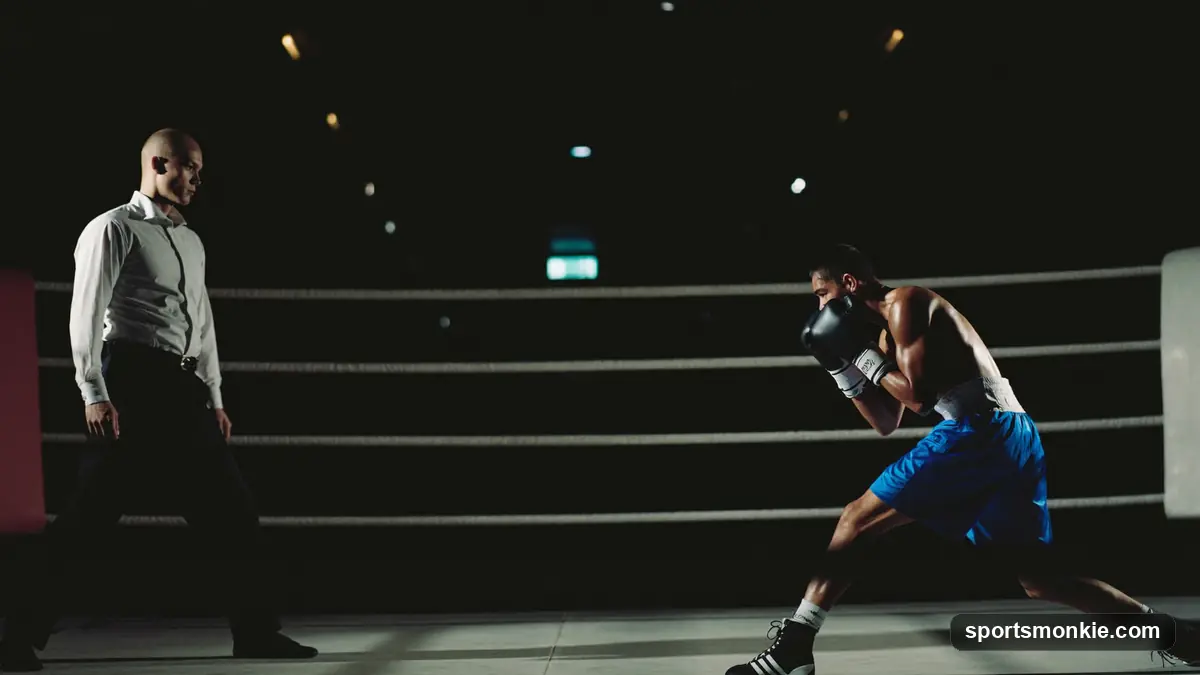
A southpaw in boxing is a fighter who uses a left-handed stance: the right hand and right foot lead, while the stronger left hand stays at the back as the power punch. It is the exact mirror image of the standard “orthodox” stance that right-handed boxers use, where the left hand leads and the right hand is the power hand.
Southpaws matter out of all proportion to their numbers, because there are relatively few of them, and that scarcity is their edge. Most boxers train and spar overwhelmingly against orthodox opponents, so the reversed angles of a southpaw feel unfamiliar and hard to solve. Here is how the stance works, why it causes so much trouble, and the lefties who mastered it.
Orthodox vs southpaw
Every boxer fights from one of two basic stances, and they are simply mirror images of each other.
| Element | Orthodox | Southpaw |
|---|---|---|
| Lead hand / foot | Left | Right |
| Power hand (rear) | Right | Left |
| Typical handedness | Right-handed | Usually left-handed |
| Jab comes from | Left | Right |
| How common | The large majority | Relatively rare |
In an orthodox stance the boxer keeps their weaker left side forward to jab and range-find, saving the stronger right hand at the back for power. A southpaw does the reverse: the right leads and the powerful left waits at the back. Because most southpaws are naturally left-handed, this puts their dominant hand in the power position, giving it a longer path and more force.
Why the name “southpaw”?
The word has nothing to do with boxing itself. It comes from baseball, where ballparks were traditionally laid out so the batter faced east, keeping the afternoon sun out of their eyes. That orientation meant a left-handed pitcher’s throwing arm pointed toward the south, hence “south paw.” The nickname crossed over into boxing to describe a left-handed fighter and never left.
The southpaw advantage
The southpaw edge is mostly about unfamiliarity. When two fighters of opposite stances meet, their lead hands and feet mirror rather than match, which changes every angle in the ring.
- Reversed angles. An orthodox fighter is used to a jab coming from their opponent’s left; a southpaw’s jab comes from the right, arriving on an unexpected line.
- The rear-hand clash. The southpaw’s power left and the orthodox fighter’s power right can land almost simultaneously, and footwork battles for the outside-foot position become crucial.
- Training imbalance. Southpaws face orthodox opponents constantly and know the match-up cold, while orthodox fighters rarely get enough southpaw sparring to feel comfortable.
None of this makes southpaws inherently better boxers, it makes them awkward to prepare for. A well-drilled orthodox fighter with plenty of southpaw sparring can neutralise the advantage.
The footwork battle deserves a closer look, because it decides many opposite-stance fights. Coaches drill fighters to keep their lead foot on the outside of the opponent’s lead foot, which opens a clear lane for the rear power hand while closing off the opponent’s. In a southpaw-versus-orthodox match-up, both fighters are fighting for that same outside-foot position, so the bout often becomes a subtle dance of angles before a single meaningful punch lands. Winning the foot position is frequently the difference between landing the big left and walking onto the opponent’s right.
Trainers also warn that the southpaw advantage can breed bad habits. Because opponents struggle with the unfamiliar angles, some southpaws lean too heavily on awkwardness and neglect fundamentals, only to be exposed by a disciplined orthodox fighter who has done their homework. The best southpaws pair the natural stance edge with genuine skill rather than relying on confusion alone.
Famous southpaws
The left-handed stance has produced some of boxing’s most admired champions. Marvelous Marvin Hagler, Manny Pacquiao and Vasyl Lomachenko are all celebrated southpaws whose reversed angles gave elite opponents fits, and their success is a big reason the stance carries such a mystique. Their careers show that the southpaw edge, combined with genuine skill, can be devastating at the highest level. It is also telling how many orthodox champions have named a southpaw as their toughest stylistic test, evidence that the awkwardness is real even for the elite, not just a problem for club-level fighters.
Trainers often develop a specific “southpaw game plan” for orthodox fighters facing one: circle away from the southpaw’s power left, lead with the right hand rather than the jab, and target the body to slow their movement. The fact that a whole tactical playbook exists just for facing lefties underlines how much the stance shapes a fight before a punch is even thrown.
The awkwardness southpaws create is a theme across combat sports, not just boxing, and stance match-ups shape strategy in mixed martial arts too, as our roundup of undefeated UFC fighters illustrates. The technical demands of striking are also central to the careers profiled in our list of the best female MMA athletes, where stance and range control decide fights just as they do in the ring.
Can a right-hander be a southpaw?
Yes, and it happens more than people assume. Some naturally right-handed boxers choose to fight southpaw so their stronger right hand sits at the back as the power punch, while some natural lefties fight orthodox. Coaches sometimes switch a fighter’s stance deliberately to suit their style or to weaponise the confusion a southpaw creates. Stance is ultimately a trained decision, so handedness alone does not determine it.
The short version: a southpaw fights left-handed, right hand and foot forward, power left at the back, the mirror of orthodox. Their advantage comes mostly from being rare and awkward to prepare for, the name is borrowed from baseball, and a boxer of either dominant hand can adopt the stance.
For the wider context, we break down The Oldest Boxing World Champions separately.
Frequently asked questions
What makes a boxer a southpaw?+
A southpaw stands with the right hand and right foot forward and the left hand and left foot back, the mirror of the orthodox stance. The lead right jabs and the rear left delivers the power punch. Most southpaws are naturally left-handed, so keeping the dominant left hand at the back gives it a longer, more powerful path to the target, but the defining feature is the stance itself, not just handedness.
Why do they call it a southpaw?+
The term comes from baseball. Ballparks were traditionally oriented so the batter faced east, keeping the afternoon sun out of their eyes, which meant a left-handed pitcher's throwing arm faced south. 'Southpaw' migrated into boxing to describe a left-handed fighter. It has nothing to do with boxing geography; it is a borrowed baseball nickname that stuck.
Why do southpaws have an advantage?+
Mainly because they are rare. Most boxers spend the vast majority of their training and sparring against orthodox opponents, so a southpaw's reversed angles, an unfamiliar lead hand, jabs and crosses arriving from the opposite side, are awkward to read and counter. Southpaws, meanwhile, face orthodox fighters constantly and are used to the match-up. It is an experience mismatch as much as a physical one.
Can right-handed be southpaw?+
Yes. Some naturally right-handed boxers deliberately fight from a southpaw stance, keeping their stronger right hand at the back as the power punch. Conversely, some natural lefties fight orthodox. Coaches sometimes switch a fighter's stance to suit their style or to exploit the awkwardness southpaws create. Stance is a trained choice, so handedness does not lock a boxer into one or the other.
Sources
Play & tools
Free browser games and tools — no account, no download.
- Play today's Sports Connections — Today's Sports Connections — daily hints, answers, and play the grid.
- Play Guess the NFL Player — A new mystery NFL player every day. Eight guesses, with a clue on each — plus free unlimited mode.
- Explore all our games →
Related guides
Boxing Weight Classes in Order: All 17 Divisions
Professional boxing has 17 weight classes, from minimumweight (105 lb) to heavyweight. Every division in order with limits in pounds and kilograms.
How Long Are Boxing Rounds? Length & Rest Times
Men's boxing rounds are three minutes with a one-minute rest; women's rounds are usually two minutes. Round length, rest and total fight time explained.
How Many Rounds Are in a Boxing Match?
Professional title fights are 12 rounds, non-title bouts 4–10, and amateur fights 3 rounds. Round counts explained, plus why boxing dropped 15-round bouts.
The 10-Point Must System Explained
The 10-point must system scores each round 10 to the winner, 9 or fewer to the loser. How it works in boxing and MMA, with 10-8 and 10-7 rounds.
TKO vs KO: What's the Difference?
A KO is a knockout by count; a TKO is a technical knockout stopped by the referee, doctor or corner. The difference explained, plus technical decisions.
Weight Cutting in Combat Sports Explained
Weight cutting is shedding water weight to make a lower class, then rehydrating. How fighters cut weight, the risks, and rehydration explained.