
Lacrosse Dodges Explained: Face, Split, Roll and More
On this page7
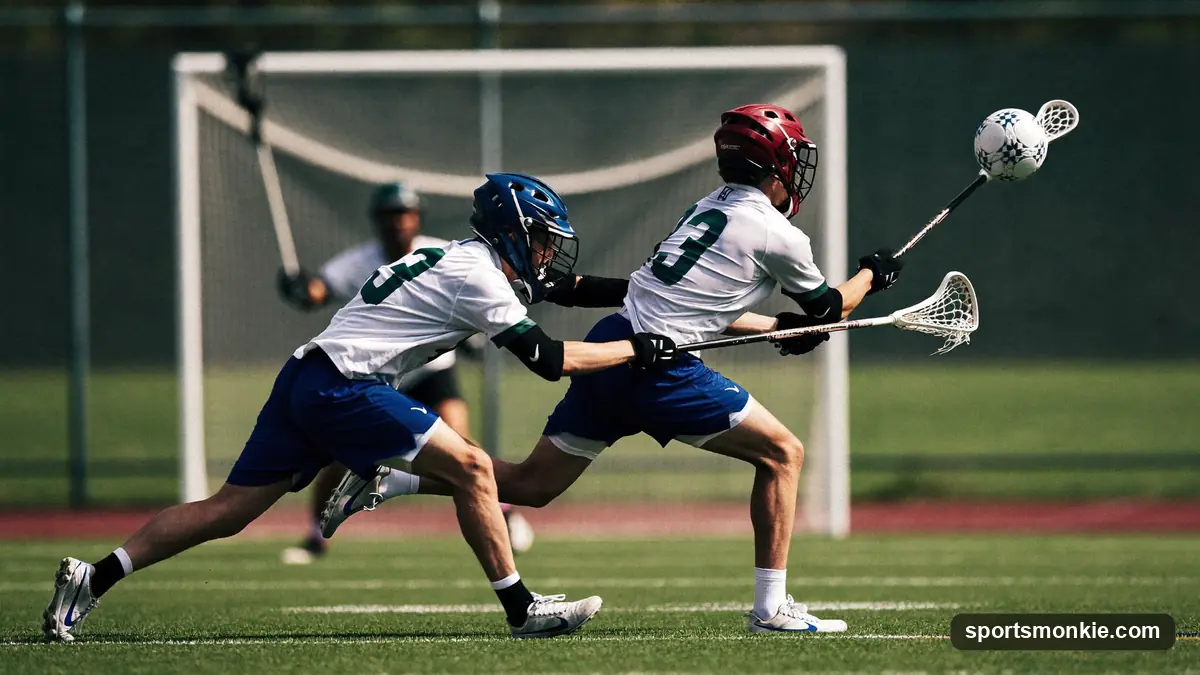
A dodge in lacrosse is a move the ball carrier uses to beat his defender one-on-one and create the space to shoot or feed a teammate. The core dodges are the face dodge, split dodge, roll dodge, bull dodge, and hitch. Which one you use depends on how the defender is playing you: aggressive defenders get split or hitched, overcommitted ones get rolled, smaller ones get bulled, and a well-timed check gets slipped with a face dodge. Master a couple that fit your game rather than trying to collect all of them.
The whole point of a dodge is separation. Beat your man by a step, and the defense has to slide, which is how good offense breaks a set.
The five dodges at a glance
Here is how the main dodges compare, and the defender reaction each one is built to punish.
| Dodge | How it works | Best used when | Difficulty |
|---|---|---|---|
| Face dodge | Bring the stick across your face, no hand switch, slip the check | The defender throws a check you can dodge under | Easiest |
| Split dodge | Change direction and switch hands to explode the other way | The defender over-pursues one direction | Medium |
| Roll dodge | Plant, turn your back, roll off the defender protecting the stick | The defender overcommits or rides you to the sideline | Medium-hard |
| Bull dodge | Lower the shoulder and power straight through or past | You have a strength or momentum edge | Medium |
| Hitch (hesitation) | Stutter-step to freeze the defender, then burst past | The defender is backpedaling or flat-footed | Medium |
No single dodge is best. The strongest dodgers pair a couple that complement each other, so the defender never knows which is coming.
The face dodge
The face dodge is the first one most players learn, because you never change hands. As the defender reaches in with a check, you bring the head of your stick across the front of your face to the other side of your body, slipping the check while keeping the ball in your strong hand, then accelerate past. It works beautifully against a defender who commits to a check high, since you take the ball right under it. The limit is that you finish on the same hand you started, so it is best when you have room to your strong side.
The split dodge
The split dodge is the workhorse of lacrosse offense. You drive hard one direction to make the defender open his hips and pursue, then quickly switch the stick to your other hand and change direction the opposite way, exploding into the space he just vacated. The hand switch is what makes it dangerous: you come out ready to shoot or feed on your off hand. USA Lacrosse clinics teach it as a foundational skill precisely because it beats the most common defender mistake, over-pursuit. The catch is the hand switch itself, which is why it takes cleaner stick skills than the face dodge.
The roll dodge
The roll dodge answers a defender who overcommits or rides you toward the sideline. You plant your outside foot, turn your back to the defender, and roll off his pressure while wrapping the stick tight to your body to protect it, coming out the other side facing the goal. Done well, it is one of the most physically dominant moves in the game. The real risk, as any Inside Lacrosse breakdown will note, is that you lose sight of the field and the sliding defense during the turn, so use it when you already have a half-step and know where your help is.
The bull dodge
The bull dodge is pure power. Instead of juking, you lower your shoulder and drive straight through or past the defender, shielding the stick to the outside and using your body to protect the ball as you power toward the cage. It shines when you have a strength or momentum advantage, from a running start up top or against a shorter defender. It is not subtle, and against a strong pole defender it can stall, but on the right matchup it collapses the defense and forces a slide.
When to use which dodge
Reading the defender is the real skill; the footwork is just the vocabulary. An aggressive defender who pressures your hands is begging for a split or a hitch. A defender playing you soft and backpedaling is vulnerable to a hitch that freezes him, then a burst by. A defender who overcommits or overplays your strong hand gets rolled. And when you have a physical edge, the bull is on. Against a long-pole defenseman with reach, respect the check and lean on the split and face dodge; against a short-stick midfielder matchup, the bull and roll open up.
Where you dodge from matters too. Top-side midfielders dodge downhill toward the goal with momentum, while attackmen often dodge from behind or beside the cage, where the roll and question-mark sweeps thrive. Knowing how much room you actually have before the crease or sideline takes the dodge away is half the read.
Drilling your dodges
Dodges fall apart without ball protection, so the fundamentals come first. A dodge is only as good as the cradle that keeps the ball secure through the change of direction, which is why our guide to how to cradle a lacrosse ball is the natural companion to this one. Start with the face dodge, add the split once your hand switch is clean, and build from there. Rep them at walking pace against a cone, then a passive defender, then live. The lacrosse drills for beginners in our drill guide give you a structure to progress through without overloading on moves you are not ready for.
Pick two dodges that fit your body and your position, drill them until they are automatic, and read the defender. That beats knowing ten dodges you cannot finish under pressure.
Freshness note: dodge technique is stable coaching content; the terminology here follows USA Lacrosse and Inside Lacrosse conventions, which occasionally vary by region and coach.
Frequently asked questions
What are the types of dodges in lacrosse?+
The main dodges are the face dodge, split dodge, roll dodge, bull dodge, and hitch (or hesitation) dodge. Each solves a different problem: the split and hitch beat a defender with a change of direction, the roll turns away from an overcommitted defender, the bull powers straight through, and the face dodge slips past a check while keeping the stick in the same hand.
What is a bull dodge in lacrosse?+
A bull dodge is a power move where the ball carrier lowers his shoulder and drives straight through or past the defender rather than trying to juke him. It works best when you have a strength or momentum advantage, often from up top or on a smaller defender. You protect your stick to the outside and use your body to shield the ball as you power to the goal.
What is a split dodge in lacrosse?+
A split dodge is a quick change of direction where the ball carrier switches the stick from one hand to the other while cutting the opposite way. You attack one direction to make the defender commit, then split your hands and explode the other way. It is the most common dodge in the game because it beats an aggressive, over-pursuing defender cleanly.
What is the easiest dodge to learn in lacrosse?+
The face dodge is usually the easiest for beginners because you never change hands. You bring the stick across your face to slip past a defender's check while keeping it in your strong hand. It requires less stick skill than the split or roll, which makes it the natural first dodge to teach a new player before adding hand switches.
When should you use a roll dodge?+
Use a roll dodge when a defender overcommits or rides you hard toward the sideline. You plant, turn your back to the defender, roll off him while protecting the stick with your body, and come out the other side. The risk is losing sight of the field and the defense during the turn, so it is best used when you already have separation.
Sources
Play & tools
Free browser games and tools — no account, no download.
- Play today's Sports Connections — Today's Sports Connections — daily hints, answers, and play the grid.
- Play Guess the NFL Player — A new mystery NFL player every day. Eight guesses, with a clue on each — plus free unlimited mode.
- Explore all our games →
Related guides

Lacrosse Slang Dictionary: Flow, Cheese, Twig and More
Lacrosse slang decoded: flow, cheese, twig, laxbro, muffin, sauce, celly and more. A full glossary of lacrosse lingo so you can follow the game and the culture.
The Attackman Position in Lacrosse
An attackman is an offensive lacrosse player who stays on the attacking half to score and feed. The role, sticks and skills explained.
Box Lacrosse vs Field Lacrosse
Box lacrosse is a fast 5-on-5 indoor game; field lacrosse is a 10-on-10 outdoor sport. Rules, field, gear and physicality compared.

The 8-Meter Arc in Women's Lacrosse: Free Position Shots
The 8-meter arc in women's lacrosse is the fan in front of goal where a major defensive foul gives the attacker a free position shot. Rules and procedure inside.
Adult Lacrosse Leagues: How to Find One and What They Cost
Adult lacrosse leagues run roughly $100-250 a season. Here is how to find one near you, what the divisions mean, and whether it's too late to start.
Can You Kick the Ball in Lacrosse? The Rule Explained
Yes, you can kick the ball in men's lacrosse, and you can even score by kicking it. The women's game restricts it more. Here is exactly what the rules allow.