
The Attackman Position in Lacrosse
On this page5
An attackman is an offensive player in men’s field lacrosse whose main job is to score goals and set up teammates, and who generally stays on the attacking half of the field. A standard men’s team fields three attackmen, and because they rarely drop back to defend, they specialize almost entirely in offense.
That specialization is what makes the position distinct. While midfielders run the whole field and defenders focus on stopping the ball, attackmen live in and around the opponent’s goal, orchestrating the offense and finishing chances. Here is what the role involves, the equipment attackmen use, and the skills that separate a good one from the rest.
Where attackmen play, and why they stay forward
The defining feature of the attackman is field position. Attackmen operate on the offensive half and, under the offside rules, generally do not cross into their own defensive end. To keep the required number of players on each side of midfield, when an attackman needs to stay forward, a midfielder handles the transitions.
Staying forward has a purpose. It lets the three attackmen build chemistry as a unit and remain constantly available for offense, so that the moment their team clears the ball or wins possession, they are already in position to attack. It also means they seldom have to defend the opposing goal, which is why they carry offensive-minded sticks and hone offensive skills above all.
Because there are three of them, the attack unit ties directly into the broader picture of how many players are on a lacrosse team and how the ten men on the field are divided by role.
The short stick and why it matters
Attackmen use a short stick, which under men’s field rules measures 40 to 42 inches in total length. That is far shorter than the long poles defenders may carry, and the difference is deliberate.
A shorter shaft is easier to cradle, protect and shoot with in the tight, crowded space around the goal where attackmen do their work. It allows quick dodges, fast passes and rapid shots, all of which are central to the position. The specifics of who can carry what length are set out in the lacrosse stick length rules, but the short answer is that every attackman uses a short stick, while the limited number of legal long poles go to defenders and a defensive midfielder.
The core jobs of an attackman
Within the offense, attackmen carry several overlapping responsibilities. The table below breaks the role into its main duties.
| Duty | What it involves |
|---|---|
| Finishing | Shooting accurately to score goals |
| Feeding | Passing to open cutters for assists |
| Dodging | Beating a defender one-on-one to create advantage |
| Initiating from X | Starting offense from behind the goal |
| Riding | Pressuring the opponent’s clear after a turnover |
The player stationed at “X,” directly behind the cage, is often the offense’s engine: from there they can survey the whole front of the goal, drive to either side, and feed cutters. A quarterback-like attackman at X frequently leads a team in assists.
Skills that define a good attackman
Because the position is so offense-focused, the skill set is specialized:
- Stick skills: clean catching, passing and cradling under pressure from long-pole defenders.
- Dodging: the footwork and change of pace to beat a defender and force the defense to slide.
- Vision and feeding: reading the defense and delivering passes to cutters at the right moment.
- Shooting: accuracy and a quick release to finish chances, often on the move.
Attackmen face constant pressure, because defenders use their longer sticks and physicality to disrupt them. Handling that pressure while still producing goals and assists is what makes the position one of the most technically demanding on the field.
Attackmen on defense: the ride
Although attackmen are offensive players, they are not idle when their team loses the ball. Because they are already forward, they lead the ride, immediately pressuring the opponents’ attempt to clear the ball out of their defensive end. A hard-riding attack unit can force turnovers deep in the opponent’s half and win the ball back in prime scoring position, which is why riding is treated as part of the attackman’s job rather than an afterthought.
Put it all together and the attackman is the specialist finisher and creator of a lacrosse team: forward-positioned, short-stick in hand, working in and around the goal to score and feed, and hustling on the ride when possession flips. It is the position where many teams’ most dangerous scorers make their home.
Frequently asked questions
What is an attackman in lacrosse?+
An attackman is an offensive player in men's field lacrosse who is responsible for scoring goals and creating chances for teammates. A team fields three attackmen, and they typically stay on the offensive half of the field rather than dropping back to defend. They use a short stick for quick handling, work in and around the goal (including behind it), and must be skilled at dodging, feeding and shooting. When their team loses the ball, attackmen also ride, pressuring the opponent's attempt to clear it upfield.
What is the hardest position in lacrosse?+
Opinions differ, but goalkeeper and faceoff specialist are often called the hardest because of the nerve and specialized skill they demand, while attackman is considered one of the most technically demanding field positions. Attackmen face constant pressure from long-pole defenders, must make split-second decisions with the ball, and are expected to produce goals and assists. Every position has its own difficulty: defenders need footwork and discipline, midfielders need endurance to play both ways. The 'hardest' depends on which skills you find most challenging.
What makes a good attack lacrosse head?+
A head suited to attack is generally designed for control, quick release and accurate passing and shooting rather than for scooping ground balls and checking, which matter more for defenders. Established manufacturers offer heads marketed specifically for attackmen, emphasizing a stiff but responsive feel, a channel that grips the ball for accuracy, and a legal shape under the rules. The 'best' head is highly personal and depends on stringing, playing style and league equipment rules, so it is worth trying several rather than assuming one model fits everyone.
How long is an attackman's stick in lacrosse?+
An attackman uses a short stick, which under men's field rules measures 40 to 42 inches in total length. This is much shorter than the long poles (52 to 72 inches) that defenders and one designated midfielder may carry. The shorter shaft makes the stick easier to cradle, dodge and shoot with in tight spaces around the goal, which suits the attackman's ball-handling and finishing role. All attackmen carry short sticks, since the limited number of long poles a team may field are used by defenders and a defensive midfielder.
Sources
Play & tools
Free browser games and tools — no account, no download.
- Play today's Sports Connections — Today's Sports Connections — daily hints, answers, and play the grid.
- Play Guess the NFL Player — A new mystery NFL player every day. Eight guesses, with a clue on each — plus free unlimited mode.
- Explore all our games →
Related guides
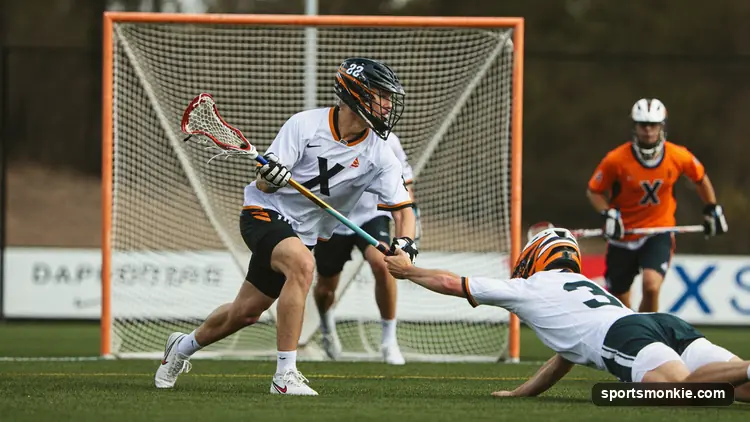
What Is X in Lacrosse? The Position Behind the Goal
X in lacrosse is the spot directly behind the goal where attackmen set up to feed and dodge. Here is why it is the most dangerous real estate on the field.
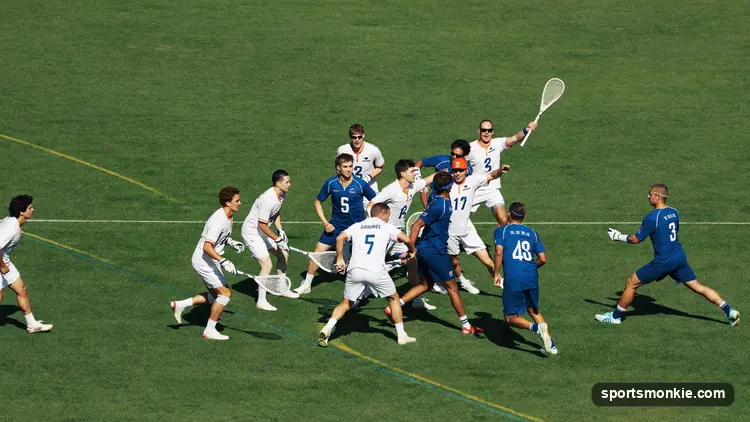
How Many Players Are on a Lacrosse Team?
Men's field lacrosse plays 10 per side, women's 12, and box lacrosse 6. How many players are on the field and on the roster, by format and level.
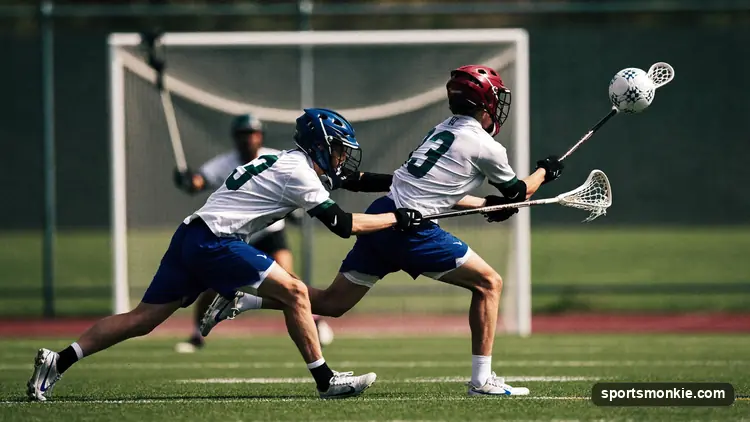
Lacrosse Dodges Explained: Face, Split, Roll and More
Lacrosse dodges beat your defender one-on-one. Learn the face dodge, split dodge, roll dodge, bull dodge, and hitch, and exactly when to use each one.
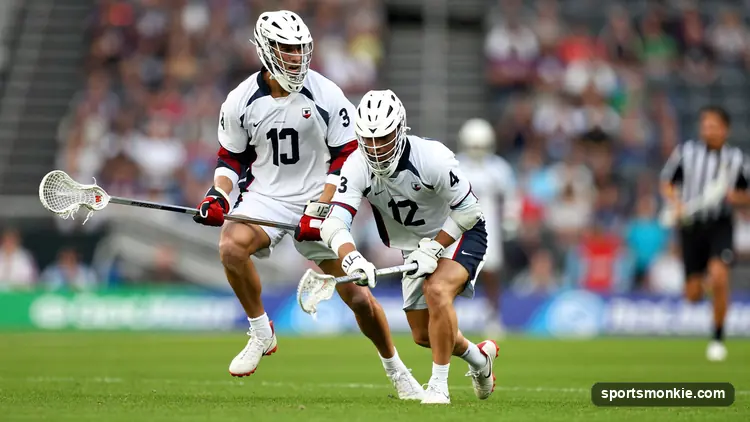
What Is an SSDM in Lacrosse? The Short-Stick D-Middie Explained
An SSDM in lacrosse is a short-stick defensive midfielder who covers opposing middies. Learn the role, how it differs from an LSM, and how to play it.
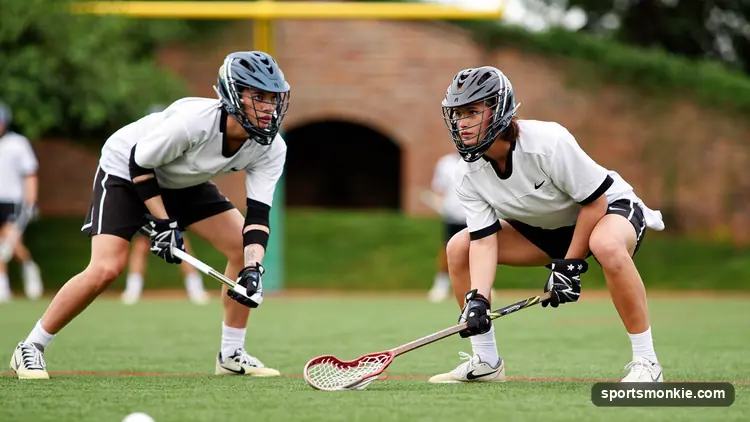
What Is a FOGO in Lacrosse? Faceoff Specialists Explained
A FOGO in lacrosse is a Face-Off, Get-Off specialist who wins the faceoff and subs off. Here is how the position works, the rules, and its famous names.
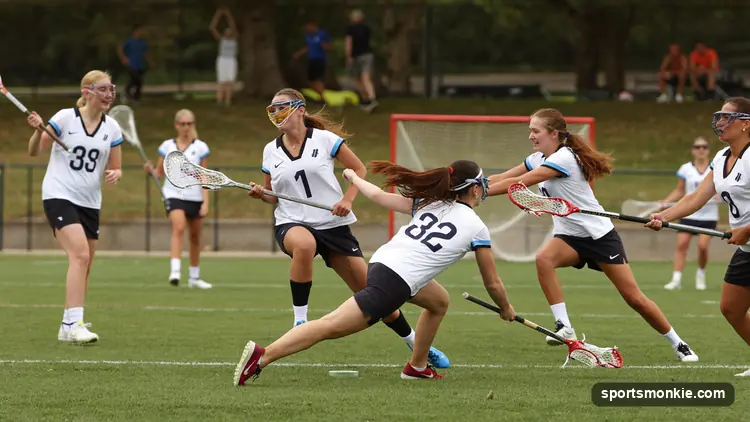
Women's Lacrosse Positions Explained: All 12 Roles
Women's lacrosse fields 12 players a side. Here are all 12 positions — attack, midfield, defense and goalie — with each role and field zone explained.