
What Is an SSDM in Lacrosse? The Short-Stick D-Middie Explained
On this page6
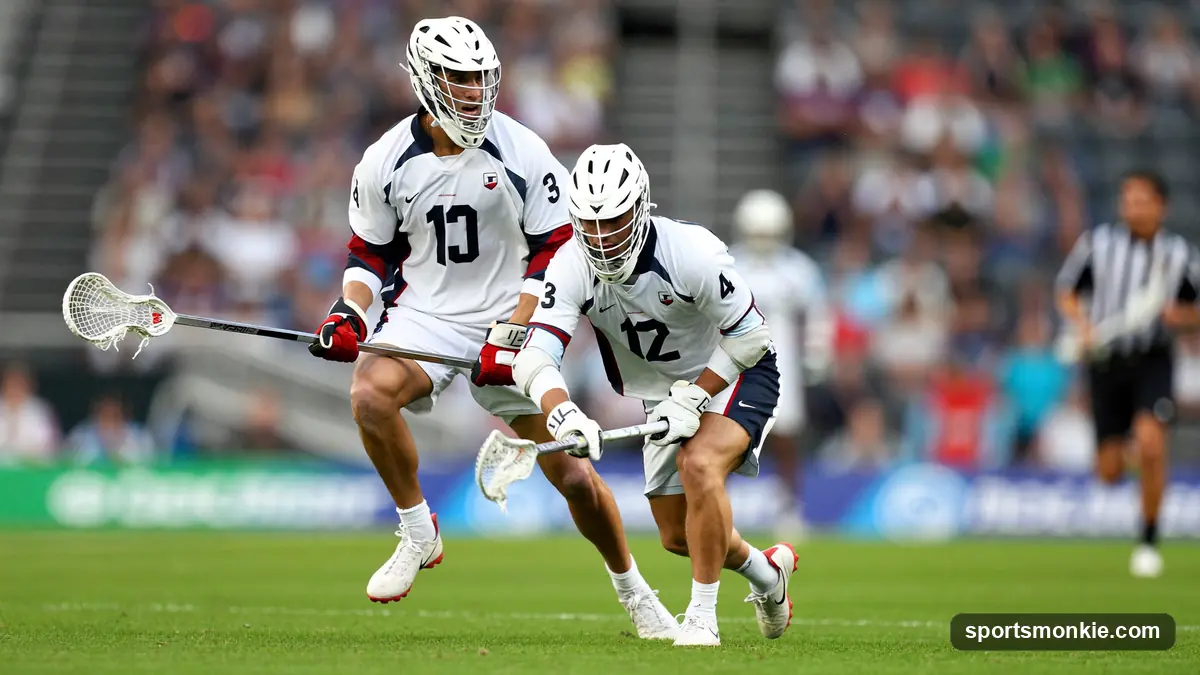
An SSDM is a short-stick defensive midfielder: a midfielder who plays defense using a regulation 40-to-42-inch stick rather than the six-foot pole a long-pole defender carries. When the ball turns over, the SSDM’s job is to pick up the opposing offensive middies, hold his own in one-on-one coverage despite the shorter reach, win ground balls, and spark the clear the other way. It is the grinder’s role — huge running load, little scoring credit — and plenty of coaches and writers at Inside Lacrosse will tell you it is the hardest job on the field.
If you have heard “D-middie” shouted from a sideline, that is the SSDM. Here is exactly what the position asks for and how it differs from the two roles it sits between.
What is an SSDM in lacrosse?
Every men’s team dresses three midfielders on the field at once. Rather than ask the same three players to defend elite attackers and score, teams substitute in defensive-minded midfielders when they lose the ball. Two of those are typically SSDMs, and often a third is a long-stick midfielder.
The SSDM keeps a short stick because he is expected to transition into offense the moment his team wins possession. A short stick handles and passes far better than a long pole, so the SSDM can carry the ball up the field and even join an odd-man rush. He trades reach on defense for skill on offense — the reverse bargain a pure pole defender makes.
SSDM vs LSM vs offensive middie
The three midfield archetypes are easy to mix up. This table lays out how they differ:
| Trait | SSDM | LSM (long-stick midfielder) | Offensive middie |
|---|---|---|---|
| Stick length | 40–42 in (short) | 60–72 in (pole) | 40–42 in (short) |
| Primary job | Cover opposing middies | Disrupt, cause turnovers, guard top dodger | Score and create |
| Ground balls | Very high priority | Highest priority | Secondary |
| Offensive role | Push transition, occasional shot | Rare; clears the ball | Main scoring midfielder |
| Running load | Highest on the field | High | High |
| Glory | Low | Moderate (highlight checks) | High (goals and assists) |
The LSM is the specialist takeaway artist, using the pole’s reach to poke-check and cause turnovers, and often guarding the opponent’s best dodging midfielder. The offensive middie is the scorer who comes off the field when his team loses the ball. The SSDM does the quiet defensive labour in between. For the full picture of the scoring side of the role, see our lacrosse midfielder guide.
Why it might be the hardest position
Ask around and the SSDM comes up again and again as lacrosse’s toughest job, for reasons that stack up:
- He runs the most. Every change of possession is a sprint, box to box, often for a full 15 to 20 seconds of shift.
- He defends with a disadvantage. A short stick gives up two-plus feet of reach against dodgers, so he has to be positionally perfect.
- He gets no cover. Miss a slide or lose a ground ball and it shows on the scoreboard; win ten of them and no one notices.
- He has to do it in bursts. SSDMs are subbed on and off constantly, so there is no easing into a rhythm.
None of that comes with the goals and assists an offensive middie banks. It is, in the truest sense, a role you play for the team.
How to play SSDM: the fundamentals
Defense at this position is footwork first, stick second. The best D-middies rarely throw big checks; they stay in front, use short jabs and lifts, and force the ball-carrier into help. A few non-negotiables:
- Stay in a defensive position — knees bent, hips low, always between your man and the goal.
- Talk constantly. Call your slides, call picks, call the ball. A silent defense is a beaten defense.
- Own every ground ball. Box out, get two hands on it, and protect it as you turn upfield.
- Know the offsides rule. Because middies live at the midline, a mistimed run leaves your team down a man — the lacrosse offsides rule is one an SSDM cannot afford to forget.
- Be relentlessly fit. Conditioning is the difference between a good D-middie and one who breaks down in the fourth quarter.
If you want to build the poke-check, approach and recovery footwork the role runs on, our lacrosse drills for beginners cover the defensive fundamentals worth grooving before you ever cover a live dodger.
Zone vs man: where the SSDM fits
Under NCAA rules, teams can play either man-to-man or zone defense, and the SSDM has to be fluent in both. In man, he shadows a specific offensive middie wherever he goes and lives on an island in one-on-one matchups. In zone, he guards an area, passes attackers off to teammates, and relies on timing and communication to cover the gaps. Zone eases the reach disadvantage of the short stick, which is one reason some coaches lean on it when their D-middies are giving up size.
The bottom line on the SSDM
If your player loves defense, never tires, and does not need his name in the box score, the SSDM is one of the most valued roles on any roster — coaches build teams around a reliable one. It is thankless, but a great short-stick D-middie quietly wins games. Before committing to it, though, get the fitness base in place; this is the one position where being a step slow is exposed on every single possession.
This connects to another question fans ask a lot: Lacrosse Conditioning Drills.
Frequently asked questions
What is an SSDM in lacrosse?+
SSDM stands for short-stick defensive midfielder. He is a midfielder who specialises in defense while carrying a standard short stick, usually 40 to 42 inches, rather than a six-foot defensive pole. His main task is covering the opposing offensive midfielders during defensive possessions and pushing the ball in transition.
What is the hardest position in lacrosse?+
Many coaches name the SSDM. He runs the most of any field player, defends elite dodgers with a short stick that gives him less reach, gets minimal offensive glory, and is expected to win ground balls and clear cleanly. Goalie and faceoff specialist are also strong candidates for different reasons.
How do you play defensive midfield in lacrosse?+
Play with your feet, not your stick. Keep a good defensive position and stay between your man and the goal, use short jabs rather than big checks, communicate slides, and treat every ground ball as yours. Fitness is non-negotiable — a D-middie sprints the length of the field on nearly every possession change.
What is the difference between zone and man defense in lacrosse?+
In man defense each defender, including the SSDM, marks a specific opponent and follows him. In zone defense players guard areas of the field and pass off attackers who move between zones. SSDMs slot into both, but their off-ball communication and slide timing matter most in a zone.
Sources
Play & tools
Free browser games and tools — no account, no download.
- Play today's Sports Connections — Today's Sports Connections — daily hints, answers, and play the grid.
- Play Guess the NFL Player — A new mystery NFL player every day. Eight guesses, with a clue on each — plus free unlimited mode.
- Explore all our games →
Related guides
Women's Lacrosse Positions Explained: All 12 Roles
Women's lacrosse fields 12 players a side. Here are all 12 positions — attack, midfield, defense and goalie — with each role and field zone explained.
Lacrosse Defenseman Guide: Role, Skills and Stick Setup
A lacrosse defenseman uses a 52-72 inch long pole to stop attackmen. Learn the role, the checks, the stick rules, and how many long poles a team can field.

Lacrosse Midfielder Guide: The Two-Way Grind Explained
A lacrosse midfielder plays both offense and defense and does the most running on the field. Learn the role, the midfielder types, and the stick rules.
The Attackman Position in Lacrosse
An attackman is an offensive lacrosse player who stays on the attacking half to score and feed. The role, sticks and skills explained.
Box Lacrosse vs Field Lacrosse
Box lacrosse is a fast 5-on-5 indoor game; field lacrosse is a 10-on-10 outdoor sport. Rules, field, gear and physicality compared.
How Many Players Are on a Lacrosse Team?
Men's field lacrosse plays 10 per side, women's 12, and box lacrosse 6. How many players are on the field and on the roster, by format and level.