
Lacrosse Conditioning Drills: Game-Speed Fitness
On this page5
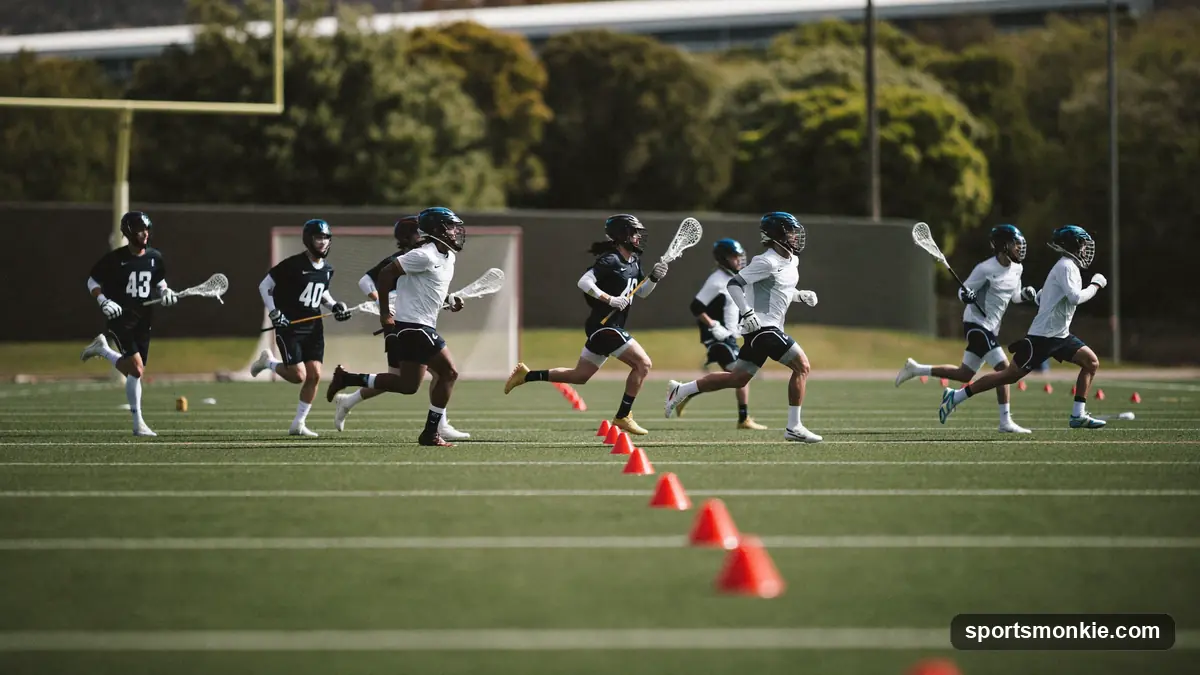
Lacrosse is a repeat-sprint sport: short, violent bursts followed by brief recovery, over and over for four quarters. Conditioning has to match that, which means shuttle runs, gassers, and interval sprints run at real game speed, not long slow jogging. Train the energy system the game actually uses and you stop fading in the fourth quarter.
The single most common conditioning mistake is preparing for the wrong sport. Distance running builds an aerobic base, but a lacrosse game is decided in the ten-second sprints, and those need their own training.
Why lacrosse conditioning is about repeat sprints
A midfielder covers three to five miles in a game, yet almost none of it is at a steady pace. It is a dodge, a clear, a ride, a slide, then a jog back, repeated hundreds of times. That stop-start pattern taxes the anaerobic system and the ability to recover between efforts, which is exactly what strength-and-conditioning bodies like the NSCA describe as repeat-sprint ability.
Steady-state running trains the wrong thing. It builds a base, useful in the early offseason, but it teaches your body to pace rather than explode. By preseason your sessions should look like the game: hard, short, and repeated with incomplete rest.
The core conditioning drills, with work-to-rest ratios
Below are the staples, with the work-to-rest ratio that makes each one build game fitness rather than junk mileage. The ratio is the whole point: rest too long and you train fresh sprinting, rest too little early on and your form falls apart. Start around 1:3 in early preseason and tighten toward 1:2 or 1:1 as you sharpen.
| Drill | Format | Work : Rest | Purpose |
|---|---|---|---|
| Gasser | Sideline to sideline and back, x2 (~215 yds) | ~30s work : 60-90s rest | Repeat-sprint capacity |
| 300-yard shuttle | 25 yds x 12, continuous | ~60s work : 2-3 min rest | Anaerobic lactate tolerance |
| Line shuttle (suicides) | 5-10-15-20 yd touches and back | 1:2 to 1:3 | Change of direction, acceleration |
| Interval sprints | 40-60 yd sprints, walk back | 1:3 early, 1:1 late | Top-end speed under fatigue |
| Box-to-box tempo runs | Field length at 75% effort | 1:1 | Aerobic base, recovery capacity |
| Ladder / Indian runs (group) | Continuous jog with sprint surges | Ongoing | Team conditioning, mental toughness |
Run these at honest intensity. A gasser jogged at 70 percent trains almost nothing; the same gasser at full effort with a strict clock is one of the best fitness builders in the sport. Time your rest with a watch, not by feel, because feel always inflates the rest.
Building a preseason conditioning block
Periodize your training rather than grinding the same sessions every week. In the offseason, six to eight weeks out, lean on tempo runs and a couple of gasser sessions to build a base without frying your legs. As the season nears, shift the balance toward 300-yard shuttles, suicides, and interval sprints, and shorten the rest so your body learns to work tired.
A workable week during preseason: two dedicated conditioning sessions of 20 to 30 minutes, one on-field practice with built-in sprints, and lower-body strength work on separate days. That is enough. Piling on a third hard running day usually adds fatigue without adding fourth-quarter fitness, and it steals recovery from the skill and strength work that actually wins games.
Position changes the dose
Not every player needs the same conditioning. Midfielders run the most and should carry the heaviest repeat-sprint load. Attackmen and defensemen sprint in shorter, more concentrated bursts, so their intervals can be shorter and more explosive. A short-stick defensive midfielder sits between the two, needing both the sprint capacity of a middie and the recovery to defend possession after possession.
Goalies are the exception: they need reaction quickness and short lateral bursts far more than sustained running, so their conditioning should lean on agility and change-of-direction drills. Match the training to the job.
Don’t neglect change of direction
Straight-line speed only wins half the battle. Lacrosse is played in cuts, dodges, and slides, so agility work belongs in every conditioning block. Cone drills, shuttle patterns, and reactive change-of-direction sprints teach your body to decelerate and re-accelerate, which is where most non-contact injuries and blown coverages come from.
Fold that agility work straight into skill sessions, since your on-ball moves double as conditioning. The footwork behind lacrosse dodges is the same footwork that carries you through a suicide drill, and practicing them together saves time while sharpening both.
Pick two of these drills, run them at full effort twice a week for six weeks, and clock your rest honestly. The players still flying in the fourth quarter are not the ones who ran the most miles; they are the ones who trained the right ones. For structured skill sessions to pair with this conditioning, start with our lacrosse drills for beginners.
Freshness note: work-to-rest ratios and drill formats are stable conditioning principles; re-check USA Lacrosse and NSCA resources for updated sport-science guidance each offseason.
Frequently asked questions
What are good conditioning drills for lacrosse?+
Shuttle runs, gassers, 300-yard shuttles, and interval sprints are the core, because they mirror the repeated hard efforts of a game. Add change-of-direction work like cone drills and tempo runs. Long steady jogging builds a base but does little for the stop-start demands lacrosse actually places on players.
How do you condition for lacrosse?+
Train the way you play: short, hard sprints with limited rest, repeated many times. Build an aerobic base early in the offseason, then shift to repeat-sprint work in the six weeks before the season. Two or three conditioning sessions a week, layered onto skill and strength work, keeps you fresh in the fourth quarter.
What are good lacrosse drills for fitness?+
Gassers, 300-yard shuttles, and box-to-box interval sprints deliver the most game-transfer. Ladder or Indian-run drills add variety and keep a group moving. The key is honest intensity and short rest; a drill only builds game fitness if you run it near full speed rather than pacing yourself through it.
How much running should a lacrosse player do?+
Midfielders cover roughly three to five miles a game in bursts, so training should total a similar volume spread across sprints, not one long run. Two to three focused conditioning sessions a week of 20 to 30 minutes each is plenty when combined with practice. More than that risks fatigue without extra game benefit.
Sources
Play & tools
Free browser games and tools — no account, no download.
- Play today's Sports Connections — Today's Sports Connections — daily hints, answers, and play the grid.
- Play Guess the NFL Player — A new mystery NFL player every day. Eight guesses, with a clue on each — plus free unlimited mode.
- Explore all our games →
Related guides

Why Lacrosse Is the Fastest Game on Two Feet
"The fastest game on two feet" is lacrosse's nickname. Where it comes from, what makes the sport so fast, and how quick the ball and shots really move.

How Long Is a PLL Lacrosse Game?
A PLL game is four 12-minute quarters, 48 minutes of game clock, plus halftime and stoppages, running about two to two-and-a-half hours in real time.
Backstroke Swimming: Technique, Start, and Drills Explained
Backstroke swimming is the only competitive stroke swum face-up. Learn the flutter kick, arm recovery, body roll, start, and drills to swim it correctly.
Breaststroke Swimming: Technique, Timing, and Drills Explained
Breaststroke swimming is the slowest competitive stroke, built on a pull-breathe-kick-glide rhythm and a whip kick. Learn the timing, pull-out, and fixes.
Butterfly Stroke: Technique, Kick Timing, and Drills Explained
The butterfly stroke pairs a simultaneous over-water arm recovery with two dolphin kicks per cycle, making it swimming's hardest, second-fastest stroke.

Dolphin Kick Swimming: Technique, the 15-Meter Rule, and Drills
The dolphin kick swimming technique explained: core-driven undulation, streamline, the 15-meter underwater rule, and drills to build a faster fifth stroke.