
Breaststroke Swimming: Technique, Timing, and Drills Explained
On this page8
- 01What Makes Breaststroke Different From the Other Strokes
- 02The Pull-Breathe-Kick-Glide Timing Sequence
- 03The Whip Kick (Frog Kick) Step by Step
- 04Common Mistake: The Screw Kick
- 05The Breaststroke Pull-Out (Underwater Sequence)
- 06Learning Breaststroke: Where It Fits for New Swimmers
- 07Breaststroke Drills to Try
- 08Bottom Line
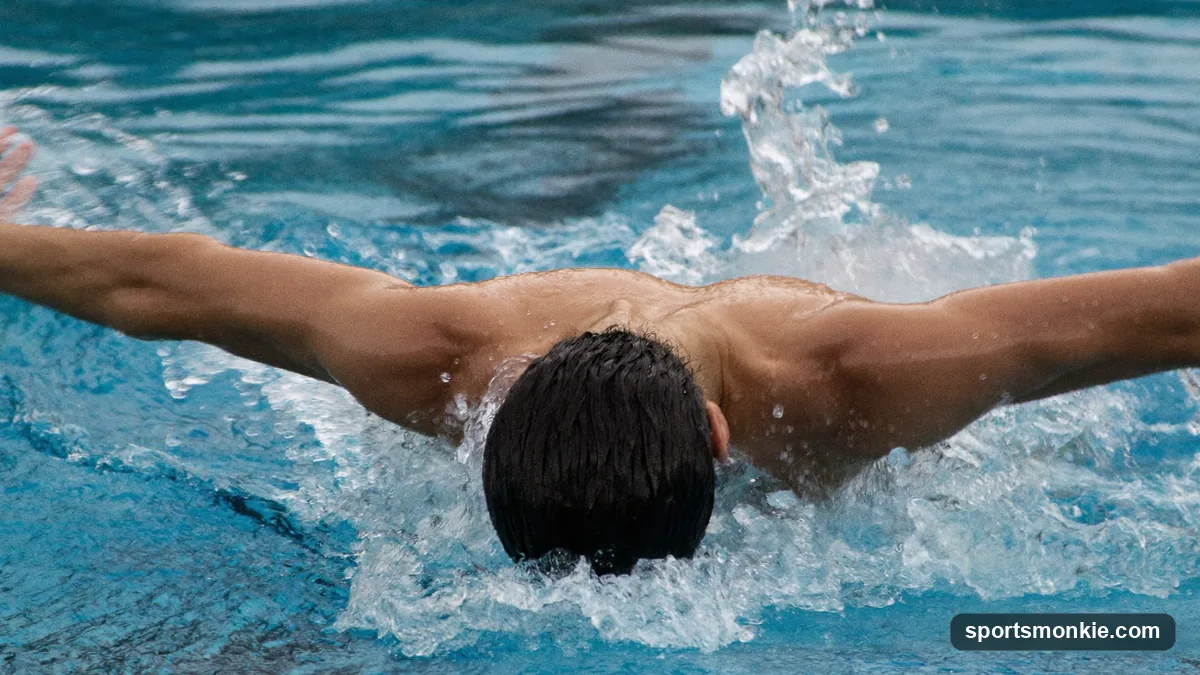
Breaststroke swimming is the slowest of the four competitive strokes, built around a repeating pull-breathe-kick-glide cycle and a symmetrical whip (frog) kick, and it’s the stroke most beginners learn first because the head can stay above water for most of it. Arms mirror arms and legs mirror legs, which makes the stroke intuitive to pick up but genuinely hard to make fast. Understanding the timing, the kick mechanics, and the underwater pull-out separates a breaststroke that glides from one that stalls every cycle.
What Makes Breaststroke Different From the Other Strokes
Breaststroke is one of four competitive swimming strokes recognized by World Aquatics, alongside freestyle, backstroke, and butterfly, but it runs on a completely different rhythm. Freestyle and backstroke use continuous, alternating arm and leg motion, so some part of the body is almost always producing thrust. Breaststroke and butterfly instead move both arms and both legs together, creating a pulse: a burst of propulsion, a glide, then a recovery phase that actually adds drag instead of removing it.
That start-stop rhythm is why breaststroke records are slower than every other stroke over the same distance, even at the Olympic level. It’s also why breaststroke rewards technique over raw power more than any other stroke — two equally fit swimmers can post very different times if one wastes less energy fighting the water during recovery.
The Pull-Breathe-Kick-Glide Timing Sequence
The whole stroke is often taught as one phrase: pull, breathe, kick, glide. Each word marks a phase, and the phases must happen in that order, not on top of each other.
- Pull. From a streamlined, arms-forward position, the hands sweep outward into a wide “Y,” then down and inward toward the chest. This out-sweep and in-sweep is where most of the arm propulsion comes from.
- Breathe. As the hands sweep inward, that motion naturally lifts the chest and shoulders. The head doesn’t need to be lifted separately — let the stroke’s momentum bring the chin above the surface, take a quick breath, and drop the head back down as the arms shoot forward again.
- Kick. While the arms recover forward past the chin, the knees bend and the heels draw up toward the hips. Just as the arms finish extending, the feet flare outward and snap backward and together in the whip kick, the stroke’s biggest single burst of speed.
- Glide. With arms and legs both fully extended, the body holds a brief streamlined line before the next pull begins. This is where distance-per-stroke is won or lost — rushing the glide to start the next pull early is one of the most common efficiency leaks in the stroke.
The core rule underneath all four steps: arms and legs should never actively drive at the same moment, or the two motions cancel out thrust instead of adding to it.
The Whip Kick (Frog Kick) Step by Step
The breaststroke kick is often called the “whip kick” or “frog kick,” and for most swimmers it supplies more of the stroke’s total propulsion than the arms do.
| Phase | What happens | Coaching cue |
|---|---|---|
| Recovery | Heels draw up toward the glutes, knees bend to roughly hip-width | Keep knees narrower than the heels; avoid a wide “frog” recovery |
| Rotation | Feet flare outward and toes point out, ankles flex to catch water | Turn the toes out hard right before the kick fires |
| Propulsive whip | Legs snap backward and around in a circular whipping motion, feet accelerating together | Think “kick the water out and back,” not just straight back |
| Finish/snap | Legs come together fully extended, feet touch or nearly touch | Squeeze the legs together at the very end for the final surge |
| Glide | Legs stay straight and streamlined while the body coasts | Hold the line — don’t let the legs drop or separate |
Ankle flexibility matters more in breaststroke than in any other stroke, because the feet need to rotate outward to “catch” water on the whip. Swimmers with stiff ankles often compensate with a wider, less efficient kick.
Common Mistake: The Screw Kick
The single most common flaw in recreational and even competitive breaststroke is the screw kick, a lopsided, corkscrewing version of the whip kick where one leg recovers or snaps differently than the other, adding drag and throwing off alignment. It’s rarely a pure “one leg is weaker” problem — the usual causes are:
- Poor core and hip stability, which lets one hip drop or rotate during the kick
- Tension in the neck and shoulders, which travels down the body and disrupts leg symmetry
- A rushed recovery phase, where the swimmer doesn’t bring both heels up evenly before firing the kick
Fixing it starts with slowing the kick down. Kickboard drills, done deliberately slowly with a focus on both feet turning out at exactly the same moment, retrain the symmetry before speed comes back. Underwater or side-angle video is the fastest way to actually spot a screw kick, since it’s hard to feel from inside the stroke.
The Breaststroke Pull-Out (Underwater Sequence)
After every start and every wall turn, competitive breaststrokers use a specific underwater sequence called the pull-out, tightly regulated by World Aquatics rules. From the streamlined position off the wall, the swimmer takes one full arm pull down past the hips. A single dolphin kick is legal at any point up to the first breaststroke kick — a relatively recent rule change, since earlier eras allowed only the arm pull and one whip kick, no dolphin kick at all. That single whip kick follows, then the arms recover forward into a glide before the swimmer breaks the surface and resumes normal stroking.
Only one arm pull and one breaststroke kick are permitted underwater per cycle; swimming further, or adding extra kicks, is a disqualification. Because the pull-out happens at a swimmer’s fastest, most drag-free position in the water, elite breaststrokers spend enormous training time perfecting it — a strong pull-out can be worth several tenths of a second per length.
Learning Breaststroke: Where It Fits for New Swimmers
Breaststroke is frequently the first stroke taught to adults learning to start swimming because the head can stay above the waterline for most of the cycle, removing the biggest early fear most new swimmers face: breathing with the face in the water. Full mastery is another matter — the whip kick’s ankle flexibility and the precise pull-breathe-kick-glide timing actually take longer to perfect than freestyle for many swimmers, which is why breaststroke technique keeps improving well into a swimmer’s competitive career.
Once the timing and kick feel natural, breaststroke pairs well with learning the other strokes. It shares the simultaneous-arm-and-leg rhythm with butterfly stroke, a more logical next stroke than it might seem, while its breathing pattern is a useful contrast to the continuous rotational breathing used in backstroke swimming.
Breaststroke Drills to Try
- Kickboard breaststroke kick: Isolate the whip kick with a board, focusing purely on symmetry and the outward-toe rotation before the snap.
- Pull buoy breaststroke pull: Isolate the arm out-sweep, in-sweep, and breath without the kick interfering, to feel the Y-shaped pull pattern.
- 1-2-3 timing drill: Count “1” for the pull and breath, “2” for the kick, “3” for the glide, exaggerating the pause on the glide to fix rushed timing.
- Streamline pull-out practice: Push off the wall and repeat the full pull-out sequence — arm pull, optional dolphin kick, one whip kick, glide — to build the same rhythm used in racing.
Bottom Line
Breaststroke is slow by design, but that’s exactly what makes its technique so rewarding to refine. Nail the pull-breathe-kick-glide timing, keep the whip kick symmetrical to avoid the screw kick, and treat the pull-out as its own skill, and the stroke stops feeling like a fight against the water and starts feeling like the glide it’s supposed to be.
Frequently asked questions
What is breaststroke swimming?+
Breaststroke swimming is a competitive and recreational stroke where swimmers lie face-down and use a simultaneous, symmetrical arm pull combined with a whip (frog) kick, breathing during the arm pull with the head naturally rising above the water. It is the slowest of the four competitive strokes but one of the easiest for beginners to learn because it does not require full-time face-in-water breathing.
Why is breaststroke the slowest stroke?+
Breaststroke is slowest because both the arm pull and the whip kick create drag during their recovery phases — the knees bending forward and the arms sweeping back to the chest both push against the water rather than through it. Freestyle and butterfly keep the arm recovery out of the water entirely, and backstroke keeps a continuous alternating kick, so breaststroke loses more speed to resistance between each propulsive phase.
What is the correct breaststroke timing?+
The standard beginner sequence is pull, breathe, kick, glide. The arms sweep outward and inward while the shoulders and head rise for a breath; as the arms recover forward, the legs perform the whip kick; the stroke finishes with a brief streamlined glide before the next pull begins. Arms and legs should never be driving at the same instant, or they cancel out each other's propulsion.
What is a screw kick in breaststroke and how do you fix it?+
A screw kick is an asymmetrical, corkscrewing breaststroke kick where one leg does a different motion than the other, usually caused by poor balance, tension in the shoulders and neck, or a rushed recovery. It is fixed by slowing the kick down, practicing with a kickboard and both feet turned out evenly, and drilling the recovery phase separately from the propulsive whip before recombining it with the full stroke.
What is a legal breaststroke pull-out?+
A pull-out is the underwater sequence swimmers use after a start or turn: one full arm pull down to the hips, during which a single dolphin kick is permitted at any point up to the first breaststroke kick, followed by one breaststroke (whip) kick, then the arms recover forward into a glide before the swimmer surfaces and resumes normal stroking. Only one arm stroke and one breaststroke kick are allowed underwater per World Aquatics rules.
How do you breathe correctly in breaststroke?+
Breathe at the top of the arm pull, when the shoulders and chest naturally rise out of the water from the propulsive in-sweep of the hands. Let the body's own motion lift the chin clear of the surface rather than craning the neck upward, take a quick breath through the mouth, then drop the head back down as the arms shoot forward into the glide.
Is breaststroke good for beginners?+
Yes. Breaststroke is usually the easiest stroke for adult beginners because the head can stay above the waterline for most of the cycle, which reduces the anxiety of face-in-water breathing that trips up new swimmers on freestyle. It also builds an intuitive rhythm for learning stroke timing before progressing to backstroke or butterfly.
What muscles does breaststroke work?+
Breaststroke works the chest, shoulders, and triceps during the arm pull, the inner thighs, glutes, and hamstrings during the whip kick's outward-and-snap motion, and the core and lower back to hold the body streamlined between phases. The hip-driven kick in particular builds groin and adductor strength that freestyle and backstroke rarely target.
Sources
Play & tools
Free browser games and tools — no account, no download.
- Play today's Sports Connections — Today's Sports Connections — daily hints, answers, and play the grid.
- Play Guess the NFL Player — A new mystery NFL player every day. Eight guesses, with a clue on each — plus free unlimited mode.
- Explore all our games →
Related guides
Butterfly Stroke: Technique, Kick Timing, and Drills Explained
The butterfly stroke pairs a simultaneous over-water arm recovery with two dolphin kicks per cycle, making it swimming's hardest, second-fastest stroke.
Backstroke Swimming: Technique, Start, and Drills Explained
Backstroke swimming is the only competitive stroke swum face-up. Learn the flutter kick, arm recovery, body roll, start, and drills to swim it correctly.

Dolphin Kick Swimming: Technique, the 15-Meter Rule, and Drills
The dolphin kick swimming technique explained: core-driven undulation, streamline, the 15-meter underwater rule, and drills to build a faster fifth stroke.
Freestyle Swimming: Technique, Drills, and Common Mistakes Explained
Freestyle swimming (front crawl) is the fastest competitive stroke. Learn the arm pull, flutter kick, breathing, and drills that fix common mistakes.
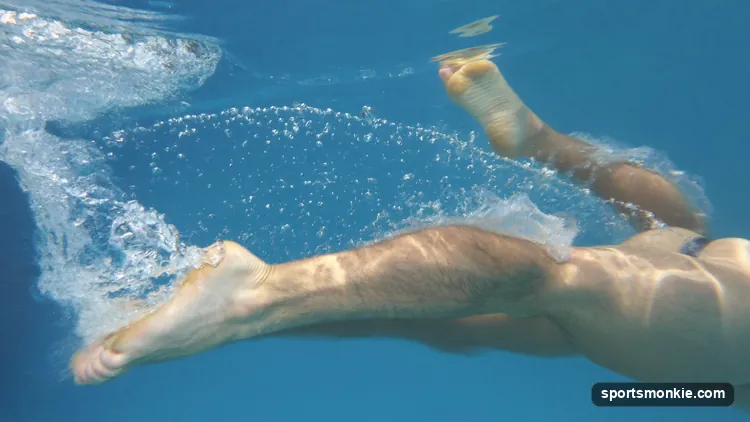
Breaststroke Kick Technique: Whip Kick, Faults & Drills
Master the breaststroke kick with a step-by-step whip kick sequence, ankle flexion cues, whip vs frog kick differences, and fixes for the most common faults.
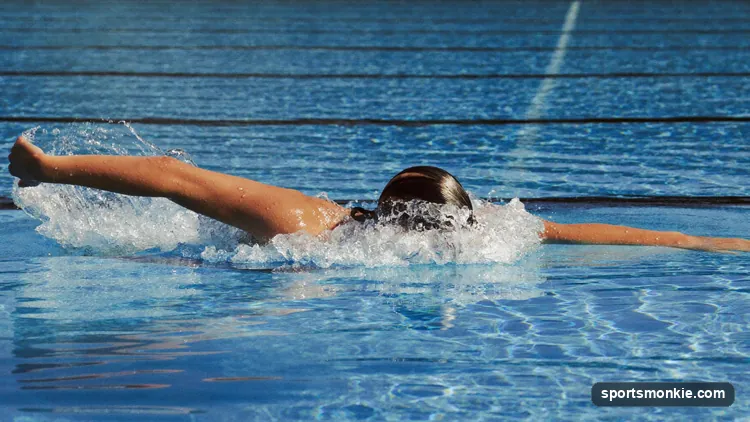
How to Swim: Complete Technique Guide for All 4 Strokes
Learn how to swim with correct technique for freestyle, breaststroke, backstroke, and butterfly. Body position, breathing, kick, and drills to swim farther and faster.