
Why Lacrosse Is the Fastest Game on Two Feet
On this page6
“The fastest game on two feet” is a long-standing nickname for lacrosse, used to capture how quickly the sport moves compared with other field games. The phrase deliberately says “on two feet” to distinguish lacrosse from sports played on skates or wheels, such as ice hockey, which can be even faster but are not run on foot.
It is a fan and marketing label rather than an officially measured title, but it reflects a genuine truth: among sports played by running, lacrosse is exceptionally fast. Here is where the nickname comes from, and the specific features of the game that earn it.
What the nickname actually claims
The key words are “on two feet.” Plenty of sports are fast, hockey players on skates and cyclists on wheels reach higher speeds than any runner can. Lacrosse’s boast is narrower and more precise: among sports played by running on foot, it is the fastest.
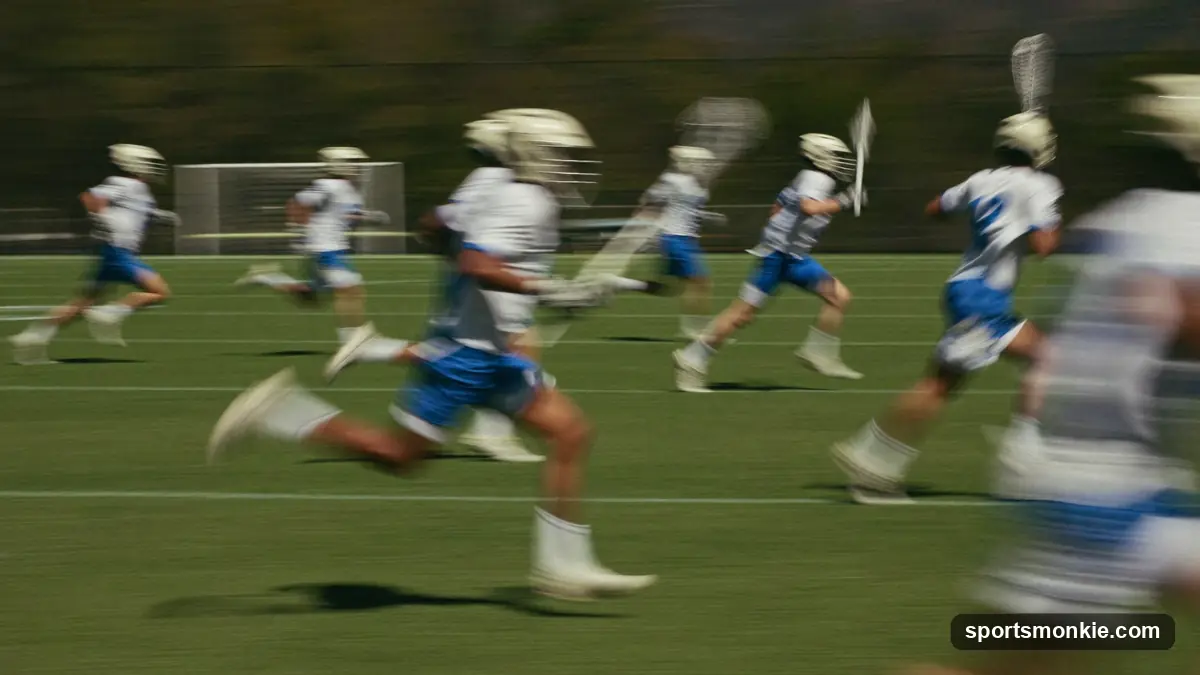
That framing is why the phrase has endured. It sidesteps the unwinnable argument about whether lacrosse is faster than hockey, and instead stakes a claim lacrosse can actually back up. When you watch a game, players sprint the length of the field while the ball travels even faster overhead, producing a pace that few running sports match.
Why lacrosse is so fast
Several features combine to give the sport its speed. No single one explains the nickname; it is the way they stack together.
| Factor | Why it adds speed |
|---|---|
| Ball travels faster than players | Passes and shots fly far quicker than anyone can run |
| Constant transitions | Possession flips in seconds between defense and offense |
| Shot clocks | Force teams to attack quickly rather than stall |
| Running clock | Keeps play flowing with fewer stoppages |
| End-to-end play | The ball moves goal to goal rapidly on clears and breaks |
The single biggest factor is that the ball outruns the players. A carried ball is only as fast as the athlete cradling it, but a passed or shot ball flies far quicker, so a team that moves the ball by passing rather than running can shift the point of attack almost instantly. That is why crisp passing offenses look so fast.
The ball and the shot
The small, hard rubber ball is central to the sport’s pace. On quick passes it zips around the field, and on shots it becomes genuinely dangerous. Elite male players have been clocked firing shots well over 100 miles per hour, with the fastest recorded shots reaching roughly 120 miles per hour in radar-gun tests.
Those top-end numbers come from professional and elite players winding up full crank shots; everyday and youth players shoot much slower. But even a strong high-level shot travels faster than a goalkeeper can fully react to, which is why goalies depend on positioning and reflexes rather than trying to track the ball the whole way. The sheer velocity of the ball is a big part of why the game feels so quick.
Transition: the part that never stops
If the ball’s speed is the first ingredient, transition is the second. In lacrosse, possession changes hands constantly, and the moment it does, both teams sprint to reorganize. A defensive stop can turn into an attacking chance within seconds as a team clears the ball upfield, and a turnover can send play racing back the other way.
This end-to-end quality is what gives lacrosse its relentless rhythm. Our explainer on what a clear is in lacrosse breaks down that defense-to-offense burst that happens dozens of times a game, and it is central to the sport’s fast identity. Add a shot clock that forces teams to attack promptly, and there is little opportunity for the game to slow down.
A running sport with hockey-like flow
Part of what makes lacrosse feel fast is that it borrows the flowing, transitional structure people associate with hockey, but plays it out on foot on a field. Players substitute on the fly, the clock keeps running, and the ball moves quickly between attacking and defending, all without the stop-start pattern of some other field sports.
The indoor version, box lacrosse, compresses this even further onto a smaller enclosed floor, ramping up the speed and physicality; our comparison of box and field lacrosse shows how the setting changes the tempo. Either way, with ten players a side in the men’s field game constantly cycling through offense and defense, the action rarely pauses, as our overview of how many players are on a lacrosse team helps illustrate.
A nickname that lives up to itself
“The fastest game on two feet” is not an official designation stamped by a governing body; it is a traditional, promotional phrase that fans and the sport have used for generations. But it has stuck for a simple reason: it is accurate. Between a ball that outruns its players, shots pushing 120 miles per hour, and transitions that flip the field in seconds, lacrosse genuinely is one of the fastest sports played on foot. If you want to see why for yourself, our beginner’s guide to lacrosse is the place to start.
Frequently asked questions
Is lacrosse the fastest sport on two feet?+
Lacrosse is popularly called 'the fastest game on two feet,' a nickname that reflects how quickly the ball moves, how fast possession changes, and how rapidly play goes end to end. The phrase specifically says 'on two feet' to set it apart from sports played on skates or wheels, like ice hockey, which can be even faster but are not run on foot. It is a fan and marketing label rather than an officially measured ranking, but it captures a real feature of the game: among sports played by running, lacrosse is exceptionally fast.
What's the fastest lacrosse shot ever recorded?+
Elite male players have been clocked firing shots well over 100 miles per hour, with the fastest recorded shots reaching roughly 120 miles per hour in radar-gun tests and competitions. Those top speeds come from professional and elite players using full crank shots. Everyday and youth players shoot far slower, but even a typical high-level shot moves faster than a goalkeeper can fully react, which is why goalies rely on positioning and quick reflexes. Exact record figures vary by event and measurement, so treat the ~120 mph range as the documented upper end rather than a fixed number.
Where does the nickname 'fastest game on two feet' come from?+
The phrase has been used to describe lacrosse for many decades as a way to convey its speed to newcomers. It highlights that, unlike hockey (on skates) or cycling (on wheels), lacrosse achieves its blistering pace purely on foot, with players sprinting the field while the ball flies even faster on passes and shots. It is a promotional and traditional nickname rather than an official title from a governing body, but it has stuck because it accurately sums up how the sport looks and feels to watch and play.
What is the fastest sport on foot?+
If you restrict the comparison to sports played by running rather than on skates or wheels, lacrosse is one of the fastest, which is exactly what its nickname claims. Sprinting itself (track) produces the highest human foot speeds, but as a team game with constant ball movement and transition, lacrosse stands out for its overall pace. Sports on ice or wheels, like ice hockey or cycling, can reach higher speeds, but they are not run 'on two feet,' which is the distinction the lacrosse nickname draws.
Sources
Play & tools
Free browser games and tools — no account, no download.
- Play today's Sports Connections — Today's Sports Connections — daily hints, answers, and play the grid.
- Play Guess the NFL Player — A new mystery NFL player every day. Eight guesses, with a clue on each — plus free unlimited mode.
- Explore all our games →
Related guides
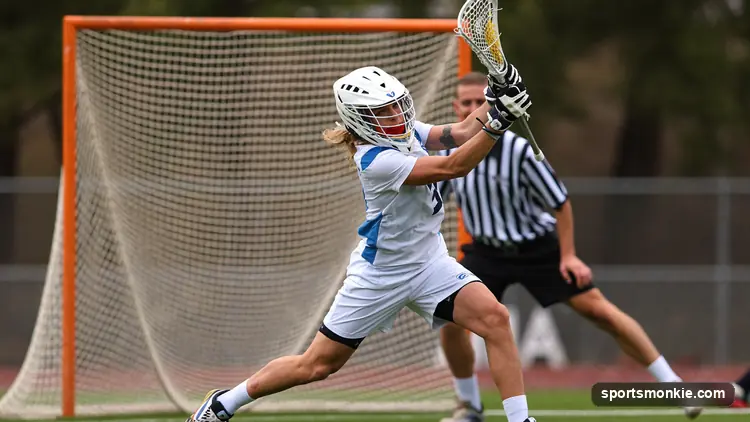
The Fastest Lacrosse Shot Ever (And Average Speeds by Level)
The fastest lacrosse shot ever officially recorded is 119.9 mph by Patrick Luehrsen. See the record, plus average lacrosse shot speed by level.

How to Shoot a Lacrosse Ball Faster: A Technique Guide
Shoot a lacrosse ball faster by generating torque with your hips and shoulders, driving the top hand and snapping the bottom. Here's the full technique.

How Long Is a PLL Lacrosse Game?
A PLL game is four 12-minute quarters, 48 minutes of game clock, plus halftime and stoppages, running about two to two-and-a-half hours in real time.
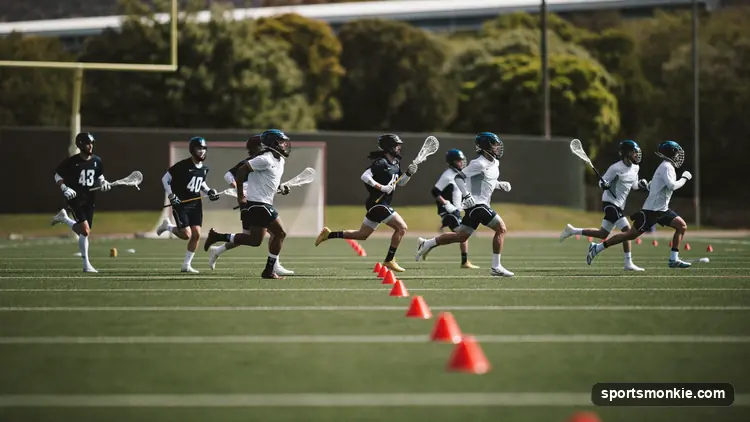
Lacrosse Conditioning Drills: Game-Speed Fitness
Lacrosse conditioning drills that build game-speed fitness: shuttle runs, gassers, and interval sprints with exact work-to-rest ratios and their purpose.
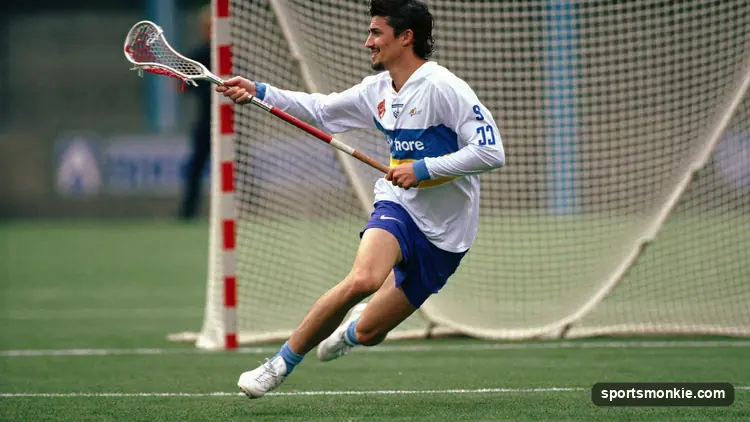
What Is a Quick Stick in Lacrosse? The Fastest Finish
A quick stick in lacrosse is a one-motion catch-and-shoot that redirects a pass to goal without cradling. Here is when to use it and how to drill it.
The Lacrosse Medicine Game: Origins and Meaning
Lacrosse began as the Haudenosaunee 'medicine game' or Creator's Game — played for healing, thanksgiving and community. Here's its meaning and living role.