
Lacrosse Stick Length Rules
On this page5
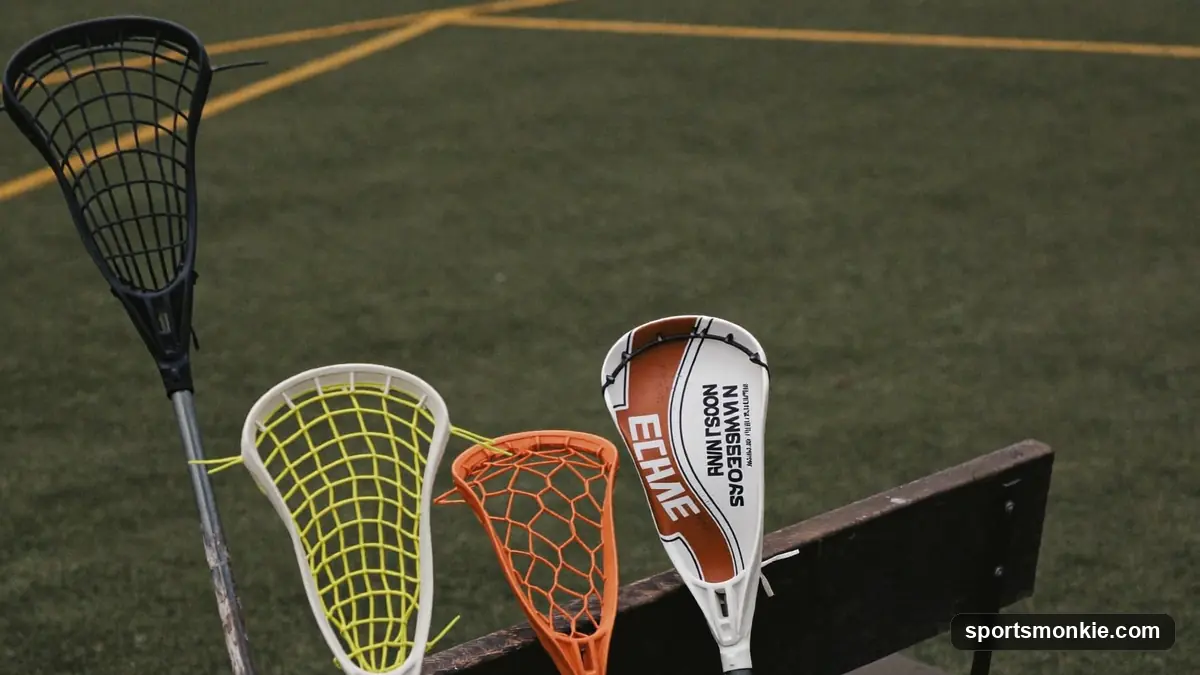
In men’s field lacrosse, stick length is governed by position: a short crosse, used by attackmen and midfielders, must measure 40 to 42 inches in total length, while a long crosse, used by defenders and a long-stick midfielder, measures 52 to 72 inches. The goalkeeper is allowed a crosse anywhere from 40 to 72 inches.
(“Crosse” is the formal name for a lacrosse stick.) These position-based ranges are one of the defining features of the men’s game, because they shape how each role is played and how many long poles a team can deploy. Here is a full breakdown of the length rules, what makes a stick illegal, and how the limits work.
Length by position: the core rules
The men’s rules tie stick length to what a player does on the field. Ball-handlers get shorter, more maneuverable sticks; defenders get long poles that extend their reach.
| Stick type | Who uses it | Total length |
|---|---|---|
| Short crosse | Attack, midfield | 40–42 inches |
| Long crosse | Defense, long-stick midfielder | 52–72 inches |
| Goalkeeper crosse | Goalkeeper | 40–72 inches |
The logic is straightforward. A short stick is easier to cradle, dodge and shoot with in traffic, which is why offensive players carry one, as our explainer on the attackman position describes. A long pole lets a defender check and disrupt a ball carrier from farther away, trading handling ease for reach. The goalkeeper’s wide allowable range reflects the specialized nature of the position and the oversized head goalies use.
The four-long-pole limit
Length is not the only stick rule that matters; there is also a cap on how many long crosses a team can use at once. A team may have a maximum of four long crosses on the field at any time.
In practice, that usually breaks down as three long-pole defenders plus one long-stick midfielder, commonly called the LSM. The limit exists to keep the game balanced, because long poles are so effective at breaking up offense that a team allowed to field more of them would gain an outsized defensive advantage. Managing that four-pole allotment, and knowing when to send the LSM up or back, is part of how coaches structure a lineup within the rules on how many players are on the field.
What makes a stick illegal
A stick can be ruled illegal for more than just being the wrong length. Officials can inspect a crosse, and the common ways a stick fails legality are:
- Length outside the legal range for its type (too short or too long).
- Head dimensions that do not meet the required shape and width.
- Pocket depth that is too deep, so the ball sits below the legal limit when the stick is checked.
Pocket depth is a frequent culprit. The rules require that the ball not drop below a defined point in the pocket, and a pocket strung too deep gives the player an unfair advantage in holding the ball, so it is penalized. Using an illegal stick draws a penalty, and because sticks can be checked during a game, players are responsible for keeping their equipment compliant. Faceoff specialists in particular have their sticks scrutinized, as our guide to lacrosse faceoff rules explains.
Women’s sticks: a different framework
Women’s lacrosse uses its own equipment rules. Rather than the men’s position-based system, women’s field sticks fall within a defined length range, and goalkeepers are permitted a longer crosse. The women’s game also has distinct rules on head shape and pocket, reflecting its lower-contact style and different techniques.
So while women’s sticks are more uniform than the men’s tiered system, they are not all exactly the same size; they simply must fall within the women’s legal specifications. Anyone crossing between the two games should check the correct rulebook, because the equipment standards do not transfer.
A note on levels and governing bodies
The figures here reflect the men’s rules used in US college and high-school lacrosse, and they are broadly mirrored by World Lacrosse for the international game. That said, exact numbers and inspection procedures can vary slightly by governing body, level and season, and youth programs sometimes adjust equipment rules for younger players.
The practical takeaway for a player is simple: know your position’s legal range, keep your stick within it, string a legal pocket, and be aware of the four-long-pole team limit. Get those right and your equipment will pass any check, letting you focus on playing rather than on a stick violation. If you are still learning the wider game, our beginner’s guide to lacrosse rules puts these equipment rules in the context of how the sport is played.
Frequently asked questions
What length should my lacrosse stick be?+
It depends on your position in the men's game. If you play attack or midfield, your stick should be a short crosse of 40 to 42 inches. If you play defense or long-stick midfield, you use a long crosse of 52 to 72 inches. Goalkeepers may use a crosse from 40 to 72 inches. Choose within your position's legal range and, for short sticks, pick a length in the 40 to 42 inch window that feels comfortable for your handling and shooting. Always confirm the exact rule for your league and level.
What is an illegal stick in lacrosse?+
An illegal stick is any crosse that does not meet the rules on length, head dimensions or pocket. Common violations include a stick shorter or longer than the legal range for its type, a head that is too narrow or the wrong shape, or a pocket that is too deep (the ball must not sit below the legal depth when checked). Officials can inspect sticks, and using an illegal stick draws a penalty. Players are responsible for keeping their equipment within the rules for their level of play.
How many long sticks are allowed in lacrosse?+
In men's field lacrosse, a team may have a maximum of four long crosses on the field at any one time. In practice this usually means three long-pole defenders plus one long-stick midfielder (often called the LSM). Exceeding the limit is an equipment violation. The cap is what balances the game, since long poles are highly effective at disrupting ball carriers, so the rules prevent a team from flooding the field with them.
Are all girls' lacrosse sticks the same length?+
No. Women's lacrosse sticks fall within a defined length range rather than being a single fixed size, so field players can use sticks within the permitted window, and goalkeepers are allowed a longer crosse. The women's game also has its own rules on head shape and pocket depth that differ from the men's game. So while women's sticks are more uniform than the men's position-based system, they are not all identical; they must simply fall within the women's legal specifications.
Sources
Play & tools
Free browser games and tools — no account, no download.
- Play today's Sports Connections — Today's Sports Connections — daily hints, answers, and play the grid.
- Play Guess the NFL Player — A new mystery NFL player every day. Eight guesses, with a clue on each — plus free unlimited mode.
- Explore all our games →
Related guides
Best Lacrosse Sticks for Beginners: Complete Setups That Last
The best beginner lacrosse sticks are pre-strung complete setups sized to age and position. Here are real picks from STX, StringKing, and Warrior plus length rules.
What Is a Faceoff in Lacrosse? Restart and Possession Rules
A lacrosse faceoff starts each quarter and follows goals, with two players competing for the ball while teammates stay outside the restraining area.
How Long Are Boxing Rounds? Length & Rest Times
Men's boxing rounds are three minutes with a one-minute rest; women's rounds are usually two minutes. Round length, rest and total fight time explained.
Lacrosse Faceoff Rules, Explained
How do lacrosse faceoffs work? The rules explained: how players line up, the clamp, common violations, and how faceoffs differ by level and gender.
Lacrosse Overtime Rules, Explained
How does overtime work in lacrosse? It's sudden victory, the first team to score wins. How OT periods, faceoffs and level-by-level rules work.

Lacrosse Rules for Beginners: The Basics
New to lacrosse? The basic rules explained: teams and positions, how to score, faceoffs, fouls, offsides and the shot clock, in plain language.