
Libero Rules in Volleyball: What They Can and Can't Do
On this page5
The libero is a back-row defensive specialist who wears a contrasting-colour jersey and plays by a special set of restrictions: back row only, no attacking a ball from entirely above net height, no blocking, and free substitutions that don’t count against the team’s normal total. It’s the position that most confuses new fans, and almost entirely because of that different jersey.
Here’s what the libero actually is, why it exists, and the exact things it can and can’t do — including the two rules that genuinely change depending on which competition you’re watching.
What the libero can and can’t do
The role was introduced to raise the standard of defence and keep rallies alive, so everything about it is built around back-row passing and digging.
| Action | Allowed? |
|---|---|
| Play in the back row | Yes |
| Play in the front row | No |
| Attack a ball entirely above net height | No |
| Block or attempt to block | No |
| Dig and serve-receive | Yes — the whole point of the role |
| Overhand-set a front-row attacker from in front of the attack line | No (attacker can’t hit it above net height) |
| Substitute freely for back-row players | Yes, without counting as a normal sub |
| Serve | Depends on the ruleset |
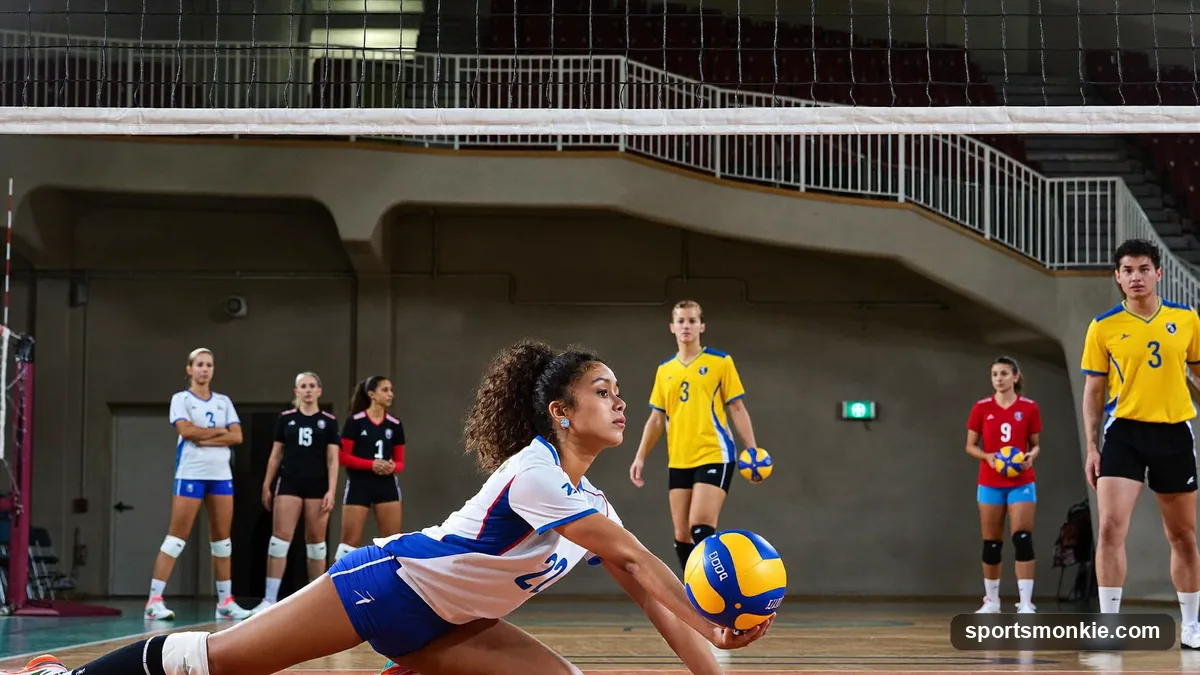
That defensive job is the reason the position exists at all. When a spike comes in at speed, it’s usually the libero who turns it into a clean pass — the defensive save known as a dig. A libero who reads hitters well can keep a team in rallies it had no business winning.
The contrasting jersey
The different-coloured shirt isn’t a style choice; it’s a requirement. Because the libero’s restrictions are constant and specific, referees and scorers need to identify them instantly during a fast rally. The rule simply says the libero must be clearly distinguishable from teammates, so you’ll always see them in an off-colour top.
Substitutions: the free swap
The libero replaces a back-row player without the exchange counting as one of the team’s limited substitutions, which is why they seem to come and go endlessly. Typically the libero comes in for a middle blocker when that player rotates to the back row, then comes off when the middle rotates back to the front.
Because of this, the libero never cycles through all six court positions the way other players do. They stay in the back row, tied to the rotation of the player they replace. If you want the underlying cycle they’re slotting into, our volleyball rotation explained guide lays out the clockwise rotation and overlap rules, and volleyball positions explained shows how the libero fits alongside the setter, hitters and middle blocker.
The rules that change by level
Two libero rules genuinely differ between competitions, so it’s worth stating the standard version and where it splits:
- Serving. Under international FIVB rules the libero cannot serve. But NCAA and many US high school rules allow the libero to serve in one rotation. If you see a libero step back to serve, you’re watching a domestic ruleset, not an international one.
- Number of liberos. Most current rulebooks permit up to two liberos on the roster, one on court at a time. Some levels allow only one per set or match.
When you’re unsure, the safe assumption is the FIVB version — no serving, one libero on court — and then check the specific league if you see something different.
Why the role matters
A great libero doesn’t score, doesn’t block and rarely makes a highlight reel, yet elite teams build their defence around one. The position rewards reading the game, footwork and consistency over power — the opposite of the kill-hunting hitters. If you want to see defensive specialists operating at the top level, our list of the best volleyball players includes the passers and diggers who make the flashy attacks possible.
The short version: the libero is the back-row defensive specialist in the contrasting jersey — no front row, no blocking, no attacking above the net, free substitutions — and the only rules that move by level are whether they can serve and how many a team may carry. For the wider framework they operate inside, start with our volleyball rules explained guide.
Frequently asked questions
Why does the libero wear a different colour jersey?+
The contrasting jersey exists so referees, scorers and opponents can instantly identify the libero and enforce the position's restrictions. Because the libero can only play in the back row and cannot attack above the net or block, officials need to spot them at a glance during fast rallies. The rule is mandatory: a libero must be clearly distinguishable from teammates.
Can the libero serve in volleyball?+
It depends on the ruleset. Under international FIVB rules the libero is not permitted to serve. However, several domestic systems, including NCAA and many US high school rules, allow the libero to serve in one rotation position. Because it varies, it's one of the few volleyball rules where you genuinely have to check which competition you're watching before assuming.
Can a libero be the setter?+
A libero can set the ball, but with a restriction. If the libero uses an overhand finger set while standing in front of the attack line, a front-row teammate cannot then attack that ball from entirely above net height. If the libero sets from behind the attack line, or bump-sets with the forearms, the attack is legal. This is why liberos usually set from deep or with a platform.
Does the libero count in the rotation?+
The libero does not count as a regular substitution and rotates in only for back-row players, so they don't cycle to the front row. When the player the libero replaced rotates to the front, the libero comes off and that player returns. Some rules allow two liberos on the roster, but only one can be on court at a time. They never serve their way around all six positions like other players.
Can a libero attack the ball at all?+
A libero can contact and send the ball over the net, but cannot complete an attack hit on a ball that is entirely higher than the top of the net. In practice that means no spiking. They can tip or play a ball over as long as part of the ball is below net height at contact. The restriction is specifically about attacking from above the net, not about touching the ball.
How many liberos can a team have?+
Most current rulebooks allow a team to designate up to two liberos on the roster, but only one may be on court at any time. Teams often carry two so they can rotate the role or cover an injury. At some levels only one libero is permitted per set or per match, so, as with serving, the exact allowance depends on the competition's rules.
Sources
Play & tools
Free browser games and tools — no account, no download.
- Play today's Sports Connections — Today's Sports Connections — daily hints, answers, and play the grid.
- Play Guess the NFL Player — A new mystery NFL player every day. Eight guesses, with a clue on each — plus free unlimited mode.
- Explore all our games →
Related guides
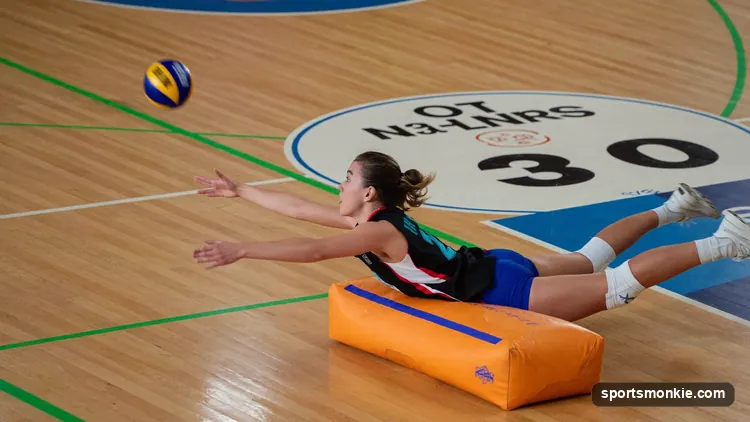
Defensive Specialist in Volleyball: DS Role Explained
A defensive specialist (DS) in volleyball subs in for weaker-passing front-row players in the back row. DS vs libero rules, jersey, and skills explained.

Libero in Volleyball: What the Position Actually Does
The libero volleyball role: the back-row defensive specialist who passes, digs and reads hitters. Origin, skills, jobs and the players who define it.
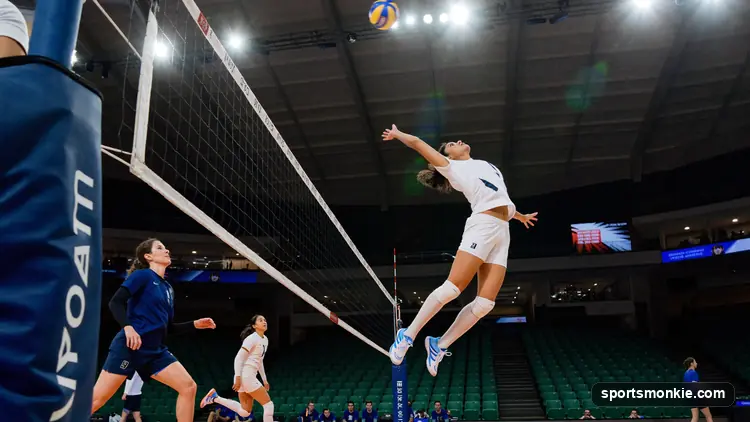
Volleyball Positions Explained: Every Role
Volleyball has six player roles: setter, outside hitter, opposite, middle blocker, libero and defensive specialist. Each position explained clearly.
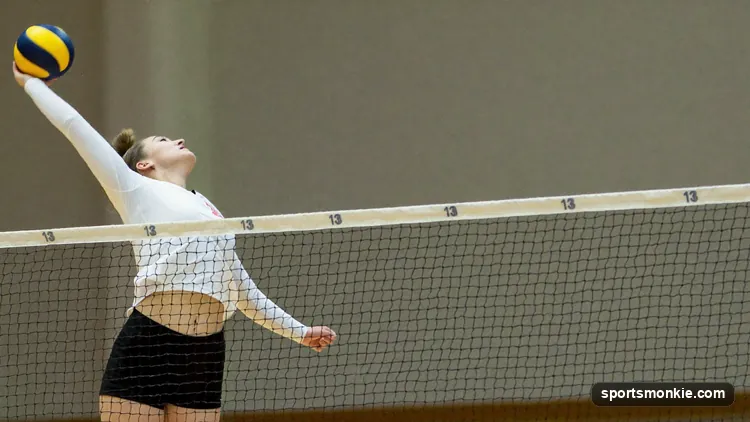
Outside Hitter in Volleyball: Role, Skills & Why They Lead in Kills
An outside hitter volleyball position attacks from zone 4, leads the team in kills, and also passes serve-receive — here's the full role explained.
How Volleyball Scoring Works: Rally Scoring Explained
Volleyball uses rally scoring: a point on every rally, sets to 25, a fifth set to 15, win by two. How points, sets and matches are counted, with a table.
Volleyball Rules Explained: The Full Ruleset
Volleyball rules in one place: six players a side, three hits per rally, rally scoring to 25, clockwise rotation and the common faults that lose points.