
Middle Blocker in Volleyball: Role, Skills and Quick Sets Explained
On this page7
- 01What does a middle blocker do in volleyball?
- 02How does a middle blocker read the setter and close the block?
- 03What quick sets does a middle blocker hit?
- 04Why do middle blockers rarely play the whole rotation?
- 05What footwork and timing does a middle blocker need?
- 06What physical profile and skills make a good middle blocker?
- 07Who are the best middle blockers in volleyball right now?
A middle blocker is the volleyball player who anchors the block at the center of the net and attacks the offense’s fastest sets, using lateral quickness and split-second timing rather than height alone. They are usually the tallest players on the roster, but the job is won with footwork and reading skills, not a tape measure.
Every rotation, the middle blocker has to solve the same puzzle twice: get across the net fast enough to close the block on whichever pin hitter the setter feeds, then sprint back to hit a set that is often released before they finish their approach. Here is how the position actually works, the sets middles attack, why they rarely stay for the whole rotation, and who plays it best right now.
What does a middle blocker do in volleyball?
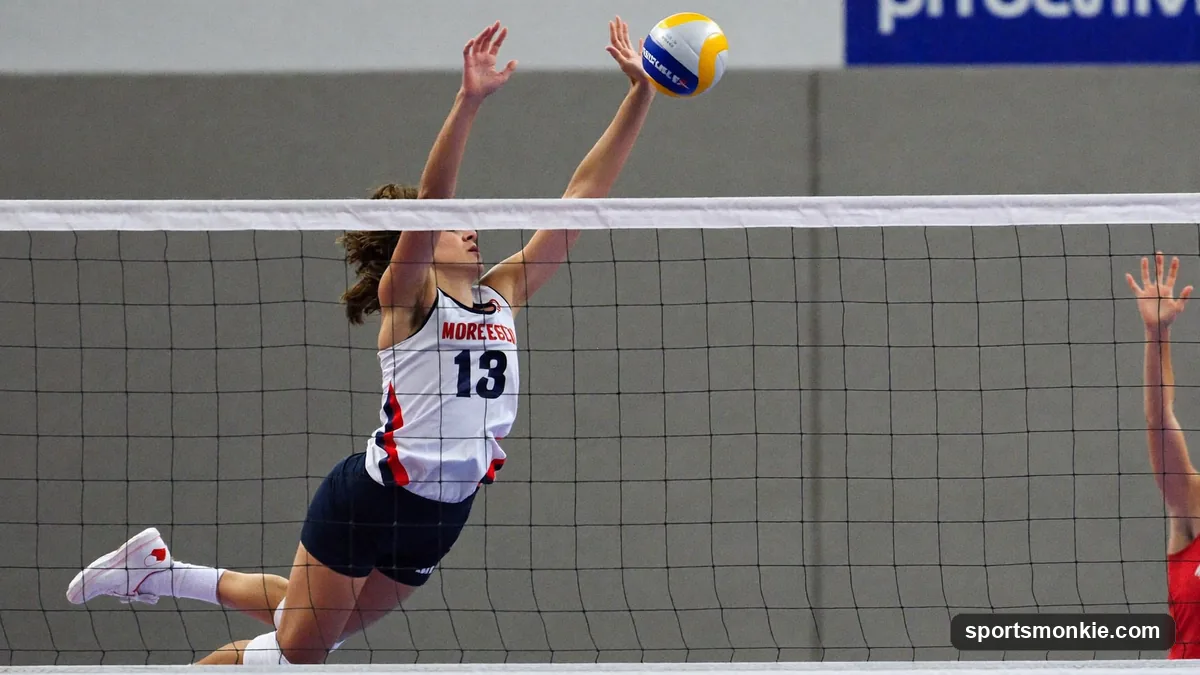
The middle blocker (also called the middle hitter) has two jobs that happen in the same few seconds of every rally. On defense, they lead the team’s block, reading the setter’s release and sliding laterally to close the block against the outside hitter on one pin or the opposite hitter on the other. On offense, they attack the fastest tempo sets in the playbook, aiming to hit before the opposing block has finished moving into position.
Because the middle touches the net on almost every play, they are also the first line of defense against the other team’s own middle. A rally can flip from block to attack and back again in under two seconds, which is why the position is considered one of the most physically demanding on the court.
How does a middle blocker read the setter and close the block?
Reading starts before the ball is even set. A middle blocker watches the pass: a tight, on-target pass usually means the setter has every option open, including a quick set to the middle, while an off-net or shanked pass narrows the play down to a high, safe set to a pin hitter. From there, the middle works through a repeatable sequence:
- Read the pass to judge how many attacking options the setter actually has.
- Hold position near the center of the net, roughly an arm’s length off it, until the set is committed.
- Push off explosively toward the pin the setter is feeding, using a big first step and a crossover or shuffle step depending on distance.
- Close the seam with the outside or opposite blocker so there is no gap between the two blockers’ hands.
- Penetrate the net with both hands turned to face the hitter, taking away the cross-court or line shot the coaching staff has scouted.
Elite middles are also taught to “commit” block, jumping with the middle attack on a quick set, or to “read” block and stay patient for a pin attack, and the best ones switch between the two based on the scout of that opponent’s setter.
What quick sets does a middle blocker hit?
Speed, not height, is what makes a middle’s attack dangerous. Three sets define the position:
| Set | Where it goes | Why it works |
|---|---|---|
| 1 (quick) | Straight in front of the setter, low and fast | Middle is often already jumping before the set leaves the setter’s hands |
| Slide | Behind the setter, toward the right antenna | Middle takes off on one foot, attacking a spot the block hasn’t reached yet |
| Shoot | A fast, flat set pushed out toward a pin | Moves the attack away from a packed middle block |
The 1-ball is the signature weapon: it’s so low and quick that the middle times their jump to the setter’s hands, not the ball’s flight. The slide lets a middle keep attacking even out of a rotation that would otherwise strand them on the wrong side of the setter, running behind for a one-foot, angled takeoff. The shoot simply widens the offense, pushing the set out toward a pin and away from a packed middle block.
Why do middle blockers rarely play the whole rotation?
Watch a match closely and the middle blocker is one of the players substituted most often. That’s because a middle’s skills, blocking reach, a fast net approach, quick-tempo attacking, don’t overlap much with what the back row needs: consistent serve-receive passing and low, controlled digging. Most teams use a libero or a dedicated defensive specialist to swap in for the middle the instant they rotate off the net into the back row, then send the middle back in the moment they rotate back to a front-row spot.
This pattern repeats every rotation, so a middle blocker effectively plays only three of the team’s six rotations at a time, all of them in the front row. It keeps the team’s best blocker fresh for net play instead of wearing them down with back-row responsibilities they aren’t specialized for, and it’s a core reason volleyball positions are built around specialists rather than six generalists.
What footwork and timing does a middle blocker need?
Middle blockers cover more lateral ground than any other position, sometimes moving close to the width of the net in under two seconds to close a block. The footwork is a repeatable pattern: a directional first step toward the pin, a crossover or shuffle step to cover distance, and a final close step that squares the shoulders to the net just as the hitter arrives. Rushing that close step is the most common breakdown, since it leaves a gap between blockers or drives the middle into the net for a violation.
Offensive timing is just as demanding: because the 1-ball is set so fast, a middle starts their approach off the setter’s hands, not the ball’s flight, then adjusts mid-approach if the call changes. That split-second recalibration, rally after rally, is what separates a middle blocker from every other position on the roster.
What physical profile and skills make a good middle blocker?
Height still matters because it raises the blocking reach and hitting contact point, but modern coaching treats it as one input among several rather than the deciding factor.
| Trait | Why it matters for a middle blocker |
|---|---|
| Height and reach | Sets the ceiling for blocking coverage and quick-attack contact point |
| Lateral quickness | Determines how much of the net a middle can realistically close in time |
| Vertical jump | A strong vertical can offset a shorter standing reach |
| Setter-reading ability | Lets a middle commit to a block or an attack a half-second earlier |
| Hand discipline | Keeps the block from netting or reaching, which draws faults |
A shorter player with an excellent vertical jump can match the effective blocking reach of a taller player with a weaker one, which is why coaches measure standing reach and jump-touch height rather than relying on height alone. Beyond the physical tools, the best middles are also disciplined communicators, calling out the opposing hitter’s tendencies to the outside and opposite blockers before every serve.
Who are the best middle blockers in volleyball right now?
On the men’s side, Cuba’s Robertlandy Simón, listed at 2.08 m (6’10”), remains one of the sport’s most decorated middles, a World Championship medalist and a fixture on Cuba’s Volleyball Nations League roster as of 2026. On the women’s side, USA’s Chiaka Ogbogu, at 1.85 m (6’1”), anchors the U.S. national team’s block; she won gold at the Tokyo Olympics and silver at the Paris Olympics and continues to represent the United States internationally. Both players are built on the same foundation the position demands everywhere from youth club gyms to the Olympics: quick feet, a fast attack approach, and the ability to read a setter before the ball is even released.
The middle blocker is, in short, the position that decides how hard a team is to score against in the middle of the net and how quickly it can strike back before the block resets, a role that rewards timing and footwork just as much as the height that first gets a player noticed.
Frequently asked questions
What does a middle blocker do in volleyball?+
A middle blocker has two jobs: leading the team's block at the net and attacking the fastest sets in the offense. Defensively, they read the setter and slide laterally to close the block against whichever pin hitter, outside or opposite, is getting the set. Offensively, they attack quick-tempo sets like the 1 and the slide before the opposing block is organized, which is why the position demands elite timing rather than just height.
Why do middle blockers get subbed out in volleyball?+
Middle blockers get subbed out because their skill set is built for the front row, not back-row defense or passing. In most systems a libero or defensive specialist enters for the middle every time they rotate to the back row, then leaves again when the middle rotates back to the front. This keeps the team's best blocker at the net on every front-row rotation without forcing them to also handle serve-receive and back-row digging.
How tall does a middle blocker need to be?+
There is no official minimum, but at the elite level men's middle blockers typically stand 6'5" to 7'0" and women's middles typically stand 6'2" to 6'5", since blocking reach at the net matters enormously. Reach and vertical jump matter as much as raw height, though: a shorter player with an excellent vertical can match the blocking reach of a taller player with a weaker jump, which is why coaches test standing reach and jump touch, not just height on a tape measure.
What is a quick set in volleyball?+
A quick set, often called a '1' or 'quick,' is a low, fast set delivered right in front of the setter for the middle blocker to attack before the opposing blockers can react. It is set so low and fast that the middle is often jumping before the ball leaves the setter's hands, which is what makes it nearly unblockable when the timing is right. It is the signature weapon of the middle blocker position.
What is the difference between a middle blocker and a middle hitter?+
Middle blocker and middle hitter describe the same volleyball position; the terms are used interchangeably. 'Middle blocker' emphasizes the defensive half of the job, leading the block at the net, while 'middle hitter' emphasizes the offensive half, attacking quick-tempo sets through the center. Coaches and broadcasts use both names for the identical role.
What skills make a good middle blocker?+
The best middle blockers combine lateral quickness, blocking reach, and the ability to read a setter's shoulders and hips to predict where the set is going, all in a fraction of a second. Consistent footwork, a fast approach for quick-tempo attacks, and the discipline to close both hands over the net without netting or reaching are just as important as size. Elite middles are judged on block touches and quick-attack efficiency, not just highlight-reel stuff blocks.
Can a middle blocker play in the back row?+
Yes, the rules allow it, but most competitive teams substitute the middle blocker out of the back row for a libero or defensive specialist because middles are trained for net play, not back-row passing and digging. A middle who stays in for all six rotations is common only at lower levels or when a team lacks a strong libero, since it trades better back-row defense for keeping the middle's legs fresh for blocking.
What is the difference between a 1 set, a slide and a shoot set?+
A 1 (or quick) set goes directly in front of the setter for the middle to attack straight up. A slide is a back set that sends the middle running behind the setter to take off on one foot toward the right antenna. A shoot set is a fast, flat set pushed further out toward a pin, sometimes used to get a middle or a combination hitter attacking away from the thick of the opposing block. All three are built around speed rather than height on the set.
Sources
Play & tools
Free browser games and tools — no account, no download.
- Play today's Sports Connections — Today's Sports Connections — daily hints, answers, and play the grid.
- Play Guess the NFL Player — A new mystery NFL player every day. Eight guesses, with a clue on each — plus free unlimited mode.
- Explore all our games →
Related guides
Opposite Hitter in Volleyball: Role, Skills & Top Players
The opposite hitter volleyball position attacks from the right side, blocks the outside hitter, and rarely passes serve receive. Full role breakdown.
Outside Hitter in Volleyball: Role, Skills & Why They Lead in Kills
An outside hitter volleyball position attacks from zone 4, leads the team in kills, and also passes serve-receive — here's the full role explained.
Defensive Specialist in Volleyball: DS Role Explained
A defensive specialist (DS) in volleyball subs in for weaker-passing front-row players in the back row. DS vs libero rules, jersey, and skills explained.
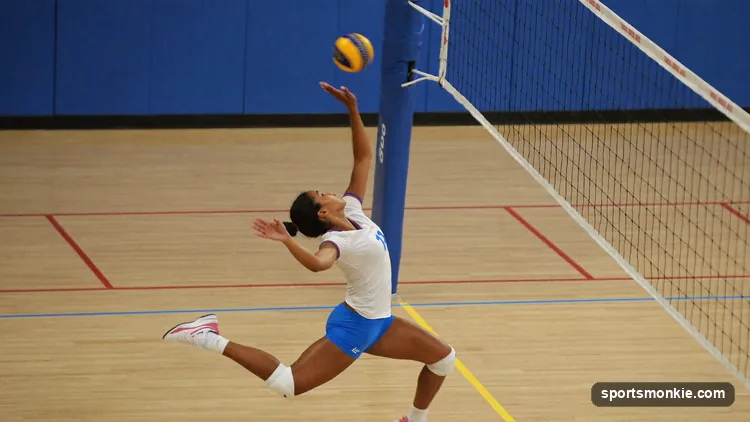
Setter in Volleyball: Role, Rules, Tempo & Best Setters Explained
The setter in volleyball takes the second touch and delivers the ball to a hitter, running the offense like a team's on-court quarterback.
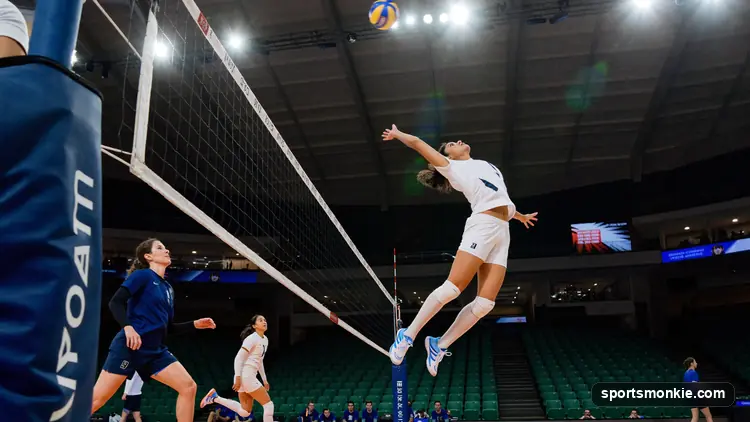
Volleyball Positions Explained: Every Role
Volleyball has six player roles: setter, outside hitter, opposite, middle blocker, libero and defensive specialist. Each position explained clearly.
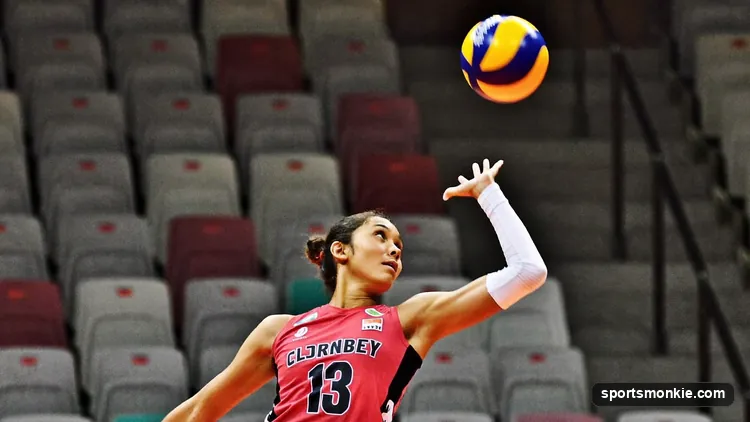
Libero in Volleyball: What the Position Actually Does
The libero volleyball role: the back-row defensive specialist who passes, digs and reads hitters. Origin, skills, jobs and the players who define it.