
Outside Hitter in Volleyball: Role, Skills & Why They Lead in Kills
On this page6
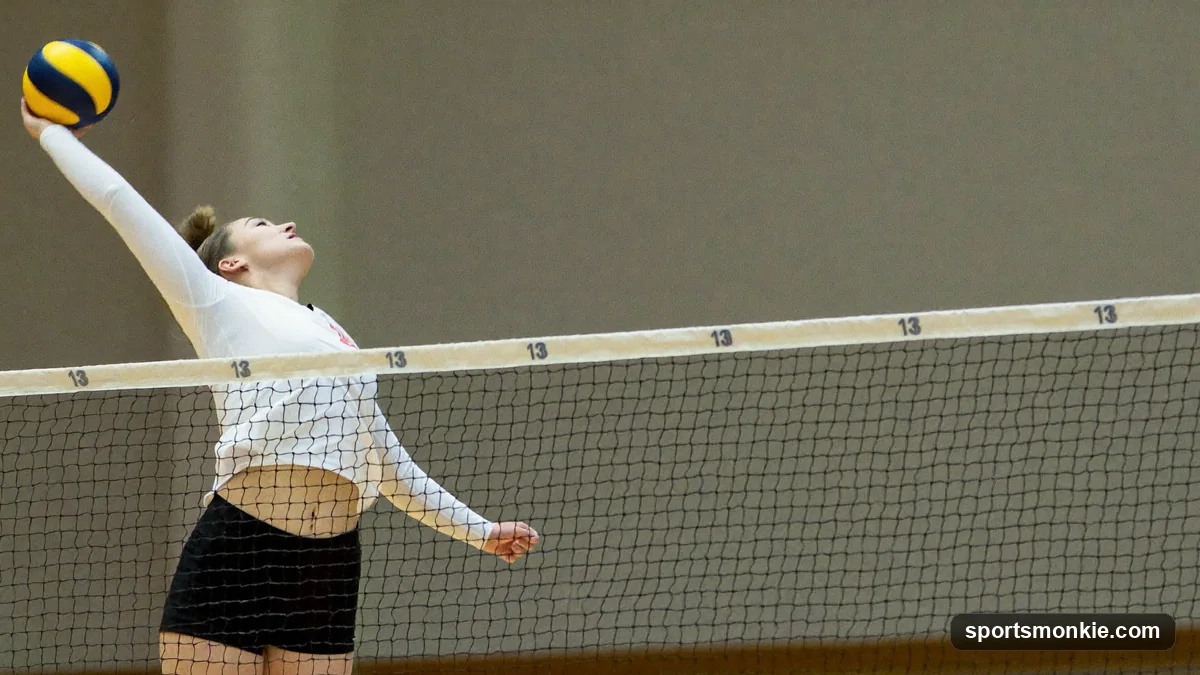
An outside hitter is volleyball’s left-side attacker, hitting from the front-left (zone 4), usually leading the team in kills, and — unlike the opposite hitter — playing all six rotations on both offense and defense. Coaches also call the position left-side hitter, OH, or pin hitter, because the attack happens near the left antenna, or “pin.” It’s widely considered the most demanding all-around job on the court, and this guide breaks down exactly what an outside hitter does, how the role splits into OH1 and OH2, and which real players define it at the top level. For the full breakdown of every role on the court, see our volleyball positions guide.
What does an outside hitter actually do on the court?
The outside hitter’s job changes depending on whether they’re in the front row or back row, but the through-line is volume: they touch the ball more than almost anyone else in the lineup.
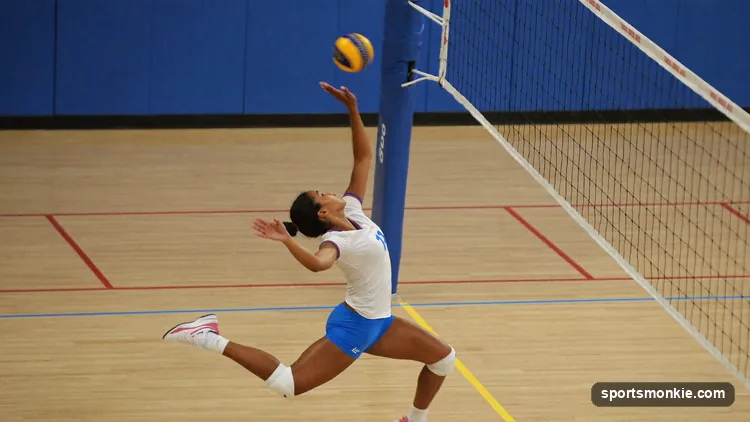
- Attacking from zone 4. In the front row, the outside hitter approaches from the left, times a jump to the setter’s delivery, and swings at sets that arrive near the antenna. Because the outside set is the easiest one for a setter to place accurately — even off a shaky pass — outside hitters often take 40-60% of a team’s total attacks in a match.
- Passing serve-receive. Outside hitters are full participants in serve-receive, usually forming the passing line with the libero. This is the single biggest difference from the opposite hitter, who is normally shielded from passing duty to stay fresh for attacking.
- Back-row defense and the pipe. When rotated to the back row, an outside hitter digs, plays defense, and can still attack by hitting the pipe — a high set delivered just behind the 10-foot line in the middle of the court.
- Blocking. At the net, the outside hitter blocks against the opposing team’s opposite hitter, and when they rotate to the right front they help block the opposing outside hitter too.
OH1 vs. OH2: what’s the difference?
Every 5-1 or 6-2 system runs two outside hitters, labeled by where they sit in the rotation relative to the setter.
- OH1 starts in the rotation slot closest to the setter and is typically the team’s number-one attacking option, drawing the most sets over a full match.
- OH2 starts roughly opposite OH1 in the order (about two rotation slots away) and, because of how the rotation lines up, usually absorbs more serve-receive passing responsibility while OH1 is freed up to focus on hitting.
Coaches use this split deliberately: it lets a team protect its most dangerous hitter from a heavy passing workload in certain rotations while still getting two full-time attackers on the floor.
Outside hitter vs. the other positions
| Position | Attacks from | Plays all 6 rotations? | Passes serve-receive? | Primary job |
|---|---|---|---|---|
| Outside hitter | Zone 4 (left) + pipe | Yes | Yes | Lead attacker, all-around |
| Opposite hitter | Zone 2 (right) | Yes, but often skips passing | Rarely | Attack specialist, blocks OH |
| Setter | Zone 2/1 depending on rotation | Yes | Sometimes | Runs the offense |
| Middle blocker | Zone 3 (center) | Front row focus | No | Blocks center, quick attacks |
| Libero | Back row only | No (back row only) | Yes, primary passer | Defense and passing specialist |
The setter delivers the ball the outside hitter attacks, and the two positions have to build real chemistry, since the outside set is the offense’s default fallback whenever a play breaks down.
Skills and physical profile of an elite outside hitter
Outside hitter is often called a beginner-friendly position to start in and one of the hardest to truly master, because the demands stack rather than trade off. Elite outside hitters combine:
- A repeatable, high approach and arm swing capable of hitting quality sets and out-of-system “junk” balls alike.
- Reliable passing platform and footwork for serve-receive, since a shaky OH pass forces the setter into worse options.
- Back-row defensive instincts — reading hitters, digging hard-driven balls, and transitioning immediately into an attacking approach for the pipe.
- High volleyball IQ to read blocks mid-swing and adjust shot placement, tempo, or shot selection in the air.
- Vertical jump and core strength, but stamina matters just as much, since an outside hitter rarely gets a rotation off from a demanding skill.
Real outside hitters who define the position
- Zhu Ting (China) — an Olympic gold medalist and repeat FIVB Best Outside Spiker award winner, widely regarded as one of the most complete outside hitters in the women’s game, combining a huge swing with reliable back-row defense.
- Yuki Ishikawa (Japan) — named Best Outside Hitter at the 2019 FIVB Volleyball Men’s World Cup and now a key attacker for Italian club Perugia; a modern example of the position’s blend of power and consistency.
- Wilfredo León (Poland) — a Cuban-born outside hitter who has anchored Poland’s national team through multiple Volleyball Nations League and World Championship runs, prized for his all-around game rather than pure hitting power alone.
For more names across every position, see our roundup of the best volleyball players.
Why the outside hitter is the position most teams build around
Because an outside hitter has to survive serve-receive, play real back-row defense, and still be trusted to close out a rally under pressure, it’s the role coaches look to first when identifying a team’s most complete athlete. A team can hide a weak passer at opposite or a limited attacker at middle for stretches of a rotation — an outside hitter has nowhere to hide.
Frequently asked questions
What does an outside hitter do in volleyball?+
An outside hitter attacks primarily from the front-left (zone 4), taking the majority of a team's sets — especially on scrappy or out-of-system passes, since the outside set is the easiest for a setter to deliver accurately. Beyond hitting, outside hitters pass serve-receive, play back-row defense, hit the back-row pipe attack, and block the opponent's outside hitter, making them the sport's most complete, highest-workload position.
What is the difference between an outside hitter and an opposite hitter?+
The outside hitter attacks from the left (zone 4) and plays all six rotations, including passing serve-receive and back-row defense. The opposite hitter attacks from the right (zone 2), lines up directly across the net from the setter, focuses on hitting and blocking, and is usually excused from serve-receive passing. In short: outside hitters are all-around players; opposites are attack-and-block specialists.
What is OH1 and OH2 in volleyball?+
OH1 and OH2 label a team's two outside hitters by their rotation position relative to the setter. OH1 is the outside hitter who starts closest to the setter in the rotation order and is typically the team's primary attacker with the most hitting opportunities. OH2 starts two spots from the setter and often takes on more serve-receive passing duty since OH1 is freed up to focus on attacking.
Why does the outside hitter get so many sets?+
The outside set is the most reliable option for a setter because it can be delivered high and outside even off an imperfect pass, unlike faster middle or back-row sets that require precise timing. Outside hitters also have more room to work with along the sideline and antenna, so when a play breaks down, the setter defaults to the outside — often 40-60% of a team's total sets.
Can an outside hitter attack from the back row?+
Yes. When an outside hitter rotates to the back row, they can still attack by hitting the pipe, a high back-row set delivered just behind the 10-foot (3-meter) attack line in the middle of the court. The pipe lets a team keep a dangerous hitter involved in the offense even when they aren't in a front-row position, and it also opens up the middle blocker's quick attack by spreading the block.
What skills does an outside hitter need?+
Outside hitters need an all-around skill set: a consistent, repeatable approach and arm swing for attacking high sets, reliable serve-receive passing, strong back-row defense, quick transition from defense to offense, and blocking technique against the opposing outside hitter. Because they touch the ball in nearly every phase of a rally, high volleyball IQ and stamina matter as much as raw jumping ability.
Is outside hitter the hardest position in volleyball?+
Setter and libero are usually ranked hardest because of decision-making and no-reward defensive pressure, but outside hitter is a close third because it's the only front-row attacking position that also carries a full defensive workload every rotation. An outside hitter must be a good enough passer to survive serve-receive and a good enough hitter to lead the team in kills, a rare combination.
Sources
Play & tools
Free browser games and tools — no account, no download.
- Play today's Sports Connections — Today's Sports Connections — daily hints, answers, and play the grid.
- Play Guess the NFL Player — A new mystery NFL player every day. Eight guesses, with a clue on each — plus free unlimited mode.
- Explore all our games →
Related guides
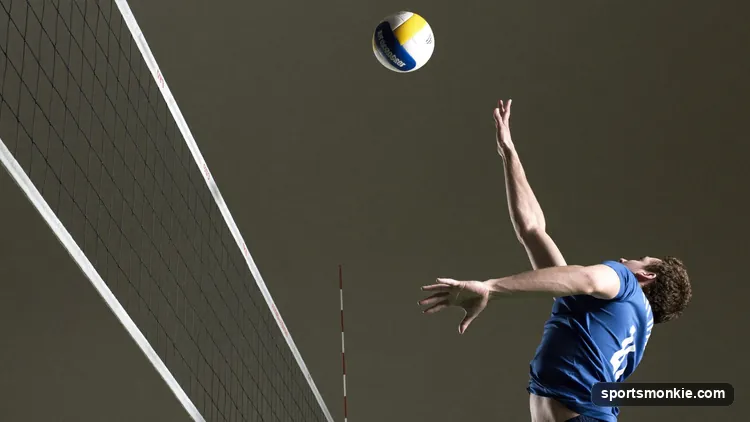
Opposite Hitter in Volleyball: Role, Skills & Top Players
The opposite hitter volleyball position attacks from the right side, blocks the outside hitter, and rarely passes serve receive. Full role breakdown.
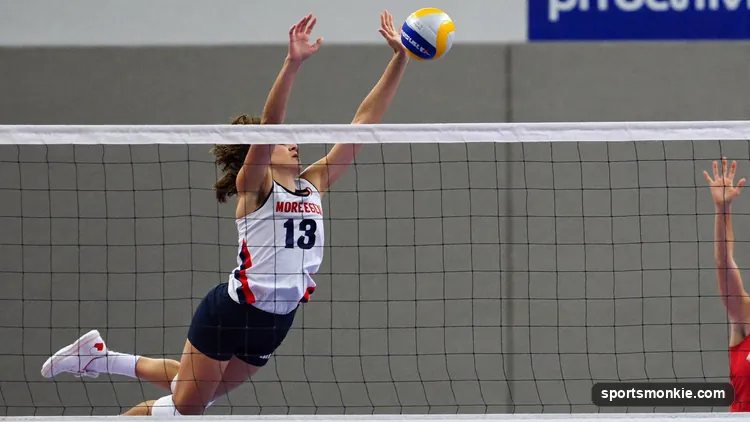
Middle Blocker in Volleyball: Role, Skills and Quick Sets Explained
A middle blocker volleyball player anchors the net's block and hits fast quick-tempo sets. Full guide to the role, footwork, quick sets and top players.
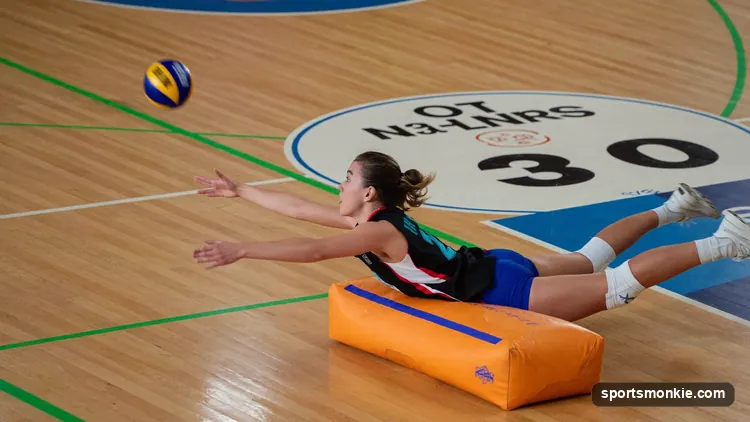
Defensive Specialist in Volleyball: DS Role Explained
A defensive specialist (DS) in volleyball subs in for weaker-passing front-row players in the back row. DS vs libero rules, jersey, and skills explained.
Setter in Volleyball: Role, Rules, Tempo & Best Setters Explained
The setter in volleyball takes the second touch and delivers the ball to a hitter, running the offense like a team's on-court quarterback.
Volleyball Positions Explained: Every Role
Volleyball has six player roles: setter, outside hitter, opposite, middle blocker, libero and defensive specialist. Each position explained clearly.
Libero in Volleyball: What the Position Actually Does
The libero volleyball role: the back-row defensive specialist who passes, digs and reads hitters. Origin, skills, jobs and the players who define it.