
Setter in Volleyball: Role, Rules, Tempo & Best Setters Explained
On this page8
- 01Where does the setter play on the court?
- 02How does a setter actually set the ball?
- 03What is setter tempo, and what are quick sets, back sets and high balls?
- 04What is a setter dump, and why does it work?
- 05What is jump-setting, and why do elite setters do it?
- 065-1 vs 6-2: which setter system do teams use?
- 07What skills and physical traits define a great setter?
- 08Who are the best setters in volleyball?
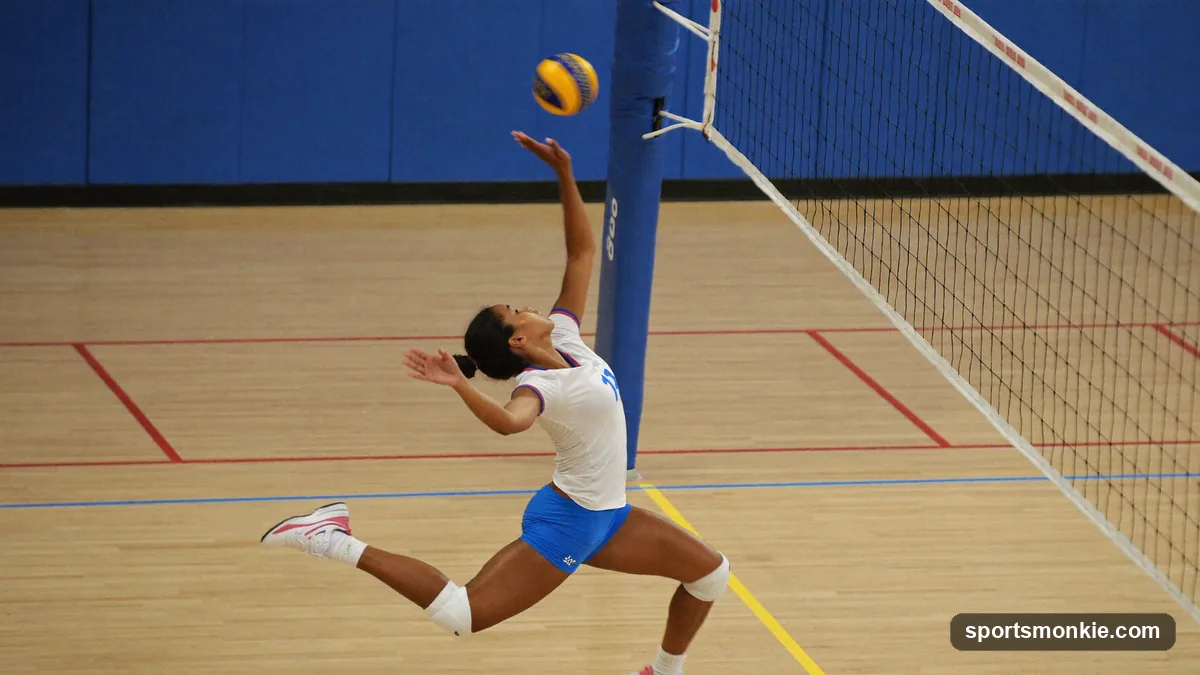
A setter in volleyball is the player who takes the team’s second contact and delivers the set, usually an overhand hand-set, that lets a hitter attack the ball — the position widely compared to a quarterback because it touches nearly every rally and decides who attacks, from where, and how fast. Within the broader volleyball positions explained framework, no role carries more decision-making load. Here is exactly what the setter does, how the technique and rules work, and which players have defined the position.
Where does the setter play on the court?
A setter’s starting spot moves through all six numbered court zones during a match, just like every other player, because of volleyball’s rotation rules — see volleyball rotation explained for how that clockwise cycle works. What sets the setter apart is what happens the instant the ball is served: they run, or “penetrate,” from their rotational spot toward the net to set from around zone 2 or 3, near the right-side antenna, regardless of where the rotation actually placed them.
| Zone | Court area | Setter’s role there |
|---|---|---|
| 1 | Back-right (serving spot) | Base position at serve; setter releases toward the net |
| 2 | Front-right | Primary setting spot for a front-row setter |
| 3 | Front-centre | Alternate setting spot; where middle blockers attack quick sets |
| 4 | Front-left | Main hitting zone for the outside hitter |
| 5 | Back-left | Passing and defensive zone |
| 6 | Back-centre | Deep defensive zone; back-row setters release from here |
When the setter’s rotation puts them in the back row (zones 1, 6 or 5), they are still the one setting on nearly every play, but FIVB rules restrict them like any back-row player: they must jump from behind the 3-metre attack line if they want to attack the ball themselves rather than set it.
How does a setter actually set the ball?
The standard technique is the overhand hand-set: hands form a triangle above the forehead, fingers absorb and redirect the ball in one clean motion, and the setter’s footwork squares their shoulders and hips to the target before contact. Because a hand-set inherently involves the ball touching multiple fingers in quick succession, referees have to judge whether that counts as an illegal “double contact.” Under current FIVB guidance, officials are instructed to let a fast, simultaneous-looking hand-set play through and only call a fault when there is a clear, visible time gap between the two hands touching the ball, which has made modern setting noticeably more lenient than it was a generation ago.
When a set is too low or too far off the net to hand-set safely, setters switch to a forearm “bump set,” using the same passing platform a libero or back-row defender would use.
What is setter tempo, and what are quick sets, back sets and high balls?
Tempo is the setter’s main offensive weapon. A quick set, or “1,” is delivered low and fast to a middle blocker who is already in the air, timed so the hitter contacts the ball almost the instant it leaves the setter’s hands, beating the opposing block to the spot. A back-1 runs the identical quick tempo behind the setter instead of in front of them, forcing blockers to defend both sides of the setter at once. When the pass is off-target or the setter wants to isolate a specific matchup, they fall back to a slower, higher set to the outside or opposite hitter, known as going “to the pins,” which trades speed for reliability.
What is a setter dump, and why does it work?
A setter dump is when the setter attacks the ball themselves on the second contact instead of setting a hitter, most often as a one-handed tip just over the block, a soft two-hand poke into a gap, or, from a taller or more athletic setter, a hard-driven attack. It is one of the highest-percentage plays in the sport precisely because blockers are trained to read and jump with the hitters, not the setter, so a well-disguised dump routinely catches an unguarded patch of court.
What is jump-setting, and why do elite setters do it?
Jump-setting means the setter leaves the ground before delivering the set, either to reach a pass that is drifting above net height or, more often at the elite level, purely for deception, since a jumping setter looks identical whether they are about to set or attack. That ambiguity forces the opposing middle blocker to commit earlier or hesitate, opening tempo plays that a flat-footed setter could not create.
5-1 vs 6-2: which setter system do teams use?
Two systems govern how many setters a team runs. A 5-1 uses a single setter across all six rotations: three front-row hitters are available whenever the setter is in the back row, but only two when the setter rotates to the front, since the setter occupies a front-row spot without attacking from it. It is the standard system in international and top-level college volleyball because one setter builds consistent timing with every hitter. A 6-2 splits the job between two setters who only set from the back row, so the team always fields three front-row attackers, with the second setter playing opposite attacker on the front row whenever they are not setting; the tradeoff is that hitters have to sync their timing to two different setters instead of one.
What skills and physical traits define a great setter?
Elite setters combine fast, soft hands with efficient footwork that gets them to the target early enough to choose from every option, not just the closest one. Court IQ separates good setters from great ones: reading the pass, the block, and the score in real time to pick the highest-percentage attack, then selling a decoy tempo to buy that hitter an extra half-step. Leadership and composure matter just as much as mechanics, since the setter effectively runs the offense from the floor, and consistency under pressure, not flash, is what coaches actually measure across a five-set match.
Who are the best setters in volleyball?
Brazil’s Bruno “Bruninho” Rezende is widely regarded as the sport’s most accomplished modern setter, with an Olympic gold medal (Rio 2016, where he was named the tournament’s best setter), two Olympic silvers, and a 2010 World Championship title built on exceptionally consistent, deceptive tempo. On the women’s side, Italy’s Alessia Orro was named Best Setter of the Paris 2024 Olympics as her team won its first-ever Olympic volleyball gold, running an offense that fed reigning MVP-calibre hitters like Paola Egonu. Both are useful study cases in the best volleyball players conversation for how a setter’s fingerprints show up in a team’s results even when they rarely take the final swing.
Frequently asked questions
What does a setter do in volleyball?+
The setter takes the team's second contact on almost every rally and delivers the ball, called a set, to a hitter so that player can attack it over the net. Beyond technique, the setter decides which hitter gets the ball, at what tempo, and from where, functioning as the team's on-court play-caller and reading the block before every decision.
Where does the setter stand in volleyball?+
The setter's base defensive spot rotates through all six court positions like any other player, but on nearly every rally they run, or penetrate, toward the net to set from around zone 2 or 3, close to the right-side antenna. When the setter starts a rotation in the back row, FIVB rules still let them attack from behind the 3-metre attack line as long as they jump from behind it.
What is a setter dump in volleyball?+
A setter dump is when the setter, instead of setting a teammate on the second contact, attacks the ball over the net themselves, usually with a one-handed tip, a soft two-hand poke, or a hard-driven strike into open court. It works because blockers are trained to watch the hitters, not the setter, so a well-timed dump catches the defense out of position.
What is the difference between a 5-1 and a 6-2 volleyball system?+
A 5-1 system uses one setter who sets from all six rotations, giving three front-row attackers when the setter is in the back row but only two when the setter is up front. A 6-2 system uses two setters who each set only while in the back row, so the team always has three front-row hitters, at the cost of extra timing complexity between two setters.
Can a setter attack the ball in volleyball?+
Yes. A front-row setter can attack any ball at any height, and a back-row setter can attack it too, provided they jump from behind the 3-metre attack line and the ball is not entirely above the height of the net when they contact it in front of that line. This back-row restriction is the same rule that governs backcourt attacks for any player.
Is setter the hardest position in volleyball to play?+
Many coaches consider it the hardest position, because the setter touches the ball on nearly every rally and must deliver a hittable set under pressure while simultaneously reading the block, managing tempo, and directing teammates. Unlike a hitter, who is judged on highlight kills, a setter is judged on ruthless, repeated consistency across an entire match.
How tall does a volleyball setter need to be?+
There is no official height rule, and setters are typically shorter than middle blockers or opposites because footwork, hand speed, and decision-making matter more than reach. At the international level many elite setters still stand around 6 feet or taller so they can also block and attack, but club and high school setters succeed at a wide range of heights.
What is a quick set or a 1-ball in volleyball?+
A quick set, often called a 1, is a low, fast set delivered right off the setter's hands to a middle blocker who is already jumping, so the attacker can hit the ball almost immediately after the pass arrives. It is designed to beat the block to the spot, and its cousin, the back-1, sends the same quick tempo behind the setter instead of in front.
Sources
Play & tools
Free browser games and tools — no account, no download.
- Play today's Sports Connections — Today's Sports Connections — daily hints, answers, and play the grid.
- Play Guess the NFL Player — A new mystery NFL player every day. Eight guesses, with a clue on each — plus free unlimited mode.
- Explore all our games →
Related guides
Defensive Specialist in Volleyball: DS Role Explained
A defensive specialist (DS) in volleyball subs in for weaker-passing front-row players in the back row. DS vs libero rules, jersey, and skills explained.
Middle Blocker in Volleyball: Role, Skills and Quick Sets Explained
A middle blocker volleyball player anchors the net's block and hits fast quick-tempo sets. Full guide to the role, footwork, quick sets and top players.
Opposite Hitter in Volleyball: Role, Skills & Top Players
The opposite hitter volleyball position attacks from the right side, blocks the outside hitter, and rarely passes serve receive. Full role breakdown.
Outside Hitter in Volleyball: Role, Skills & Why They Lead in Kills
An outside hitter volleyball position attacks from zone 4, leads the team in kills, and also passes serve-receive — here's the full role explained.
Volleyball Positions Explained: Every Role
Volleyball has six player roles: setter, outside hitter, opposite, middle blocker, libero and defensive specialist. Each position explained clearly.
Libero in Volleyball: What the Position Actually Does
The libero volleyball role: the back-row defensive specialist who passes, digs and reads hitters. Origin, skills, jobs and the players who define it.