
Libero in Volleyball: What the Position Actually Does
On this page7
- 01Why does the libero position exist?
- 02What does a libero actually do on the court?
- 03What can’t a libero do? (the headline restrictions)
- 04What skills and physical profile does a libero need?
- 05How does the libero fit into the rotation?
- 06Who are the greatest liberos in volleyball history?
- 07Libero vs. other back-row roles
The libero is volleyball’s back-row defensive specialist — the player in the different-colored jersey whose entire job is passing, digging and reading attacks, not scoring. They never rotate to the front row, never spike, and never block, yet on most elite teams they’re the player everything defensively runs through.
This page is about the role itself: what a libero actually does on every rally, the skills that separate a good one from a great one, and the players who’ve defined the position. For the full rulebook on restrictions, substitutions and serving eligibility by level, see our dedicated libero rules in volleyball guide.
Why does the libero position exist?
The FIVB created the libero in 1998, debuting it at that year’s FIVB World Championships, as a direct response to a sport that had become dominated by big-swing offense after the 1996 Olympics. Rallies were ending too fast; serves and spikes were winning points before defense ever got a chance to matter. By adding a specialist whose entire job was to keep the ball alive, the FIVB rewarded ball control and lengthened rallies, making the sport more watchable and more balanced between offense and defense. It’s one of the few positions in any major sport with a documented invention date and a stated reason for existing.
What does a libero actually do on the court?
Strip away the rules and the libero’s job comes down to four responsibilities, repeated dozens of times a match:
- Serve-receive. The libero takes the first contact on most opposing serves, using a stable forearm platform to send a controllable pass to the setter’s target zone.
- Digging. On defense, the libero reads the hitter’s approach and arm swing, then gets a platform or hands under hard-driven spikes and tips before they hit the floor.
- Directing the back row. Between rallies and mid-play, the libero calls out coverage, tells teammates to shift, and organizes who takes which zone.
- Limited setting. When the setter is pulled out of position, the libero often takes the second-ball set — but only with restrictions near the net (see the next section).
None of that shows up as a kill or an ace on the scoresheet, which is exactly why the position is so often undervalued by casual fans and so heavily prioritized by coaches.
What can’t a libero do? (the headline restrictions)
Three restrictions define the position and explain why it looks different from every other role on the floor:
- No attacking above net height. A libero cannot complete an attack hit on a ball that is entirely higher than the top of the net — no spiking.
- No blocking. A libero cannot block or attempt to block at any point.
- Special, unlimited back-row substitution. The libero swaps freely for back-row players without the swap counting against the team’s normal substitution limit.
These are the headlines, not the whole rulebook — serving eligibility, the front-row overhand-set restriction and roster limits all vary by level. For the complete breakdown with a full allowed/not-allowed table, read libero rules in volleyball.
What skills and physical profile does a libero need?
Liberos are built differently from the hitters around them, and it’s by design rather than accident.
| Trait | Why it matters for a libero |
|---|---|
| Low center of gravity | Faster first step to reach a dug ball or short serve |
| Platform consistency | A repeatable forearm pass is the single most important skill in the role |
| Reading ability | Anticipating a hitter’s swing shaves crucial milliseconds off reaction time |
| Agility and footwork | Covers more ground laterally than any other position |
| Communication | Organizes back-row coverage and calls out shifts mid-rally |
| Mental consistency | Judged over hundreds of touches, not a handful of highlight plays |
| Shorter stature (often) | Lower to the floor already; height offers little benefit without net play |
Because attacking and blocking are off the table, height stops being the deciding trait it is for a middle blocker or outside hitter. Many of the sport’s best liberos stand well under six feet, trading reach for quickness, balance and a lower platform — the exact opposite build coaches look for at the net. To see how this role sits alongside the other five on a roster, our volleyball positions explained pillar lays out the full six-role breakdown, including how systems like 5-1 and 6-2 build around a libero’s presence in the rotation.
How does the libero fit into the rotation?
Because the libero never rotates to the front row, they’re always subbing in for whichever back-row player they’ve been assigned to replace — typically a middle blocker, since middles are the weakest passers on most rosters. When that player’s rotation carries them to the front row, the libero comes off and the original player returns. This cycle repeats every rotation, which is why a libero appears to substitute constantly during a set. The mechanics of that clockwise rotation, and how overlap rules apply around it, are covered fully in our volleyball rotation explained guide.
Who are the greatest liberos in volleyball history?
A handful of players have defined what elite libero play looks like:
- Sérgio “Serginho” Santos (Brazil). Widely regarded as the position’s original superstar, Serginho is the only libero to be named MVP at both an Olympic Games and an FIVB World League, anchoring Brazil’s back row through two World Championship titles (2002, 2006) and multiple World League crowns through the 2000s.
- Jenia Grebennikov (France). Often called the best libero of the modern era, Grebennikov has logged more than 500 international matches and popularized an unorthodox, upright defensive stance that lets him engage the ball closer to the attack line than the traditional low-and-deep style.
- Justine Wong-Orantes (USA). The face of the American women’s libero position, Wong-Orantes earned Best Libero honors en route to Olympic gold at Tokyo 2020 and added silver at Paris 2024, after starring at the University of Nebraska.
For a wider list of standout players across every position, including the hitters these liberos defend against, see our best volleyball players roundup.
Libero vs. other back-row roles
The libero is frequently confused with the plain defensive specialist, and the two are not the same position:
| Libero | Defensive specialist (DS) | |
|---|---|---|
| Jersey | Contrasting color, mandatory | Standard team uniform |
| Substitution | Free, unlimited swaps for back-row players | Counts against the team’s normal sub limit |
| Attacking above net | Not allowed | Allowed, since a DS has no special restriction |
| Roster limit | Up to two designated liberos, one on court | No cap beyond the roster size |
| Rule basis | Written into the FIVB rulebook as its own position | Not a rules-defined position, just a tactical substitution |
The full side-by-side, including how coaches decide which tool to use, lives in our defensive specialist in volleyball guide.
The short version: the libero is the back-row defender in the contrasting jersey, invented by the FIVB in 1998 to keep rallies alive, built on serve-receive, digging and reading hitters rather than scoring, and defined at the highest level by players like Serginho, Jenia Grebennikov and Justine Wong-Orantes.
Frequently asked questions
What does libero mean in volleyball?+
Libero comes from the Italian word for 'free,' referring to the position's free substitution privilege — the libero can swap in and out for back-row players without it counting against the team's substitution limit. On court, the term now simply means the back-row defensive specialist who wears a jersey in a contrasting color and focuses on passing and digging rather than attacking.
Why does the libero wear a different colored jersey?+
The contrasting jersey is a mandatory FIVB rule so officials, scorers and opponents can instantly identify the libero during fast play, since the position carries unique restrictions like no attacking above net height and no blocking. Referees need to spot the libero at a glance to enforce those rules correctly on every rally.
Is the libero the most important position in volleyball?+
Not the single most important, but arguably the most decisive for consistency. The setter runs the offense and touches the ball most often, while the libero determines how clean that first touch is. Elite teams are built on a libero who turns hard-driven serves and spikes into playable passes, because without a good first contact the entire offense breaks down.
Can a libero become team captain in volleyball?+
Yes, under FIVB rules a libero can be designated team captain, but with one restriction: if the libero is serving as game captain during play, they cannot discuss decisions with the referee at the net the way a front-row captain normally would, since they're confined to the back row. It's uncommon but explicitly allowed.
Do liberos need to be short?+
No, but most are shorter than their teammates because height isn't the advantage in this role — first-step quickness, a low center of gravity and reaction time are. Many elite liberos stand 5'6" to 5'10", noticeably shorter than the 6'2"+ hitters they play behind, since a low platform and fast lateral movement matter more than reach.
What's the difference between a libero and a defensive specialist in volleyball?+
The libero is a specific rule-defined position with a contrasting jersey, free substitutions and net-height attacking restrictions written into the rulebook. A defensive specialist (DS) is simply any substitute brought in to strengthen back-row defense or serve-receive, using the team's normal, limited substitutions and wearing the regular uniform. Our defensive specialist guide breaks down that comparison in full.
How many liberos can be on the court at once?+
Only one libero per team can be on the court at any time, even though a roster may carry up to two designated liberos under most current rules. The two liberos can rotate between sets or matches, but never share the floor simultaneously — only one contrasting jersey is in play per team at a time.
What skills make a great libero in volleyball?+
The core skills are platform passing (a stable, repeatable forearm pass), reading the hitter's approach and arm swing before contact, quick lateral footwork, and vocal communication to organize the back row. Elite liberos combine those with mental consistency, since the role is judged on avoiding errors over hundreds of touches rather than making highlight plays.
Sources
Play & tools
Free browser games and tools — no account, no download.
- Play today's Sports Connections — Today's Sports Connections — daily hints, answers, and play the grid.
- Play Guess the NFL Player — A new mystery NFL player every day. Eight guesses, with a clue on each — plus free unlimited mode.
- Explore all our games →
Related guides
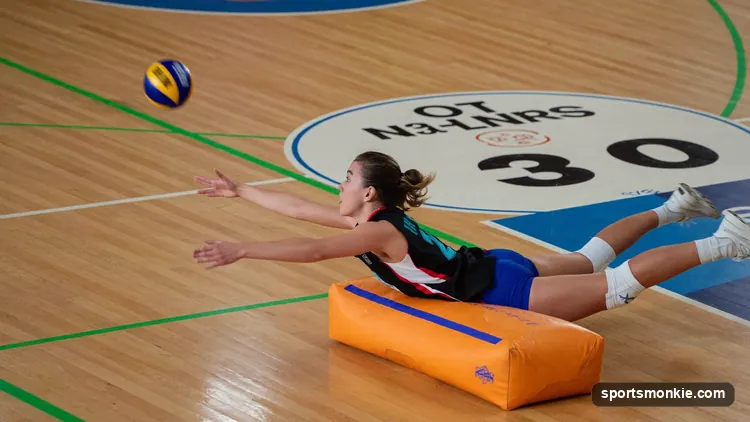
Defensive Specialist in Volleyball: DS Role Explained
A defensive specialist (DS) in volleyball subs in for weaker-passing front-row players in the back row. DS vs libero rules, jersey, and skills explained.
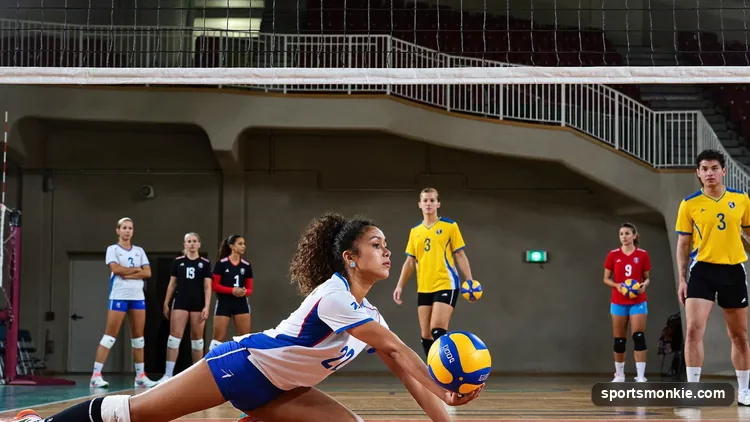
Libero Rules in Volleyball: What They Can and Can't Do
The libero is a back-row defensive specialist who can't attack above the net or block. Full libero rules: the jersey, substitutions and what's allowed.
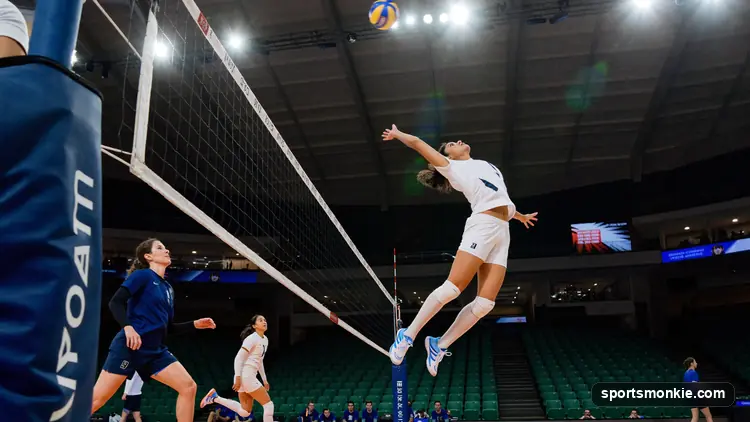
Volleyball Positions Explained: Every Role
Volleyball has six player roles: setter, outside hitter, opposite, middle blocker, libero and defensive specialist. Each position explained clearly.
Middle Blocker in Volleyball: Role, Skills and Quick Sets Explained
A middle blocker volleyball player anchors the net's block and hits fast quick-tempo sets. Full guide to the role, footwork, quick sets and top players.
Opposite Hitter in Volleyball: Role, Skills & Top Players
The opposite hitter volleyball position attacks from the right side, blocks the outside hitter, and rarely passes serve receive. Full role breakdown.
Outside Hitter in Volleyball: Role, Skills & Why They Lead in Kills
An outside hitter volleyball position attacks from zone 4, leads the team in kills, and also passes serve-receive — here's the full role explained.