
What Is a Dig in Volleyball? The Defensive Save
On this page5
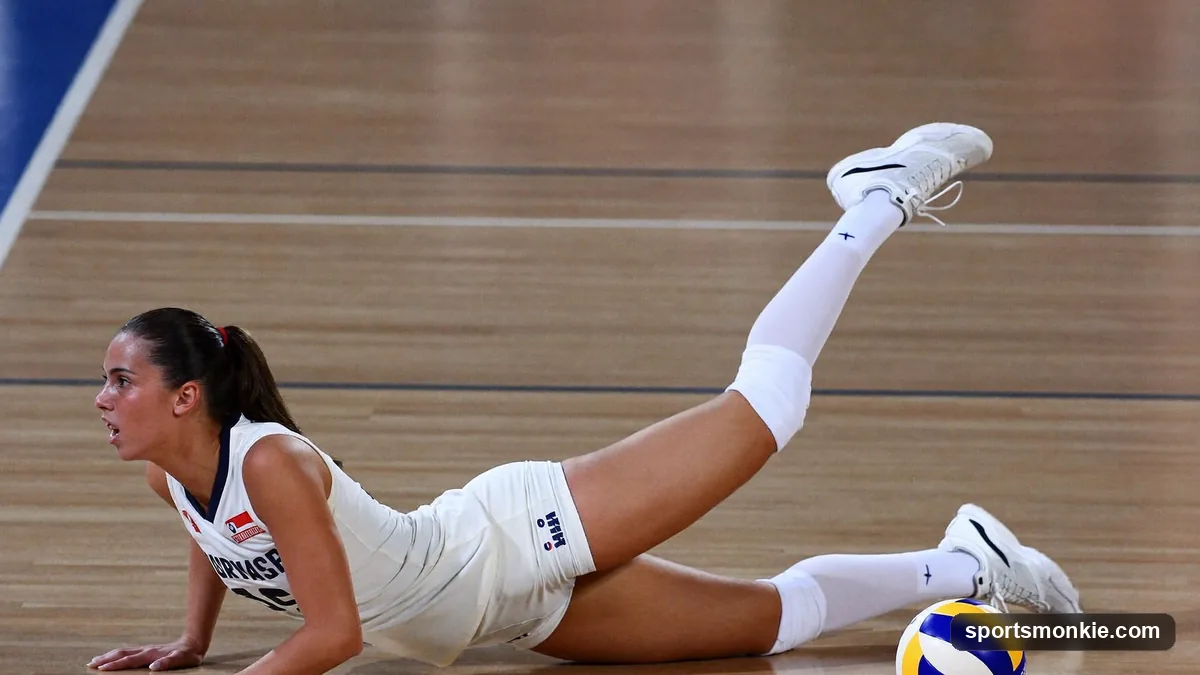
A dig is a defensive pass that keeps a hard-driven attack — nearly always a spike — from hitting the floor, turning it into a ball a teammate can play. It’s the first touch of a team’s defence, usually made low with the forearms, and it’s what keeps a rally alive after the other team attacks. If you’ve ever seen a player throw themselves flat and somehow keep the ball up, you’ve watched a dig.
The word gets used loosely, so it’s worth pinning down: a dig specifically handles an attack. Controlling a serve is a different skill with a different name.
Dig vs pass vs reception
The confusion between a dig and a pass comes from the fact that they can look identical — both often use a forearm platform. The difference is the ball you’re handling.
| Term | The ball it handles |
|---|---|
| Dig | A hard-driven attack (a spike) |
| Pass / reception | A serve |
| Free-ball pass | A soft, easy ball sent over |
Statistically, a dig is only credited when it comes off an opponent’s attack. The exact same forearm motion on a serve is recorded as a reception, not a dig. So while the technique overlaps, the situation is what makes it a dig — and that’s why a team’s dig count is a measure of how well it handles genuine offence, not just serves.
The technique
A good dig starts before the ball is even hit. Defenders read the hitter’s approach and arm, get low with knees bent, and present a stable forearm platform angled toward their target — usually the middle of the court, where a setter can run the next play.
Because a spike arrives fast, the dig is often less about generating power and more about absorbing and redirecting it. On the hardest-driven balls the platform barely moves; the ball rebounds off it. On extreme reaches, defenders resort to emergency techniques: an overhand hand-dig, a dive, or a pancake where a flat hand slides under the ball just before it lands.
Where the dig fits in a rally
A dig is a normal team contact, so it counts as one of the three touches a side gets. The classic sequence after a good dig is dig, set, attack — the defensive save becomes the first link in a counter-attack that can end in a kill of your own.
This is why defence and offence aren’t separate in volleyball: a clean dig to the setter gives a team all its attacking options, while a scrambled one forces a desperate over-pass. The block and the dig together form a team’s defence — the block up high at the net, the dig down low behind it. A block, notably, doesn’t count as a touch, while a dig does.
Who does the digging
Most digs come from the back row, and the specialist is the libero, a defender who plays only in the back row and whose entire job is turning attacks into clean passes. Outside hitters dig heavily too once they rotate behind the attack line. Front-row players dig less because their defensive role is blocking, not floor defence.
If you want to see how the libero and back-row defenders slot into the wider lineup, our volleyball positions explained guide covers every role, and volleyball rules explained sets out the three-hit rule the dig kicks off.
Why the dig wins matches
Spectacular attacks get the highlight reels, but at a high level rallies are usually won by the team that refuses to let the ball drop. A great digging side drags opponents into long rallies and turns their best swings into nothing. Watch a top match and count how often a “great point” actually started with a defender getting a body behind a spike — that’s the dig doing the quiet, decisive work.
The short version: a dig is the defensive save on a hard attack, made low with the forearms, credited only off a spike (not a serve), counting as one of your three touches, and it’s the play that keeps volleyball’s best rallies alive.
Frequently asked questions
What is the difference between a dig and a pass in volleyball?+
Both use a similar forearm platform, but they handle different balls. A pass, or reception, controls a serve or a soft free ball. A dig controls a hard-driven attack such as a spike. Statistically, a dig is only credited when it comes off an opponent's attack; the same motion on a serve is recorded as a reception, not a dig. The skill overlaps, but the situation defines which it is.
Can you dig with your hands in volleyball?+
Yes, though the forearm platform is most common. On a hard spike you can dig overhand with the hands, sometimes called a 'tomahawk' or a hand-dig, but referees judge it strictly for a lift or double-contact. Because a hard-driven ball rebounds quickly off a clean contact, overhand digs on spikes are usually allowed, but soft-touch overhand digs risk being called as a held ball.
What is a pancake in volleyball?+
A pancake is a specific type of emergency dig where a player slides one hand flat onto the floor so the ball bounces off the back of the hand instead of hitting the ground. It's used as a last resort on a ball that can't be reached with a normal platform. It counts as a legal dig as long as the ball rebounds cleanly off the hand and not the floor.
Who digs the most in a volleyball team?+
The libero and the back-row defenders handle most digs, because the libero is a defensive specialist who plays only in the back row. Outside hitters also dig a lot when they rotate to the back row. Front-row players dig less, since their defensive job at the net is blocking rather than floor defence. A team's dig total is one of the clearest measures of its back-row defence.
Is a block the same as a dig?+
No. A block happens at the net, above the height of the net, where front-row players try to stop or slow an attack as it crosses. A dig happens behind the block, lower to the ground, where a defender picks up a ball that got past or deflected off the block. They are the two halves of defence: the block up high, the dig down low. A block also doesn't count as a team touch, whereas a dig does.
Does a dig count as one of the three hits?+
Yes. A dig is a normal team contact, so it counts as the first of the three touches a team is allowed before the ball must cross the net. After a dig, the team typically has a set and an attack left. The only contact that doesn't count toward the three is a block, which is why a team can block and still have all three touches available.
Sources
Play & tools
Free browser games and tools — no account, no download.
- Play today's Sports Connections — Today's Sports Connections — daily hints, answers, and play the grid.
- Play Guess the NFL Player — A new mystery NFL player every day. Eight guesses, with a clue on each — plus free unlimited mode.
- Explore all our games →
Related guides
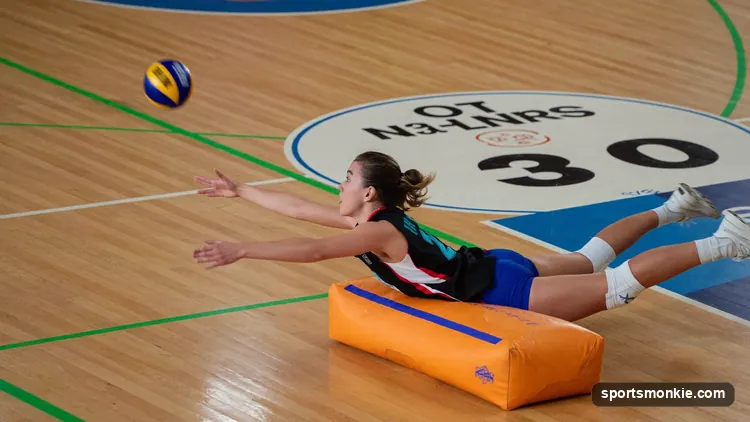
Defensive Specialist in Volleyball: DS Role Explained
A defensive specialist (DS) in volleyball subs in for weaker-passing front-row players in the back row. DS vs libero rules, jersey, and skills explained.
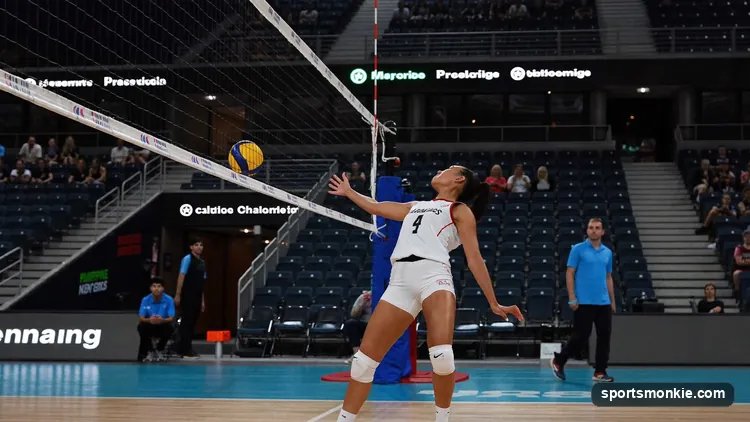
How Volleyball Scoring Works: Rally Scoring Explained
Volleyball uses rally scoring: a point on every rally, sets to 25, a fifth set to 15, win by two. How points, sets and matches are counted, with a table.
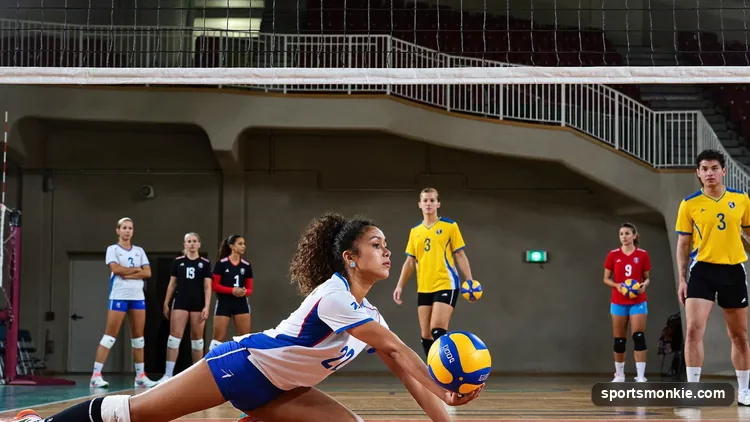
Libero Rules in Volleyball: What They Can and Can't Do
The libero is a back-row defensive specialist who can't attack above the net or block. Full libero rules: the jersey, substitutions and what's allowed.
Volleyball Rules Explained: The Full Ruleset
Volleyball rules in one place: six players a side, three hits per rally, rally scoring to 25, clockwise rotation and the common faults that lose points.

Libero in Volleyball: What the Position Actually Does
The libero volleyball role: the back-row defensive specialist who passes, digs and reads hitters. Origin, skills, jobs and the players who define it.
Middle Blocker in Volleyball: Role, Skills and Quick Sets Explained
A middle blocker volleyball player anchors the net's block and hits fast quick-tempo sets. Full guide to the role, footwork, quick sets and top players.