
What Is a Kill in Volleyball? Stats & Examples

On this page6
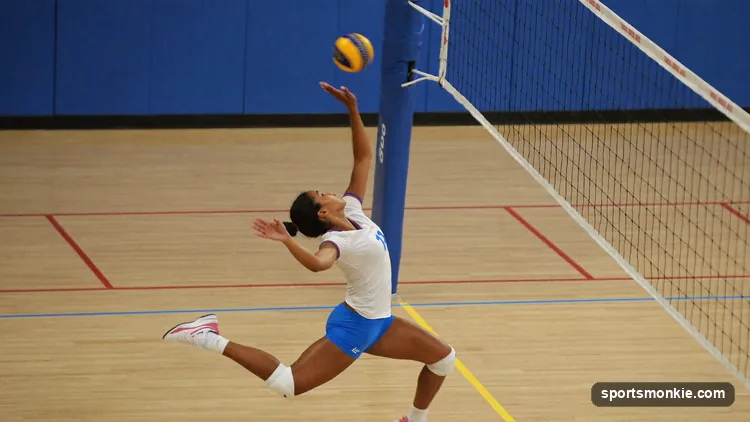
A kill in volleyball is an attack that directly ends the rally and wins a point for the attacking team. It happens either when the attacked ball lands in the opponent’s court, or when it is deflected out of bounds off a blocker’s hands. The point is credited to the player who made the attack as a “kill.”
It is the single most-tracked offensive statistic in the sport, the volleyball equivalent of a goal or a home run in the box score. But there is a common misunderstanding: a kill is defined by its result, not by how hard the ball was hit. Here is exactly what does and does not count.
Kill = attack that ends the rally
The rule is simple once you separate the action from the outcome. A kill is recorded when your attack immediately terminates the rally in your favour. There are two ways that happens:
- The ball lands cleanly in the opponent’s court for a point.
- The ball is touched by a blocker or defender and goes out of bounds, or they cannot control it and the rally ends.
If the opponent digs your attack up and play continues, no kill is recorded even if you hit it as hard as you possibly could. The stat is about ending the point, which is why it is such a good measure of a hitter’s real effectiveness.
Kill vs spike vs block
These three terms get muddled constantly, so here is how the statisticians separate them.
| Term | What it describes | Who gets credit |
|---|---|---|
| Spike | The swinging attack motion | Attacker (action only) |
| Kill | An attack that ends the rally for a point | Attacker |
| Block | Stopping an attack at the net for a point | Blocker/defender |
| Assist | The set that feeds a kill | Setter |
So a spike is the swing, a kill is a spike that worked, and a block belongs to the defending team, not the hitter. A “stuff block” that sends the ball straight down for a point is scored as a block, never as a kill.
Kills come in many shapes
Because a kill is judged only by outcome, it does not have to be a power swing. Any attack that ends the rally counts:
- A hard cross-court spike past the block.
- A soft tip or dink that drops just over the net into open space.
- A roll shot floated deep to the back corner.
- A swing that ricochets off the block and out of bounds.
This is why smart hitters mix power with placement. Against a tall block, a well-timed tip into a gap can earn a kill just as surely as a full-blooded spike, and it shows up identically in the stats.
Hitting percentage: the kill in context
A raw kill count tells you how much a player scored, but not how efficiently. That is what hitting percentage measures. It is calculated as kills minus attack errors, divided by total attack attempts.
A hitter with 15 kills, 3 errors and 30 attempts has a hitting percentage of .400, which is excellent. The stat punishes reckless swinging: a player who racks up kills but also hits the ball out or into the net constantly will have a mediocre percentage despite a flashy kill total. This is why coaches read the two numbers together. Kills show volume; hitting percentage shows whether that volume is coming at an acceptable cost in errors.
Which positions get the most kills
Kills are not spread evenly across a lineup. A few positions are built to attack:
- Outside hitters usually lead a team in kills, because they take the most swings, including tough, high-set balls when the pass is poor.
- Opposite hitters attack from the right side and often post high kill totals against weaker blocks.
- Middle blockers get fewer attempts but score at high efficiency on quick sets close to the setter.
- Setters and liberos rarely record kills, because their jobs are to distribute and defend rather than attack.
Reading a box score with this in mind tells you a lot: an outside hitter with 20 kills carried the offence, while a middle blocker with 8 kills on few attempts may have been the most efficient scorer on the floor.
Why kills matter as a stat
Coaches lean on kill counts because they tie directly to scoring. A hitter with 20 kills is personally responsible for 20 of their team’s points, which is why “kills per set” and “hitting percentage” (kills minus errors, per attempt) are among the first numbers analysed after a match.
Reading these stats also tells you how a team distributes its offence. If one outside hitter has most of the kills, the team runs through them; if kills are spread across several attackers, the setter is keeping the defence guessing. The set that feeds each kill is itself a tracked stat, the assist, so the whole attacking chain is measured.
The geometry of the net is part of why placement kills work. A shorter block, a deep court and the exact height of the net all shape where an attack can safely land, which we cover in our guide to how tall a volleyball net is. If you want to see who turns those chances into kills at the highest level, our rundown of the best volleyball players is full of elite finishers.
The short version: a kill is any attack that ends the rally for a point, credited to the attacker, whether it is a booming spike or a soft tip. Blocks belong to the defence, and a spike that gets dug up is not a kill.
Frequently asked questions
What is the difference between a kill and a spike?+
A spike is the swinging attack motion; a kill is the result. If your spike lands for a point or forces an error, it counts as a kill. If it is dug up and the rally continues, it is a spike but not a kill. Every kill is an attack, but only attacks that end the rally count as kills.
Is a block a kill?+
No. When a defender blocks the ball straight down for a point, that is credited as a block, or 'stuff block', not a kill. Kills belong to the attacking side. The stats separate them because they measure different skills: attacking over the net versus stopping an attack at the net.
Is a tip or dink counted as a kill?+
Yes, if it ends the rally. A tip, dink or roll shot that drops into the opponent's court for a point is a kill just like a hard spike. The stat rewards the outcome, not the power, so a clever soft touch into open space counts exactly the same as a thunderous swing.
What does it mean when a player has 5 kills?+
It means that player personally ended five rallies with a scoring attack. Five kills is a modest total for a full match; standout hitters routinely record 15 to 25 in a competitive game. Kill counts are one of the first numbers coaches check to see who is carrying a team's offence.
Sources
Play & tools
Free browser games and tools — no account, no download.
- Play today's Sports Connections — Today's Sports Connections — daily hints, answers, and play the grid.
- Play Guess the NFL Player — A new mystery NFL player every day. Eight guesses, with a clue on each — plus free unlimited mode.
- Explore all our games →
Related guides
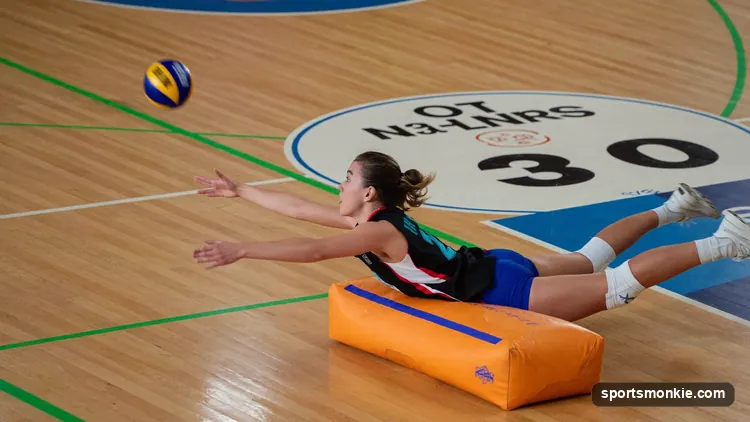
Defensive Specialist in Volleyball: DS Role Explained
A defensive specialist (DS) in volleyball subs in for weaker-passing front-row players in the back row. DS vs libero rules, jersey, and skills explained.

Libero in Volleyball: What the Position Actually Does
The libero volleyball role: the back-row defensive specialist who passes, digs and reads hitters. Origin, skills, jobs and the players who define it.
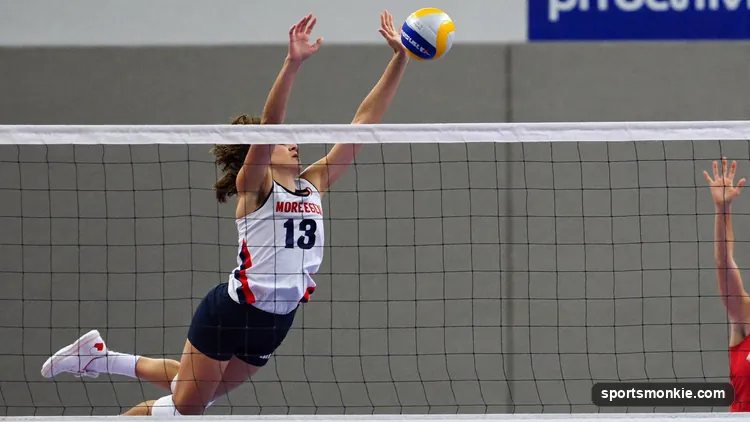
Middle Blocker in Volleyball: Role, Skills and Quick Sets Explained
A middle blocker volleyball player anchors the net's block and hits fast quick-tempo sets. Full guide to the role, footwork, quick sets and top players.
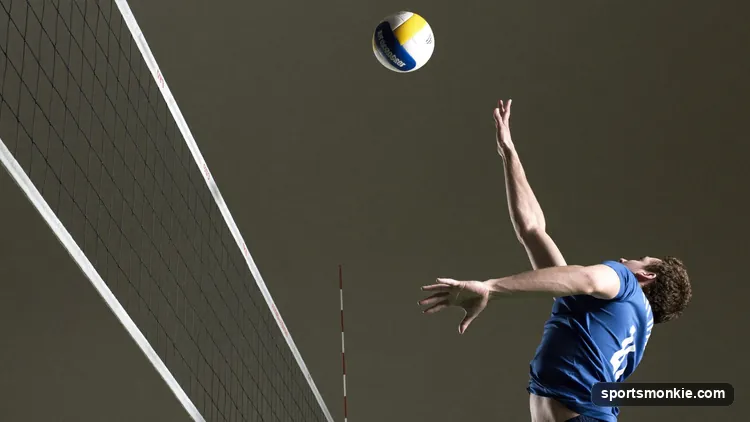
Opposite Hitter in Volleyball: Role, Skills & Top Players
The opposite hitter volleyball position attacks from the right side, blocks the outside hitter, and rarely passes serve receive. Full role breakdown.
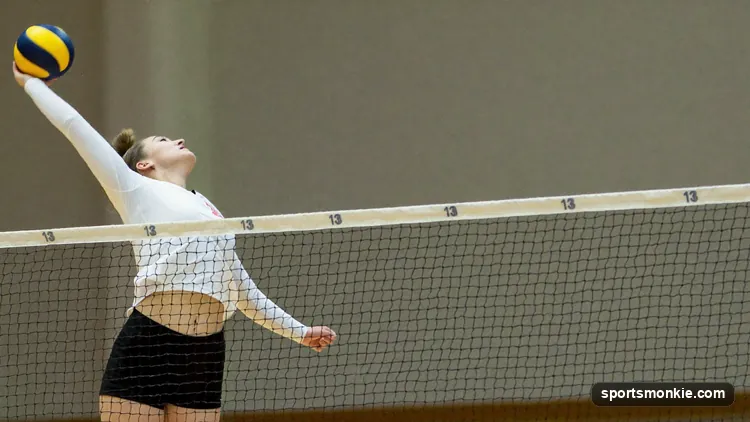
Outside Hitter in Volleyball: Role, Skills & Why They Lead in Kills
An outside hitter volleyball position attacks from zone 4, leads the team in kills, and also passes serve-receive — here's the full role explained.
Setter in Volleyball: Role, Rules, Tempo & Best Setters Explained
The setter in volleyball takes the second touch and delivers the ball to a hitter, running the offense like a team's on-court quarterback.