
What Is a Pancake in Volleyball?
On this page6
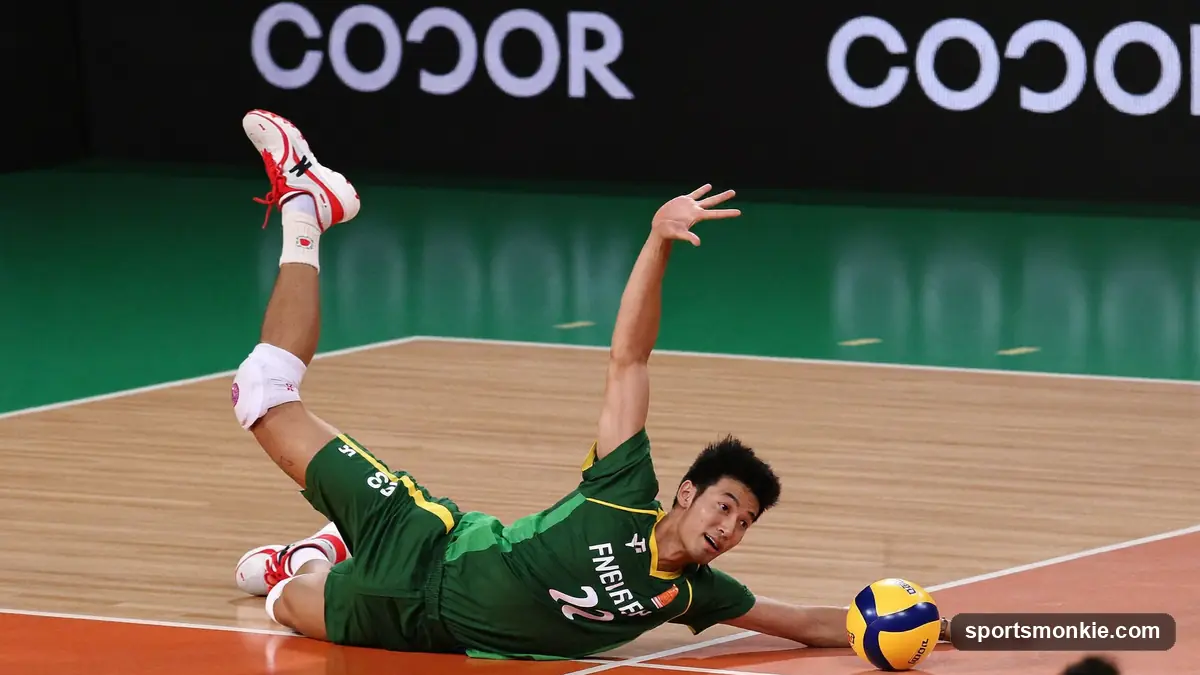
A pancake in volleyball is a last-ditch defensive move in which a player slides or dives and lays one hand flat, palm down, on the floor beneath the ball, so the ball bounces off the back of the hand and stays in play. It is the save you reach for when a ball is dropping too fast and too low to reach with any normal dig.
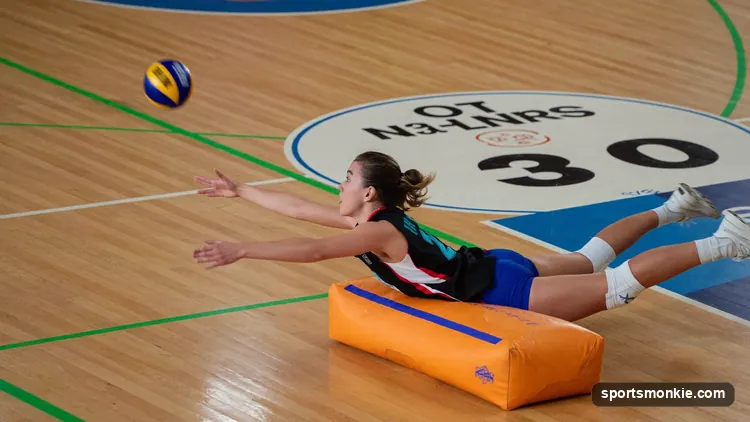
It is one of the most eye-catching plays in the sport: a defender fully extended along the floor, one hand slapped flat under a ball that was about to land, flicking it back up to keep the rally alive. Here is exactly what a pancake is, why it is legal, when players use it, and how the move is executed.
What the pancake actually is
The name describes the shape. As the player reaches the ball, they spread one hand flat against the floor, fingers extended, palm down, like a pancake lying on a griddle. If the timing is perfect, the ball strikes the back of that flat hand and pops back up instead of hitting the ground.
The whole point is to get something between the ball and the floor at the very last moment. A pancake does not aim for a controlled, accurate pass; it aims simply to keep the ball off the deck so a teammate has a chance to play it. Any bit of extra air the pancake buys can turn a lost point into a continued rally.
Why it is legal
Volleyball’s core rule is that a ball touching the floor ends the play. A pancake is legal because the ball contacts the hand, not the floor. As long as the flat hand is under the ball at the moment of contact, the ball has been legally played and the rally continues, it counts as a normal team touch.
The move fails only in one way: if the ball touches the ground before or instead of the hand. There is no penalty for attempting a pancake; you either get your hand under the ball in time or you do not.
When players use it
The pancake is an emergency option, not a first choice. Players, especially back-row defenders, reach for it in specific situations:
- On a hard-driven ball that ricochets off a block or a teammate and drops sharply.
- On a well-placed tip or roll shot that falls just out of reach for a standard dig.
- When fully extended in a dive or sprawl and there is no time to get the forearms under the ball.
It is most associated with defensive specialists and the libero, the back-row defenders whose job is to chase down exactly these desperate, low balls. Understanding where those players operate is easier with our guide to volleyball positions and how the rotation moves them around the court.
Pancake vs a normal dig
Comparing the pancake to a standard forearm dig shows why it is a specialist, last-resort tool.
| Feature | Standard dig | Pancake |
|---|---|---|
| Contact surface | Both forearms (platform) | Back of one flat hand |
| Ball height when played | Reachable, off the floor | Almost on the floor |
| Control of the pass | Higher, can be aimed | Low, just keeps it alive |
| Situation | Normal defense | Emergency, no time to dig |
| Body position | Balanced, athletic stance | Diving/sliding, fully extended |
Reading across, the dig is the controlled, everyday defensive contact, while the pancake trades all control for one thing: keeping an unreachable ball in play.
How to execute a pancake
The technique rewards timing above all:
- Read and commit early. Recognise that the ball will drop out of digging range and move toward it fast.
- Extend and slide. Dive or slide, stretching one arm toward the ball’s landing spot.
- Flatten the hand. Slap the hand flat on the floor, palm down, fingers spread, so the back of the hand faces up.
- Time the contact. The hand must be flat on the ground at the exact instant the ball arrives, so it bounces up off the back of the hand.
The margin is tiny, a fraction too early or late and the ball hits the floor, which is why the pancake looks so impressive when it works. It also pairs with the fundamentals that decide most rallies; keeping the ball alive on defense is what sets up your side’s next chance at a kill.
The bottom line
A pancake is volleyball’s flat-hand floor save: one hand pressed to the ground so a falling ball bounces off the back of it and stays in play. It is legal because the ball hits the hand, not the floor, and it is the emergency tool of defensive specialists scrambling to extend a rally. It demands near-perfect timing and offers little control, but when a point looks lost, a well-timed pancake is one of the most thrilling ways to keep it alive.
Frequently asked questions
What does pancake mean in volleyball?+
In volleyball, a pancake is an emergency defensive technique where a player extends one hand flat on the floor, palm down, so a fast-falling ball bounces off the back of the hand and stays in play. It is a save of last resort when the ball is dropping too low and quick to dig normally. The name comes from the flat, spread-out shape of the hand pressed against the floor, resembling a pancake. Done right, it keeps a rally alive that would otherwise end.
Is a pancake legal in volleyball?+
Yes. A pancake is legal because the ball makes contact with the player's hand, not the floor. Under the rules, a ball is still in play as long as it does not touch the ground, and a pancake works precisely by getting the hand between the ball and the floor at the last instant. Referees allow it, and it counts as a normal team contact. The only way it fails is if the ball touches the floor before or instead of the hand, which is simply a point for the other team.
What is a donut in volleyball?+
A donut in volleyball is slang for scoring zero points in a set, being 'shut out' with a goose-egg of zero on the scoreboard, because a zero looks like a donut. It is unrelated to the pancake, which is a defensive move; the two just share food nicknames. A team that loses a set without scoring a single point is said to have been given a donut, an unusual and lopsided result.
How do you do a pancake in volleyball?+
You dive or slide toward the falling ball, extend one arm, and slap your hand flat on the floor, palm down and fingers spread, so the back of your hand is directly under the ball as it arrives. Timing is everything: the hand must be flat on the ground at the exact moment the ball reaches it, so it bounces up off the back of the hand rather than hitting the floor. Players practice the sliding motion and the flat-hand timing repeatedly, because the margin for error is tiny.
Sources
Play & tools
Free browser games and tools — no account, no download.
- Play today's Sports Connections — Today's Sports Connections — daily hints, answers, and play the grid.
- Play Guess the NFL Player — A new mystery NFL player every day. Eight guesses, with a clue on each — plus free unlimited mode.
- Explore all our games →
Related guides
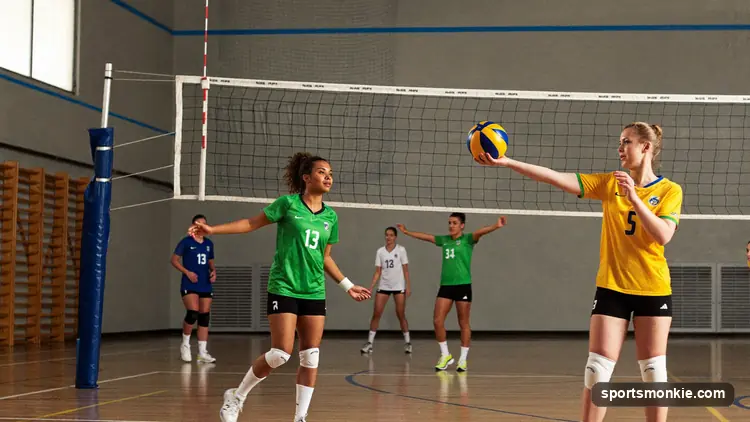
How Much Does Club Volleyball Cost?
Club volleyball typically costs a few thousand dollars a season once fees, travel and gear are added. Full cost breakdown and why it's expensive.
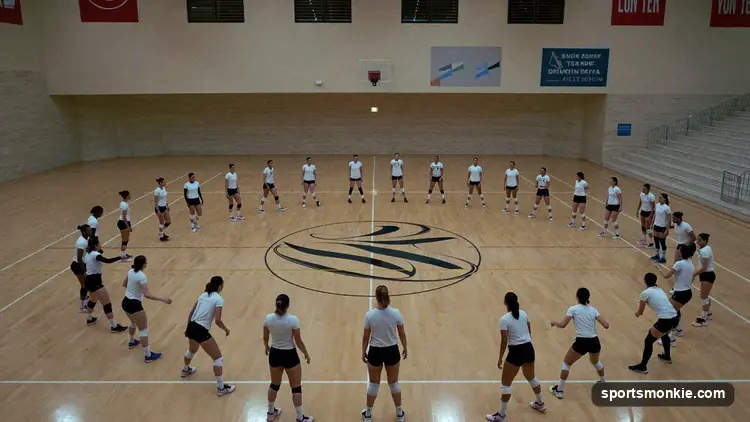
Volleyball Rotation Explained Simply
Volleyball rotation means the six players move one spot clockwise each time their team wins the serve. How rotation, serve order and overlap work.
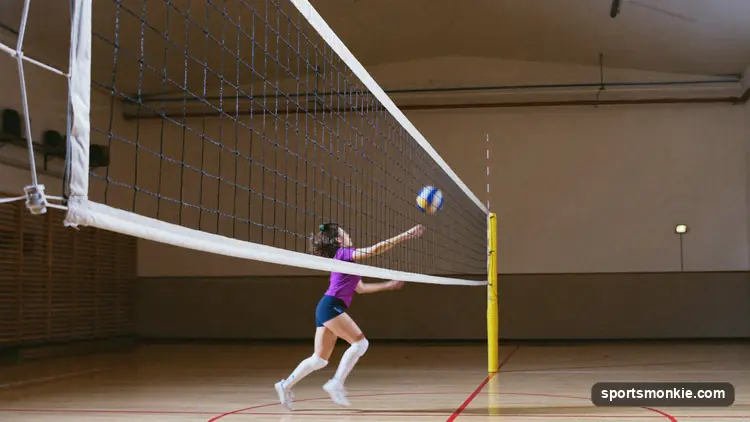
Volleyball Net Height: Men, Women and Juniors
Official volleyball net height is 2.43 m (7 ft 11 5/8 in) for men and 2.24 m (7 ft 4 1/8 in) for women. Full chart for juniors, coed, beach and sitting.
Defensive Specialist in Volleyball: DS Role Explained
A defensive specialist (DS) in volleyball subs in for weaker-passing front-row players in the back row. DS vs libero rules, jersey, and skills explained.
Libero in Volleyball: What the Position Actually Does
The libero volleyball role: the back-row defensive specialist who passes, digs and reads hitters. Origin, skills, jobs and the players who define it.
Middle Blocker in Volleyball: Role, Skills and Quick Sets Explained
A middle blocker volleyball player anchors the net's block and hits fast quick-tempo sets. Full guide to the role, footwork, quick sets and top players.