
Individual Medley Order: The 4 Strokes in Turn
On this page6
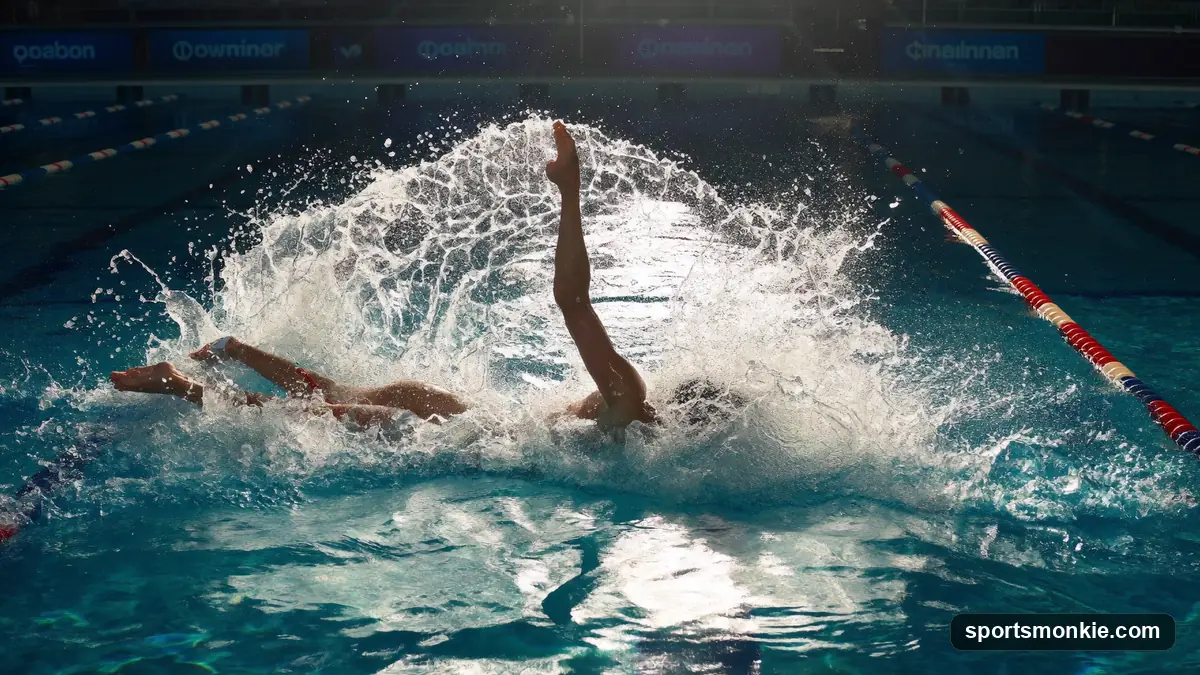
The individual medley order is butterfly, backstroke, breaststroke, then freestyle. A single swimmer completes all four competitive strokes in that exact sequence, switching stroke at each turn, and the order is fixed by the sport’s world governing body, World Aquatics.
If you only remember one thing, make it “fly, back, breast, free.” That phrase covers every individual medley at every level, from club galas to the Olympic final. But there is a good reason the order is set this way, and a good reason the medley relay uses a different order, so here is how it all fits together.
The individual medley order, in full
In the individual medley (IM), one swimmer races all four strokes back to back. The order is always the same:
- Butterfly — the most physically demanding stroke, swum first while the swimmer is freshest.
- Backstroke — a natural follow-on, since the butterfly-to-backstroke turn is a simple touch-and-rotate.
- Breaststroke — the slowest of the four strokes, swum third.
- Freestyle — the fastest stroke, saved for the finish so races often come down to the final length.
That sequence is not random. Placing the exhausting butterfly first, when swimmers have the most energy, and the fast freestyle last, when races are decided, gives the IM its distinctive shape: a brutal opening and a sprint finish.
Individual medley vs medley relay order
Here is where many people get tripped up. The individual medley and the medley relay use different stroke orders, and knowing why makes both easy to remember.
| Event | Stroke order | Reason for the order |
|---|---|---|
| Individual medley | Butterfly → Backstroke → Breaststroke → Freestyle | One swimmer; fly first while fresh, free last for the finish |
| Medley relay | Backstroke → Breaststroke → Butterfly → Freestyle | Backstroke must lead off because it starts in the water |
The relay order is driven by a practical rule. Backstroke is the only stroke that starts in the water, with the swimmer gripping the wall and pushing off, rather than diving from the blocks. In a relay, every leg after the first begins when the previous swimmer touches the wall, and you cannot perform an in-water backstroke start off a teammate’s finish. So backstroke has to be first, which pushes the rest of the relay order into its own arrangement while freestyle stays last as the anchor.
The Olympic distances
At the Olympic Games and other major long-course meets, the individual medley is contested over two distances, both following the fly-back-breast-free order:
- 200m IM — 50 metres of each stroke.
- 400m IM — 100 metres of each stroke.
The 400m IM in particular is considered one of the toughest events in the pool, demanding elite ability in all four strokes plus the endurance to hold form across eight lengths of a 50-metre pool. Understanding the venue helps here, our guide to how long an Olympic pool is explains the standard course these times are set in.
The turns that link the strokes
The individual medley is not just four strokes stacked together; it is also a test of the transitions between them. Each change of stroke happens at a turn, and the rules for those turns are specific. Going from butterfly to backstroke, the swimmer touches the wall with both hands, then rotates onto their back to push off. From backstroke to breaststroke, the swimmer touches on their back and turns to push off on the front. From breaststroke to freestyle, a simple front-wall touch sends them into the final leg.
These turns are where medals are won and lost. A swimmer who executes a fast, legal transition gains ground on a rival who fumbles it, and because there are three stroke changes plus the normal turns within each leg, the IM demands more technical wall work than any single-stroke race. Getting a turn wrong, touching illegally or pushing off in the wrong position, can bring disqualification, so precision under fatigue is part of the challenge.
Why the IM rewards all-rounders
The individual medley is often called the truest test of swimming because it does not let a specialist hide. A swimmer who is world-class at freestyle but weak at breaststroke will lose ground in the third quarter, while a great breaststroker can be overhauled on the closing freestyle. Winning an IM requires being genuinely good at everything, plus mastering the four turns that link the strokes together.
That is why IM champions tend to be some of the most complete athletes in the sport, a theme that runs through our look at the greatest swimmers of all time. For anyone learning the strokes for the first time, building competence across all four in order is exactly the foundation our tips to start swimming guide encourages.
Remembering it for good
If the technicalities blur together, keep two short phrases in your head. For the individual medley: fly, back, breast, free. For the medley relay: back, breast, fly, free. The only difference is where backstroke and butterfly sit, and that difference exists entirely because backstroke starts in the water and therefore has to lead off a relay.
The short version: the individual medley order is butterfly, backstroke, breaststroke, freestyle, used at both Olympic distances (200m and 400m). The medley relay reorders those to backstroke, breaststroke, butterfly, freestyle because backstroke, the only in-water start, must go first.
Frequently asked questions
What is the sequence of the individual medley?+
The individual medley is swum in the order butterfly, backstroke, breaststroke, then freestyle. One swimmer completes all four strokes in that exact sequence, changing stroke at each turn. A common way to remember it is the phrase 'fly, back, breast, free.' This order is fixed by World Aquatics and does not change between events or age groups.
Why is the medley relay order different from the individual medley?+
The medley relay order is backstroke, breaststroke, butterfly, freestyle, and it differs because backstroke has to go first. Backstroke is the only stroke that begins in the water, with the swimmer pushing off the wall, so it cannot start after a teammate touches the wall the way a dive-start stroke can. Putting backstroke first solves that problem, which is why the relay order is not the same as the individual medley's fly-first sequence.
What is the order of the Olympic individual medley?+
The Olympic individual medley uses the same order as every other IM: butterfly, backstroke, breaststroke, freestyle. Both Olympic distances, the 200m IM (50m of each stroke) and the 400m IM (100m of each stroke), follow that sequence. The order never changes, only the total distance does.
Where does the slowest swimmer go in a relay?+
In a medley relay the legs are set by stroke, so each swimmer is a specialist and there is no 'slowest' slot to hide. In a freestyle relay, where coaches can order swimmers freely, a common strategy is to lead off and anchor with two of the strongest swimmers and place a weaker swimmer in the middle, often the second or third leg. The exact call depends on race tactics and reaction times, not a single fixed rule.
Sources
Play & tools
Free browser games and tools — no account, no download.
- Play today's Sports Connections — Today's Sports Connections — daily hints, answers, and play the grid.
- Play Guess the NFL Player — A new mystery NFL player every day. Eight guesses, with a clue on each — plus free unlimited mode.
- Explore all our games →
Related guides
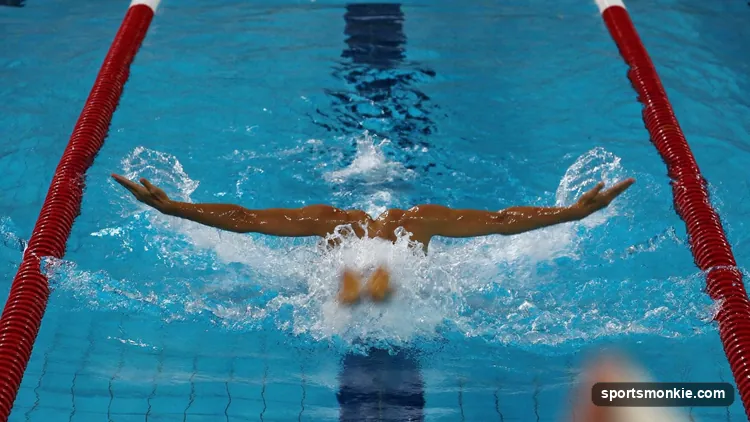
What Is the Individual Medley in Swimming? Order, Distances & Rules
Individual medley swimming has one swimmer race all four strokes in a fixed order: butterfly, backstroke, breaststroke, freestyle. Here's how it works.
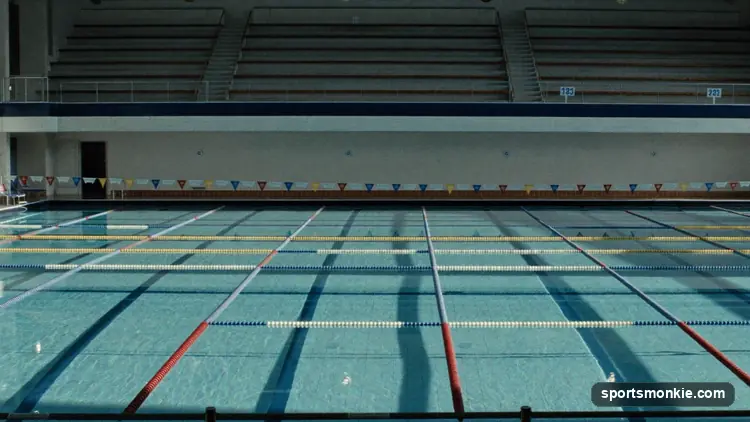
How Long Is an Olympic Pool? Size & Lanes
An Olympic pool is 50 meters long, 25 meters wide, with 10 lanes and a 2-meter minimum depth. Full dimensions, lane specs, and format comparisons.
What Is the Individual Medley in Swimming? Order and Rules
The individual medley combines butterfly, backstroke, breaststroke, and freestyle in one race, in that order.
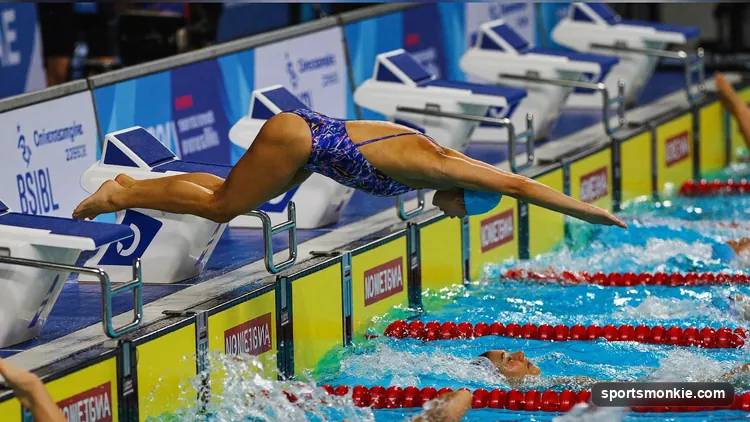
Medley Relay Explained: Stroke Order, Exchanges & Strategy
The medley relay swims backstroke, breaststroke, butterfly, then freestyle. Learn the medley relay swimming order, exchange rules, and race strategy.
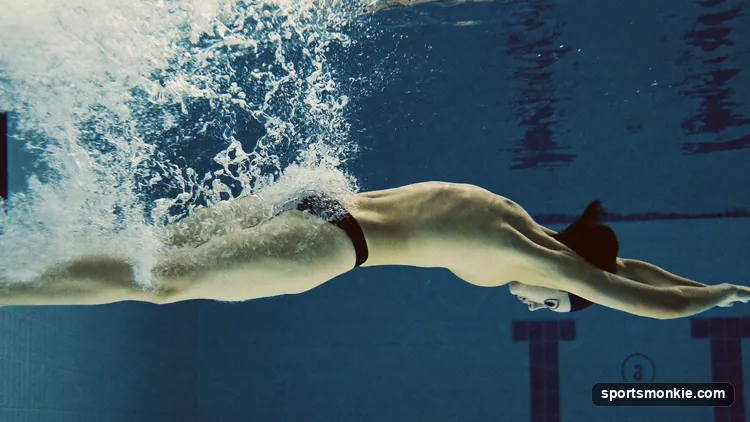
Flip Turn in Swimming: How to Master the Tumble Turn Step by Step
Master the flip turn swimming technique: the approach, tuck, plant, and streamline push-off used in freestyle and backstroke, plus fixes for common mistakes.
Types of Swimming Strokes: Freestyle, Backstroke, Breaststroke & More
The main types of swimming strokes are freestyle, backstroke, breaststroke, butterfly, sidestroke, and elementary backstroke — each built for a different job.