
Bulgarian Split Squat Form: How to Do It Right
On this page6
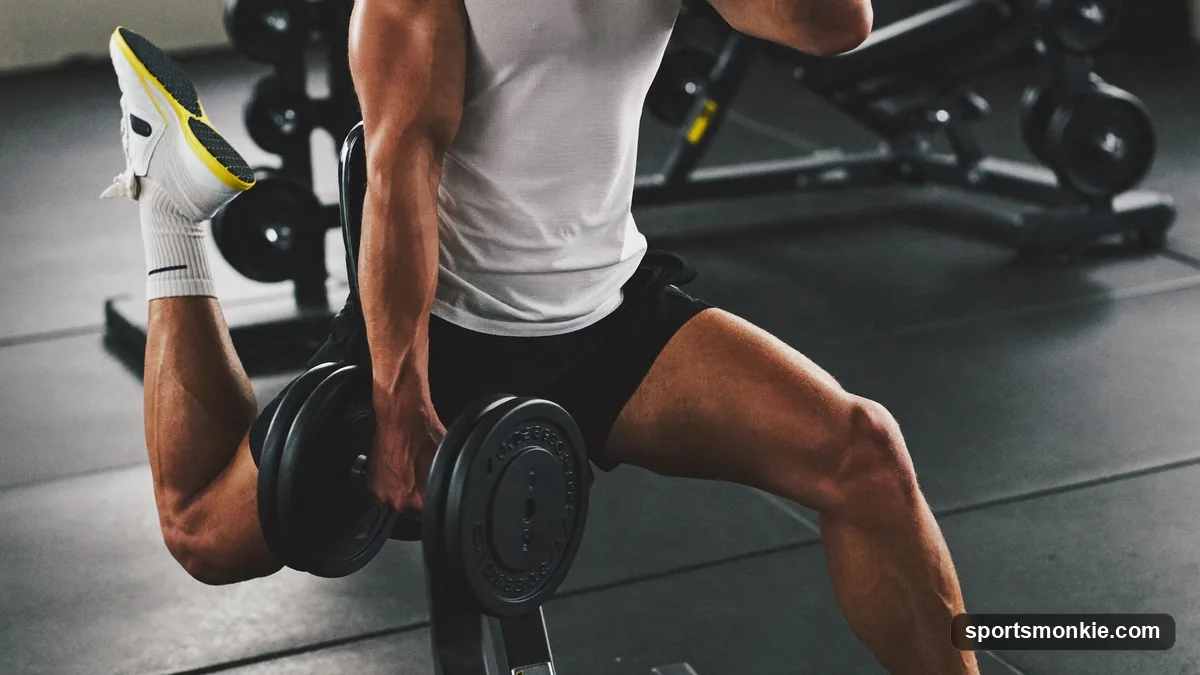
Proper Bulgarian split squat form comes down to three things: a stance long enough that your front shin stays close to vertical, a slight forward lean from the hips, and a front knee that tracks over your toes instead of caving inward. Set your rear foot on a bench, lower until your front thigh is about parallel to the floor, and drive up through your front heel. Get those checkpoints right and this becomes one of the best single-leg builders for your quads and glutes; get them wrong and it just beats up your knee.
What Is a Bulgarian Split Squat?
A Bulgarian split squat is a single-leg squat variation where your rear foot rests on a bench or box behind you, so nearly all the load sits on the front leg. Because one leg does the work, it builds strength and size while exposing side-to-side imbalances that a regular two-legged squat can hide. It trains the quads, glutes, and adductors hard, and it demands balance and control, which is why form matters more here than on almost any other lower-body lift.
It belongs in the same family as the barbell back squat and the goblet squat, but the elevated rear foot removes the “cheat” of pushing off both legs. If you already own solid two-legged mechanics from our proper squat form guide, the split squat is the natural next step for fixing a weaker side. It also fits neatly into the broader movement principles in our proper lifting form guide.
How to Set Up the Rear Foot and Stance
Setup is where most reps are won or lost, so build it deliberately before you load anything.
Elevate the rear foot correctly. Use a bench, box, or step roughly knee-height (about 12 to 20 inches). You can rest either the top of your rear foot (laces down) or the ball of your foot on the bench; laces-down is usually more comfortable and takes pressure off the toes. The rear leg is a kickstand for balance, not a pushing leg.
Find your stance length. Stand a couple of feet in front of the bench, place one foot back, and lunge down once. At the bottom your front shin should stay close to vertical and your knee should sit over your midfoot, not far past your toes. If the knee shoots forward, step your front foot further away; if you feel nothing in the quad and it all sits in the hip, step it in a little.
Set your side-to-side width. Don’t stack both feet on a tightrope. Keep the front foot a few inches out to the side of the rear foot so you have a stable base. A wider base makes balance far easier without changing which muscles work.
The Step-by-Step Movement
Once the setup is dialed in, the rep itself is simple:
- Brace and set your posture. Stand tall, pull your ribs down, brace your core, and pick a spot on the floor a few feet ahead to fix your gaze.
- Lean slightly forward. Hinge about 10 to 20 degrees from the hips, keeping your spine long. This forward lean loads the glutes and protects the front knee.
- Lower under control. Bend the front knee and let the rear knee travel toward the floor. Keep your front heel flat and your weight centered over the front foot.
- Hit depth. Stop when your front thigh is roughly parallel to the floor, or as deep as you can go while staying controlled and pain-free.
- Drive up through the front heel. Push the floor away with your whole front foot, straighten the front leg, and finish tall without locking the knee hard.
Keep the tempo honest: two to three seconds down, a brief pause, then up. Rushing the descent is how balance and knee tracking fall apart.
Common Bulgarian Split Squat Mistakes
Most form breakdowns trace back to a handful of repeat offenders:
- Stance too short. The single most common fault. A cramped stance forces the front knee far past the toes and loads the joint instead of the muscle. Lengthen the stance until the shin stays near vertical.
- Staying bolt upright. Refusing to lean forward keeps all the tension on the knee and cuts the glutes out. A slight hip hinge fixes it.
- Pushing off the back foot. If the rear leg is driving you up, you’ve turned this into a two-legged exercise. Keep it light — imagine there’s an egg under your rear foot.
- Front heel lifting. Coming onto the ball of the front foot dumps load onto the knee and wrecks balance. Cue “screw the heel into the floor.”
- Knee caving inward. Let the knee collapse toward the midline and you lose the glute and stress the joint. Actively track the knee over the second and third toes, the same cue you’d use on a front squat.
If pain, not effort, is what stops you, back off the depth and load and check the setup before pushing on. As with any lift, consult a coach or clinician if a movement consistently hurts rather than fatigues.
Dumbbells vs Barbell: How to Load It
For almost everyone, dumbbells held at your sides are the best way to load a Bulgarian split squat. They add real resistance, keep your hands free to catch your balance, and spare your spine. A goblet-style hold — one dumbbell at your chest — is a friendly middle ground that also encourages the upright-but-leaning posture you want.
A barbell on your back allows the heaviest loading and forces the strictest torso position, but it punishes any balance error and takes real setup to get on and off safely. Earn it only after months of clean, controlled dumbbell reps. The same load-progression logic carries over from big bilateral lifts like the proper deadlift form and the romanian deadlift form guides: master the pattern light, then add weight in small, honest jumps.
Whatever tool you pick, the rule holds — if adding load breaks your form, the weight is too heavy. Single-leg work rewards precision over ego.
Warm-Up, Progression, and Programming
Warm up the pattern first. Do a few bodyweight split squats and some hip and ankle mobility before loading. Tight ankles or hips will force compensations, so prepare them the way you’d prepare your shoulders before an overhead press form session.
Progress in stages. Start with bodyweight reps holding a rack for balance, then free-standing bodyweight, then light dumbbells, then heavier dumbbells or a goblet hold. Only after that should you consider a barbell. Aim for 3 to 4 sets of 8 to 12 reps per leg, always starting with your weaker side and matching the reps on the stronger side.
Fit it into your week. The Bulgarian split squat pairs well with a main squat or hinge as an accessory, adding single-leg strength, balance, and muscle without the spinal load of another heavy barbell lift. It complements upper-body pulling work like learning how to do a pull-up and pressing patterns like the proper bench press form for a balanced full-body routine.
Treat it as a skill as much as a strength move. The reps you spend earning clean, balanced technique now are what let you load it heavily and safely later — and that patience is the whole point of building a body that holds up.
Frequently asked questions
How far forward should my front foot be in a Bulgarian split squat?+
Set your front foot roughly two to three feet ahead of the bench, then adjust so that at the bottom your front shin stays close to vertical and your knee sits over the midfoot. Too short and the knee shoots past the toes with all the load; too long and you feel it only in the hip, losing the quad work.
Should I lean forward during a Bulgarian split squat?+
A slight forward lean of roughly 10 to 20 degrees from the hips is correct and shifts more work to the glutes while keeping the front knee comfortable. Staying bolt upright loads the knee harder and shortens the range. Keep your spine long and hinge from the hips rather than rounding your back to lean.
Is it OK for my knee to go past my toes?+
A little forward knee travel is normal and safe for healthy knees, since the joint is built to flex. The problem is when the knee drives far past the toes because your stance is too short, dumping load onto the joint. Lengthen your stance so the front shin stays closer to vertical and the effort moves into the quad and glute.
How do I stop losing my balance in a Bulgarian split squat?+
Balance comes from a slightly wider stance side to side, a fixed gaze on a spot ahead, and treating the rear foot as a light kickstand rather than a source of push. Hold a rack or wall for your first sessions, do the reps slowly, and drop the elevation if a tall bench feels unstable. Balance improves fast with practice.
Dumbbells or barbell for Bulgarian split squats?+
Dumbbells held at your sides are the best default: they load the movement heavily, keep your hands free to catch balance, and spare your spine. A barbell on your back allows more load and a stricter torso but demands real balance and setup, so earn it after months of clean dumbbell reps. A goblet-style hold is a good beginner middle ground.
How low should I go on a Bulgarian split squat?+
Lower until your front thigh reaches roughly parallel to the floor, or as deep as you can go while keeping your heel flat and your torso controlled. Stop at the point where you feel a stretch in the front thigh and glute, not a pinch in the knee or hip. Depth should come from mobility and control, never from collapsing at the bottom.
Sources
Play & tools
Free browser games and tools — no account, no download.
- Play today's Sports Connections — Today's Sports Connections — daily hints, answers, and play the grid.
- Play Guess the NFL Player — A new mystery NFL player every day. Eight guesses, with a clue on each — plus free unlimited mode.
- Explore all our games →
Related guides
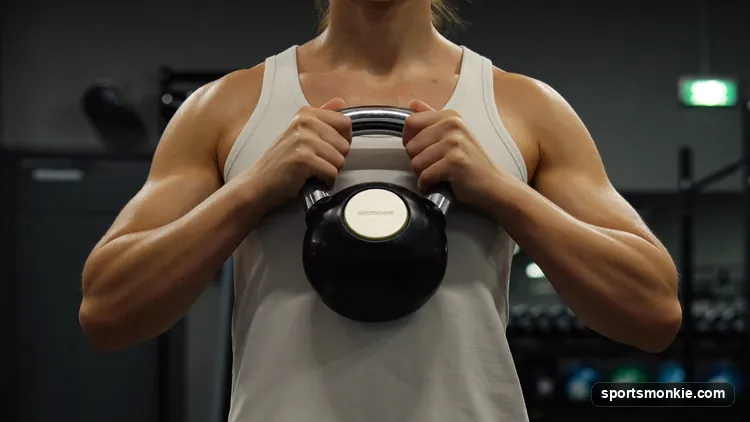
Goblet Squat Form: How to Do It Right (Cues, Depth, Mistakes)
Correct goblet squat form means holding a dumbbell or kettlebell at chest height, sitting straight down between your hips with an upright torso, dropping to at least parallel, and driving your elbows inside your knees at the bottom.
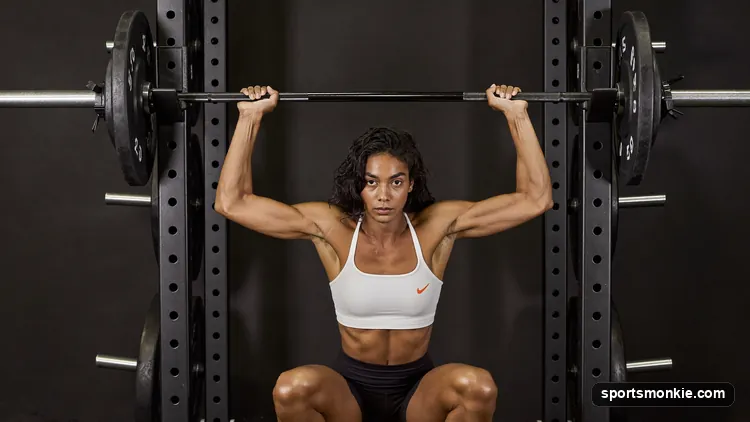
Front Squat Form: Elbows High, Torso Tall, Full Depth
Front squat form starts with a solid front rack, elbows driven high, an upright torso, and a controlled descent to at least parallel. Here are the exact cues, mobility checks, and mistakes to fix.
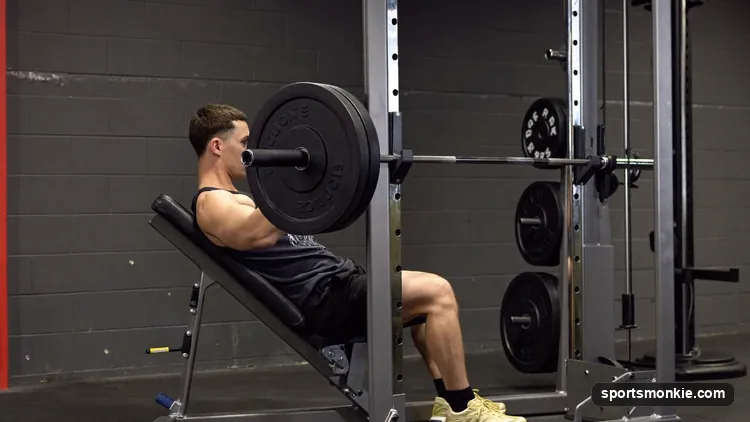
Hack Squat Form: How to Use the Machine Safely, Step by Step
Hack squat form means feet mid-platform and shoulder-width, back and shoulders flat against the pads, knees tracking over the toes, and a controlled drop to thighs-parallel — here are the cues, depth, and mistakes.
Proper Squat Form: How to Back Squat Safely, Step by Step
Proper squat form means a braced trunk, hips and knees bending together, knees tracking over the toes, and thighs breaking parallel — here is the setup, the cues, and the fixes for butt wink and knee cave.
How to Do a Pull-Up: Strict Form, Cues, and Progressions
To do a pull-up, hang from an overhand grip, pull your shoulder blades down, drive your elbows to your ribs until your chin clears the bar, then lower under control. Here is the full step-by-step with beginner progressions.
Overhead Press Form: Grip, Bar Path, and Lockout, Step by Step
Overhead press form comes down to a stacked bar path: grip just outside the shoulders, brace hard, move your head back so the bar travels straight up past your face, then finish with the bar over the mid-foot.