
How to Put On a Swim Cap Without Tearing or Slipping
On this page7
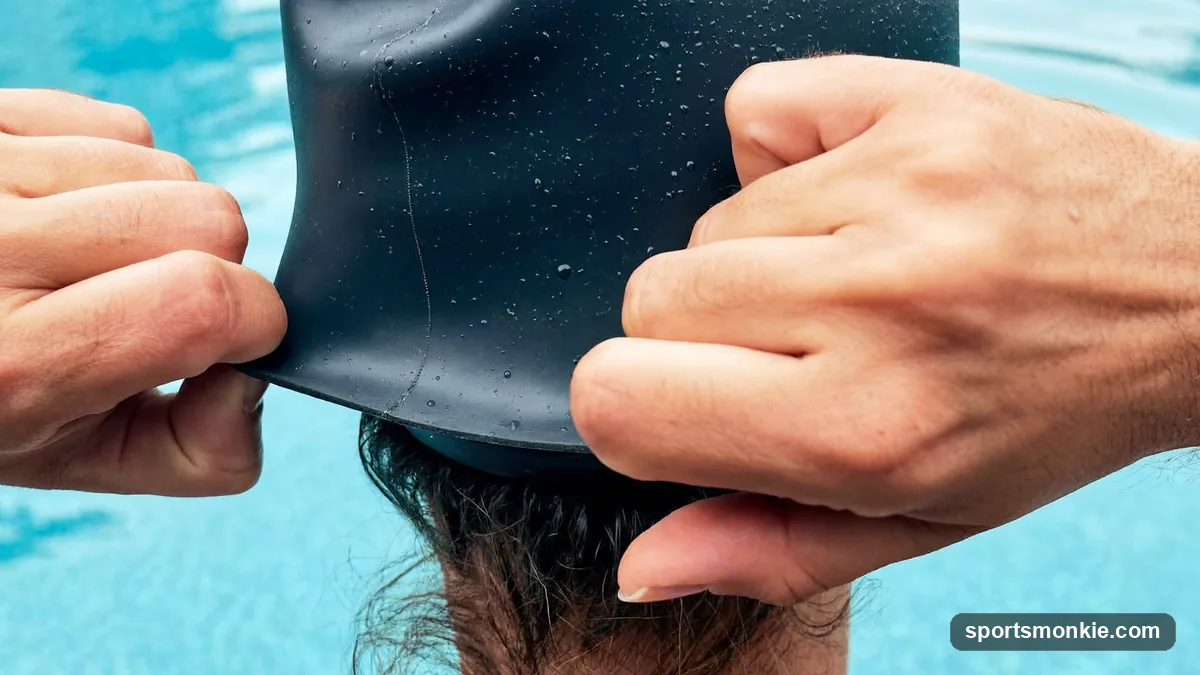
To put on a swim cap, hold it open with both hands using your thumbs inside the rim, tuck your chin, and stretch it front-to-back over your forehead before working the back edge down to the nape of your neck. Keep your fingertips flat and your nails away from the material so it does not tear, and start with lightly damp hair so the cap glides on and grips. Master those three moves and you will never fight a cap again.
The Fast Front-to-Back Method
The single biggest mistake is dropping a cap onto the top of your head and yanking it down like a hat. That pinches hair, folds ears, and creates the wrinkles that let water in.
Do this instead:
- Open the cap. Slide both hands inside so your fingers are on the outside and your thumbs are on the inside of the rim, spreading it into a wide oval.
- Anchor the front. Bend forward slightly, tuck your chin, and set the front edge against your hairline above your forehead.
- Roll it back. Pull the cap up and over the crown, then walk the back edge down toward the base of your skull.
- Seat the rim. Run flat fingers around the whole edge, sweeping stray hairs underneath and pushing the back down low on your neck.
The whole thing takes about ten seconds once it is muscle memory. If you are brand new to the pool, pairing this with our swimming for beginners walkthrough will make your first few sessions far less fiddly.
Silicone vs. Latex: Which Cap to Buy
The material you choose changes everything about how the cap goes on. Silicone is the default recommendation for almost everyone; latex has a narrow set of uses.
| Feature | Silicone | Latex |
|---|---|---|
| Thickness | Thicker, sturdier | Thin, delicate |
| Durability | High, resists snags | Low, tears easily |
| Ease of putting on | Very easy, glides | Grabs and drags |
| Warmth | Warmer | Cooler, breathable |
| Best for | Beginners, long hair, cold water | Racing, hot pools, budget |
| Allergy risk | None | Latex sensitivity |
| Typical lifespan | 1-2+ years | Weeks to months |
Silicone slides on because it is smoother and holds its stretched shape. Latex clings to itself and to your hair, which is why beginners often think they are “bad at caps” when they are really just fighting the wrong material. Buy silicone first. Keep a cheap latex cap around only if you want the thinnest, coolest option for a hot outdoor pool.
Prepping Your Hair So the Cap Grips
Hair prep decides whether a cap slides on smoothly or snags every strand. The goal is lightly damp, not dripping and not bone-dry.
- Rinse first. Wet your hair with clean water at the shower before the pool. Chlorine soaks into dry hair faster, and clean-water saturation limits how much pool water it absorbs.
- Add a little conditioner. A dime of leave-in conditioner or a purpose-made swim spray cuts friction and protects strands. It also makes the cap glide.
- Do not soak it. Sopping-wet hair turns slick and literally squeezes the cap off your head mid-lap.
Once your hair is prepped, smooth it straight back off your face before the cap touches your head. Good hair prep also cuts the water resistance that our guide to swimming faster is built around, so it is a small habit with real payoff.
Keeping Long or Thick Hair Tucked In
Long hair needs a plan, or it will hang out the back and drag. The fix is where you gather it and how you seat the rim.
- Go low, not high. Tie hair into a low bun or a flat braid at the nape of your neck. A high ponytail or top bun pushes the crown of the cap up and pops the back edge off your neck.
- Tuck as you seat it. After the cap is on, use flat fingertips to sweep loose strands under the front and side rim, working around the whole edge.
- Size up if needed. Thick or very long hair does better in a dome-shaped or dedicated bun cap, which adds height and volume so nothing gets crushed or squeezed out.
If strands keep escaping at the front, you are pulling the cap on top-down again. Reset and use the front-to-back roll so the rim catches your hairline cleanly.
How to Avoid Tearing the Cap
Tears almost always come from fingernails, not from stretching. Silicone and especially latex will split if a nail hooks under the rim.
- Use finger pads only. Spread and pull with the flat pads of your fingers and thumbs. Never dig a nail beneath the edge.
- Pull evenly with both hands. Yanking one side stresses a single point until it rips. Share the load across both hands.
- Mind jewelry. Rings, sharp earrings, and long acrylic nails are the top cap-killers. Remove rings before handling latex.
- Store it dry. Rinse in clean water, dry it, and dust silicone with a little talc so it does not stick to itself and tear on the next use.
Remove the cap the same careful way: slip a flat finger under the front edge at your forehead and peel it up and back, rather than clawing it off the crown.
Stop the Cap From Slipping Off Mid-Swim
A cap that creeps up or flies off during flip turns is almost always one of three problems.
- It is too small or too big. Too small rides up; too big never grips. Match the cap to your head size and hair volume.
- The rim is too high. The back edge must sit low on the nape of your neck, not partway up the back of your skull. A high back edge is the number one slip cause.
- Hair is too wet or greasy. Slick hair and heavy oils give the silicone nothing to hold. Keep hair lightly damp and rinse out excessive product.
For open-water or hard training sessions, some swimmers double up: a thin latex cap underneath and a silicone cap on top. The two layers grip each other and stay put through the roughest turns. That trick also adds warmth in cold water, which matters if you are logging distance the way our how long to swim a mile breakdown assumes.
Quick Fixes for Common Cap Problems
Keep these one-line diagnoses handy on deck:
- Wrinkles and water pooling: you dropped it top-down. Re-seat front-to-back and smooth the rim.
- Painful scalp tug: hair was too dry. Dampen and add conditioner.
- Cap rolls up at the back: the rim sits too high. Pull the back edge down to your neck.
- Ears folded and muffled: tuck the rim just over the top of the ears, not across them.
- Splits after a few uses: you are using nails or storing it damp and stuck together.
None of this requires strength or a special knack. A well-chosen silicone cap, lightly damp hair, and the front-to-back roll solve nearly every complaint. Once the cap stops being a distraction, you can put your attention where it belongs, whether that is your freestyle technique or the fundamentals in our swim technique guide. Comfortable gear is the quiet foundation under every good swim.
Frequently asked questions
Should you wet your hair before putting on a swim cap?+
Lightly damp hair works best. Bone-dry hair creates friction that snags the cap and tugs your scalp, while soaking-wet hair turns slick and slides the cap off. Spritz or towel your hair until it is barely moist, then smooth it back. Many swimmers also add a few drops of conditioner or a swim-specific spray to reduce drag, help the cap glide on, and protect strands from chlorine during the session.
Is silicone or latex better for a swim cap?+
Silicone is better for most swimmers. It is thicker, more durable, snag-resistant, warmer, and far easier to pull on and off, which makes it ideal for beginners and long hair. Latex is thinner, cheaper, and more breathable in warm water, but it tears easily on rings or nails and can irritate latex-sensitive skin. Choose silicone for comfort and longevity; choose latex only if you want maximum breathability or a budget cap.
How do you keep long hair inside a swim cap?+
Tie long hair into a low bun or braid at the nape of your neck, not a high ponytail that pushes the cap up. Put the cap on front-to-back and use flat fingertips to sweep loose strands under the rim as you seat it. A bun cap or a slightly larger dome-shaped silicone cap gives thick or long hair the extra room it needs to stay tucked and comfortable.
Why does my swim cap keep slipping off?+
Slipping usually comes from a cap that is too small, hair that is too wet or greasy, or a rim that never fully reaches the nape of your neck. Make sure the back edge sits low on your neck, not halfway up your skull. Choose a cap sized for your head, keep hair only lightly damp, and rinse heavy conditioner or oils out before swimming so the silicone can grip your scalp.
How do you put on a swim cap without ripping it?+
Keep your fingernails away from the material entirely. Spread the cap open with the pads of your fingers and thumbs, never hooking a nail under the rim. Silicone resists tears far better than latex, but any cap can split if you yank a single edge. Pull evenly with both hands, ease it over your forehead first, then walk it back. Remove it the same way, peeling from the forehead rather than the crown.
Do swim caps keep your hair dry?+
No. A standard swim cap reduces drag, keeps hair out of your face, and adds warmth, but it does not create a waterproof seal, so your hair will still get damp. To keep hair drier, wet it with clean water and add conditioner first, wear a snug silicone cap low on the forehead, or double up with a latex cap under a silicone one. For real dryness, only specialized waterproof caps come close, and even they leak.
Sources
Play & tools
Free browser games and tools — no account, no download.
- Play today's Sports Connections — Today's Sports Connections — daily hints, answers, and play the grid.
- Play Guess the NFL Player — A new mystery NFL player every day. Eight guesses, with a clue on each — plus free unlimited mode.
- Explore all our games →
Related guides
Freestyle Breathing Technique: Breathe Without Sinking
Master freestyle breathing with head-position, exhale-underwater, and bilateral breathing cues. Fix the lift-and-sink habit and swim relaxed for longer, faster laps.

How to Swim Faster: Streamline, Stroke & Turn Tips
Learn how to swim faster with proven fixes: tighter streamlines, more distance per stroke, quicker turns, and smarter tempo. A coach-built guide to real speed.
How to Swim for Beginners: First Steps in the Water
Learn how to swim as a beginner with a step-by-step plan: get comfortable, float, blow bubbles, kick, and swim your first freestyle strokes safely.
How to Learn to Swim as an Adult: A Step-by-Step Guide
Learn to swim as an adult with a fear-first, step-by-step progression: water comfort, breathing, floating, and your first strokes. Confidence-building drills that actually work.

What Is a False Start in Track? Rules and Disqualification
A false start happens when a sprinter begins before the legal starting signal or reacts early enough to violate the competition’s reaction-time rule.

What Is the Individual Medley in Swimming? Order and Rules
The individual medley combines butterfly, backstroke, breaststroke, and freestyle in one race, in that order.