
How to Rack Pool Balls: 8-Ball & 9-Ball
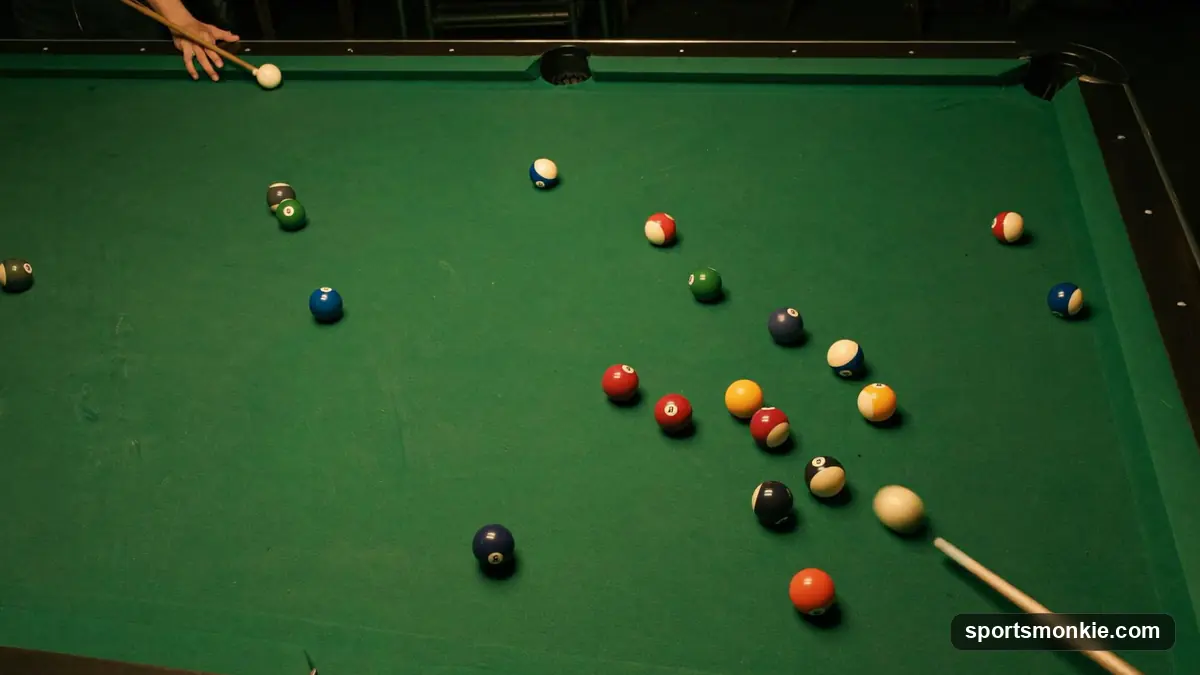
On this page6
To rack pool balls correctly, only a few positions actually matter. Put the front ball on the foot spot, place the game’s key ball in the right spot, and fill the rest in tightly. For 8-ball that means the 8 in the center and one solid plus one stripe in the back corners; the other balls go anywhere.
That is the part most people get wrong, either fussing over number order that does not matter or racking too loosely so the break dies. Below are the exact setups for 8-ball, 9-ball and 10-ball, straight from the WPA rules, plus the tight-rack habit that makes any break better.
The one rule every rack shares
Whatever the game, the apex ball, the single ball at the front of the rack, sits on the foot spot. That is the marked spot at the foot end of the table, and it lines the rack up so the break is fair and repeatable.
The second universal is tightness. Slide the rack forward, press the balls together from behind, and lift the frame straight up so nothing shifts. A gap of even a millimeter between balls soaks up the cue ball’s energy and gives you a weak, clumpy spread. A frozen rack, where every ball touches its neighbors, is what separates a rack that breaks well from one that does not.
How to rack 8-ball
8-ball uses all 15 object balls in the triangle. Three positions are fixed, and the rest are free.
- Apex ball: any ball, placed on the foot spot.
- 8-ball: the exact center of the rack (the middle ball of the third row).
- Back corners: one solid (1 to 7) in one corner and one stripe (9 to 15) in the other.
- Everything else: random, no pattern required.
That is the whole official rack. The common myth that solids and stripes must alternate, or that the 1 goes up front, is just bar tradition. The WPA fixes only the apex, the centered 8 and the split back corners.
| Position | 8-ball | 9-ball | 10-ball |
|---|---|---|---|
| Shape | Triangle (15) | Diamond (9) | Triangle (10) |
| Apex on foot spot | Any ball | 1-ball | 1-ball |
| Center ball | 8-ball | 9-ball | 10-ball |
| Back corners | 1 solid, 1 stripe | n/a | 2-ball and 3-ball |
| Rest of rack | Random | Random | Random |
How to rack 9-ball
9-ball uses only balls 1 through 9, racked in a diamond shape rather than a full triangle. You can form the diamond with a standard triangle rack or a dedicated diamond rack.
- 1-ball: at the apex, on the foot spot.
- 9-ball: in the center of the diamond.
- Balls 2 to 8: placed anywhere else in the diamond.
Because 9-ball is a rotation game where you must hit the lowest-numbered ball first, only the front 1 and the center 9 are pinned. The tight rack matters even more here, since a loose 9-ball diamond tends to leave clusters that stall the run.
How to rack 10-ball
10-ball uses balls 1 through 10 in a triangle of four rows (one, two, three, then four balls). It is the game many pros prefer for its tougher, more honest breaks.
- 1-ball: at the apex, on the foot spot.
- 10-ball: in the center, which is the middle ball of the third row.
- 2-ball and 3-ball: in the two back corners.
- Balls 4 to 9: random in the remaining spots.
Template racks and why the break rules matter
Getting a truly frozen rack by hand is harder than it looks, which is why plastic template racks have become popular. These thin sheets sit on the cloth with cutouts for each ball, holding every ball in exact contact so there are no energy-sapping gaps. Many leagues and tournaments allow them because they make racks consistent from game to game and remove arguments over a “bad rack.”
The rack you build also has to survive the break, and each game judges that differently. In 9-ball and 10-ball, the breaker must strike the lowest-numbered ball first (the 1) and, in most rulesets, either pocket a ball or drive a set number of balls to the rails for the break to count. In 8-ball, a legal break usually requires a pocketed ball or several balls reaching a cushion. A weak, gappy rack often fails these requirements, which is another practical reason to rack tight rather than a purely aesthetic one.
Get the rack right, then the rest of the table
Nail the three fixed balls, freeze the rack tight, and set the apex on the foot spot. Do that and your break will spread the way the game intends, whichever version you are playing.
From here, it is worth knowing how the games themselves differ, which our guide to types of pool games lays out, and seeing how the sport’s best handle the break in our list of the best pool players. For another pub-table classic that rewards the same repeatable setup, read how to play darts.
Frequently asked questions
Is there an official racking rule?+
Yes. The World Pool-Billiard Association (WPA) sets the standard racks used in tournament play, fixing the apex, the key middle ball and the back corners for each game while leaving the rest random. Casual and bar play is looser, but if you want the correct rack, the WPA positions are the reference.
What is the perfect rack of pool balls?+
A 'perfect' rack is a tight one, with every ball frozen against its neighbors so no gaps absorb the break's energy. Gaps deaden the spread. Many players use a plastic template rack (sometimes called a magic rack) to get every ball touching, which is legal in many events and removes the guesswork.
What is the order of the pool balls?+
Solids are numbered 1 through 7, the 8-ball is black, and stripes run 9 through 15. In racking, though, only specific positions are fixed. The rest of the numbers can sit anywhere in the rack, so there is no strict left-to-right number order like people assume.
How do you rack for straight pool or rotation?+
Straight pool (14.1) racks all 15 in a triangle with the apex on the foot spot; by tradition the 1-ball goes in the right back corner and the 5-ball in the left. Rotation also racks 15, with the 1 at the apex, the 2 and 3 in the back corners and the 15 in the center. Different games, different fixed balls.
Sources
Play & tools
Free browser games and tools — no account, no download.
- Play today's Sports Connections — Today's Sports Connections — daily hints, answers, and play the grid.
- Play Guess the NFL Player — A new mystery NFL player every day. Eight guesses, with a clue on each — plus free unlimited mode.
- Explore all our games →
Related guides

Types of Pool Games: 8-Ball, 9-Ball, Snooker & More
There are many types of pool games with different rules and objectives. The most popular are 8-ball, 9-ball, straight pool, one-pocket and snooker.

Best Pool Players of All Time: The Greatest in Billiards
The greatest pool players of all time include Efren Reyes, Earl Strickland, Ralph Greenleaf and Shane Van Boening — ranked by world titles, U.S. Open wins and longevity at the top of the pro game.
8-Ball Rules: Racking, Breaking & Winning
8-ball rules: pot all seven of your group (solids or stripes), then legally sink the called 8-ball to win. Scratch on the 8-ball and you lose the game.
Pool Table Sizes: 7ft, 8ft and 9ft
Pool table sizes explained: 7ft, 8ft and 9ft playing surfaces, the room size you need for each, and how to tell an 8-foot from a 9-foot table.

How to Hook a Bowling Ball: Beginner Guide
Learn to hook a bowling ball: the fingers-then-thumb release, wrist position and axis rotation that curve the ball into the pocket. Step-by-step guide.

What Is a False Start in Track? Rules and Disqualification
A false start happens when a sprinter begins before the legal starting signal or reacts early enough to violate the competition’s reaction-time rule.