
Soccer Tactics Explained: Football Tactical Systems, Formations & Styles
On this page6
- 01Formation is the skeleton, not the tactic
- 02Pressing systems: when and how to win the ball back
- 03Possession styles: tiki-taka, direct play, and everything between
- 04Defensive systems: compactness, lines, and marking
- 05Positional innovations that reshaped tactics
- 06How coaches actually combine these systems
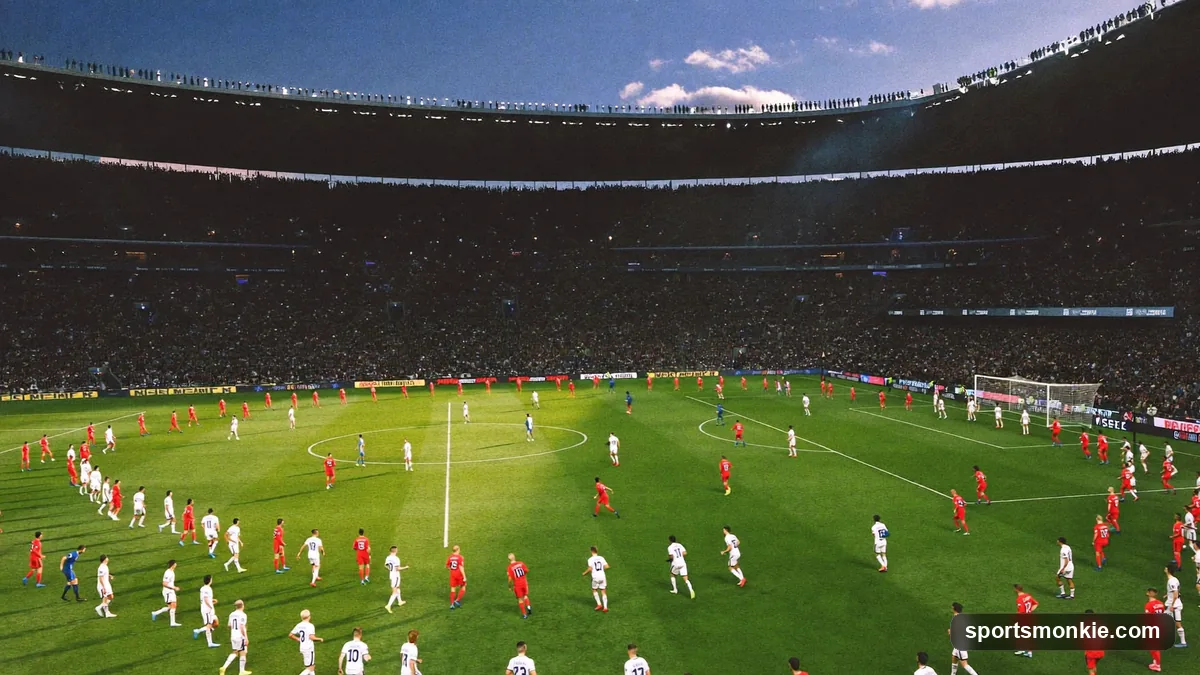
Soccer tactics are the organized decisions a team makes about shape, pressing, and possession to control a match — the formation sets the starting positions, while the tactical system decides how those players press, build attacks, and defend as a unit. No formation wins games on its own; it’s the instructions layered on top — when to press, how high the defensive line sits, whether to build patiently or go direct — that separate one team’s version of 4-3-3 from another’s. This guide breaks down the building blocks of football tactical systems so the terminology used to describe a match actually makes sense.
Formation is the skeleton, not the tactic
A formation is simply the numerical shape a team lines up in without the ball — 4-4-2, 4-3-3, 3-5-2, 4-2-3-1, and so on. It tells you how many defenders, midfielders, and forwards a coach nominally deploys, but it says nothing about how the team actually plays.
| Formation | Structure | Typical use case |
|---|---|---|
| 4-4-2 | 4 defenders, 4 midfielders (flat), 2 strikers | Simple, direct, strong central pairing up top |
| 4-3-3 | 4 defenders, 3 midfielders, 3 forwards | Width from wingers, control through a midfield triangle |
| 4-2-3-1 | 4 defenders, 2 holding mids, 3 attacking mids, 1 striker | Balance — double pivot protects the back line |
| 3-5-2 | 3 center-backs, 5 midfielders/wing-backs, 2 strikers | Midfield overload, wing-backs provide width |
| 5-3-2 / 5-4-1 | 5 defenders, narrow midfield, 1-2 forwards | Defensive solidity, absorb pressure, counter |
Two managers can both set up in a 4-3-3 and produce entirely different football. Pep Guardiola’s Manchester City uses the 4-3-3 to dominate possession through patient buildup; a relegation-threatened side might use the same numbers to sit deep and break at pace. The formation is the skeleton — the tactical system is the muscle and nervous system that makes it move.
Pressing systems: when and how to win the ball back
Pressing tactics decide where on the pitch a team tries to regain possession.
- High press — the team pressures the opponent’s build-up near their own penalty area, aiming to force turnovers close to goal. It demands fitness, coordination, and a high defensive line. See the full mechanics in high press in soccer.
- Gegenpressing (counter-press) — a specific, more aggressive form of pressing where the team swarms to win the ball back within seconds of losing it, before the opponent can organize a counter. Jurgen Klopp’s Dortmund and Liverpool sides are the textbook examples. Full breakdown: what is gegenpressing.
- Mid-block — the team presses only once the opponent crosses the halfway line, balancing risk and defensive compactness.
- Low block — the team drops deep, compresses space between its own lines, and invites the opponent forward before defending in numbers. Read more: low block in soccer explained.
Choosing a pressing height is a trade-off between risk and control. A high press wins the ball in dangerous areas but leaves space in behind if it’s broken; a low block concedes territory but limits the room in behind the defense.
Possession styles: tiki-taka, direct play, and everything between
How a team wants to use the ball once it has it defines its attacking identity.
Tiki-taka is built on short, rapid passing combinations, constant off-ball movement, and patience — probing for gaps rather than forcing chances. Guardiola’s Barcelona (2008-2012) and the Spanish national team of the same era are the style’s high-water mark, winning multiple Champions Leagues, a World Cup, and back-to-back European Championships on the back of it. Full explainer: tiki-taka explained.
Direct play, by contrast, moves the ball forward in fewer touches, often via longer passes or quick vertical transitions, prioritizing speed over control of possession percentage.
Counter-attacking football sits between the two: a team deliberately cedes possession, absorbs pressure, then breaks at speed the moment it wins the ball, exploiting the space an attacking opponent leaves behind. Diego Simeone’s Atletico Madrid and Jose Mourinho’s Inter Milan (the 2010 treble winners) are classic examples. See counter-attacking football explained.
Defensive systems: compactness, lines, and marking
Defensive tactics revolve around three questions: how high does the back line sit, how compact is the team between the lines, and how do defenders track attackers?
- High defensive line — squeezes the pitch to support a high press, but is vulnerable to balls played in behind.
- Deep/low defensive line — sits closer to goal, reducing space in behind at the cost of ceding territory further up the pitch. Taken to its extreme, this becomes “parking the bus” — see what does park the bus mean in soccer for the full explainer.
- Zonal marking assigns defenders to cover space rather than a specific player; man-marking assigns a defender to shadow one opponent everywhere they go. Most elite teams blend zonal principles in open play with man-marking on corners and free kicks.
Positional innovations that reshaped tactics
Certain roles have become tactical trends of their own because they solve a specific structural problem.
- False nine — a striker who drops deep into midfield rather than staying on the last defensive line, dragging a center-back out of position and creating space for wingers or midfielders to run into. Francesco Totti and Lionel Messi (under Guardiola) are the position’s most famous exponents. Full explainer: what is a false nine.
- Inverted fullback — a fullback who tucks into central midfield during buildup instead of staying wide, adding a passing option and defensive cover against counters. Guardiola popularized the role with Philipp Lahm and later Joao Cancelo. See inverted fullback explained.
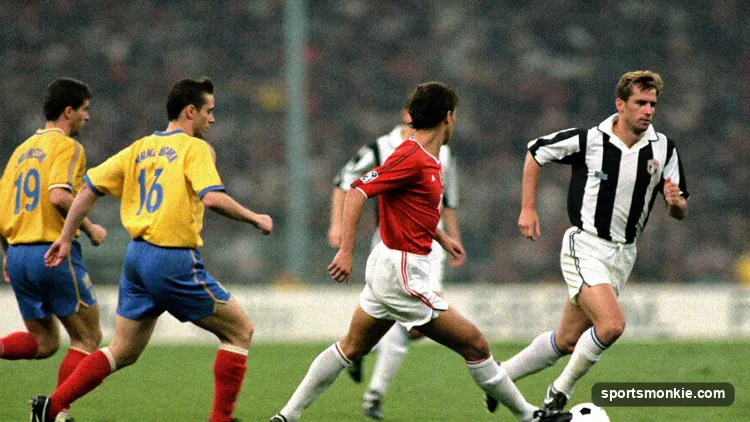
- Total Football — the Dutch tactical philosophy where any outfield player can fill any position on the pitch, trading spaces fluidly as a match unfolds. Rinus Michels’ Ajax and the Netherlands teams of the early-to-mid 1970s, built around Johan Cruyff, are the style’s origin point and its greatest ambassadors. Full history: total football explained.
How coaches actually combine these systems
No elite team runs one pure tactic for 90 minutes. A single match might see a side start with a high press and tiki-taka buildup, switch to a mid-block after taking the lead, and finish with a low block and direct clearances to protect a result. Pep Guardiola, Jurgen Klopp, and Diego Simeone represent three distinct tactical philosophies — control, chaos-through-intensity, and reactive counter-attacking — but all three adjust their base system depending on the opponent, the scoreline, and personnel available. Understanding the individual building blocks above is what makes it possible to read those in-game adjustments rather than just watching a scoreline change.
Tactics also evolve generationally. The 2-3-5 pyramid of early 20th-century football gave way to WM formations in the 1930s, the rigid 4-4-2 dominance of the 1980s-90s, and today’s fluid systems that blur the line between formations entirely — a “4-3-3” in possession can become a back-three the moment the team loses the ball. Smaller-sided games compress those same ideas, so our futsal rules guide is useful if you want to see how pressure, rotation and quick combinations change on a five-a-side court. That fluidity is the throughline connecting everything in this guide: modern football tactical systems are dynamic identities, not fixed shapes on a team sheet. For the numbered shapes those identities are built on — and a guide to each one — see our soccer formations explained hub.
Frequently asked questions
What are soccer tactics?+
Soccer tactics are the coordinated plans a team uses on the field, covering formation (player shape), pressing (how and when to win the ball back), possession style (how the team keeps and moves the ball), and defensive structure (how compact and deep the team sits). Tactics turn eleven individuals into one working system.
What is the most common soccer formation?+
The 4-3-3 and 4-2-3-1 are the most widely used formations in modern top-flight football because they balance defensive coverage with attacking width and central control. The 4-4-2 remains common at youth and lower levels for its simplicity.
What's the difference between a formation and a tactical system?+
A formation (e.g., 4-3-3) is just the starting shape of the eleven players. A tactical system is everything layered on top: how high the team presses, whether it plays out from the back or long, how it defends set pieces, and how it shifts shape in and out of possession. Two teams can use the same formation and play completely different tactics.
What is gegenpressing in soccer?+
Gegenpressing (German for 'counter-pressing') is an aggressive tactic where a team immediately hunts to win the ball back within seconds of losing it, rather than retreating into a defensive shape. Jurgen Klopp made it famous at Borussia Dortmund and Liverpool. Read the full explainer at /what-is-gegenpressing/.
What is tiki-taka?+
Tiki-taka is a possession-based tactical style built on short passing, constant movement, and patient buildup to draw opponents out of position before breaking them down. Pep Guardiola's Barcelona (2008-2012) and Spain's 2008-2012 national team are the style's defining examples. See the full breakdown at /tiki-taka-explained/.
What does 'park the bus' mean in soccer?+
'Park the bus' describes an extremely defensive tactic where a team packs nearly every outfield player behind the ball, conceding possession and territory to protect a result, usually a draw or narrow lead. Jose Mourinho popularized the phrase and the approach. Full explainer at /what-does-park-the-bus-mean-in-soccer/.
Why do teams change formation mid-game?+
Coaches switch formation or tactics mid-match to respond to the scoreline, exploit an opponent's weakness, manage fatigue, or protect a lead. A team might start in an attacking 4-3-3 and switch to a defensive 5-4-1 low block to close out a win, or go the other way when chasing a goal.
What is the difference between man-marking and zonal marking?+
Man-marking assigns each defender to track a specific opponent wherever they go on the field. Zonal marking assigns defenders to cover an area of the pitch and pick up whichever attacker enters it. Most modern top teams use a hybrid, applying zonal principles in open play and man-marking on set pieces.
Sources
Play & tools
Free browser games and tools — no account, no download.
- Play 38-0 — Sign a 4-4-2 of all-time football legends and chase a perfect 38-0 league season — perfect, not just unbeaten.
- Explore all our games →
Related football guides
View all →
What Is Gegenpressing? The Soccer Tactic Explained
Gegenpressing is the German counter-pressing tactic where a team hunts the ball back within seconds of losing it. Origins, rules, and examples explained.
9v9 Soccer Formations: Best Youth Shapes for U11/U12 Explained
The best 9v9 soccer formations for youth teams are 3-3-2, 3-2-3, 2-4-2, 3-4-1, and 2-3-3 — here's how each one lines up and which fits your squad.
Inverted Fullback Explained: What It Means in Soccer Tactics
What is an inverted fullback in soccer? Learn how the role works, why Pep Guardiola popularized it, and which players do it best.
Total Football Explained: Meaning, Origins, and Tactics
Total football is a system where outfield players interchange positions freely. Learn its Ajax-Cruyff origins, principles, and modern legacy.
Counter-Attacking Football Explained: How the Break Works
Counter attacking football is a rapid defense-to-attack transition that exploits disorganized opponents. Learn the principles, roles, and famous examples.
High Press in Soccer: What It Is and How It Works
High press in soccer explained: how teams trap opponents deep, key triggers, man vs zonal systems, and why Klopp, Guardiola and Bielsa built careers on it.