
What Does "Park the Bus" Mean in Soccer? Origin, Examples & How to Beat It
On this page6
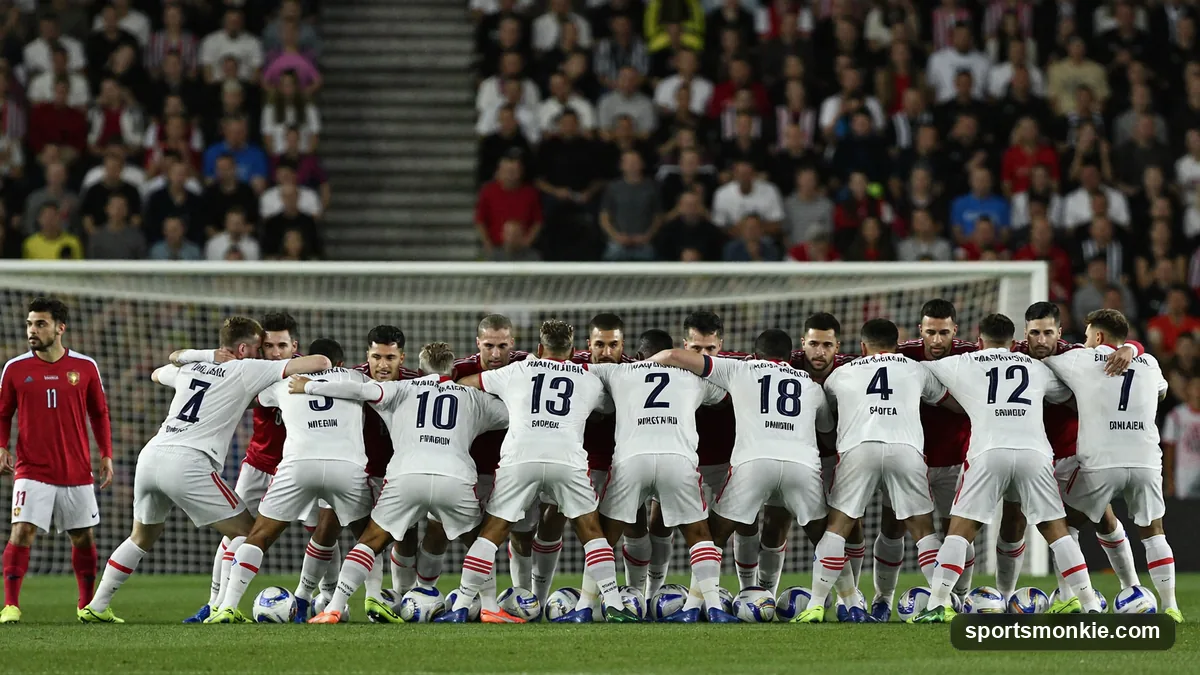
“Park the bus” means a soccer team crams almost every outfield player behind the ball, usually deep inside its own half, to smother the opponent’s attack and prevent goals rather than try to score them. It is the most extreme form of defensive soccer in the modern game, and it has both won major trophies and drawn heavy criticism for killing the spectacle. Below is where the phrase came from, how the tactic actually works, and how the best attacking teams break it down.
Where does “park the bus” come from?
The phrase entered global football vocabulary in September 2004, when Jose Mourinho’s newly arrived Chelsea side was held to a 0-0 draw at Stamford Bridge by Tottenham Hotspur. Frustrated with Spurs’ refusal to attack, Mourinho told reporters: “As we say in Portugal, they brought the bus and they left the bus in front of the goal.” English-language media shortened this to “parking the bus,” and it stuck permanently.
The idiom itself likely predates Mourinho. Some accounts trace an earlier version of the phrase to Spanish football media covering Racing Santander manager José María Maguregui’s defensive setups against Real Madrid and Barcelona in the 1980s. But Mourinho’s quote is the one that made the term mainstream, and it is now used across English, Spanish, and Portuguese football media without translation.
Mourinho later leaned into the phrase rather than avoided it. After Inter Milan beat Barcelona 3-1 at San Siro in the 2010 Champions League semifinal while playing most of the second half with ten men, he joked that his team had “parked the plane” rather than the bus.
How “parking the bus” actually works on the pitch
A team parking the bus typically drops into a low block: two banks of four or five players sitting just outside or inside their own penalty area, with minimal gaps between the lines. Wingers and even the striker are often asked to track back and defend rather than stay high, meaning the team may field as few as one or zero recognized forwards once the opposition has the ball. For the full mechanics of that defensive shape, see our guide to the low block in soccer.
This isn’t the same as every deep defensive posture. It sits at the extreme end of a broader spectrum of defensive systems and pressing structures — see our pillar guide to soccer tactical systems explained for how it compares to a mid-block, high press, or gegenpressing.
Key features of a parked bus:
- Ten or more players behind the ball for long stretches, sometimes the entire match
- Very narrow spacing between defensive lines to eliminate passing lanes through the middle
- Almost no players committed to attacking transitions
- Heavy reliance on blocking shots, clearances, and set-piece defending rather than winning the ball high up the pitch
- A willingness to accept 70-80% possession for the opponent in exchange for territorial and shot-quality control
Why teams choose to park the bus
| Situation | Why it makes sense |
|---|---|
| Protecting a late lead | Fewer players forward means fewer chances conceded on the counter |
| Facing a clearly superior opponent | Trades the ball for organization; a technically weaker side is more likely to concede in open play than in a packed box |
| Down to ten men | Fewer bodies mean less ground to cover, so compacting the defense is the only realistic option |
| Away leg of a two-legged tie | A 0-0 or narrow away result can be enough to advance, so risk is minimized |
| Underdog in a one-off knockout match | A single, low-probability chance (set piece, counter, penalty shootout) can be enough to win |
Famous examples of parking the bus
Mourinho’s own Chelsea sides are the textbook case. His 2004-05 title-winning team conceded a Premier League-record-low 15 goals across the season, built almost entirely on defensive discipline. His Inter Milan side went further in 2009-10, defending deep against Barcelona in the Champions League semifinal and again in the final against Bayern Munich en route to a treble.
Diego Simeone’s Atletico Madrid built a decade of relevance in La Liga and Europe on a compact, disciplined defensive block combined with rapid counters — a style closely related to counter attacking football, which is often the attacking payoff once a parked-bus team regains possession. Sean Dyche’s Burnley used a similar low-resource, high-discipline approach to survive multiple Premier League seasons against wealthier clubs. At international level, Greece’s shock Euro 2004 title was built on set-piece goals and a defense that gave almost nothing away, famously beating hosts Portugal in both the opening game and the final.
How to beat a team that parks the bus
Breaking down a packed defense is one of the hardest problems in soccer, and there is no single fix. The tactics that tend to work share a common thread: they attack space the low block cannot cover, rather than trying to force the ball through a crowd.
- Stretch the pitch with width. Wingers or overlapping fullbacks pin the defense wide, opening central passing lanes.
- Overload one side. Creating a two-on-one or three-on-two on a single flank forces defenders to make a choice they cannot win cleanly.
- Use quick combination play, not crosses. One-touch passing in tight areas is more likely to unlock a packed box than aimless crossing into a crowd of defenders.
- Bring on a spare attacker or a false nine. Dragging a deep center-back out of position, rather than adding another target for crosses, creates the gaps a low block is built to deny. Our explainer on the false nine covers how that role manipulates exactly this kind of defense.
- Stay patient. A parked bus is a war of attrition; panicking and rushing final-third decisions plays directly into the defending team’s hands.
Is parking the bus good or bad for soccer?
It depends who is asked. Purists and many fans see it as anti-football — a tactic that suppresses goals, entertainment, and the sport’s attacking spirit, especially when a wealthier or more talented team uses it against a smaller opponent rather than the reverse. Coaches and pragmatists counter that it is a completely legal, often necessary tool that has decided World Cups, Champions Leagues, and title races, and that underdog soccer would be far less competitive without it.
Either way, it remains one of the defining strategic debates in the sport. For more on how it fits alongside pressing, possession, and transition systems across the modern game, explore the full football/soccer hub at SportsMonkie.
Frequently asked questions
What does 'park the bus' mean in soccer?+
It describes a team packing nearly all of its outfield players behind the ball, usually inside or near its own penalty area, to make scoring as difficult as possible for the opponent. The team surrenders possession and attacking ambition almost entirely in exchange for defensive solidity, typically to protect a lead, survive against a superior opponent, or play out a draw.
Who invented the phrase 'park the bus'?+
Jose Mourinho popularized it in English-language football media in September 2004. After his Chelsea side was held to a goalless draw at home by Tottenham Hotspur, he said, "As we say in Portugal, they brought the bus and they left the bus in front of the goal." The underlying idiom existed in Portuguese and Spanish football culture earlier, but Mourinho's quote is what made it a global term.
Is parking the bus the same as a low block?+
They overlap but aren't identical. A low block is the specific defensive shape — a compact line of players sitting deep near the 18-yard box. Parking the bus is a broader match-day strategy that usually includes a low block plus minimal attacking players, few forward runs, and a willingness to sit deep for the full 90 minutes rather than just situationally. Read the full breakdown in our guide to the low block in soccer.
Why do teams park the bus?+
Three common reasons: protecting a lead late in a game, facing a technically or physically superior opponent where open play favors the other side, or playing with ten men after a red card. It trades attacking threat for defensive certainty, betting that a 0-0 or narrow scoreline is a better outcome than an open contest.
What teams are famous for parking the bus?+
Jose Mourinho's Chelsea (2004-05, a record 15 goals conceded in the Premier League) and his Inter Milan side that beat Barcelona to win the 2010 Champions League with ten men are the most cited examples. Diego Simeone's Atletico Madrid, Sean Dyche's Burnley, and Greece's Euro 2004-winning side are also frequently referenced for disciplined, ultra-defensive setups against stronger opposition.
How do you beat a team that parks the bus?+
Patience, width, and quick combination play in tight spaces beat a parked bus more reliably than crosses or long shots into a crowded box. Overloading one flank to create a two-on-one, using set pieces, and introducing an extra attacker or a false nine to drag deep defenders out of position are common counters. Our guide to counter attacking football explains the opposite approach some bus-parking teams use once they win the ball back.
Is parking the bus considered bad for soccer?+
Opinion is split. Purists criticize it as anti-football because it reduces goals and open play, and some fans find 0-0 stalemates dull. Pragmatists point out it is a legitimate tactical choice that has won major trophies, including World Cups and Champions Leagues, and that any legal tactic that helps a weaker team compete is fair game.
Does parking the bus always mean defending for 90 minutes?+
Not necessarily. Some teams only park the bus in phases — for example, the final 15-20 minutes while protecting a 1-0 lead, or after going down to ten men. Others, especially underdogs against elite opposition, plan to do it for the entire match from kickoff, accepting almost no possession in exchange for a clean sheet.
Sources
Play & tools
Free browser games and tools — no account, no download.
- Play 38-0 — Sign a 4-4-2 of all-time football legends and chase a perfect 38-0 league season — perfect, not just unbeaten.
- Explore all our games →
Related football guides
View all →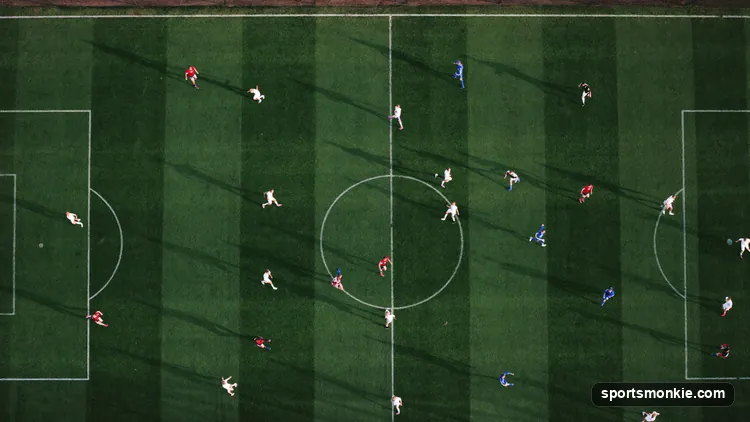
3-5-2 Formation Explained: Roles, Strengths and Weaknesses
The 3-5-2 formation uses three center-backs, two attacking wing-backs, a midfield three and two strikers for a compact, wide-covering shape.

Counter-Attacking Football Explained: How the Break Works
Counter attacking football is a rapid defense-to-attack transition that exploits disorganized opponents. Learn the principles, roles, and famous examples.
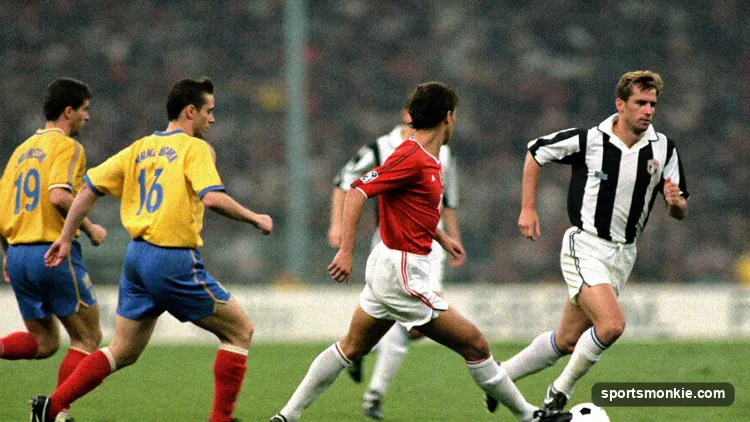
Total Football Explained: Meaning, Origins, and Tactics
Total football is a system where outfield players interchange positions freely. Learn its Ajax-Cruyff origins, principles, and modern legacy.
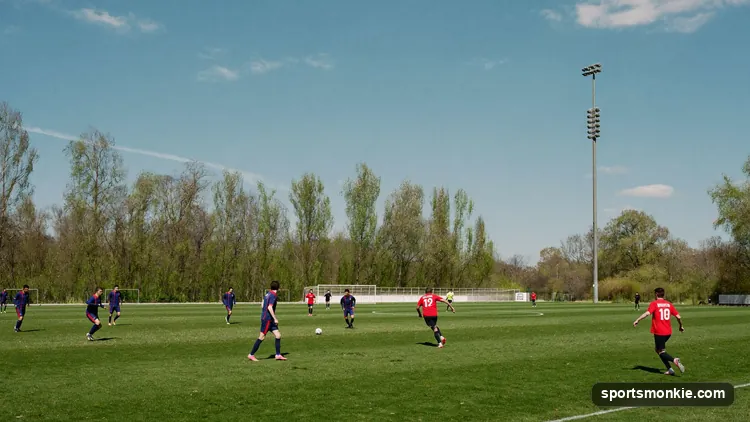
11v11 Soccer Formations: The Full-Sided Guide to Every Shape
11v11 soccer formations explained: how full-sided lineups work, the most common shapes (4-4-2, 4-3-3, 4-2-3-1, 3-5-2, 5-3-2), and how to pick one.
9v9 Soccer Formations: Best Youth Shapes for U11/U12 Explained
The best 9v9 soccer formations for youth teams are 3-3-2, 3-2-3, 2-4-2, 3-4-1, and 2-3-3 — here's how each one lines up and which fits your squad.
High Press in Soccer: What It Is and How It Works
High press in soccer explained: how teams trap opponents deep, key triggers, man vs zonal systems, and why Klopp, Guardiola and Bielsa built careers on it.