
Total Football Explained: Meaning, Origins, and Tactics
On this page6
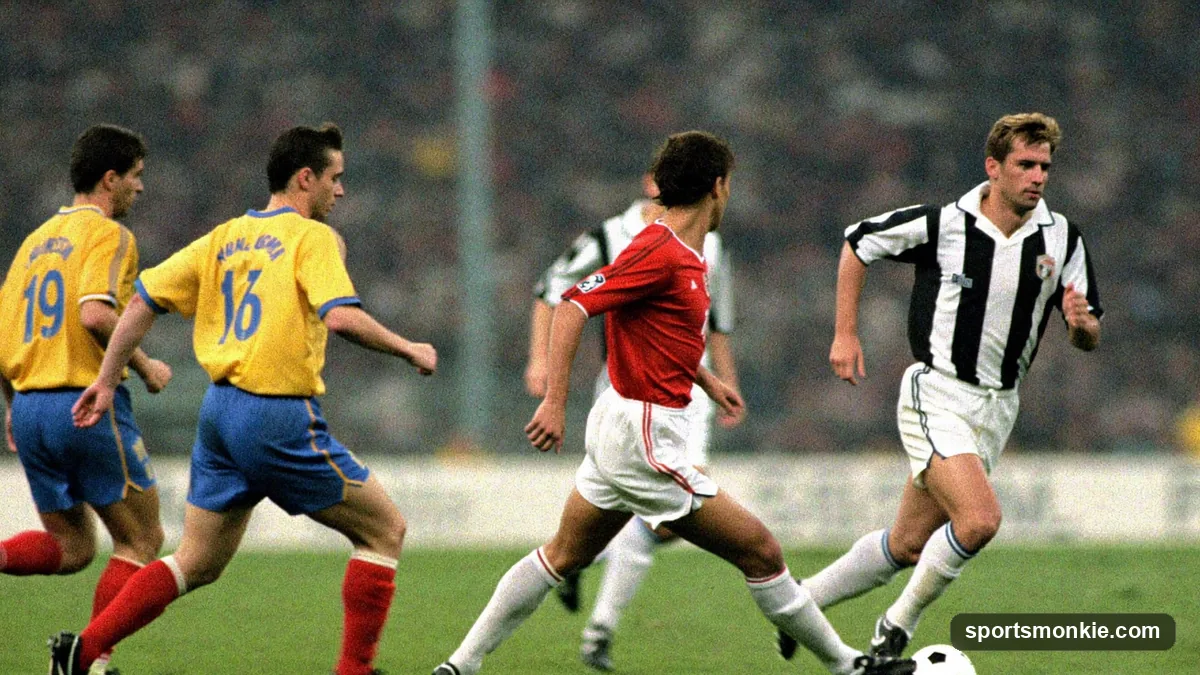
Total football is a system in which any outfield player can step into any teammate’s role during a match, with the team constantly rearranging itself to cover the space left behind. Only the goalkeeper stays fixed. It was perfected by Ajax and the Netherlands in the early 1970s and remains one of the most studied ideas in soccer tactical systems.
The core idea: interchangeable positions
Total football rejects the idea that a player is permanently a striker, a winger, or a fullback. Instead, positions are starting points, not cages. If a fullback overlaps into an attacking position, a midfielder or another defender rotates back to fill the gap he vacated. If a striker drops deep to collect the ball, a winger or attacking midfielder pushes forward to occupy the space up front.
The result is a team that looks the same on the scoresheet, 4-3-3 or 3-4-3, but behaves completely differently from possession to possession. Opponents who are used to marking a position rather than a player struggle to track who they’re actually supposed to stop, because the man in the left-back slot in the 10th minute might be the same player standing at center-forward in the 60th.
Where it came from
The roots of total football trace back further than most fans realize. Jack Reynolds, an English coach who managed Ajax across three separate spells starting in 1915, built a youth academy culture around technical skill and positional intelligence long before the term “total football” existed. Central European football in Austria and Hungary during the mid-20th century also emphasized fluid movement and combination play, ideas that filtered into Dutch coaching.
It was Rinus Michels, though, who turned these threads into a coherent system. As Ajax manager in the late 1960s and early 1970s, and later as coach of the Netherlands national team, Michels demanded that his players understand every position on the pitch, not just their own. Ajax won three straight European Cups from 1971 to 1973 playing this way, and the Netherlands carried the same approach into the 1974 World Cup, reaching the final before losing 2-1 to West Germany.
Johan Cruyff: the system’s defining player
No player is more associated with total football than Johan Cruyff. Officially a forward, Cruyff spent matches roaming across the front line and dropping deep into midfield, dragging defenders out of position and creating space for teammates to exploit. His football intelligence, close control, and vision made him the closest thing the system had to a conductor, even though total football is, in principle, a team idea rather than a star vehicle.
Cruyff’s influence didn’t stop when he retired. As a coach at Barcelona from 1988 to 1996, he adapted total football’s core principles, especially spacing and player intelligence, into what became known as “juego de posicion,” or positional play. That coaching tree runs directly to Pep Guardiola, who played under Cruyff at Barcelona and later built his own possession-heavy systems on similar foundations.
Space, pressing, and the “big pitch, small pitch” principle
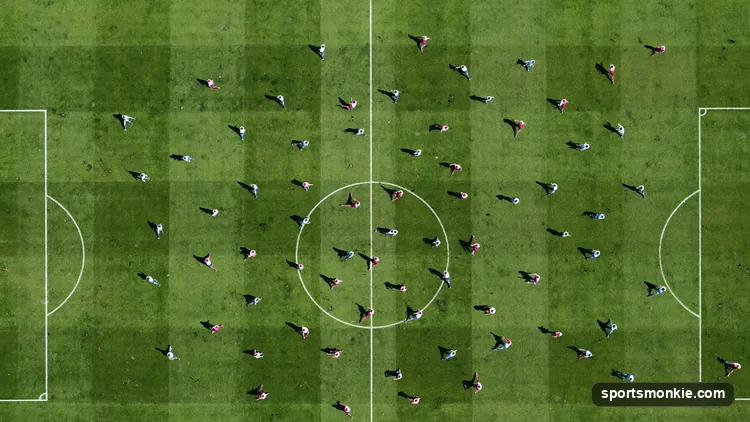
Total football is often summarized with a simple idea: make the pitch as big as possible when your team has the ball, and as small as possible when you don’t. In possession, players spread wide and deep to stretch the opponent’s defensive shape and open passing lanes. Out of possession, the team compresses quickly, pressing high to win the ball back close to the opponent’s goal rather than retreating into a defensive shape.
This pressing element is what connects total football to later pressing-based systems. It demanded extraordinary fitness and tactical discipline, since every player needed to understand not just their own job but their teammates’ jobs too, in order to cover for one another the instant someone left their starting zone.
| Element | Total football (1970s Ajax/Netherlands) | Later evolution |
|---|---|---|
| Positional roles | Fluid, fully interchangeable | Positional play retains more fixed zones |
| Defensive approach | High pressing, compact shape | Modern gegenpressing and high press |
| Key demand on players | Universal tactical intelligence | Specialists trained in multiple roles |
| Best-known era | Ajax 1971-73, Netherlands 1974 | Cruyff’s Barcelona, Guardiola’s teams |
Why it declined as a pure system
West Germany’s approach in the 1974 World Cup final exposed a real vulnerability. Rather than defending zones, the Germans assigned specific man-markers, most notably Berti Vogts on Cruyff, which made it harder for the Dutch to use interchange to create confusion. If a defender simply follows the player rather than the position, swapping roles matters less.
Beyond that tactical answer, total football is also simply demanding to sustain. It requires a full squad of technically excellent, tactically literate, and extremely fit players, built through years of academy work like the one Ajax had. Modern squads are often assembled from specialists bought from different clubs and systems, which makes true universal interchange harder to coach in a short time. Shorter managerial tenures compound the problem, since total football historically took years to instill.
The legacy in modern soccer
Pure total football, as Michels and Cruyff ran it, doesn’t exist in today’s game. But its fingerprints are everywhere. High pressing, players spreading the pitch in possession, and fullbacks pushing into midfield roles, sometimes described today as an inverted fullback, all descend from total football’s core logic. Guardiola’s positional play and the broader family of possession-based systems, including tiki-taka, are direct descendants of ideas Cruyff carried from Ajax to Barcelona.
Total football’s real achievement wasn’t a trophy haul, though Ajax’s European Cups and the Netherlands’ 1974 final run are plenty impressive. It was proving that a team could function as a single, adaptable organism rather than eleven players glued to fixed spots, an idea that reshaped how coaches think about soccer tactics to this day.
It is worth pairing this with our guide to Most Successful Football Teams in the World.
Frequently asked questions
What is total football in simple terms?+
Total football is a tactical philosophy where any outfield player can take over any teammate's position during a match. Instead of fixed roles, players rotate fluidly, so a fullback might attack as a winger while a midfielder drops back to cover, as long as the team's overall shape stays balanced.
Who invented total football?+
Dutch coach Rinus Michels is usually credited with developing total football, first at Ajax and then with the Netherlands national team in the 1970s. Earlier ideas from coach Jack Reynolds at Ajax and Austrian and Hungarian football of the mid-20th century also fed into the concept.
Why is Johan Cruyff linked to total football?+
Johan Cruyff was the on-field embodiment of total football under Michels at Ajax and the Netherlands. His intelligence, technique, and willingness to drift across every attacking position made him the system's most influential practitioner, and he later carried its ideas into his own coaching at Barcelona.
Did total football ever win a World Cup?+
No. The Netherlands played total football to reach the 1974 World Cup final but lost 2-1 to West Germany, who nullified the system with disciplined man-marking. Total football's legacy rests on its influence and on domestic and continental trophies with Ajax, not a World Cup title.
What formation does total football use?+
Ajax and the Dutch national team typically lined up in a 4-3-3, which could morph into a 3-4-3 during matches. The formation on paper mattered less than the constant rotation within it, since players were expected to cover for teammates who moved out of position.
How is total football different from tiki-taka?+
Total football is built on positional interchange and pressing to win the ball back quickly, while tiki-taka, developed later at Barcelona, emphasizes rapid short passing and patient possession within fixed positional zones. Tiki-taka borrowed total football's pressing principles but relies far less on players swapping roles. See our [tiki-taka explainer](/tiki-taka-explained/) for the full breakdown.
Does any team play total football today?+
No modern team runs a pure version of it, since total football requires a full squad of technically gifted, tactically flexible players and constant fitness to sustain the pressing. But its DNA lives on in possession-based, position-swapping systems, most visibly in Pep Guardiola's coaching and in modern [inverted fullback](/inverted-fullback-explained/) roles.
Why did total football decline?+
West Germany's man-marking plan in the 1974 World Cup final exposed a weakness: if opponents track individual players rather than zones, interchange becomes harder to exploit. The faster pace of the modern game, shorter managerial tenures, and squads built around specialists rather than universal players also made the pure version harder to sustain.
Sources
Play & tools
Free browser games and tools — no account, no download.
- Play 38-0 — Sign a 4-4-2 of all-time football legends and chase a perfect 38-0 league season — perfect, not just unbeaten.
- Explore all our games →
Related football guides
View all →
3-5-2 Formation Explained: Roles, Strengths and Weaknesses
The 3-5-2 formation uses three center-backs, two attacking wing-backs, a midfield three and two strikers for a compact, wide-covering shape.
What Does "Park the Bus" Mean in Soccer? Origin, Examples & How to Beat It
Park the bus in soccer means stacking every outfield player behind the ball to shut out an opponent. Origin, tactics, and famous examples explained.
Soccer Tactics Explained: Football Tactical Systems, Formations & Styles
Soccer tactics explained: how formations, pressing, possession, and defensive systems shape football tactical systems, from 4-4-2 to tiki-taka and gegenpressing.
4-2-2-2 Formation Explained: The 'Magic Box' Football Tactic
The 4-2-2-2 formation explained: how the 'magic box' double pivot and two number 10s create central overloads, plus its strengths, weaknesses and famous users.

Counter-Attacking Football Explained: How the Break Works
Counter attacking football is a rapid defense-to-attack transition that exploits disorganized opponents. Learn the principles, roles, and famous examples.
Inverted Fullback Explained: What It Means in Soccer Tactics
What is an inverted fullback in soccer? Learn how the role works, why Pep Guardiola popularized it, and which players do it best.