
Tiki-Taka Explained: What the Soccer Tactic Really Means
On this page6
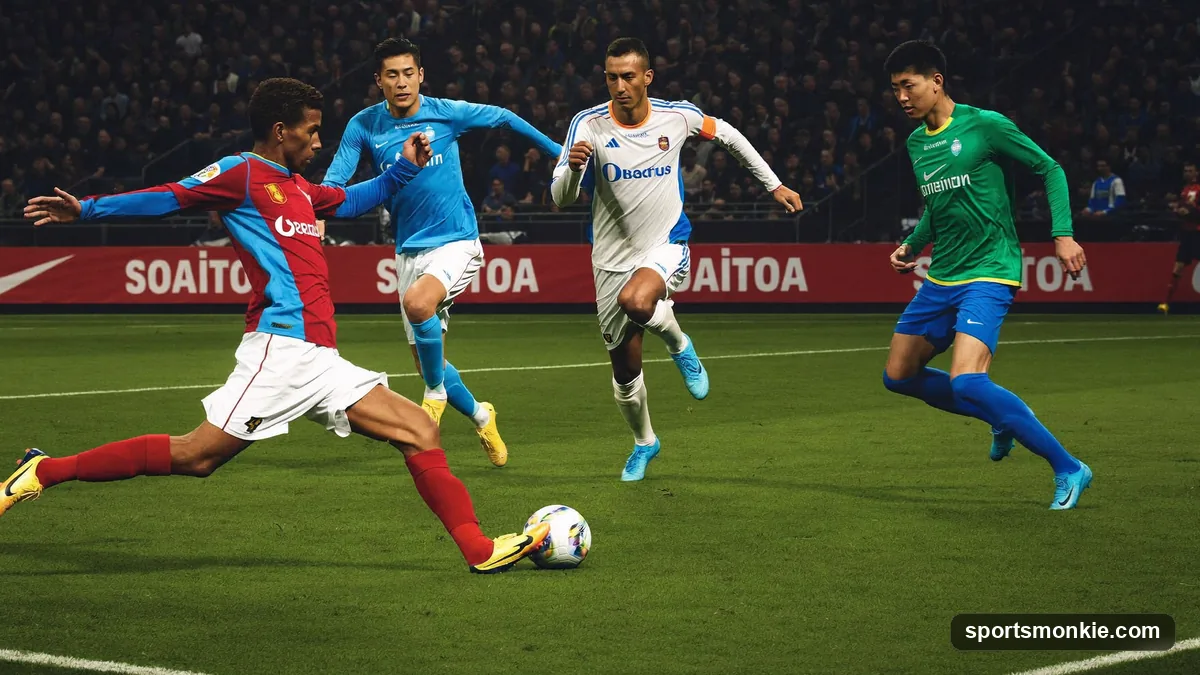
Tiki-taka is a soccer tactic built on short, rapid passing, constant off-ball movement, and near-total possession control, designed to shift defenders out of position until a gap opens to attack. It is the style that carried Pep Guardiola’s Barcelona and Spain’s national team to years of near-total dominance, and its fingerprints are still on almost every top coaching philosophy in the sport today.
The core idea behind tiki-taka
At its simplest, tiki-taka asks a team to keep the ball rather than fight for it. Short one- and two-touch passes are exchanged in tight triangles and diamonds, players constantly rotate to stay available, and possession itself becomes a form of defense — the opponent cannot score if they never have the ball. Rather than rushing forward, a tiki-taka side is patient, probing for the moment a defender steps out of line or a passing lane opens between the lines.
The core principles that separate tiki-taka from ordinary possession football:
| Principle | What it means on the pitch |
|---|---|
| Short, quick passing | One- or two-touch exchanges over 5-15 yards, minimizing risky long balls |
| Geometric spacing | Players form triangles and diamonds so there is always a passing option |
| Constant movement | Every pass triggers a positional rotation to keep angles open |
| Immediate pressing | If possession is lost, the nearest players swarm to win it back within seconds |
| Patience over pace | Circulate the ball, draw the opponent out, then strike through the gap |
Where tiki-taka came from
Tiki-taka did not appear from nothing. Its intellectual roots go back to Rinus Michels and Johan Cruyff’s Total Football with Ajax and the Dutch national team in the 1970s, a system built on fluid positional interchange and technical precision. Cruyff carried that philosophy to FC Barcelona, first as a player in the 1970s and then as manager of the “Dream Team” from 1988, where he installed possession-based principles inside Barcelona’s La Masia academy.
Frank Rijkaard continued that thread through the mid-2000s, but it was Pep Guardiola — promoted from Barcelona B to the first team in 2008 — who systematized the ideas into the version the world came to know. Guardiola formalized the spacing between players, the timing of pressing after a turnover, and the passing patterns that had been more instinctive under Cruyff. The name itself came from outside the dressing room: Spanish commentator Andres Montes popularized “tiki-taka” during the 2006 World Cup to describe the pinball rhythm of Spain’s short passing, and the label stuck even though Guardiola preferred the term “positional play.”
Barcelona and Spain’s golden era
Guardiola’s Barcelona (2008-2012) is the definitive tiki-taka team. Built around Sergio Busquets shielding the defense, Xavi Hernandez dictating tempo, Andres Iniesta gliding between the lines, and Lionel Messi dropping deep as a false nine, that Barcelona side won 14 trophies in four seasons, including the treble in 2008-09.
Spain’s national team ran an almost identical blueprint with the same core Barcelona players plus Real Madrid’s Xabi Alonso and others, and the results were historic: Euro 2008, the 2010 World Cup, and Euro 2012 — the only side ever to win three straight major international tournaments. That run cemented tiki-taka as, briefly, the most feared style in world soccer.
How tiki-taka differs from related systems
Tiki-taka is often used loosely, but it sits inside a wider family of possession and pressing ideas that are each their own thing. It is not the same as total football, the broader Dutch system built on positional interchange across the entire team rather than strictly short passing; tiki-taka is really Total Football’s passing-heavy descendant, refined and narrowed by Guardiola. It is also the natural counterpart to gegenpressing, the German-originated tactic of pressing immediately and aggressively the instant possession is lost — a principle tiki-taka actually shares, since Barcelona pressed hard to win the ball back within seconds, even if gegenpressing as a standalone philosophy (associated with Jurgen Klopp) prioritizes winning the ball in transition over patient circulation. For the fuller family tree of pressing and possession ideas, see our guide to soccer tactical systems.
Why tiki-taka declined
No tactic stays unbeaten forever. Opponents found two effective counters. The first was the low block: a deep, compact, disciplined defensive shape that refused to chase the ball, inviting tiki-taka teams to pass sideways in front of it without ever creating a clean shot — “sterile possession” that looked pretty but produced nothing. The second was coordinated high pressing, epitomized by Jurgen Klopp’s Borussia Dortmund and later Liverpool, which attacked the short-passing structure directly, cutting passing lanes and winning the ball high up the pitch before tiki-taka could even get started.
The clearest public sign of the cracks came at the 2014 World Cup, when reigning champions Spain lost 5-1 to the Netherlands in their opening game and were eliminated in the group stage — a stunning collapse for a side that had been unbeatable just two years earlier. It did not mean tiki-taka was “solved” outright, but it confirmed that a rigid, one-dimensional version of the style could be broken by teams willing to press it or sit deep and wait it out.
Tiki-taka’s legacy in modern soccer
Pure, uncut tiki-taka is rare today, but almost no top-level coaching philosophy is untouched by it. Manchester City under Guardiola kept the positional core while adding far more directness and variation than 2008-2012 Barcelona ever needed. Mikel Arteta’s Arsenal and Xabi Alonso’s sides have blended tiki-taka’s short-passing structure with faster verticality and transition play. Rondos — the small-sided possession drills where tiki-taka’s DNA lives — are now a staple of youth academies worldwide, and the idea that a defensive midfielder should be a clean, press-resistant passer rather than just a destroyer is now the default across the sport.
Tiki-taka’s real legacy isn’t a formation anyone still copies wholesale — it’s the assumption, baked into modern coaching everywhere, that keeping the ball intelligently is itself a weapon.
Frequently asked questions
What is tiki-taka in soccer?+
Tiki-taka is a possession-based playing style built around short, rapid passes, constant player movement, and tight positional structure. The goal is to keep the ball almost permanently, using quick one- and two-touch exchanges to shift opponents out of position until a gap opens for a penetrating pass or shot. It is less a single formation than a philosophy of controlling the game through the ball.
Who invented tiki-taka?+
No single person invented it, but its roots trace to Rinus Michels and Johan Cruyff's Total Football at Ajax and the Dutch national team in the 1970s. Cruyff carried those ideas to FC Barcelona as a player and later as coach in the late 1980s, embedding them in the La Masia academy. Pep Guardiola then systematized the style into what the world calls tiki-taka when he took charge of Barcelona's first team in 2008.
Where does the name tiki-taka come from?+
The term was popularized by Spanish television commentator Andres Montes during the 2006 World Cup, describing the pinball-like, touch-touch rhythm of Spain's passing. It stuck as shorthand for the short-passing, high-possession style Spain and Barcelona both played, even though many purists inside the game preferred the more technical label 'juego de posicion' (positional play).
Is tiki-taka the same as positional play?+
They overlap but are not identical. Tiki-taka is popularly understood as rapid short-passing and constant ball circulation for its own sake, while positional play (juego de posicion) is the more precise coaching concept behind it: occupying specific zones of the pitch to create passing lanes and numerical overloads, then using the pass — long or short — that actually breaks defensive lines. Guardiola himself has said he never coached 'tiki-taka,' only positional structure; the passing patterns people call tiki-taka are really a byproduct of it.
Which teams played tiki-taka?+
FC Barcelona under Pep Guardiola from 2008-2012 is the definitive example, built around Xavi, Andres Iniesta, Sergio Busquets, and Lionel Messi as a false nine. Spain's national team ran the same principles to win Euro 2008, the 2010 World Cup, and Euro 2012 with largely the same core of Barcelona players. Frank Rijkaard's earlier Barcelona sides and Cruyff's own 1990s 'Dream Team' were direct forerunners of the same idea.
Why did tiki-taka decline?+
Opponents adapted. Disciplined low blocks that refused to press let tiki-taka teams pass sideways without ever breaking through, and coordinated high-pressing sides — most notably Jurgen Klopp's Borussia Dortmund and later Liverpool — attacked the short-passing structure directly and won the ball high up the pitch. Spain's 5-1 loss to the Netherlands at the 2014 World Cup is often cited as the moment pure tiki-taka's limits were exposed on the biggest stage.
Does any team still play tiki-taka today?+
Few teams run pure, unbroken tiki-taka anymore, but its DNA is everywhere. Manchester City under Guardiola, Mikel Arteta's Arsenal, and Xabi Alonso's sides have all kept the short-passing, positional core while adding more directness, verticality, and transition speed than the 2008-2012 Barcelona blueprint. Modern coaching almost universally borrows tiki-taka's rondos and possession principles even where the finished product looks different.
Sources
Play & tools
Free browser games and tools — no account, no download.
- Play 38-0 — Sign a 4-4-2 of all-time football legends and chase a perfect 38-0 league season — perfect, not just unbeaten.
- Explore all our games →
Related football guides
View all →
Inverted Fullback Explained: What It Means in Soccer Tactics
What is an inverted fullback in soccer? Learn how the role works, why Pep Guardiola popularized it, and which players do it best.
What Is Gegenpressing? The Soccer Tactic Explained
Gegenpressing is the German counter-pressing tactic where a team hunts the ball back within seconds of losing it. Origins, rules, and examples explained.
9v9 Soccer Formations: Best Youth Shapes for U11/U12 Explained
The best 9v9 soccer formations for youth teams are 3-3-2, 3-2-3, 2-4-2, 3-4-1, and 2-3-3 — here's how each one lines up and which fits your squad.
High Press in Soccer: What It Is and How It Works
High press in soccer explained: how teams trap opponents deep, key triggers, man vs zonal systems, and why Klopp, Guardiola and Bielsa built careers on it.
Soccer Tactics Explained: Football Tactical Systems, Formations & Styles
Soccer tactics explained: how formations, pressing, possession, and defensive systems shape football tactical systems, from 4-4-2 to tiki-taka and gegenpressing.
What Does "Park the Bus" Mean in Soccer? Origin, Examples & How to Beat It
Park the bus in soccer means stacking every outfield player behind the ball to shut out an opponent. Origin, tactics, and famous examples explained.